

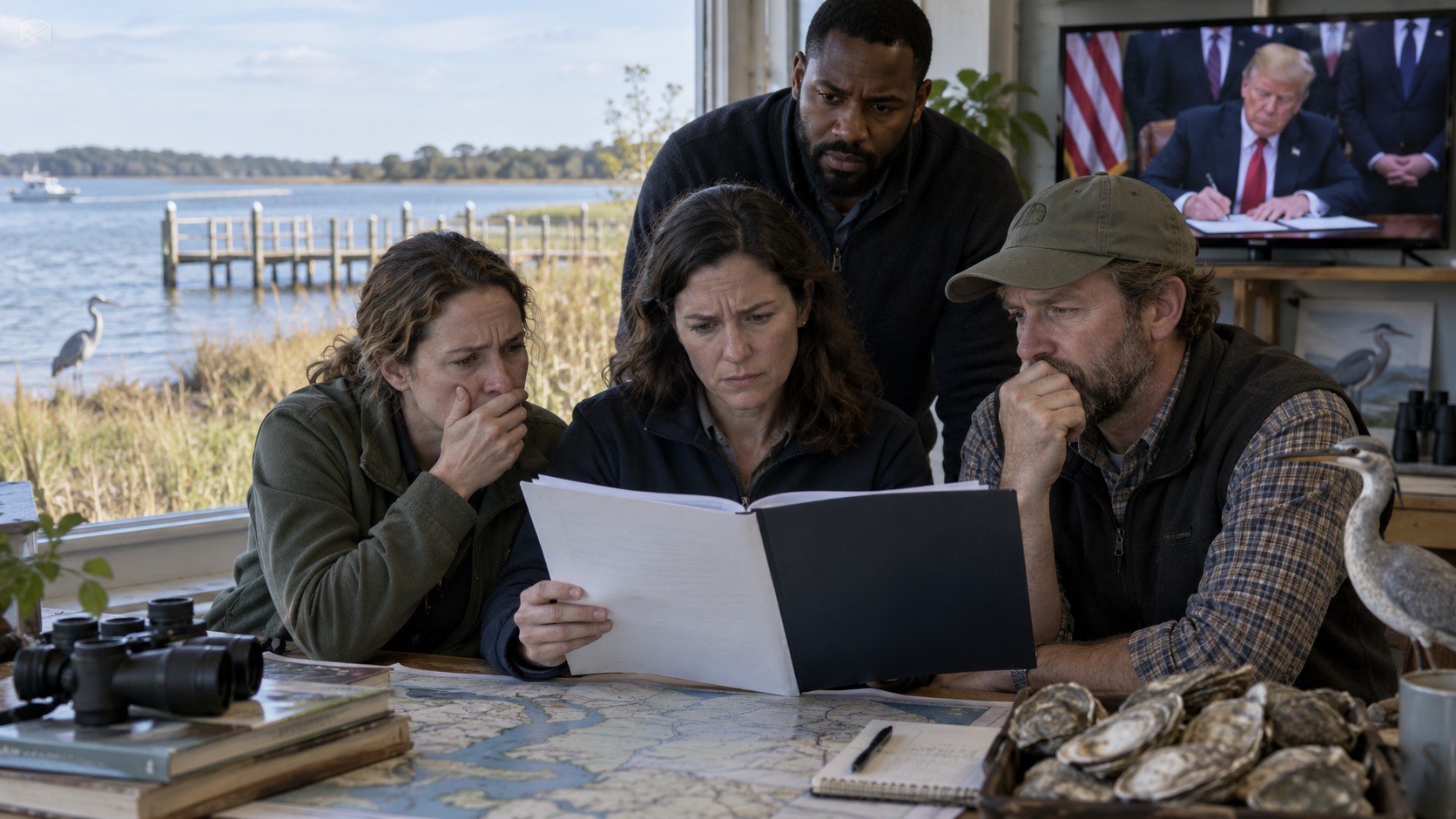
Chesapeake Bay executive order changes are drawing scrutiny after President Donald Trump revoked a federal restoration framework created in 2009. The decision affects coordination across the Chesapeake watershed and targets local stormwater fees, as reported by Baltimore Chronicle.
President Trump signed Executive Order 14428 on September 16, 2026. It formally revokes Executive Order 13508, signed by President Barack Obama in May 2009.
What Trump’s Chesapeake Bay executive order changes
The previous order created a federal framework for coordinating restoration across the Chesapeake Bay watershed. That region includes Maryland, Virginia, Pennsylvania, Delaware, New York, West Virginia and Washington, D.C.
The new order directs federal agencies to focus resources on projects producing measurable reductions in nutrients and sediment. It also tells the Environmental Protection Agency to review stormwater fees with watershed jurisdictions.
The administration describes those fees as “rain taxes” and argues they can impose unnecessary costs on residents.
The order calls for:
- federal resources to shift toward direct water-quality projects;
- EPA coordination with Chesapeake watershed jurisdictions;
- assessments of the financial impact of stormwater fees;
- measures encouraging states and localities to repeal such fees.
The White House says environmental programs should rely on measurable indicators and documented results. Its order specifically references nitrogen, phosphorus and sediment reductions.
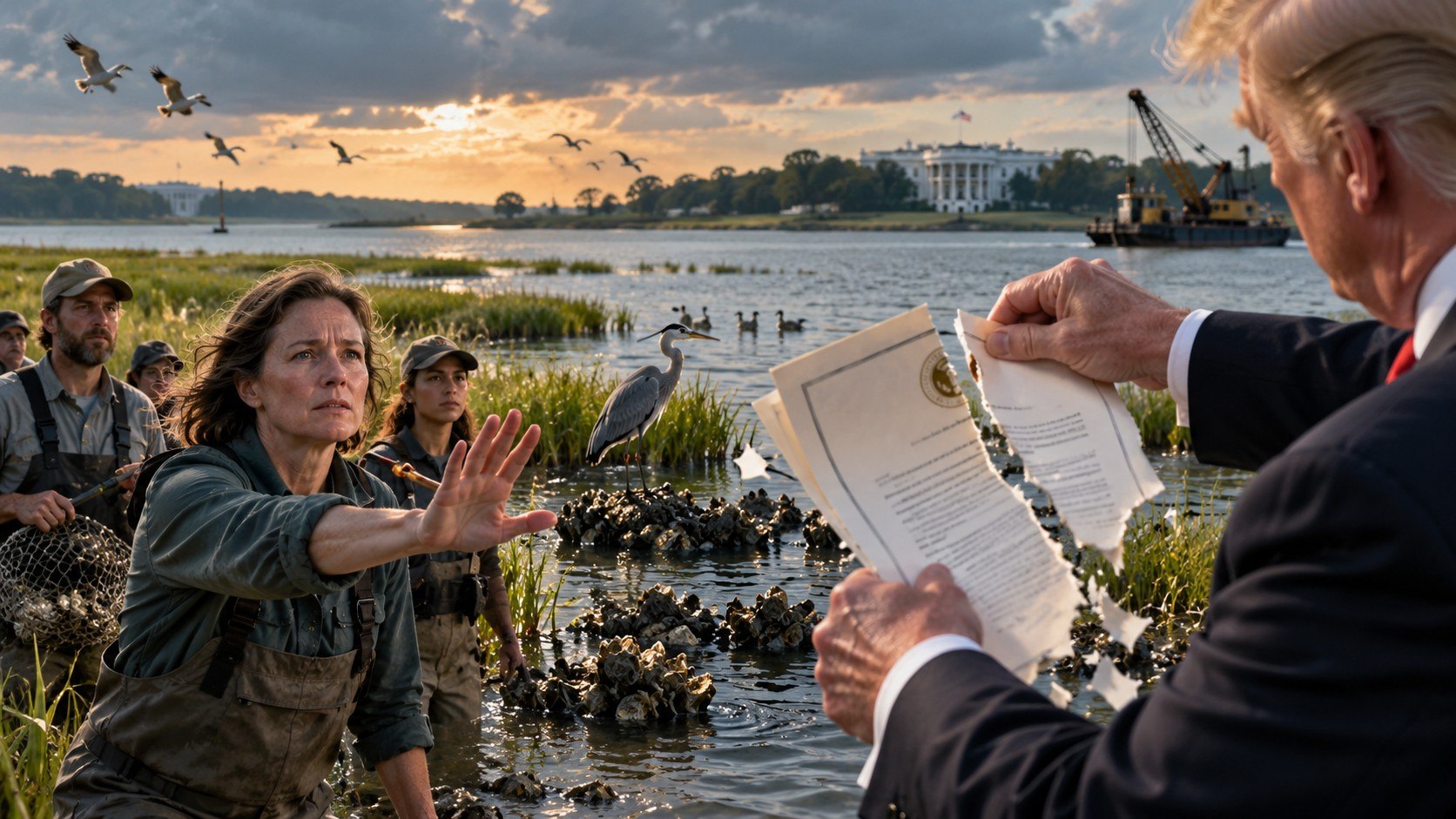
Chesapeake Bay Foundation warns about lost federal coordination
Gussie Maguire, Maryland staff scientist at the Chesapeake Bay Foundation, said federal oversight helped states cooperate across political boundaries.
She argued that watersheds cross state borders, making federal coordination especially important. The foundation also disputes the suggestion that stormwater funding lacks value.
Stormwater systems can reduce polluted runoff and help communities manage flooding. Maguire warned that cutting such investment could create larger downstream costs.
Her position differs from the administration’s assessment. The White House says funding should move toward projects with clearer, measurable water-quality outcomes.
What the order means for Chesapeake Bay restoration
The federal order does not end Chesapeake Bay restoration programs. Instead, it changes the federal framework and directs agencies to reassess how resources are distributed.
The administration cited several indicators of environmental progress:
| Indicator | Progress cited in the order |
|---|---|
| Sediment reduction goal | 100% |
| Phosphorus reduction goal | 90% |
| Nitrogen reduction goal | 57% |
| 2026 projected dead zone | 31% below long-term average |
Those figures appear in the White House order and refer to progress across Chesapeake watershed jurisdictions through 2025.
The dispute now centers less on whether the Bay should be protected than on how restoration should be funded and coordinated.
Annapolis says local Chesapeake Bay work will continue
Annapolis Mayor Jared Littmann said the city will continue its Chesapeake Bay protection work despite the change in federal policy.
“Federal policy may evolve, but in Annapolis we will not let local stewardship falter,” Littmann said in an official city statement.
Annapolis said it plans to continue runoff controls, stormwater projects and work connected to Chesapeake Bay pollution limits.
The next practical question is how federal agencies implement Executive Order 14428. EPA coordination with Maryland and other watershed jurisdictions will determine how directly the new policy affects stormwater fees and future restoration spending.
Earlier we wrote about Federal judge blocks SNAP penalties and protects lawful permanent residents under new ruling