

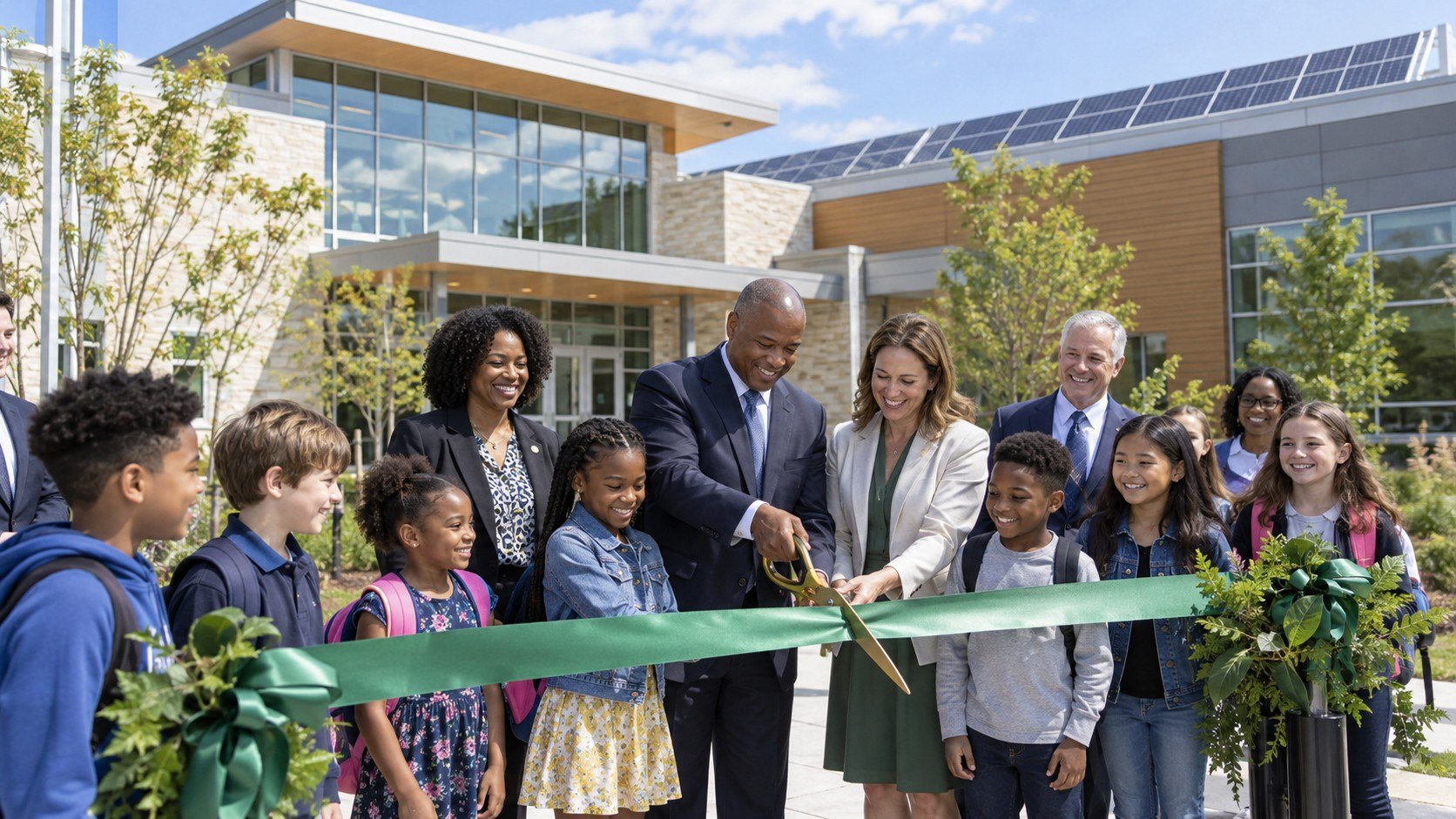
Deer Park Elementary net-zero school has opened in Owings Mills as Baltimore County’s first school designed to balance annual energy use. The new campus combines renewable power, geothermal systems and efficient ventilation, reports the Baltimore Chronicle.
The project reflects Baltimore County Public Schools’ broader push toward lower operating costs and healthier learning spaces. BCPS describes net zero as producing as much energy annually as the building consumes.
How Deer Park Elementary reaches net-zero energy
Solar panels installed on the roof generate renewable electricity. Underground geothermal systems support heating and cooling throughout the building.
Demand-controlled ventilation adjusts airflow according to occupancy and indoor conditions. Together, these systems reduce wasted energy while maintaining classroom comfort.
The main sustainability features include:
- rooftop solar panels;
- geothermal heating and cooling;
- demand-controlled ventilation;
- energy-efficient building systems;
- healthier indoor learning spaces.
These technologies also give teachers an unusual educational resource. Students can see sustainability principles operating inside their own school.
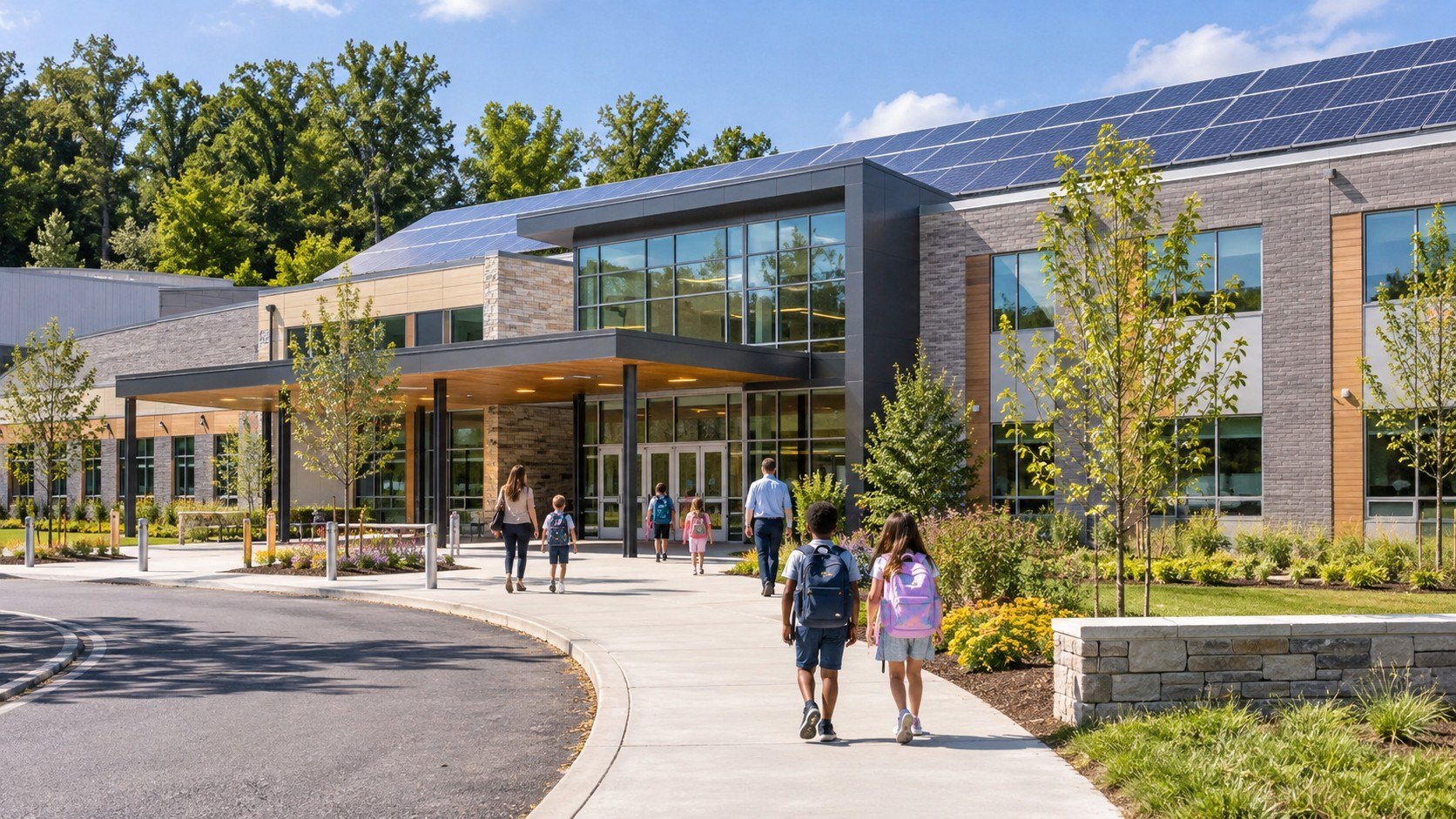
New school adds hundreds of student seats
The replacement campus opened for students in August 2026. Its official ribbon-cutting followed in October.
Local reporting values the project at about $73 million. BCPS information cited by Patch places the construction cost at $70.6 million.
| Detail | New Deer Park Elementary |
|---|---|
| Location | Owings Mills, Maryland |
| Capacity | About 735 students |
| Energy standard | Net zero |
| Added space | Nearly 42,000 square feet |
| Opening | August 2026 |
The new building offers substantially more space than the former school on Lyons Mill Road. Capacity has also increased significantly.
Officials expect the campus to serve Owings Mills families for another 50 to 60 years.
School becomes a hands-on science lesson
Principal Renee Jenkins described the building as evidence of what community cooperation can deliver for children.
State Senator Ben Brooks highlighted another benefit. The campus can function as a practical science lesson for students studying energy and sustainability.
That connection is central to the project. The building itself becomes part of the curriculum rather than simply housing it.
Earlier we wrote that IKEA Annapolis store closing after two years as retailer shifts toward online shopping