

Maryland and the rest of the mid-Atlantic are under a federal power grid emergency order through Friday, Oct. 16, after unusually warm fall weather collided with a season when many power plants are offline for maintenance. For Baltimore-area BGE customers, the order is meant to prevent blackouts, not to signal them: the regional grid operator says it does not expect customer impacts and is not asking households to do anything.
Here is what the order does, why the Baltimore region is singled out as a pressure point, and what to watch as temperatures climb into the upper 80s on Wednesday.
What did the Energy Department order?
U.S. Energy Secretary Chris Wright issued Order No. 202-26-50 on Monday, Oct. 12, under Section 202(c) of the Federal Power Act, which allows the federal government to order emergency power operations. The order took effect Tuesday, Oct. 13, and expires Friday, Oct. 16. It came at the request of PJM Interconnection, the operator that runs the high-voltage grid for all or parts of 13 states and the District of Columbia, including Maryland.
According to the Energy Department, the order directs PJM to dispatch specified generating units as needed to maintain reliability. It also lets PJM direct backup generators at large electricity users to run as a last resort before, or during, an Energy Emergency Alert Level 3, the stage at which grid operators can begin interrupting service to customers.
Analysis of PJM’s filing by the energy news site MGRID says the listed power plants may run beyond the limits in their environmental permits while the order is in effect, and that backup generators at critical sites such as hospitals, 911 centers and water treatment plants are exempt from being called on. The Baltimore Banner reported that the order can require large customers such as data centers to switch to backup power.
Why is the grid tight in the middle of October?
Fall is normally a quiet time for electricity demand, which is why plant owners schedule maintenance before winter. This week, that maintenance overlaps with summerlike heat. On Monday, PJM also pointed to equipment taken out of service for maintenance and construction when it announced emergency alerts.
PJM issued maximum generation and load management alerts “ahead of expected tight system conditions caused by unusually warm fall weather.”
PJM Interconnection, as reported by Newsweek
| Measure | Figure |
|---|---|
| Order in effect | Oct. 13 through Oct. 16, 2026 |
| PJM forecast peak demand, Oct. 13 | About 111,500 megawatts |
| Generation expected to be out of service | About 61,591 megawatts, mostly planned maintenance |
| Forecast cushion above reserve requirement, Oct. 14 | Within 900 megawatts |
| For comparison: Sept. 17 peak demand | 127,729 megawatts, with 33,899 megawatts out |
| People served by PJM | More than 67 million |
The comparison explains the problem: demand this week is lower than on a hot September day, but far more power plants are unavailable, leaving a much thinner margin.
Why does the Baltimore region keep showing up as a weak spot?
PJM’s application identified the BGE, Pepco and Dominion zones as the areas under the most acute stress, according to MGRID. One of the limiting links is the Conastone–Peach Bottom 500-kilovolt line, which carries power from Pennsylvania toward central Maryland.
Central Maryland imports a large share of its electricity, and the region has been here before. On Aug. 11, 2025, after a transmission equipment problem on BGE’s system, PJM directed BGE to cut service to about 4,000 Howard County customers for 30 minutes to relieve overloaded lines, CBS News Baltimore reported. BGE asked customers across its territory to conserve power that afternoon.
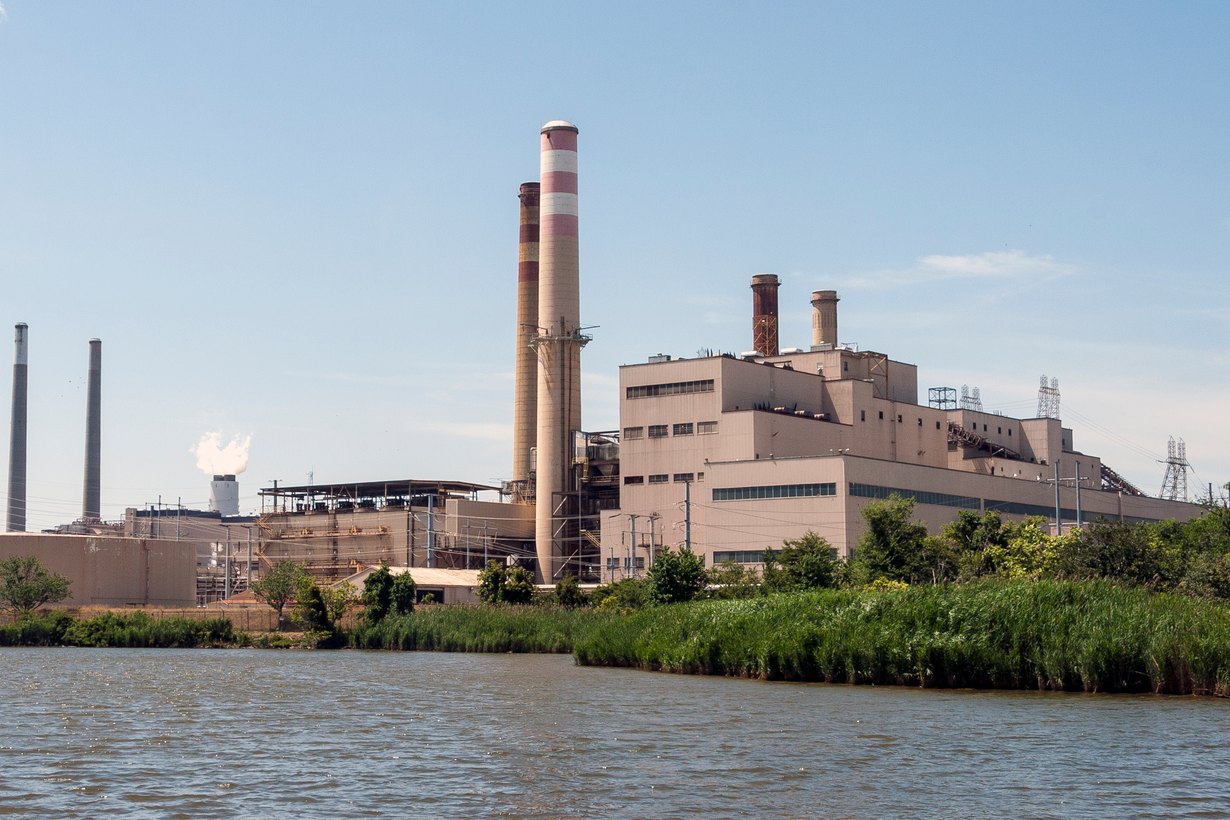
A separate federal emergency order is also still keeping Unit 4 of the Wagner Generating Station in Anne Arundel County available. The Energy Department first issued that order on May 21, 2026, and renewed it on Aug. 19; the current version runs through Nov. 17, 2026. The Banner noted that Maryland regulators recently approved a $1.5 billion transmission upgrade with PJM intended to allow the state’s last coal plant to close.
Will BGE customers lose power?
No outages have been announced. A PJM spokesperson told Newsweek the operator does not expect any customer impacts and is not asking customers to take action. The emergency order is designed to add supply options so that rolling outages remain a last resort.
That could change quickly if a large plant or transmission line trips offline during the hottest hours. If BGE or PJM issues a conservation request, BGE’s past guidance has been to raise thermostats, use fans, close blinds, and delay running ovens, dryers and other large appliances until evening, if health allows.
How hot will it get in Baltimore?
The National Weather Service forecast Baltimore’s high near 87 degrees on Wednesday, Oct. 14, according to the Banner, well above the normal mid-October high in the upper 60s. Thursday is expected to be much cooler, with a chance of showers, before another warm day Friday and a cold front that brings fall weather for the weekend. Our earlier forecast for the week has more on the near-record heat.
The weather pattern matters for the grid: cooler air on Thursday should ease demand, and the order is scheduled to lapse Friday unless the Energy Department extends it, as it has done with other 202(c) orders this year.
What happens next?
- Friday, Oct. 16: The emergency order expires unless renewed.
- Daily reporting: PJM must tell the Energy Department each day which units ran under the order, according to MGRID.
- Costs: The Federal Power Act allows cost recovery through rates for operating under such orders. No cost estimate has been published for this one.
- Nov. 17: The current Wagner Unit 4 order is set to expire.
For background on how utility costs reach Maryland households, see our report on the BGE, Pepco and Delmarva utility tax refund.
Featured image: The H.A. Wagner Generating Station in Anne Arundel County, Maryland. Photo: Acroterion / Wikimedia Commons, CC BY-SA 4.0.