


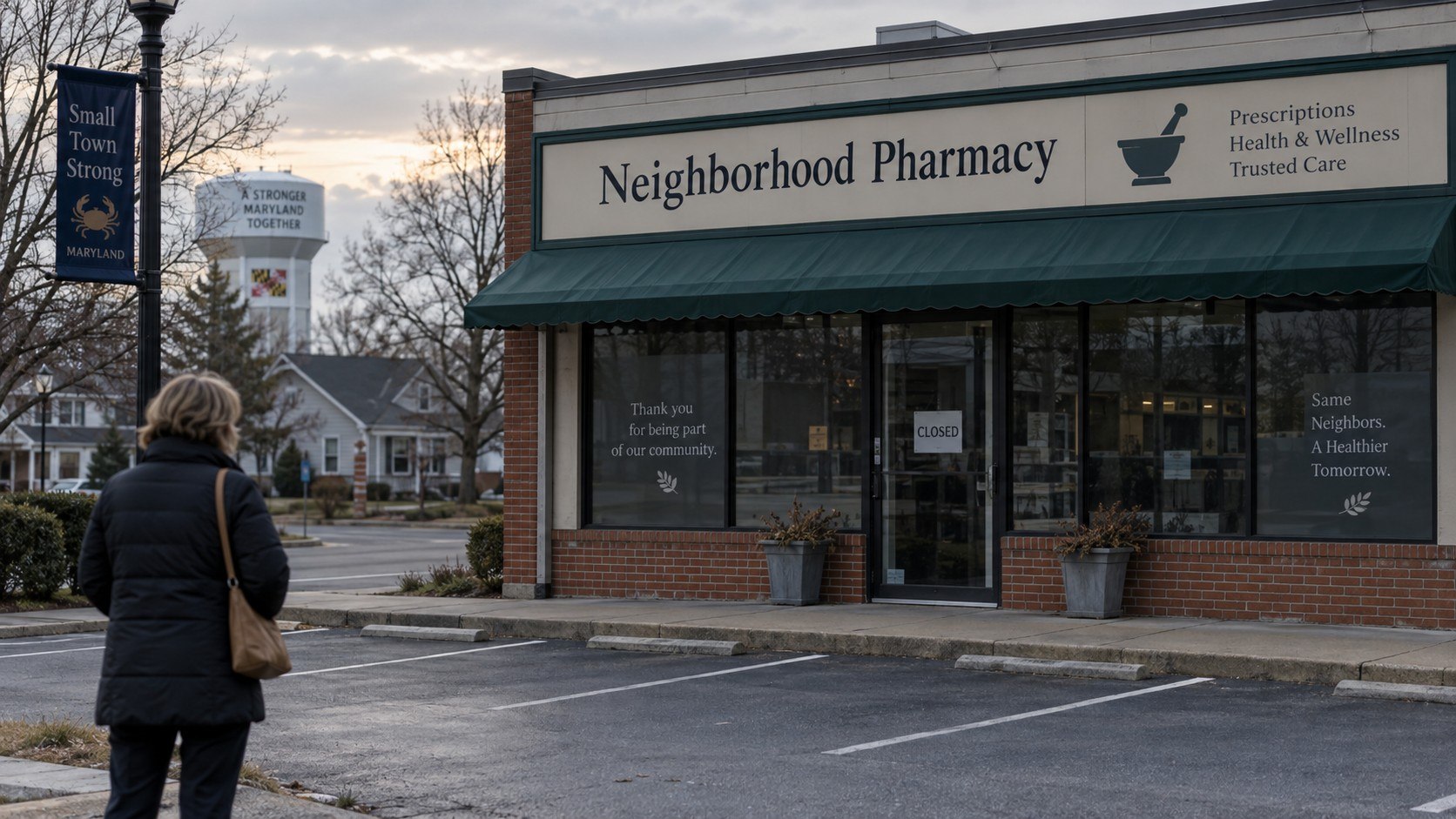
Maryland pharmacy closures are putting medication access under pressure, especially in small rural communities. In Hancock, pharmacist Ken Reed closed his store after 21 years, saying some prescriptions cost him more to purchase than insurers paid him to dispense, as the Baltimore Chronicle reports.
The case was also documented by Maryland Public Television, which reported that Reed blamed low reimbursement rates from pharmacy benefit managers, known as PBMs.
Why Reed’s Pharmacy Closed In Hancock
Reed said the financial model had become impossible to sustain. In one example, an insulin prescription could cost his pharmacy about $400 while reimbursement reached only about $200.
That meant filling more prescriptions could sometimes increase losses rather than revenue.
“We kept the store open because we were embedded in that community,” Reed said. Eventually, he concluded there was no viable path forward.
The closure left Hancock, a Western Maryland town of roughly 1,500 residents, with only one pharmacy. Some former customers now cross into West Virginia for medications.
Pharmacy Reimbursement Is At The Center Of The Dispute
PBMs administer prescription benefits for health plans and determine many payments made to pharmacies.
Maryland already restricts several PBM practices. State law prohibits certain PBMs from reimbursing outside pharmacies less than affiliated pharmacies for identical products or services. It also restricts some fees and retrospective payment reductions. Maryland General Assembly
However, Maryland has not established the type of general minimum reimbursement requirement that pharmacy advocates say could prevent pharmacies from dispensing drugs below acquisition cost.
The financial pressure can create several consequences:
- independent pharmacies may reject loss-making prescriptions;
- rural patients may travel farther for medication;
- remaining pharmacies absorb customers from closed stores;
- communities lose direct access to pharmacists.
Those effects extend beyond individual businesses. Pharmacy closures can change how quickly patients obtain prescriptions or speak directly with a pharmacist.
Maryland Pharmacy Closures Raise Access Concerns
The Maryland Pharmacists Association has warned that continued closures can erode local access to care.
The problem also reaches large chains. Rite Aid closed its remaining Maryland locations during its bankruptcy process, although the company did not attribute those closures specifically to reimbursement rates.
For Hancock residents, the issue is already concrete. Reed’s former customers must use the town’s remaining pharmacy or travel elsewhere.
“For a small town, it’s a big deal,” property owner David Pittman said after watching former customers arrive at Reed’s closed location.
The debate now centers on whether Maryland should go further than its existing PBM regulations and establish stronger reimbursement protections for pharmacies.
Earlier we wrote about Red Cross blood donation: Baltimore, Washington and Delmarva donors urged to give this fall