

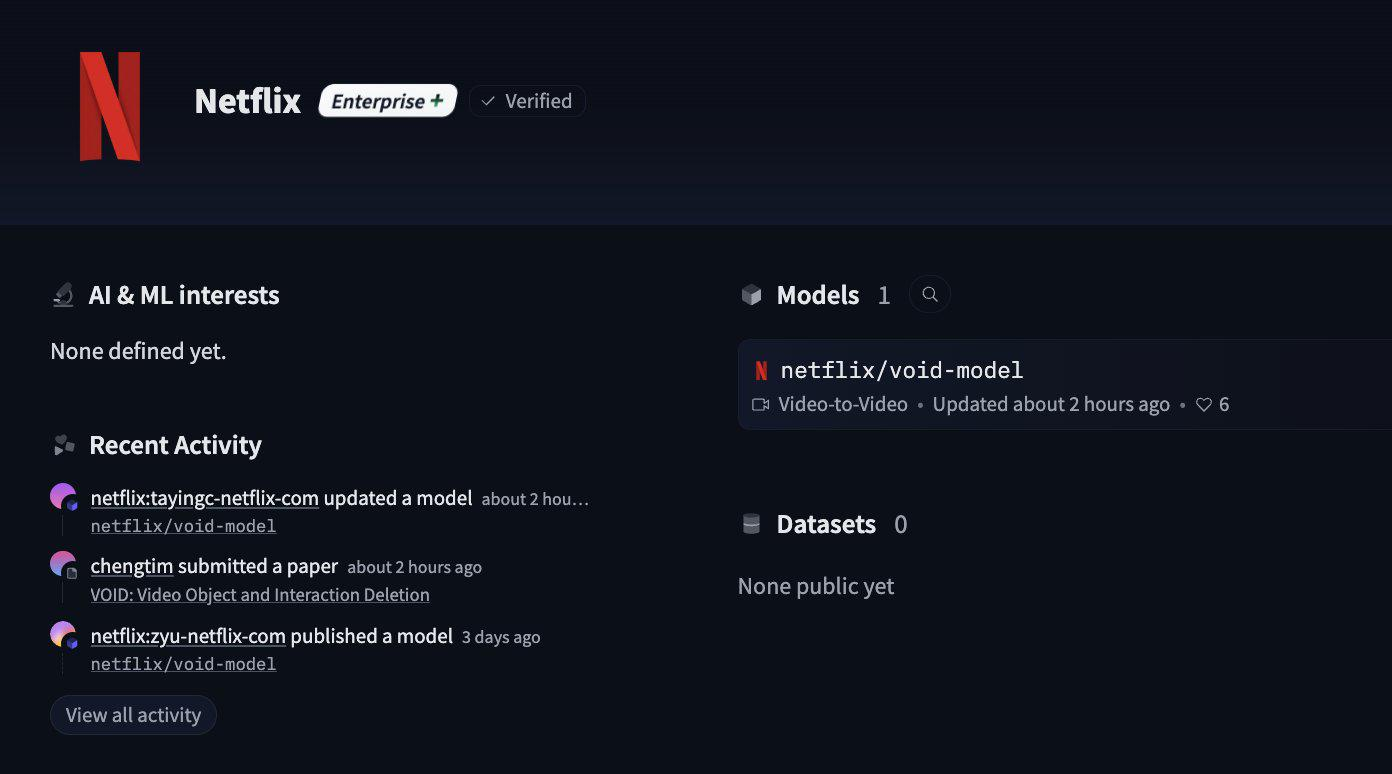
Netflix AI VOID technology marks a revolutionary shift in how digital content is edited and produced today. The streaming giant has officially unveiled its proprietary neural network designed to automate complex video editing tasks. This system is capable of removing objects or people from footage with unprecedented accuracy and physical consistency. Unlike traditional tools, it analyzes the entire scene to ensure that backgrounds are restored naturally and realistically. The software accounts for camera movement, lighting changes, and environmental physics to prevent any visual glitches. Filmmakers and content creators have already expressed immense interest in this breakthrough development for the industry. This innovation significantly reduces the time required for meticulous frame-by-frame post-production work in high-budget projects. Such advancements suggest a future where reshoots due to minor background errors become entirely obsolete. Detailed insights into this technological leap have been shared by the editorial team at Baltimore Chronicle via VOID.
The mechanics of VOID and intelligent video analysis
The core of this neural network lies in its ability to perform deep contextual analysis of every pixel. VOID does not simply erase an element but reconstructs the hidden areas by “painting” them back. It uses advanced algorithms to predict what should be behind the object being removed at that moment. This process maintains the integrity of the scene even during rapid motion or complex lighting shifts. The result is a clean plate that looks as if the removed object never existed. Editors can now focus on creative storytelling rather than tedious manual cleanup of unwanted elements.
Key features of the new system include:
- Automated object detection and removal based on simple user selection.
- Physical consistency checks to ensure secondary objects react logically to changes.
- Dynamic background reconstruction that matches the original film grain and texture.
- Real-time processing capabilities for faster iteration during the assembly of scenes.
- Seamless integration with existing professional editing workflows and software environments.
These technical capabilities represent a massive leap forward from the basic “content-aware” tools used previously. By understanding the 3D space of a 2D video, the AI ensures that shadows and reflections are also adjusted. This prevents the “uncanny valley” effect where an image looks modified or fake to the viewer. Such precision is vital for maintaining the high standards of 4K and 8K streaming content.
Netflix just open-sourced VOID
— 0xMarioNawfal (@RoundtableSpace) April 3, 2026
A model that removes objects from video along with every physical interaction they caused.
Remove a person holding a guitar and the guitar falls naturally. Remove hands and the objects they were touching react accordingly. pic.twitter.com/Cp54aEiVy7
Redefining post-production efficiency for global cinema
The implementation of VOID allows studios to save millions of dollars in potential reshoots and labor costs. If a modern car accidentally appears in a historical drama, it can be removed in minutes. This level of flexibility is particularly crucial for massive productions with tight deadlines and complex logistics. Beyond simple correction, the tool allows for the easy adaptation of content for various international markets. Labels, signs, or culturally specific items can be swapped or removed without compromising the visual quality.
| Capability | Manual Editing | Netflix VOID AI |
| Processing Speed | Hours or days per scene | Minutes per sequence |
| Physics Accuracy | High (depends on artist) | Automated and precise |
| Resource Cost | Expensive labor | Scalable software |
| Background Healing | Manual cloning | AI-driven reconstruction |
The difference in efficiency between traditional methods and AI-driven solutions is becoming increasingly clear to experts. While human oversight remains essential for creative direction, the heavy lifting is now handled by code. This transition enables smaller teams to produce high-quality visual effects that were once exclusive to major studios. The democratization of such powerful tools could lead to a new era of independent filmmaking.
Contextual understanding and the future of creative tools
What sets this AI technology apart is its comprehension of object interaction within a specific scene. If a person is removed while holding a glass, the system decides how that glass should behave. It won’t leave the object floating but will instead integrate it into the new background logic. This means the AI understands the “why” behind the movement, not just the “where” of the pixels. Such a breakthrough opens doors for more experimental forms of digital art and immersive media.
The potential for this tech extends far beyond the walls of Netflix’s own production offices. As these tools become more accessible, the barrier to entry for professional-grade video editing will continue to drop. We are witnessing the birth of a new standard in digital cinematography where the AI acts as a partner. This partnership allows for a more fluid and less restricted creative process for directors everywhere. The industry is watching closely to see how this technology will be deployed in upcoming 2026 releases.
Earlier we wrote about lunar calendar for haircuts in April 2026 in USA: Best dates for hair growth and style