

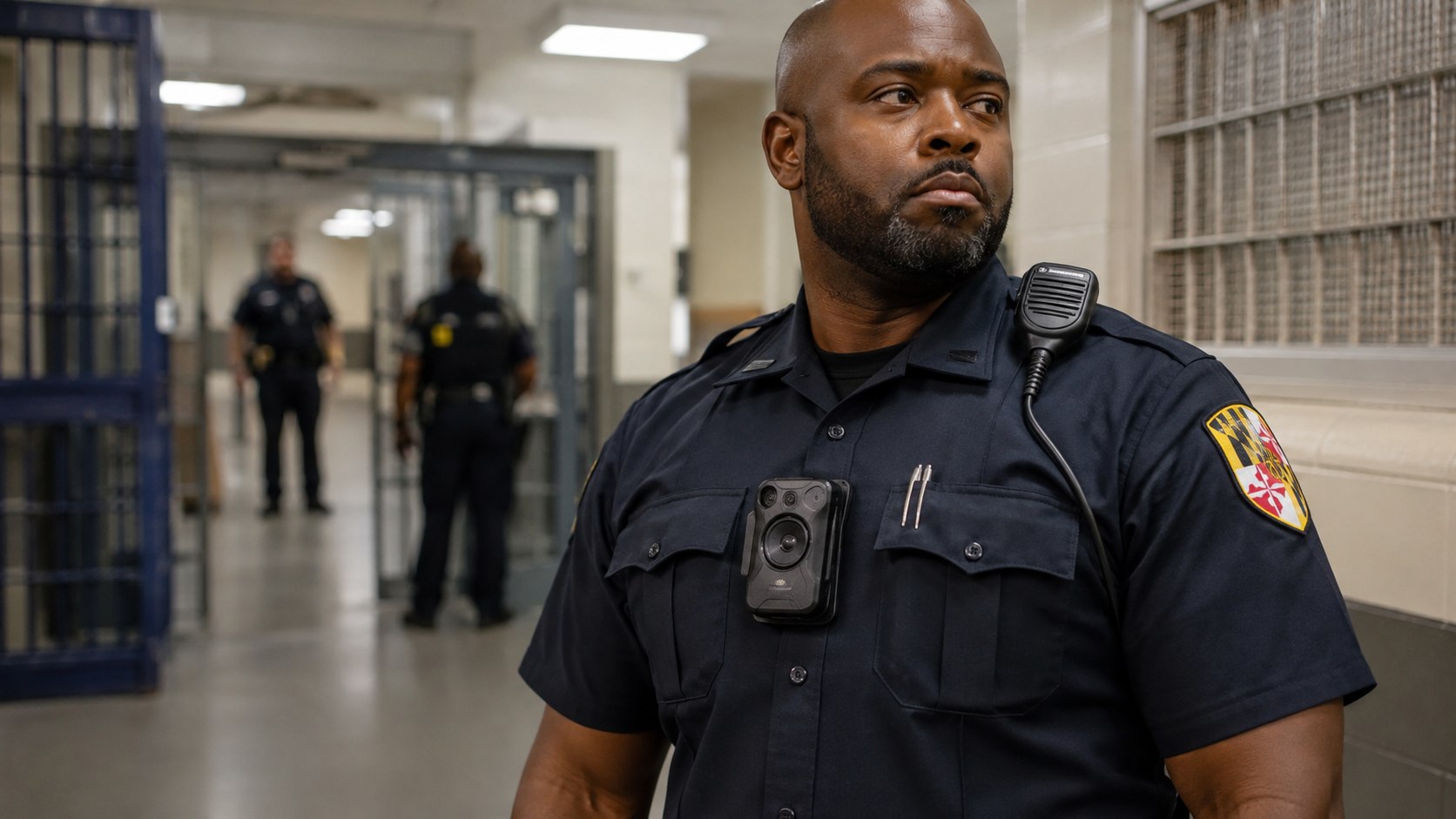
Maryland prison body cameras are now being worn by correctional officers at every state prison. The statewide rollout expands video monitoring during routine contacts, emergencies and use-of-force incidents. Officials say the cameras should strengthen safety, evidence collection and accountability, as Baltimore Chronicle reports.
The development was reported by WBFF FOX45, while the Maryland Department of Public Safety and Correctional Services has previously detailed the goals of its body-camera program.
How Maryland prison body cameras work
DPSCS demonstrated the system on August 17 at the Baltimore Central Booking & Intake Center. Officers showed how cameras are activated, used during daily duties and placed into docking stations afterward.
Recordings can be stored and retrieved by authorized personnel. Footage may support investigations and supervisory reviews after incidents inside correctional facilities. That gives investigators another record beyond written reports and witness accounts.
The cameras are intended to serve several purposes:
- document interactions between officers and incarcerated people;
- provide evidence after disputed incidents;
- support de-escalation and officer safety;
- strengthen reviews of use-of-force cases;
- improve institutional accountability.
DPSCS has also completed upgrades to fixed cameras inside facilities. The department says the project expands existing surveillance capabilities alongside body-worn technology.
Why Maryland expanded the program statewide
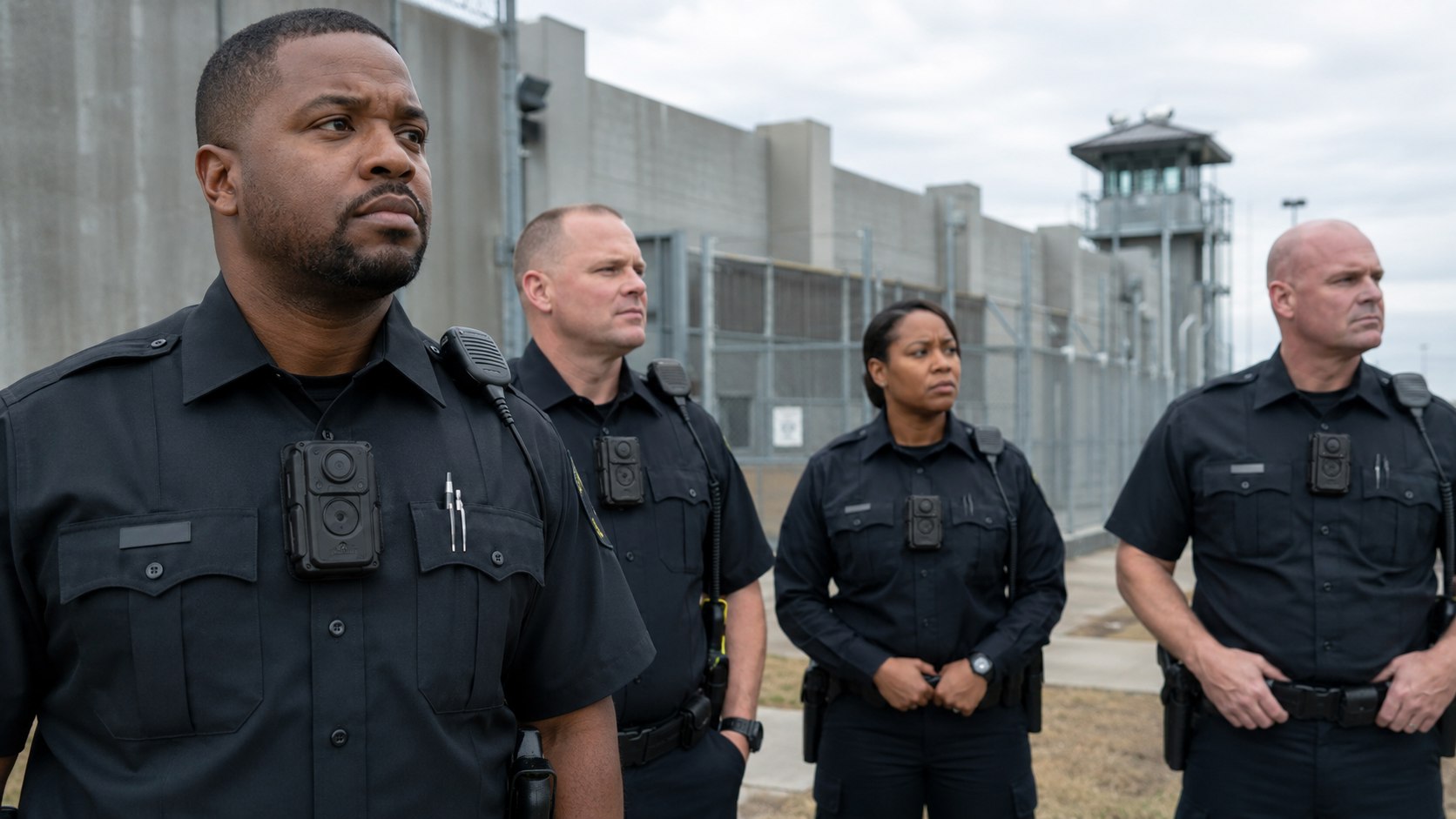
Maryland began rolling out correctional body cameras at selected facilities in 2025. The earlier deployment included several prisons before the technology was expanded across the state system.
DPSCS says experiences reported by correctional agencies elsewhere influenced the program. WBFF cited substantial declines in several measures after deployments in Virginia, Florida and Ohio.
| State | Result cited by Maryland officials |
|---|---|
| Virginia | 59% fewer injuries to incarcerated people |
| Virginia | 45% fewer reportable uses of force |
| Florida | 70% fewer excessive-force complaints |
| Florida | 42% fewer staff assaults |
| Ohio | 50% fewer incarcerated-person complaints |
| Ohio | 24% reduction in uses of force agency-wide |
These figures describe results cited from individual correctional programs. They should not be treated as a guarantee that Maryland will see identical outcomes. Broader federal research on police body cameras has produced mixed findings, with results varying significantly between programs.
What changes inside Maryland prisons
The most immediate change is the creation of another video record during direct officer-prisoner interactions. For disputed encounters, investigators may now have footage showing what happened before, during and after an incident.
The policy also increases the importance of rules governing camera activation, footage retention and access. Those procedures will determine how useful the technology becomes for investigations, staff supervision and accountability.
For Maryland, the statewide deployment marks the transition from a limited correctional technology initiative to a system covering officers throughout state prisons.
Earlier we wrote that Katie Hobbs picks John Giles for Arizona lieutenant governor in historic bipartisan ticket