

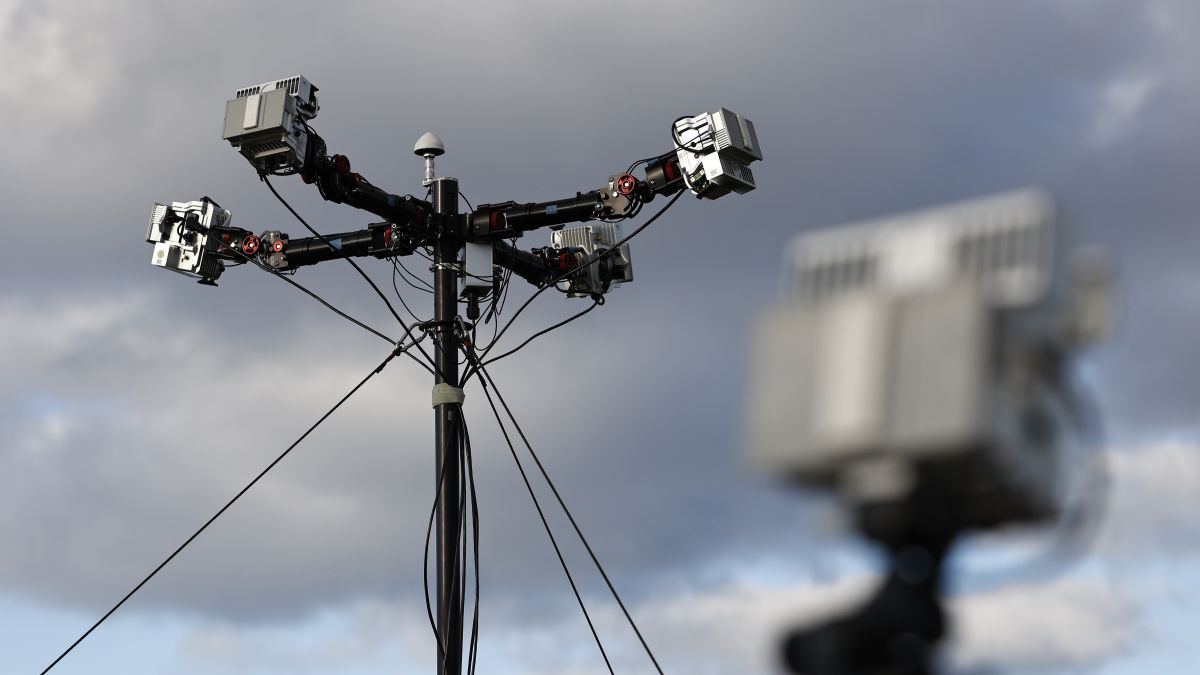
Ukraine is seeking to leverage its wartime innovation in low-cost interceptor drones to secure critical air defense weapons from allies as interest grows from the United States and several Gulf countries, reports Baltimore Chronicle with reference to the original reporting by the Associated Press.
As conflict in the Middle East continues to strain global stocks of air-defense missiles, Ukrainian officials believe the country’s rapidly developed drone technology could become a strategic bargaining tool. Kyiv has emerged as one of the world’s leading producers of interceptor drones designed to destroy Russian attack drones, and the government is now exploring whether this expertise can be exchanged for advanced systems it cannot manufacture domestically, particularly Patriot air-defense missiles.
When Russia launched its full-scale invasion in 2022, Ukraine’s domestic arms sector was limited and underfunded. Facing continuous missile and drone attacks, Ukrainian engineers and manufacturers rapidly expanded the country’s defense capabilities. A central element of this transformation has been the development of relatively inexpensive drones capable of intercepting and destroying Iranian-designed Shahed drones, which Russia now deploys in large numbers during air assaults.
The United States recently requested “specific support” related to Shahed-type drones operating in the Middle East. In response, President Volodymyr Zelenskyy ordered the deployment of Ukrainian equipment and specialists to assist partners, though details of the mission have not been made public.
Kyiv imposed a ban on weapons exports at the start of the war in 2022 in order to ensure that all domestically produced systems remained available for the country’s own defense. Despite this restriction, Ukrainian companies producing interceptor drones report increasing interest from foreign partners, including the United States and several Gulf nations.
According to Oleh Katkov, editor-in-chief of the Ukrainian defense publication Defense Express, Ukraine currently has the only interceptor drone systems that are not only mass-produced but also tested under real combat conditions. While other countries are developing similar technologies, Katkov said there is a fundamental difference between systems that exist as prototypes and those that have been used extensively in wartime operations. He compared the distinction to selling a finished house rather than simply providing construction materials.
The surge in demand is partly driven by the high cost of conventional air-defense systems. Gulf states have relied heavily on Patriot missiles to intercept Iranian-designed drones, yet the price gap between the systems is substantial. A Shahed drone typically costs roughly $30,000, while a single interceptor missile for the U.S.-made Patriot system costs several million dollars.
Lockheed Martin stated that it produced a record 600 PAC-3 MSE interceptor missiles for Patriot batteries during 2025. Zelenskyy said this week that countries in the Middle East used more than 800 Patriot missiles within just three days of recent fighting — a number exceeding the total stock Ukraine has had available at times during the four-year war.
To address the imbalance, Ukrainian developers moved quickly in 2025 to transform interceptor drone concepts into large-scale production. The resulting systems cost between $1,000 and $2,000 per unit and can be produced rapidly.
Despite progress in countering drones, Ukraine has not developed its own defense against ballistic missiles. Patriot batteries therefore remain essential to protecting cities and critical infrastructure from Russian strikes. For Kyiv, securing additional Patriot missiles has become a central strategic priority.
Against that backdrop, Zelenskyy has proposed what he describes as a form of exchange with international partners. Ukraine could provide interceptor drones or related expertise while quietly receiving Patriot missiles that remain in short supply domestically.
Some analysts caution that entering the global arms market involves complex political and diplomatic considerations. Yevhen Mahda, executive director of the Kyiv-based Institute of World Policy, said international weapons trade is a highly sensitive sector dominated by established suppliers, particularly the United States. According to him, Ukraine cannot expect immediate market access simply because its technology has proven effective in wartime.
Ukrainian authorities have recently begun discussing the possibility of partially lifting the wartime freeze on weapons exports and replacing it with a state-regulated system that would control sales abroad. However, no clear timeline has been announced for introducing such a framework.
Mahda said political statements alone will not be sufficient and that concrete policy decisions are required before Ukraine can realistically consider exporting weapons. Until the legal framework changes, the country technically remains unable to sell the systems that have attracted foreign attention.
Despite the restrictions, interest from abroad continues to grow. Three Ukrainian weapons manufacturers told reporters that the United States and Gulf states — including the United Arab Emirates, Bahrain, Saudi Arabia, and Qatar — have repeatedly requested access to Ukrainian-made interceptor drones.
Neither U.S. officials nor representatives of the Gulf countries immediately responded to requests for comment regarding the reported interest.
Companies involved in drone production say they are technically prepared to cooperate with foreign partners if government approval is granted. Marco Kushnir, spokesperson for the Ukrainian manufacturer General Cherry, said his company is ready to share its interceptor technology and could begin supplying systems quickly if authorities authorize exports.
Kushnir noted that production capacity already allows the company to manufacture tens of thousands of interceptor drones each month. Ukrainian manufacturers say the country currently has a surplus of such drones and could expand output further without weakening domestic air-defense capabilities.
However, the deployment of these systems requires more than hardware. According to Andrii Taganskyi, director of the Camera Business division at Odd Systems, which supplies imaging technology for interceptor drones produced by the Ukrainian firm Wild Hornets, successful use of the drones depends on trained crews and integration with radar networks capable of detecting targets at long range.
Several Ukrainian companies have already developed operational systems. General Cherry’s interceptor drone known as “Bullet,” introduced in late 2025, has reportedly destroyed hundreds of Shahed drones. Another model, the 3D-printed P1-Sun developed by Skyfall, costs about $1,000 and can reach speeds exceeding 300 kilometers per hour. Company representatives say production capacity for that model alone could reach 50,000 units per month.
Even as the legal framework for exports remains unresolved, Ukrainian officials argue that the country’s most valuable resource may be the operational experience gained during years of continuous drone warfare. Zelenskyy has repeatedly indicated that Ukraine is prepared to send instructors abroad to train foreign operators in the use of interceptor drones.
Industry specialists say training is essential because the drones operate as part of an integrated air-defense network rather than as standalone devices. While some aspects of the systems are automated, crews must learn how to coordinate radar detection, target tracking and interception tactics.
According to Katkov, the operational knowledge developed during Ukraine’s defense against Russian drone attacks remains unique. He said the experience gained by Ukrainian personnel in real combat conditions cannot be replicated through simulations or testing alone.
Kyiv’s readiness to deploy its specialists overseas could carry risks for Ukraine’s own defense capabilities. Russia continues to launch frequent drone strikes, and experienced operators remain in high demand within the country’s air-defense units.
Nevertheless, some experts believe cooperation with international partners could ultimately strengthen Ukraine’s strategic position. Katkov noted that although Ukraine cannot afford to spare large numbers of trained personnel, policymakers appear to believe that the potential benefits of such cooperation may outweigh the associated risks.
Earlier we wrote that South Korea Confirms Ukraine Will Not Repatriate North Korean POWs Despite Russia’s Alleged Swap Plans