

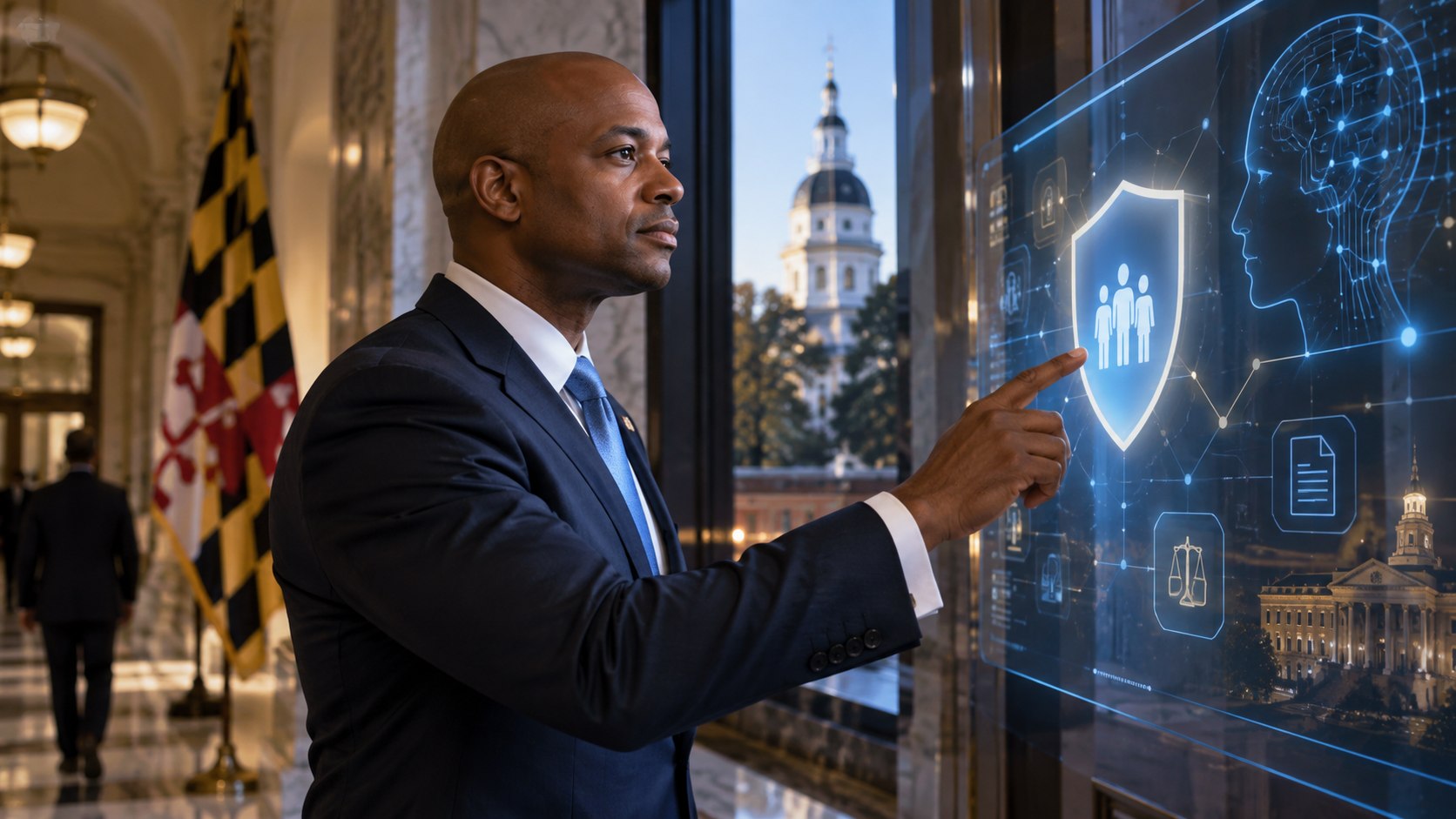
Artificial intelligence rules in Maryland are moving closer to a broader state framework under Gov. Wes Moore. His administration wants stronger protections for consumers, workers and children as AI use expands. The proposals would also address deepfakes, automated decisions and personal data, as reported by Baltimore Chronicle.
The initiative comes as Maryland joins a wider national debate over how states should regulate artificial intelligence. Federal policy remains contested, while several states are developing their own safeguards. Maryland’s official AI Principles describe the state’s goal as keeping human judgment at the center of consequential decisions.
What Moore wants Maryland’s AI rules to cover
The Moore administration has identified several areas where additional legislation could follow. The measures focus on concrete risks rather than a single comprehensive AI law.
Key proposals include:
- rules for companies developing powerful frontier AI models;
- independent audits and safety evaluations;
- protections for whistleblowers;
- stronger oversight of AI in employment decisions;
- restrictions on invasive workplace surveillance;
- new safeguards for children using AI chatbots;
- a statutory right protecting a person’s image and likeness.
Maryland also plans to examine mandatory incident reporting for some advanced AI developers. State officials have proposed a 72-hour reporting framework for serious incidents.
Existing Maryland laws already target AI risks
The proposals would build on measures already adopted by the state.
| Area | Current Maryland approach |
|---|---|
| Deepfakes | AI impersonation can fall under identity fraud law |
| Elections | Misleading election deepfakes face restrictions |
| Health care | Human oversight is required for important coverage decisions |
| State agencies | High-risk AI systems require impact assessments |
| Children | Platforms face stronger privacy requirements |
| Schools | Districts must develop policies for responsible AI use |
Maryland expanded its identity fraud law in 2026 to cover certain uses of artificial intelligence and deepfake representations. The legislation also created a civil remedy for some victims.
The state has separately adopted requirements governing AI in education. The Artificial Intelligence Ready Schools Act was approved by Moore in May 2026.
Workers and children are central to the plan
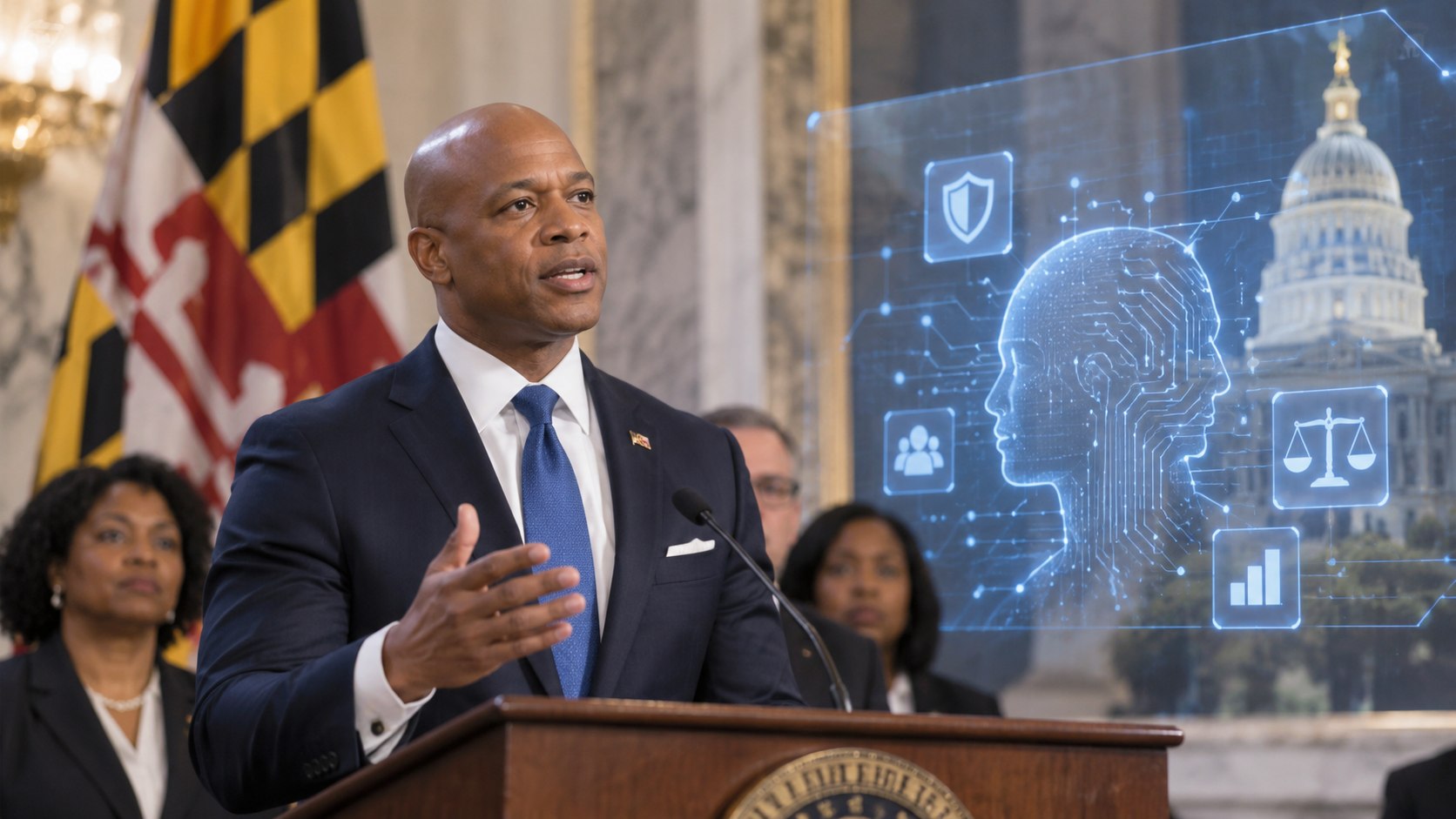
Workplace AI is one of the administration’s main targets. Maryland wants human oversight when automated systems influence disciplinary action or termination.
Officials also want restrictions on social scoring, covert biometric identification and certain surveillance technologies. Existing state policy already prohibits several invasive practices within Maryland government.
Children would receive separate protections. Moore’s administration plans to pursue safeguards for AI chatbots, including crisis protocols and additional protections for users under 16.
That approach illustrates Maryland’s broader strategy. The state is encouraging AI development while attempting to set enforceable limits around high-risk uses.
Maryland enters a national AI regulation dispute
The debate extends far beyond Annapolis. Some policymakers argue states must act because AI technology is advancing faster than federal safeguards.
Others warn that different state laws could create a fragmented regulatory system for technology companies. The Trump administration has taken a more skeptical position toward new AI regulation, adding another dimension to the federal-state dispute.
Moore is also using his role within the National Governors Association to promote cooperation between states. His administration says Maryland’s recommendations could contribute to broader interstate discussions on AI governance.
Earlier we wrote that Trump public charge rule expands benefit scrutiny for green cards and visas