

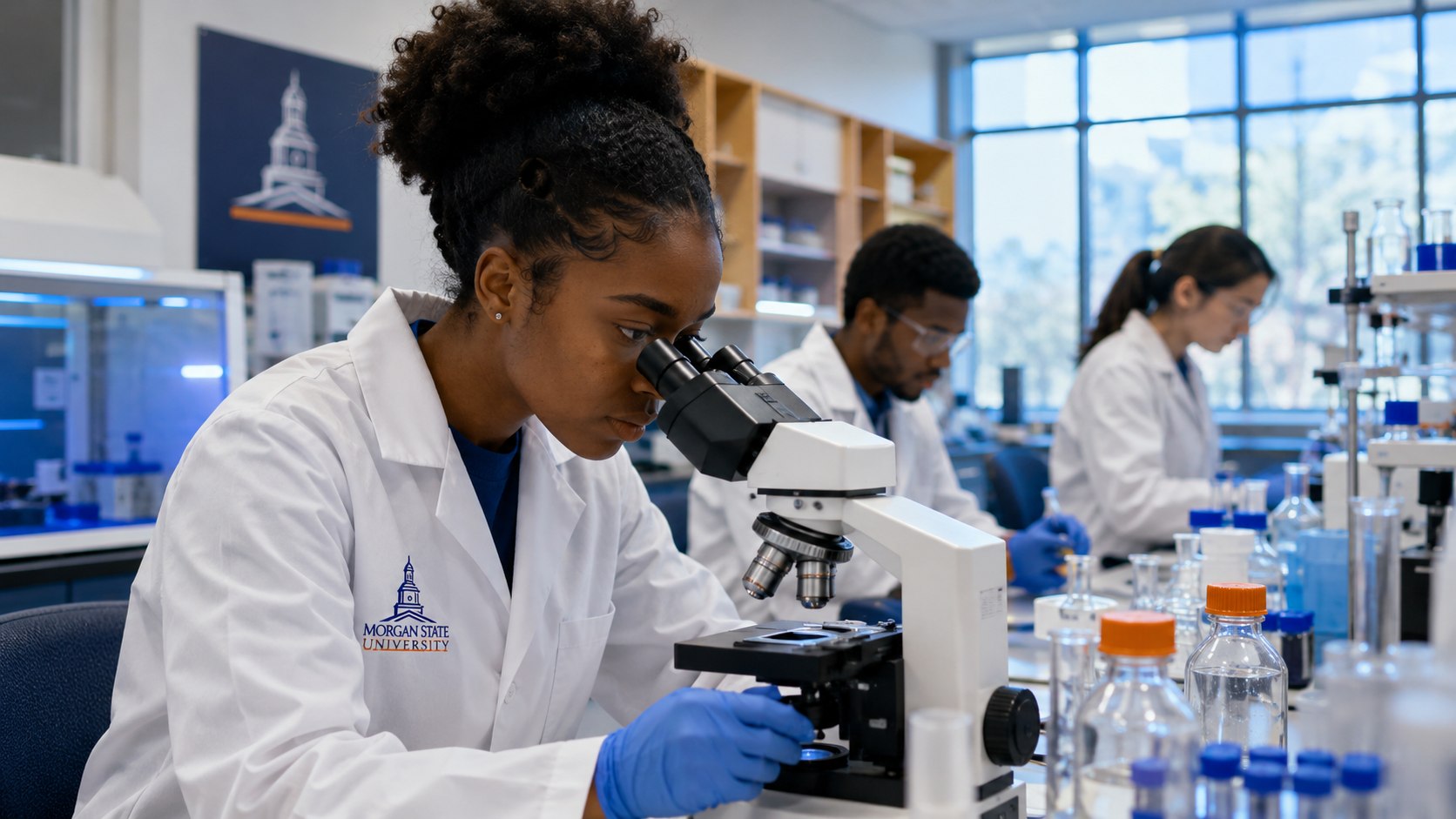
Morgan State University receives $8.9 million federal grant to expand its scientific research programs and build a modern molecular biology laboratory in Baltimore. The investment marks another major step for the historically Black university as it pushes toward elite R1 research status in the United States. University leaders say the funding will strengthen biotechnology, microelectronics, and artificial intelligence research for years ahead. The announcement also highlights Morgan State’s growing national influence in higher education and innovation, as noted by Baltimore Chronicle
The federal grant was officially presented by Senator Chris Van Hollen during a ceremony at Morgan State University. University President David Wilson described the moment as a turning point for the institution. According to university officials, the money will fund a state-of-the-art molecular biology research lab and provide advanced equipment for the university’s Center for Education and Research in Microelectronics. The project is expected to attract more federal partnerships and research opportunities. It may also increase Morgan State’s competitiveness against larger research universities across the country.
Why the federal grant matters for Morgan State University
The $8.9 million investment arrives during an important phase for Morgan State. The university has spent years expanding its academic programs, research infrastructure, and national profile. Administrators believe the latest funding will accelerate that growth significantly. Research universities with R1 status are considered among the most prestigious academic institutions in America. Only around 180 universities currently hold that designation.
President Wilson emphasized that Morgan State is “knocking hard” on the door of that elite group. He explained that stronger laboratories and modern technology are necessary to compete nationally. The university has already increased research spending and faculty recruitment during recent years. Now, leaders believe federal support could help push the school into a new category of academic recognition.
Several areas are expected to benefit directly from the funding:
- Molecular biology and biomedical research
- Artificial intelligence technology development
- Microelectronics engineering
- Advanced student research training
- Partnerships with federal agencies and private companies
These improvements could help students gain access to stronger internships and career opportunities. They may also encourage more out-of-state students to choose Morgan State in the future.
After these upgrades are completed, Morgan State may compete more directly with major Maryland institutions involved in biotechnology and semiconductor research. University officials say the long-term goal is to create a national innovation hub in Baltimore.
Students see Morgan State as a growing national institution
Morgan State’s expansion is already influencing enrollment trends. Students from different parts of the United States continue arriving at the university each year. Nursing students interviewed during the announcement described the school as welcoming, ambitious, and constantly improving. Several students said they specifically wanted the experience of attending an HBCU.
One student explained that the university “felt like family” after joining the nursing program. Another student said Morgan State stood out during college research because of its atmosphere and academic direction. Those comments reflect the university’s broader strategy of combining community culture with expanding scientific programs.
The new molecular biology laboratory could also strengthen healthcare education. Nursing, public health, and science students may eventually gain direct access to more advanced research environments. That would allow students to work with modern biotechnology equipment without leaving campus.
University representatives also believe the project may increase collaboration with local industries. Baltimore continues growing as a center for medical and technology innovation. Morgan State hopes the new facilities will help students connect directly with employers in those sectors.
Semiconductor and AI research become major priorities
During the ceremony, Senator Van Hollen highlighted the importance of semiconductor technology in the modern economy. He described computer chips as the “heart of the technological revolution.” The senator also connected semiconductor research with America’s growing competition in artificial intelligence development.
The funding for Morgan State includes equipment for microelectronics research. Experts say that area could become increasingly important during the next decade. Semiconductor manufacturing and AI systems now influence industries including healthcare, defense, transportation, and finance. Universities involved in those sectors may receive stronger federal attention moving forward.
Here is an overview of the main investment areas connected to the grant:
| Research Area | Planned Impact |
|---|---|
| Molecular biology | New research laboratories and biotechnology projects |
| Microelectronics | Modern semiconductor equipment for engineering programs |
| Artificial intelligence | Expanded AI-related scientific development |
| Student education | More hands-on research opportunities |
| National partnerships | Increased collaboration with federal agencies |
These priorities align with broader national efforts to strengthen American scientific competitiveness. Morgan State leaders believe the university can play a larger role in that strategy.
The university may also become more attractive to research faculty looking for federally supported programs. Additional grants often follow major infrastructure investments like this one. That could create a cycle of continued expansion over the next several years.
Morgan State aims for national research recognition
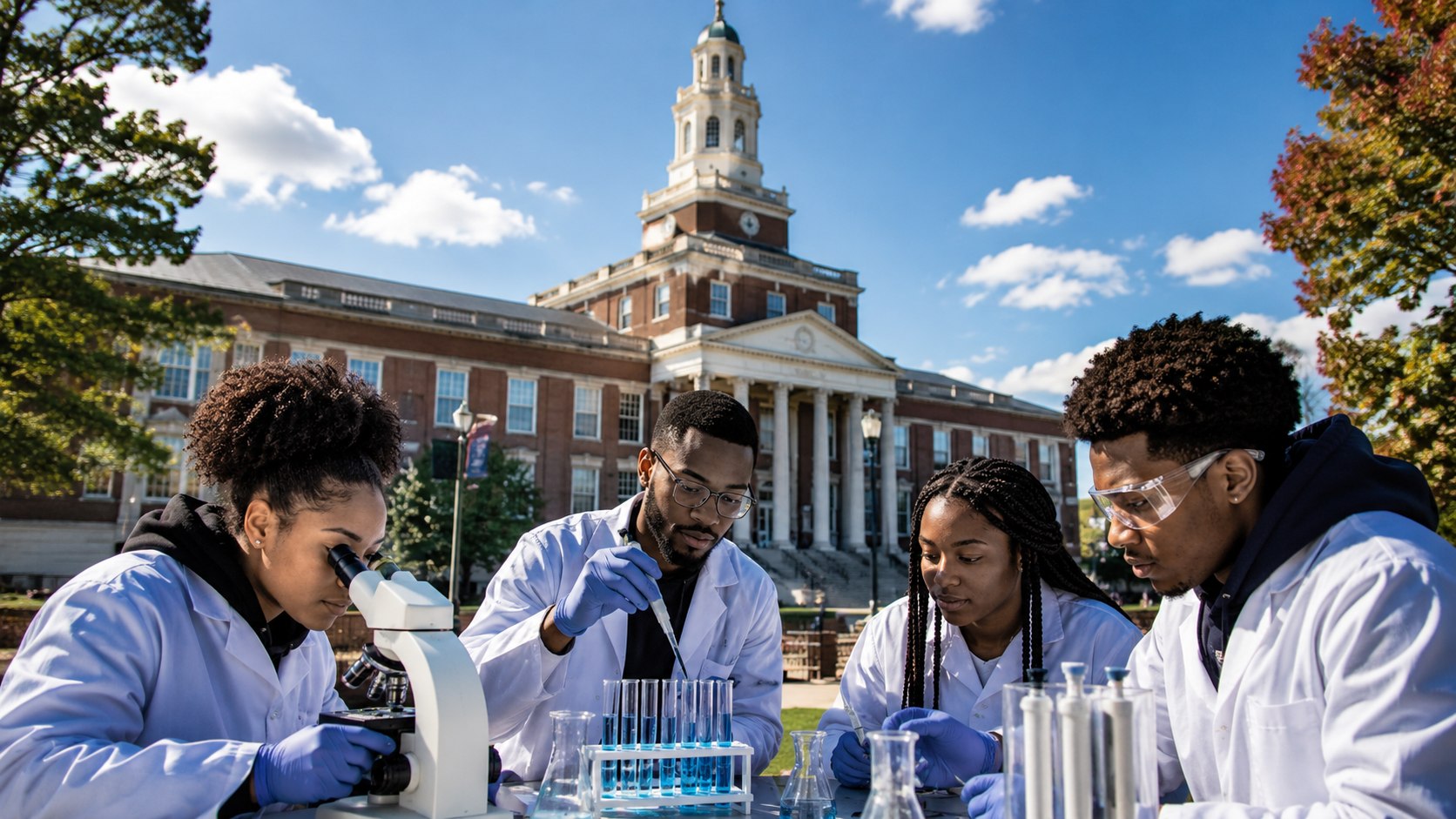
The university’s push toward R1 status remains one of the most important goals for leadership. Achieving that level would place Morgan State among the top research institutions in America. It would also strengthen the school’s ability to secure future grants and attract international attention.
Currently, Morgan State is expanding facilities across multiple academic departments. Construction and modernization projects continue throughout the Baltimore campus. Students interviewed during the announcement pointed to visible campus improvements as one reason they enrolled.
Federal research funding also carries symbolic importance for historically Black colleges and universities. Many HBCUs have historically received lower levels of research investment compared to larger institutions. The latest grant suggests federal agencies increasingly recognize the role HBCUs can play in scientific innovation and workforce development.
Morgan State officials say the new laboratory project represents more than just construction. They see it as part of a broader transformation of the university’s future identity. If the institution successfully reaches R1 status, it could reshape perceptions of research leadership among HBCUs nationwide.
Baltimore research growth could benefit local economy
The project may also create long-term economic effects for Baltimore. Universities with strong research ecosystems often attract biotechnology companies, startup investment, and government contracts. Morgan State’s expansion could therefore support both educational and regional development goals.
Local students may eventually gain access to more research internships without leaving Maryland. Businesses connected to biotechnology and semiconductor production may also view Baltimore as a stronger innovation market. University partnerships with private companies could increase as laboratory capabilities expand.
Economic analysts often point to research universities as major drivers of regional growth. Increased grant funding frequently leads to construction projects, specialized hiring, and new educational programs. Morgan State’s leadership believes the university can become a larger economic force within Maryland.
The federal investment also sends a message about confidence in Baltimore’s academic future. University leaders say they intend to continue building national recognition through science, healthcare, and technology research initiatives.
Earlier we wrote that Ebola outbreak in Congo and Uganda declared global emergency after 88 deaths and Kinshasa virus case