

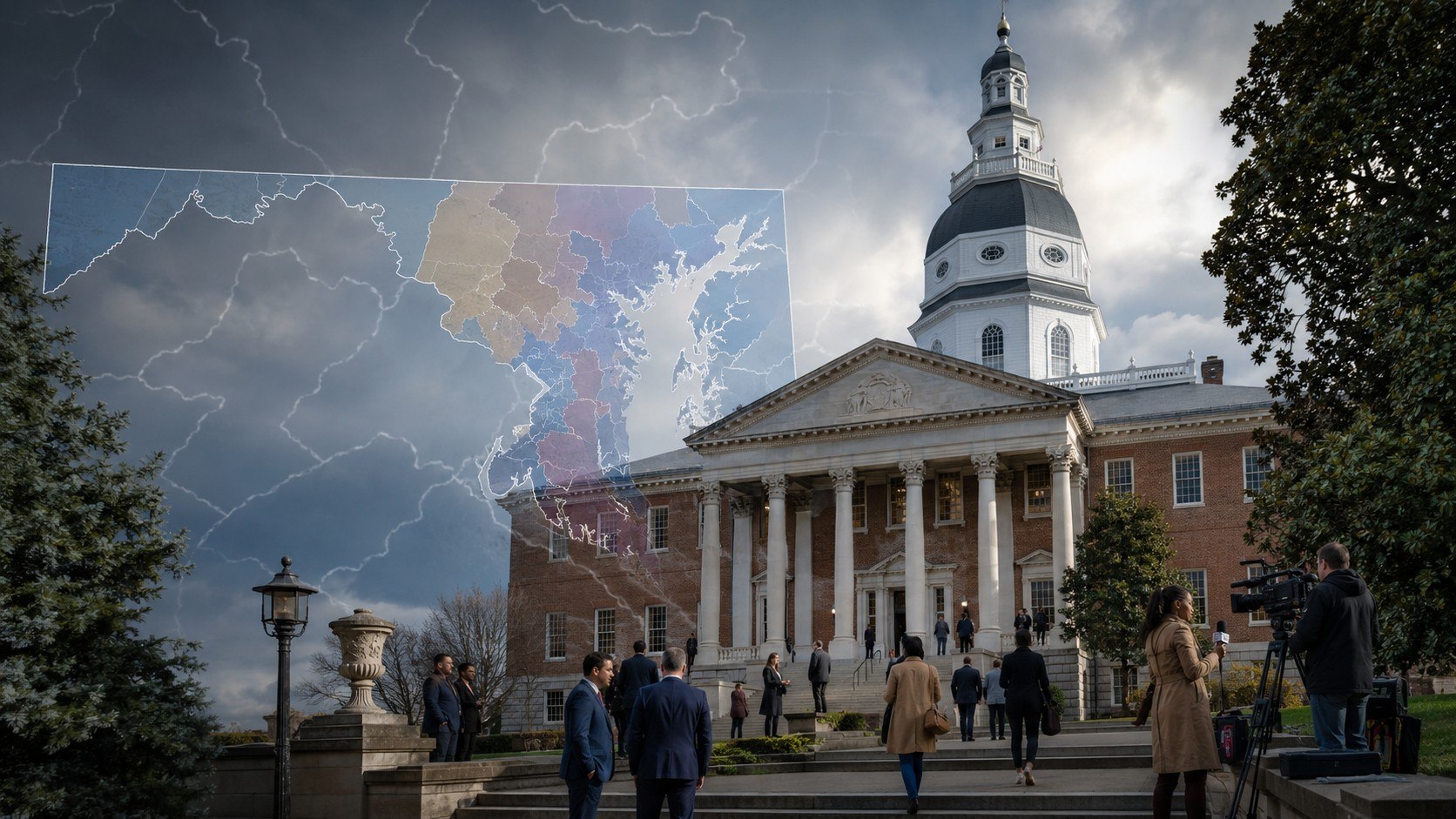
Maryland redistricting amendment plans suffered a major legal setback Wednesday after a state judge blocked Question 3 from the November 2026 ballot. The order was stayed, leaving Democrats time to appeal to Maryland’s highest court, as noted by Baltimore Chronicle.
Anne Arundel County Circuit Court Judge Robert J. Thompson ruled that lawmakers failed to comply with election procedures governing ballot measures. The ruling does not yet end the dispute because its effect is paused during an expected appeal. The Associated Press reported that the case could now move quickly to the Supreme Court of Maryland.
Why the Maryland redistricting amendment was blocked
The Democratic-backed proposal was designed to change how Maryland’s constitutional districting standards apply to congressional maps. It could have cleared a path for lawmakers to redraw congressional districts before the 2028 elections.
The official legislation, HB 2100, sought to clarify that certain state constitutional standards apply to legislative districts rather than congressional districts. The Maryland General Assembly lists the proposal among its 2026 redistricting measures.
The dispute centered largely on procedure. Earlier legislation established deadlines affecting statewide ballot questions. Thompson concluded lawmakers could not bypass those requirements simply by writing ballot language themselves.
The immediate issue before the court was not which party should control Maryland’s congressional map, but whether the state followed its own election rules.
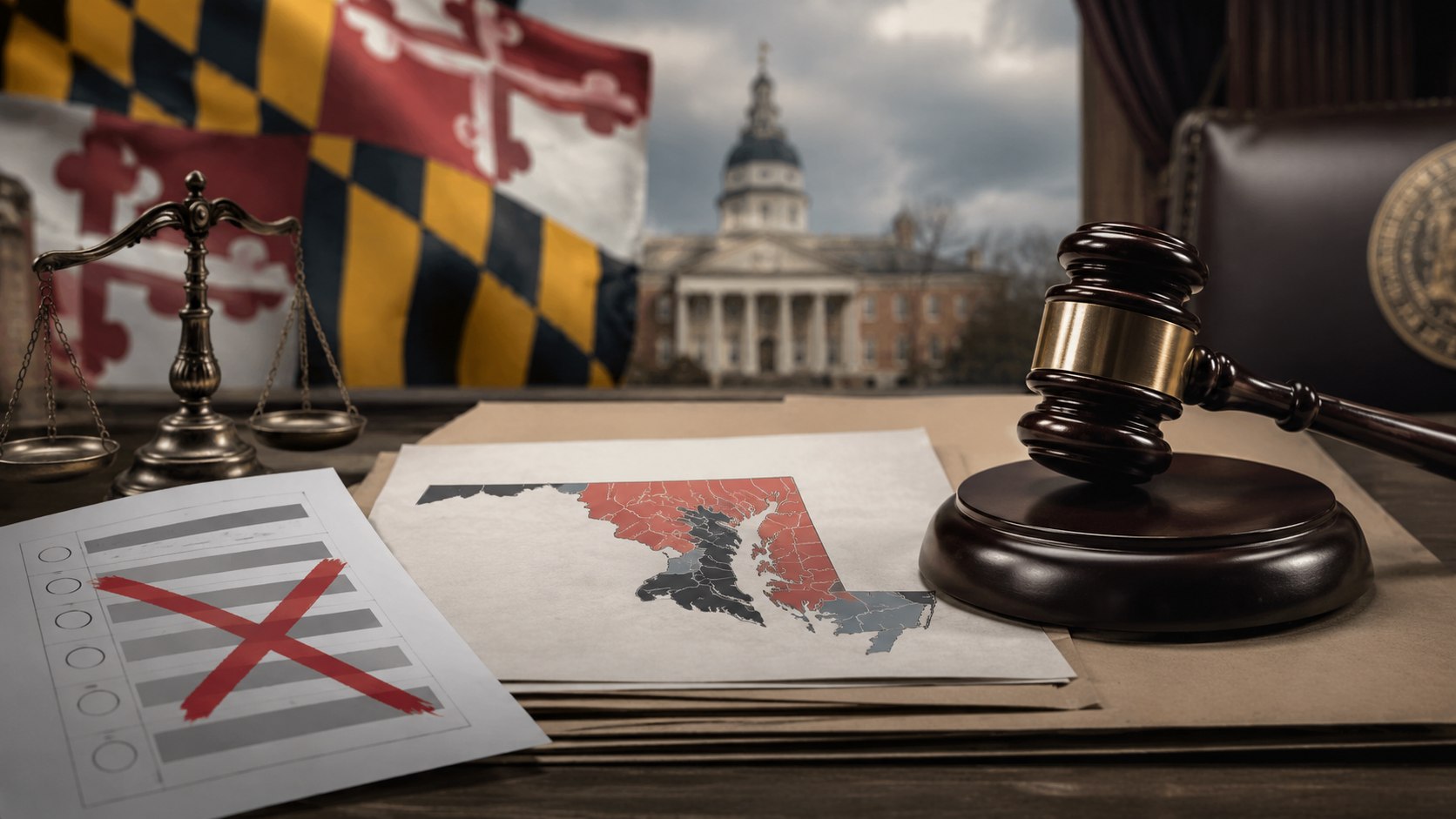
What Question 3 could have changed
Democrats currently hold 7 of Maryland’s 8 U.S. House seats. A new map could target the remaining Republican-held district represented by Andy Harris.
The proposed amendment could affect several areas:
- constitutional standards used when drawing congressional districts;
- lawmakers’ ability to approve a new map before the next census;
- potential district lines crossing the Chesapeake Bay;
- legal review of future congressional maps.
Those changes carried national significance because both parties are pursuing mid-decade redistricting strategies. Maryland Democrats have sought another possible House seat as Republican-led states advance new congressional maps elsewhere.
The proposal’s official language also addressed judicial review of congressional districting. Legislative records show it contemplated giving the Supreme Court of Maryland original jurisdiction over certain redistricting challenges.
Maryland redistricting fight now moves toward an appeal
Maryland House Speaker Joseline Peña-Melnyk said lawmakers still believe voters should decide the issue. Republican leaders described the ruling as a victory for compliance with state election law.
Because Thompson stayed his injunction, the November ballot is not necessarily settled. CBS Baltimore reported that an appeal to the Supreme Court of Maryland is expected.
The next ruling could therefore determine whether Question 3 returns to the ballot. It could also shape Maryland’s role in the broader congressional redistricting battle before the 2028 elections.
Earlier we wrote that Anne Arundel County Schools revise LGBTQ+ policy after federal pressure