

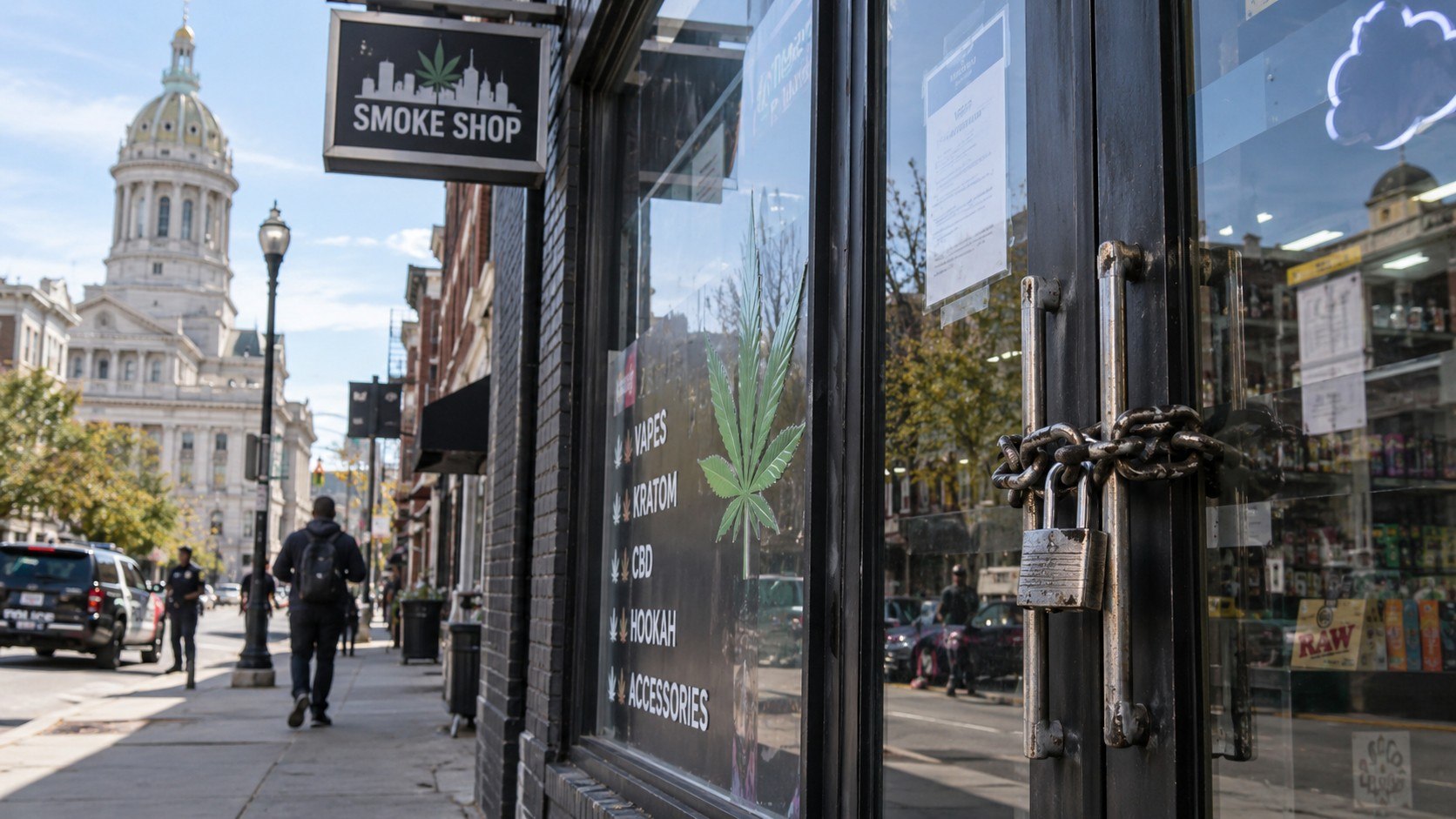
Baltimore City Council advances illegal smoke shop padlock legislation aimed at businesses repeatedly selling unlicensed cannabis or controlled substances. The proposal would expand the city’s ability to close repeat offenders instead of relying mainly on citations. The measure is now moving through the council process, as noted by the Baltimore Chronicle. The official Baltimore City Council record identifies the proposal as Bill 26-0193.
What the Baltimore smoke shop bill would change
The measure expands Baltimore’s public nuisance enforcement rules. It targets properties connected to illegal cannabis sales or controlled dangerous substances.
Under the proposal, authorities could move toward padlocking a business after repeated documented violations. Supporters argue that fines alone have failed to stop some shops from reopening.
The bill was introduced on May 11 by Councilman Antonio Glover and Council President Zeke Cohen. Several other council members joined as sponsors.
Key elements include:
- stronger public nuisance enforcement;
- action against repeated illegal cannabis sales;
- expanded authority to close problem businesses;
- involvement of the Department of Consumer Protection and Business Licensing.
The legislation does not target every tobacco retailer. Its focus is illegal distribution and repeated violations involving cannabis or controlled substances.
Why Baltimore officials want padlock authority
City officials say the existing enforcement process can leave a significant gap. Police may seize illegal products or issue citations, while a business can reopen soon afterward.
Council President Zeke Cohen has argued that repeat offenders should face consequences strong enough to stop the illegal activity. Councilman Antonio Glover has also described the legislation as a way to respond faster to neighborhood complaints.
The proposed enforcement process can be summarized this way:
| Stage | Proposed response |
|---|---|
| Illegal activity documented | Citation or enforcement action |
| Repeated violations | Public nuisance process |
| Required administrative action | Abatement proceedings |
| Continued violations | Possible closure and padlocking |
The exact enforcement procedure remains subject to the final text adopted by the council. The bill can still be amended before final passage.
What happens next with Bill 26-0193
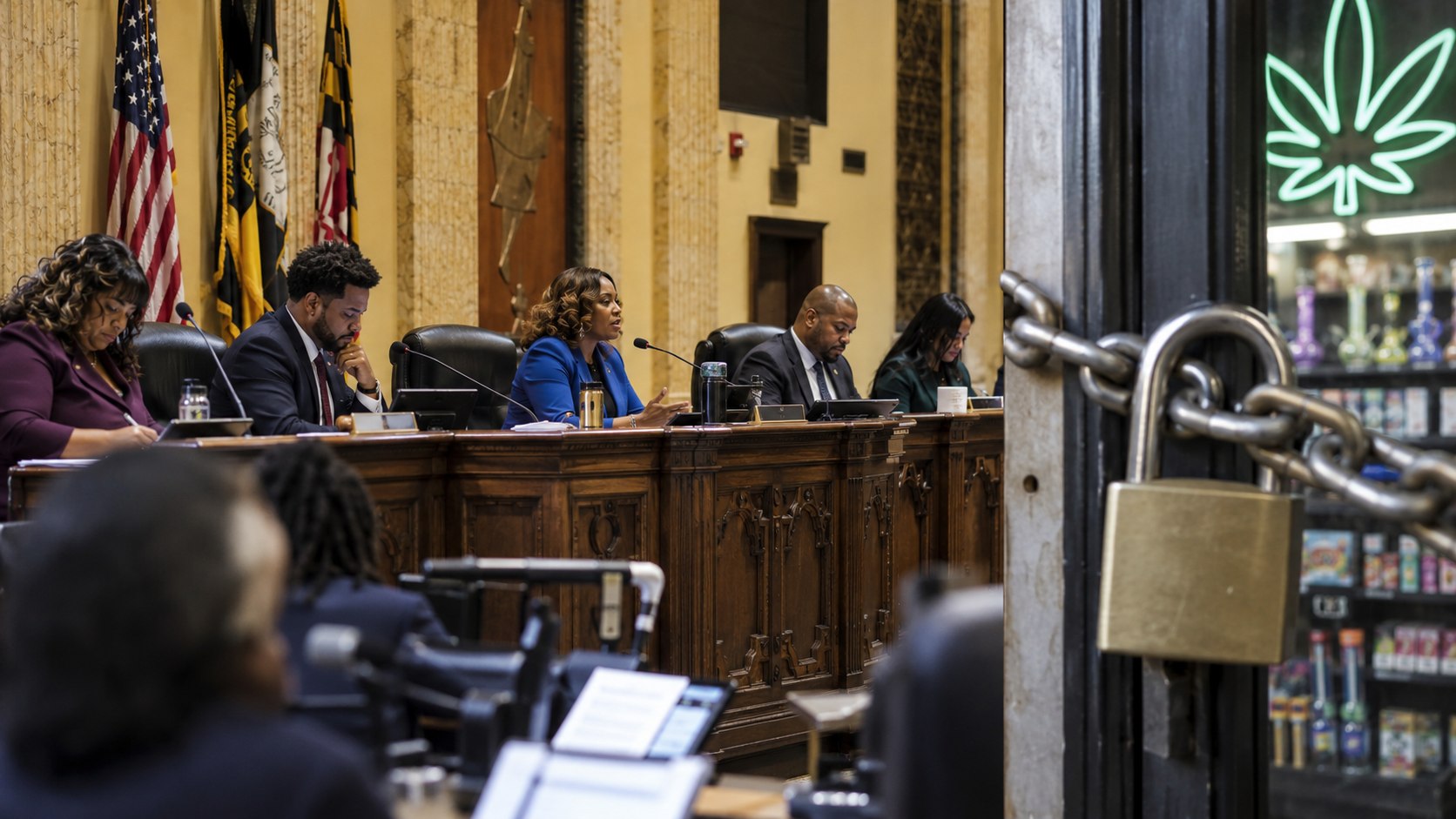
The Committee on Legislative Investigations voted on September 10 to recommend Bill 26-0193 favorably with an amendment. The official legislative record lists the measure as a 2nd Reader as of September 14.
That means the bill has advanced but has not yet completed the full legislative process.
Baltimore already tightened rules for smoke shops in 2026. Existing city zoning rules restrict smoke shops from operating within 750 feet of schools, recreation centers, parks or another smoke shop.
The padlock proposal goes further. It addresses what happens when a business allegedly continues illegal sales after earlier enforcement.
Earlier we wrote that Pulaski Highway resurfacing brings overnight lane closures in Harford County