

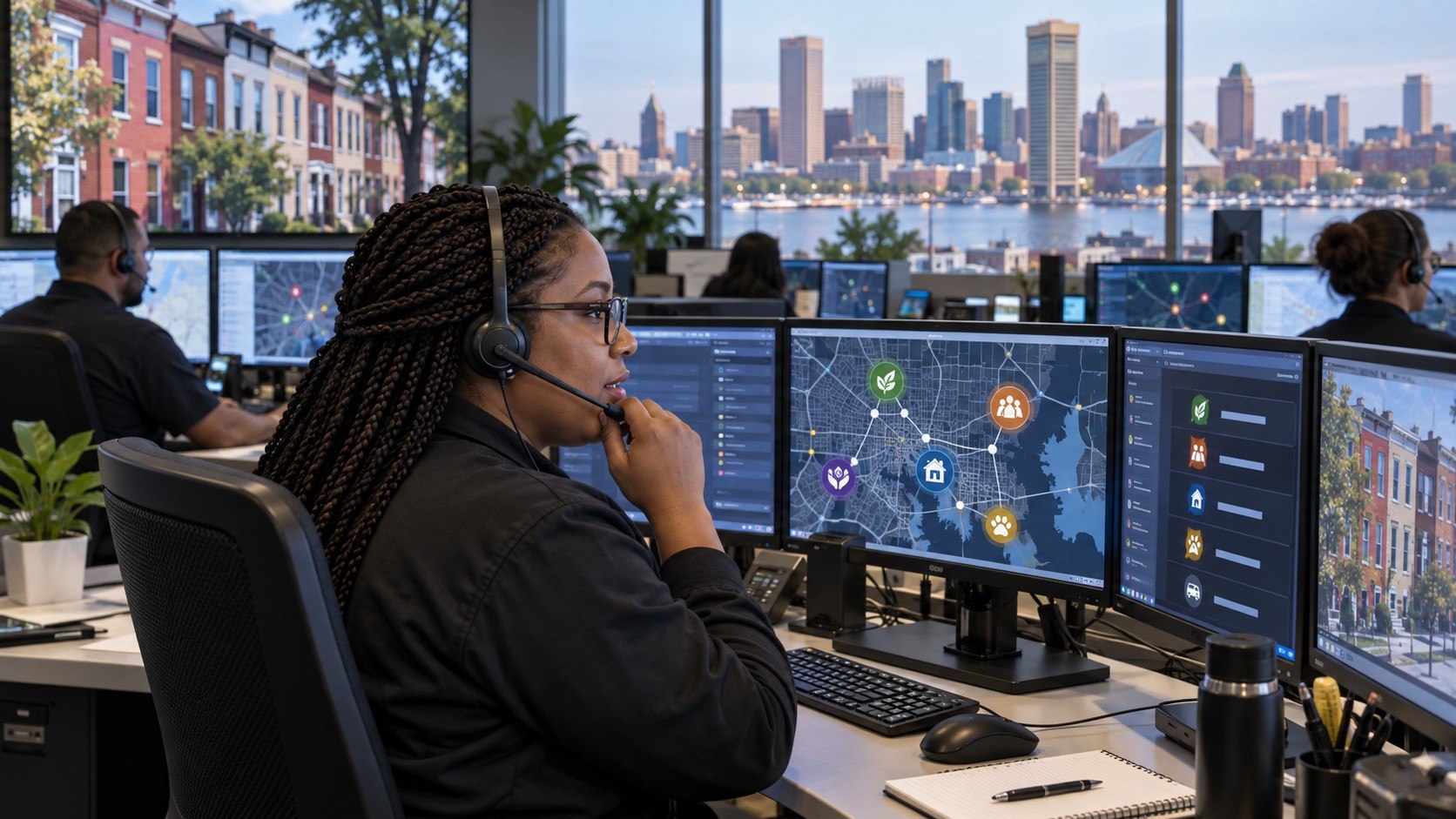
Baltimore mental health 911 response could soon change how the city handles thousands of nonviolent emergencies. Mayor Brandon Scott and City Council President Zeke Cohen have proposed a new Department of Neighborhood Safety. The agency could send trained behavioral health professionals instead of police to selected calls, as Baltimore Chronicle reports. The proposal was formally announced by the City of Baltimore and detailed by WMAR-2 News.
What the Department of Neighborhood Safety would do
The proposed Department of Neighborhood Safety, or DNS, would become another branch of Baltimore’s emergency response system. It would operate alongside police, fire and EMS.
The central idea is simple. Not every 911 call requires an armed police response.
Baltimore receives about 22,000 nonviolent emergency calls each year that could potentially receive an alternative response. City officials cited welfare checks, public intoxication, trespassing and public nuisance complaints among the examples.
Calls that could be routed differently include:
- behavioral health and mental health crises;
- welfare checks;
- some trespassing complaints;
- public intoxication and nuisance calls;
- some emergencies involving people experiencing homelessness.
About one-third of potentially eligible calls involve people experiencing homelessness, according to information released with the proposal.
Police would remain responsible for incidents requiring law enforcement. The plan instead creates another option when clinicians or social workers may be more appropriate.
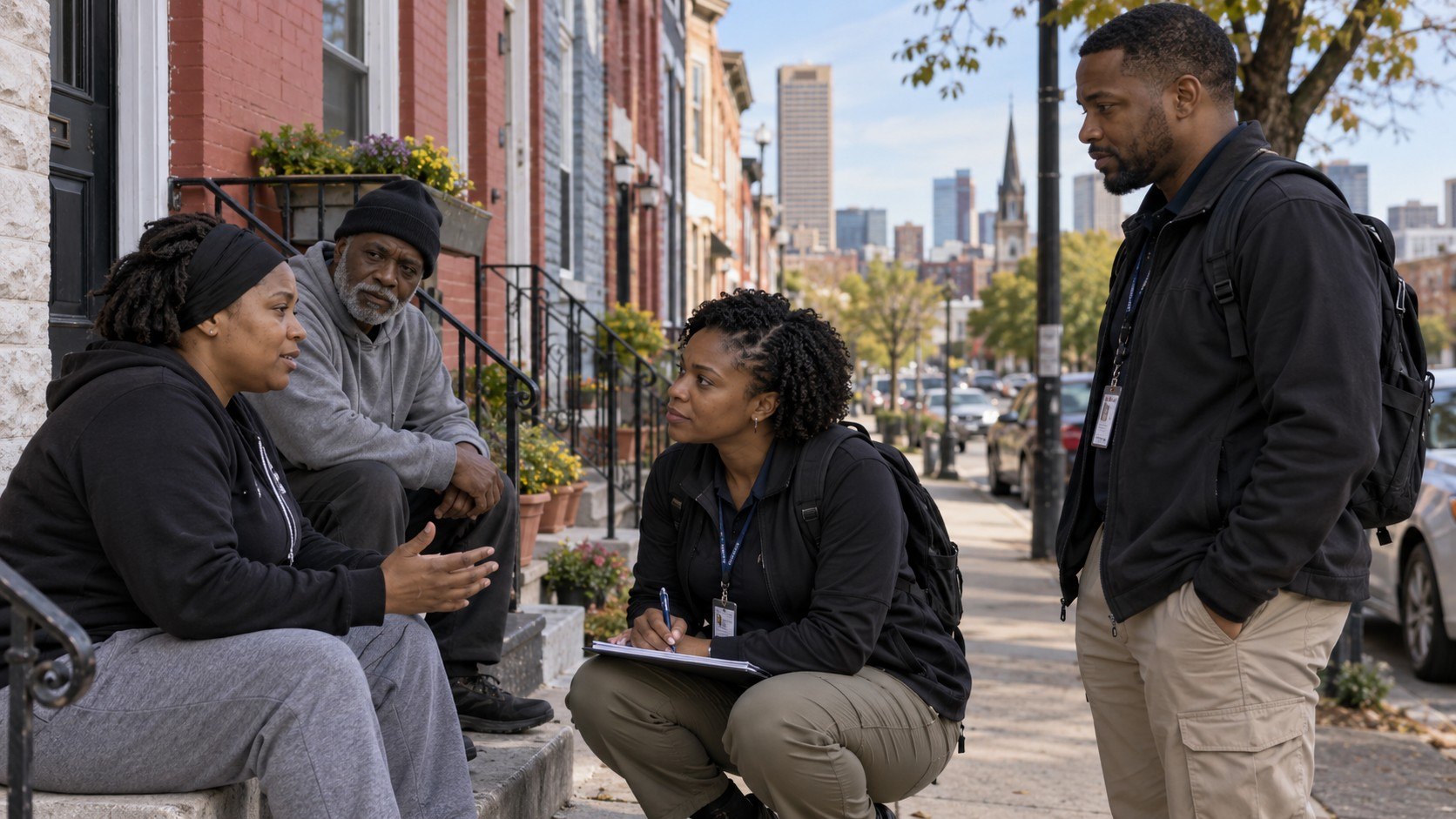
Why Baltimore wants to change its 911 response
Scott said the goal is to match residents with the right type of emergency assistance. The change could also free officers for violent crime and other police duties.
The proposal builds on Baltimore’s existing behavioral health diversion work. The Baltimore Police Department says its approach seeks the least police-involved response appropriate for behavioral health crises. The program is also connected to reforms required under the federal consent decree.
The scale of the proposed change can be summarized this way:
| Measure | Detail |
|---|---|
| Potentially divertible calls | About 22,000 annually |
| Proposed agency | Department of Neighborhood Safety |
| Response | Trained behavioral health professionals |
| Existing office affected | MONSE |
| Status | Requires City Council approval |
DNS would also absorb the Mayor’s Office of Neighborhood Safety and Engagement. Existing MONSE programs are expected to continue during the transition.
That would place violence prevention and alternative emergency response within one permanent city department.
What happens next with Baltimore’s new safety department
The proposal still needs approval from the Baltimore City Council. If adopted, Baltimore plans to establish DNS in phases and conduct a nationwide search for an executive director.
The city’s fiscal 2027 budget already allocates more than $16 million toward the initiative. That includes $12.4 million for replacing Baltimore’s aging computer-aided dispatch system, according to Baltimore Brew.
For residents, the practical change could eventually happen at the first 911 call. A nonviolent crisis would no longer automatically mean that a police officer is the primary responder.
Earlier we wrote about Hayden Panettiere death investigation focuses on suspected fentanyl-laced oxycodone pill