

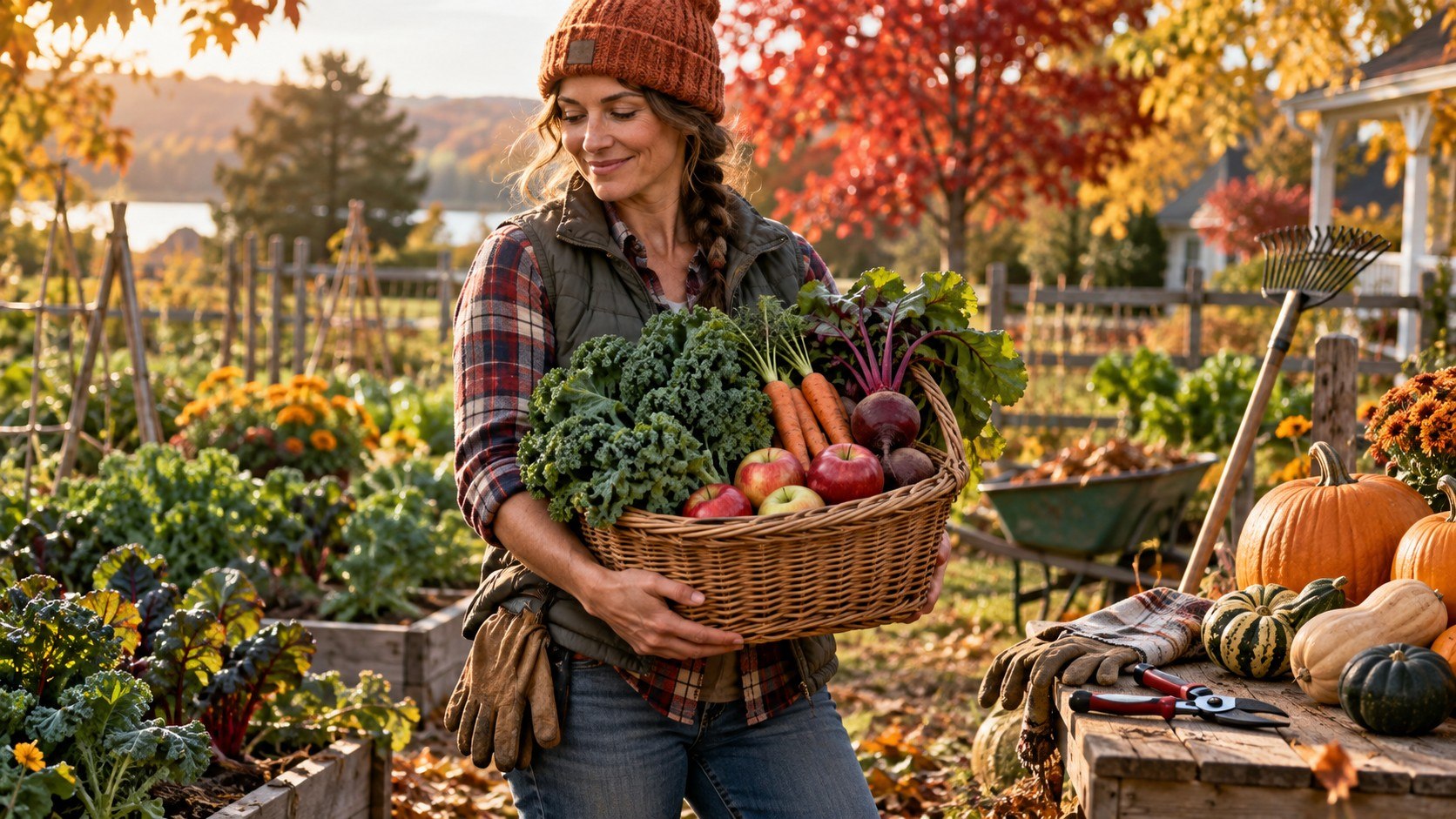
October 2026 gardening calendar in the USA begins with one practical rule: check local conditions before planting. October means frost preparation in Minnesota, active vegetable planting in Florida, and cool-season sowing across much of California. The same date can demand completely different garden work across the country, as noted by the Baltimore Chronicle.
The best reference point is the USDA hardiness zone combined with the local frost forecast. The USDA Plant Hardiness Zone Map divides locations by average annual extreme minimum winter temperature. Gardeners can enter a ZIP code and identify their exact zone. The current map uses 1991–2020 climate data and 13,412 weather stations.
October is less about following a national date and more about matching each task to local temperature, soil moisture, and frost risk.
What to do in the garden in October 2026
The October gardening checklist changes as temperatures fall. Northern gardeners usually focus on cleanup, protection, bulbs, garlic, lawns, and winter preparation. Southern gardeners can still establish vegetables, herbs, ornamentals, and some perennial plants.
Several jobs belong on most October schedules:
- remove diseased or heavily damaged plant material;
- collect healthy leaves for compost or mulch;
- plant spring-flowering bulbs where soil temperatures allow;
- prepare beds with finished compost;
- monitor nighttime temperatures and frost alerts;
- protect tender container plants before cold nights;
- check irrigation instead of watering automatically.
Healthy leaves can stay useful in the garden. Shredded leaves work as mulch and slowly return organic matter to the soil. Diseased foliage needs separate handling when local guidance recommends removal. Heavy leaf layers should not remain packed over turf.
Beds also benefit from a final weed removal before winter. Small weeds are easier to control now than after spring growth begins. Avoid unnecessary deep cultivation around established perennials. Their roots need time to settle before repeated freezes.
The Baltimore Chronicle’s September garden task guide provides useful preparation ideas. October continues many of those jobs, but frost risk becomes more important.
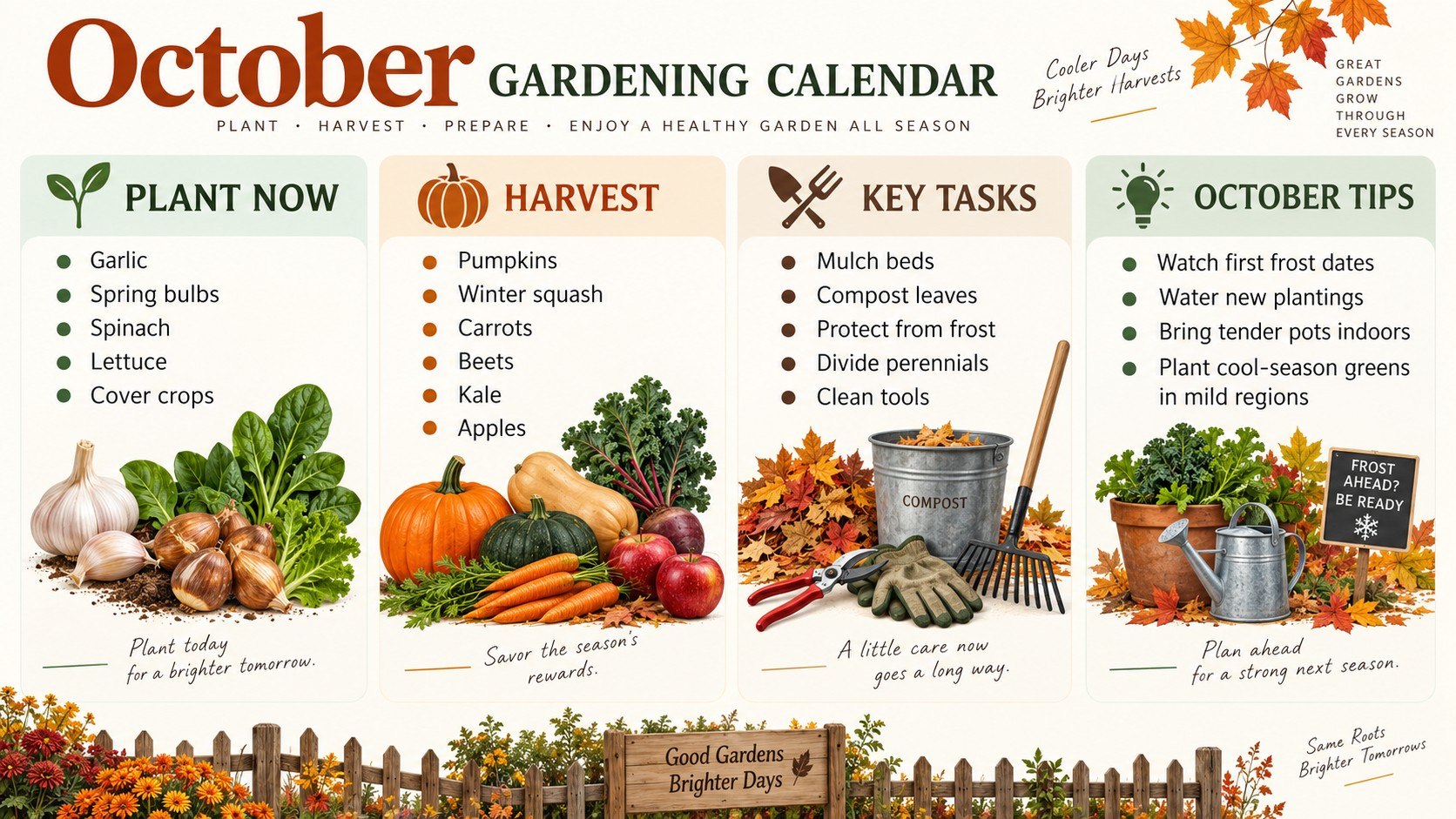
October garden calendar by USDA zone
USDA zones describe winter cold tolerance rather than exact planting dates. Local elevation, rainfall, urban heat, wind, and soil can shift garden timing. Still, zones provide a useful framework for an October plan.
| USDA zones | Typical October priority | Good candidates | Main risk |
|---|---|---|---|
| 3–4 | Winter protection | Garlic, hardy bulbs | Early freeze |
| 5–6 | Planting and cleanup | Garlic, bulbs, trees, shrubs | Frost and wet soil |
| 7–8 | Extended fall planting | Greens, roots, perennials | Temperature swings |
| 9–10 | Cool-season gardening | Lettuce, carrots, brassicas | Heat and dry soil |
| 11–13 | Warm-climate planting | Tropical and cool-season crops | Heat, humidity, rain |
This division is only a planning tool. A gardener in zone 7 in Virginia does not share the same October as zone 7 in the West. Rainfall and daytime temperatures can differ sharply.
USDA also stresses that hardiness zones describe average extreme winter minimum temperatures. They do not predict the exact first frost. National Weather Service climatology shows substantial variation between nearby locations.
A ZIP-code zone search should therefore come before buying perennial plants. Local Extension recommendations can then refine planting dates. A 7-day weather forecast should provide the final check.
“The standard by which gardeners and growers can determine which perennial plants are most likely to thrive.”
USDA Agricultural Research Service, describing the Plant Hardiness Zone Map and its purpose.
What to plant in October 2026
The what to plant in October USA question has no single nationwide answer. Cool-season vegetables dominate many regions, while northern gardens may already be approaching frozen ground.
In mild areas, October can support direct sowing or transplanting of several crops:
- Sow radishes, carrots, beets, or turnips where recommended locally.
- Transplant broccoli, cabbage, cauliflower, or other brassicas in suitable climates.
- Plant spinach, lettuce, kale, chard, or arugula in mild regions.
- Set garlic when local soil and frost timing are appropriate.
- Establish suitable spring-flowering bulbs before the ground freezes.
California Extension guidance for October includes leafy greens, beets, carrots, radishes, and turnips. Its September 23, 2026 guidance describes October as the transition toward winter vegetables.
Florida follows a very different calendar. UF/IFAS lists October planting windows for crops including beets, carrots, cauliflower, spinach, radishes, and strawberries. Florida recommendations also vary between northern, central, and southern counties.
The same principle applies to garlic. Planting too early can encourage excessive top growth. Planting too late can limit root development. The Baltimore Chronicle garlic planting guide explains the crop’s basic seasonal requirements.
For October planting, the local first-freeze pattern matters more than the calendar printed on a seed packet.
October 1–10: clean beds and make planting decisions
Early October is the planning window for many temperate regions. Summer crops may still produce in warmer gardens, while northern beds can already face frost.
Harvest mature tomatoes, peppers, squash, and tender herbs before damaging cold arrives. Remove clearly diseased annual plants instead of leaving infected debris through winter. Healthy plant residues can enter a properly managed compost system.
This period is also useful for soil work. Add finished compost when needed, but avoid assuming every bed needs fertilizer. Soil testing is more reliable than routine application.
For established lawns, regional advice matters. Minnesota Extension describes early October as a useful period for lawn management in its climate. Fertilizer timing farther south can differ substantially.
“October is the last chance to prepare the lawn for the entire next year.”
University of Minnesota Extension, October garden checklist for Minnesota conditions.
A northern recommendation should not be copied automatically into Texas or Florida. Local Extension services publish region-specific turf guidance. Temperature, grass species, and dormancy timing determine the correct approach.
October 11–20: bulbs, garlic and winter protection
Mid-October often becomes the busiest period in the fall gardening calendar 2026. In many temperate areas, soil remains workable while nights become colder.
Spring-flowering bulbs generally need well-drained soil. Tulips, daffodils, crocuses, and similar hardy bulbs should be matched with regional planting recommendations. Avoid low spots where water remains after rain.
Garlic also needs a sunny, well-drained bed. Separate healthy cloves close to planting time and keep damaged material out of the bed. Local Extension guidance should determine planting depth and exact timing.
Container plants need special attention because exposed roots cool faster than roots in garden soil. Tender tropical plants may need indoor shelter before the first cold nights. Inspect them for insects before moving them indoors.
The Baltimore Chronicle also covers fall planting principles for grapes. Its regional timing should not replace U.S. Extension guidance, but drainage and site selection remain useful considerations.
October 21–31: protect soil and prepare for frost
Late October becomes a winter-preparation period across much of the northern United States. In warmer regions, it may still be prime planting season.
A practical October garden maintenance routine includes several final checks:
- drain or protect vulnerable irrigation equipment where freezing is expected;
- mulch after appropriate soil cooling in cold regions;
- secure young trees against wildlife damage when necessary;
- store cleaned garden tools under cover;
- empty frost-sensitive containers or move them indoors;
- continue planting cool-season crops in regions with mild winters.
Mulch should protect roots without burying plant crowns. Excess material against trunks can trap moisture and encourage problems. Young trees also need space around their bark.
Do not automatically cut every perennial to ground level. Healthy seed heads can provide winter structure and wildlife value. Diseased stems are better candidates for removal.
Watering may still be necessary during a dry autumn. Newly planted trees and shrubs should not enter winter with extremely dry root zones. Soil moisture should be checked beneath the surface first.
Weather forecasts become more useful than historical averages at this stage. Frost climatology describes typical timing, not the exact night of a 2026 freeze. National Weather Service regional pages show how first-freeze dates can vary even within one state.
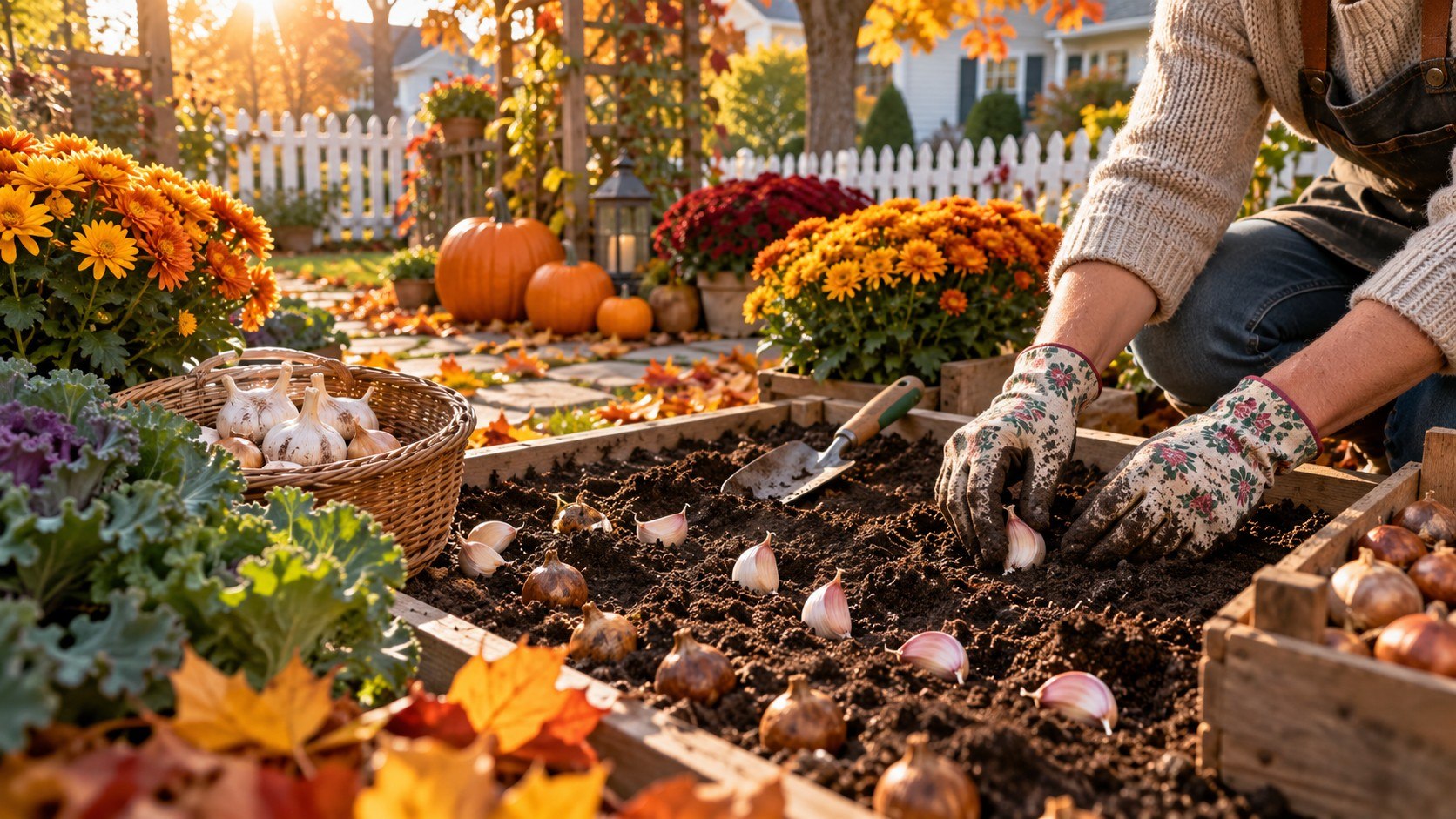
Regional priorities across the United States
A national gardening calendar October 2026 works best when divided into broad climate groups. These are starting points rather than fixed planting boundaries.
Northeast and Upper Midwest
Expect frost preparation, leaf management, garlic planting, hardy bulbs, and winter protection. Tender annuals may already be finished. Finish time-sensitive planting before soil becomes difficult to work.
Mid-Atlantic and lower Midwest
October often combines active planting with cleanup. Garlic, spring bulbs, trees, and shrubs may still establish well under suitable local conditions. Watch forecasts for the first frost.
Southeast and Gulf Coast
Cool-season vegetables become more important. Georgia Extension lists fall vegetables including broccoli, cabbage, collards, kale, lettuce, radishes, and turnips within regional planting windows.
California and the Southwest
Many areas shift toward winter vegetables rather than closing the garden. California Extension recommends October planting of cool-season crops in suitable locations. Heat can still affect germination and new transplants.
Florida
October is an active growing month. UF/IFAS provides separate calendars for North, Central, and South Florida. Cool-season vegetable choices expand as summer heat eases.
FAQ about the October 2026 gardening calendar
What vegetables can be planted in October in the USA?
It depends on location. Many mild regions can plant greens, radishes, carrots, beets, brassicas, and other cool-season crops. Northern areas have shorter planting windows.
Is October too late to plant garlic?
Not necessarily. Garlic is commonly planted during fall in many U.S. climates. Exact timing should follow local Extension guidance and frost conditions.
Can trees and shrubs be planted in October?
In many regions, yes, while soil remains workable and suitable for root establishment. Local climate and plant species still determine the safest timing.
Should fallen leaves be removed from the garden?
Diseased leaves often need removal. Healthy leaves can be shredded for mulch or compost. Thick, matted leaf layers should not smother lawns.
When should plants be protected from frost?
Protection should begin when forecasts approach damaging temperatures for the specific plant. Frost sensitivity differs widely between tropical plants and hardy vegetables.
How can a gardener find the correct USDA zone?
Enter a ZIP code on the official USDA Plant Hardiness Zone Map. Then compare that zone with local Extension planting guidance.
Earlier we wrote about OpenAI DevDay 2026: ChatGPT Pro 500, GPT-6.1 Sol, Dots and Astra Ultrafast explained