

Four candidates will be on Maryland’s Nov. 3 ballot for governor, led by Democratic Gov. Wes Moore and Republican Dan Cox in a rematch of their 2022 race. With early voting starting Oct. 22 and a state budget hole of more than $3 billion waiting for the winner, here is who is running, where the race stands and what Baltimore voters need to do before Election Day.
Who is on the ballot for Maryland governor?
Governor and lieutenant governor run together as a ticket in Maryland. These are the four candidates voters will see:
| Candidate | Party | Background |
|---|---|---|
| Wes Moore (running mate: Lt. Gov. Aruna Miller) | Democratic | Incumbent governor, elected in 2022 |
| Dan Cox (running mate: Rob Krop) | Republican | Former state delegate for Frederick and Carroll counties; 2022 GOP nominee |
| Andy Ellis | Green | Third-party candidate; not invited to the televised debate |
| Cathy White | Working Class Party | Third-party candidate; not invited to the televised debate |
Cox won the Republican nomination in the June 23 primary, defeating longtime Baltimore businessman Ed Hale, according to an AP projection reported by FOX 5 DC. His running mate, Rob Krop, owns a gun store. In 2022, Cox received about 32% of the vote against Moore.
What do the latest polls show?
A UMBC Institute of Politics poll released Oct. 6 found Moore with a wide lead among likely voters. The survey of 776 likely Maryland voters was conducted Sept. 22 to 27 and has a margin of error of plus or minus 3.5 percentage points, according to FOX 5 DC.
- Moore: 51%
- Cox: 24%
- Ellis: 3%
- White: 3%
- Other candidates: 5%
- Undecided: 14%
Unaffiliated voters are the group still most up for grabs: 40% backed Moore, 14% backed Cox and 27% were undecided. Overall, 74% of respondents said they were set on their choice, while 23% said they could change their mind. Polls are a snapshot, not a prediction, and the result depends on who actually turns out.
What did Moore and Cox say in their only debate?
The two major-party candidates met once, on Oct. 6 at Maryland Public Television in Owings Mills. WYPR’s debate recap highlighted several issues that matter directly to Baltimore residents:
- The budget: Maryland faces a structural deficit of more than $3 billion next fiscal year. Cox pledged not to raise taxes or fees and said he would cut them, pointing to money a legislative audit found was improperly spent at the Department of Human Services. Moore did not specify whether he would favor cuts or tax increases; he blamed past overspending and pointed to spending control and private investment.
- The Key Bridge: The replacement is now estimated at $4.3 billion to $5.2 billion, with completion expected by 2030. Cox criticized a new state website tracking the rebuild, while Moore promised to finish it in “record time.”
- Federal job losses: Maryland lost nearly 25,000 federal jobs in 2025, and recent labor reports put the number closer to 31,000. Moore cited his “Feds to Eds” program to certify displaced federal workers as teachers; Cox said the state should lower its income tax brackets.
- Trump and national ambitions: Cox, who is closely aligned with President Donald Trump’s agenda, said he would stand up to Trump for Marylanders. Moore was pressed on whether he would serve a full term amid talk of a 2028 presidential run; he said he is committed to the people of Maryland but did not answer directly.
“I am a Marylander first and last, and I’m an American first and last. I will work with whoever is the president.”
Dan Cox, during the Oct. 6 debate, as quoted by WYPR
The debate also covered reparations, LGBTQ policy and Cox’s past comments about the Jan. 6, 2021, events, which Cox dismissed as “political TMZ.”
Why does this race matter for Baltimore?
The next governor will write budgets during a deficit, which affects state aid that Baltimore depends on for schools, transit and public safety. The Key Bridge rebuild affects port jobs and commuting in the southern part of the region. And the Baltimore region is home to major federal employers, including the Social Security Administration headquarters in Woodlawn, so the candidates’ answers on federal job losses are not abstract here.
The governor’s race is not the only statewide item on the ballot. Voters will also decide constitutional amendments, including Question 3 on redistricting.
When and how can Baltimore residents vote?
| What | Date and time |
|---|---|
| Early voting | Thu., Oct. 22, through Thu., Oct. 29, 7 a.m. to 8 p.m. daily, including weekend |
| Request a mail-in ballot to be mailed to you | Received by Tue., Oct. 27 |
| Request a mail-in ballot to download and print | By Fri., Oct. 30 |
| Election Day | Tue., Nov. 3, 7 a.m. to 8 p.m. |
| Return a mail-in ballot | Postmarked by Nov. 3, or in a drop box by 8 p.m. Nov. 3 |
Even after the regular registration deadline, eligible residents can register in person during early voting or on Election Day with proof of address, according to the Maryland State Board of Elections. For details on registration, see our guide to Maryland’s voter registration deadline. Polling places also still need workers; here is how election judges are being recruited.
What happens next?
WYPR described the Oct. 6 event as the only gubernatorial debate of 2026. The next milestones are the start of early voting on Oct. 22 and the Oct. 27 deadline to request a mailed ballot. The winner takes office in January 2027.
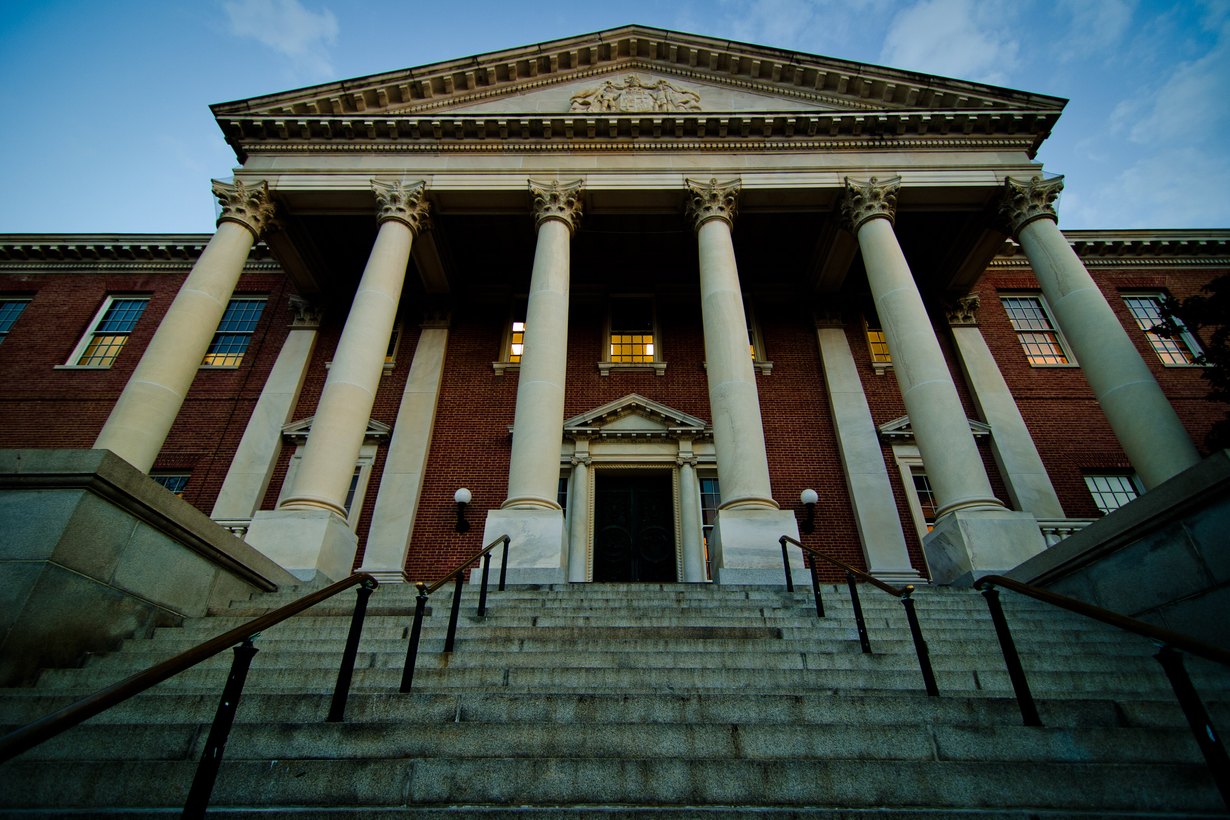
Featured image: The entrance of the Maryland State House in Annapolis. Photo: Kevin Galens / Wikimedia Commons, CC BY-SA 2.0.