

Baltimore’s proposed Department of Neighborhood Safety, a new city agency that would send trained civilian responders instead of police to some nonviolent 911 calls, faces a vote Wednesday evening, WBAL NewsRadio reported. For Baltimore residents, the outcome could change who knocks on the door after a call about a welfare check, trespassing or someone in a mental health crisis.
The vote, set for 6 p.m. Wednesday according to WBAL, comes one month after Mayor Brandon Scott and City Council President Zeke Cohen unveiled the plan on Sept. 14. Our earlier coverage explained how the department could divert 22,000 calls a year from police. Here is what is on the table now, what is still unanswered and what happens next.
What would the Department of Neighborhood Safety actually do?
The city describes the department, known as DNS, as a “third branch” of public safety alongside the Baltimore Police Department and the Baltimore City Fire Department and EMS, according to the mayor’s office. Its main jobs would be:
- Alternative 911 response. Civilian teams would handle certain nonviolent calls, such as welfare checks, public nuisance complaints, trespassing, loitering and lewd behavior, according to the city and WBAL.
- Co-responder teams. When a weapon may be involved, WBAL reported, calls would go to teams made up of clinicians and police officers.
- Follow-up care. “Care continuity” teams of peers and social workers would provide case management after the initial call, the city said.
- Violence prevention. DNS would absorb and permanently codify the Mayor’s Office of Neighborhood Safety and Engagement, or MONSE, which runs the city’s Group Violence Reduction Strategy.
The Baltimore Banner reported that calls with no weapons in a safe environment would be handled by a social worker and a peer specialist, and that teams would eventually work around the clock. The city says DNS calls would be treated as emergency responses, held to the same response-time standards as police and fire, not as referrals.
Why does Baltimore want a new agency for 911 calls?
City officials estimate about 22,000 Baltimore 911 calls a year could be better handled by alternative responders, and roughly one-third of those involve people experiencing homelessness. Baltimore also has an obligation under its federal consent decree to set up behavioral health crisis diversion for 911.
The model is Durham, North Carolina. According to the Banner, Durham diverts about 5% of its 911 calls away from police, compared with about 1.5% in Baltimore. Baltimore has run a 911 diversion pilot since 2021 that routes eligible calls to a clinician in the 911 center, to the 988 crisis line or to a police-clinician co-response team.
“Police officers should be primarily focused on reducing violent crime, not solving mental health crises.”
Council President Zeke Cohen, in the city’s Sept. 14 announcement
How much will it cost Baltimore taxpayers?
That remains the biggest open question. The city has identified startup money but no long-term operating budget.
| Funding item | Amount | Source |
|---|---|---|
| Replace the 911 computer-aided dispatch (CAD) system | $12.4 million | City FY2027 budget |
| State supplement for the CAD replacement | $8 million | State of Maryland |
| Initial planning phase | $3.4 million | Opioid Restitution Fund |
| Expand alternative response teams | $1 million | Federal funds |
| Long-term staffing and operations | Not yet disclosed | To be set in future budgets |
Scott acknowledged in September that the department will require city money. “Obviously it’s going to involve city funds,” he told reporters, according to CBS Baltimore. He and Cohen have said the plan is not aimed at cutting the police budget.
Who has raised concerns?
- Cost and growth: Taxpayer advocate David Williams told FOX45 that “city agencies expand. They don’t contract,” warning that spending could become harder to track.
- Structure: Councilman Isaac “Yitzy” Schleifer questioned whether the plan amounts to reorganizing existing departments, FOX45 reported.
- Oversight: FOX45 noted past Inspector General investigations involving MONSE programs, including the now-defunct SideStep program.
- Coordination: State’s Attorney Ivan Bates’ office said in September that he learned of the proposal through media reports and would hold further comment until he had more information.
Supporters, including Councilwoman Odette Ramos, have said the plan puts existing work in one place and takes pressure off 911 so police and firefighters can focus on what they are trained to do.
What happens after Wednesday’s vote?
A vote Wednesday does not mean civilian responders will show up next week. Based on what city officials have said so far, the next steps would be:
- Final passage and the mayor’s signature. Cohen’s staff told the Banner in September they were targeting passage in late October.
- A national search for leadership. The city plans to hire an executive director, who requires City Council confirmation, and a deputy director for alternative response.
- Community engagement to shape the department’s structure.
- Phased launch. Based on Durham’s experience, the Banner reported, the department could take about a year to become operational.
MONSE Director Stefanie Mavronis would remain in her role overseeing violence prevention, and existing MONSE programs would continue without interruption, the city said.
What should Baltimore residents do in an emergency now?
Nothing changes yet. Call 911 for any emergency. For a mental health or substance use crisis, the 988 Suicide and Crisis Lifeline is available by call or text 24 hours a day.
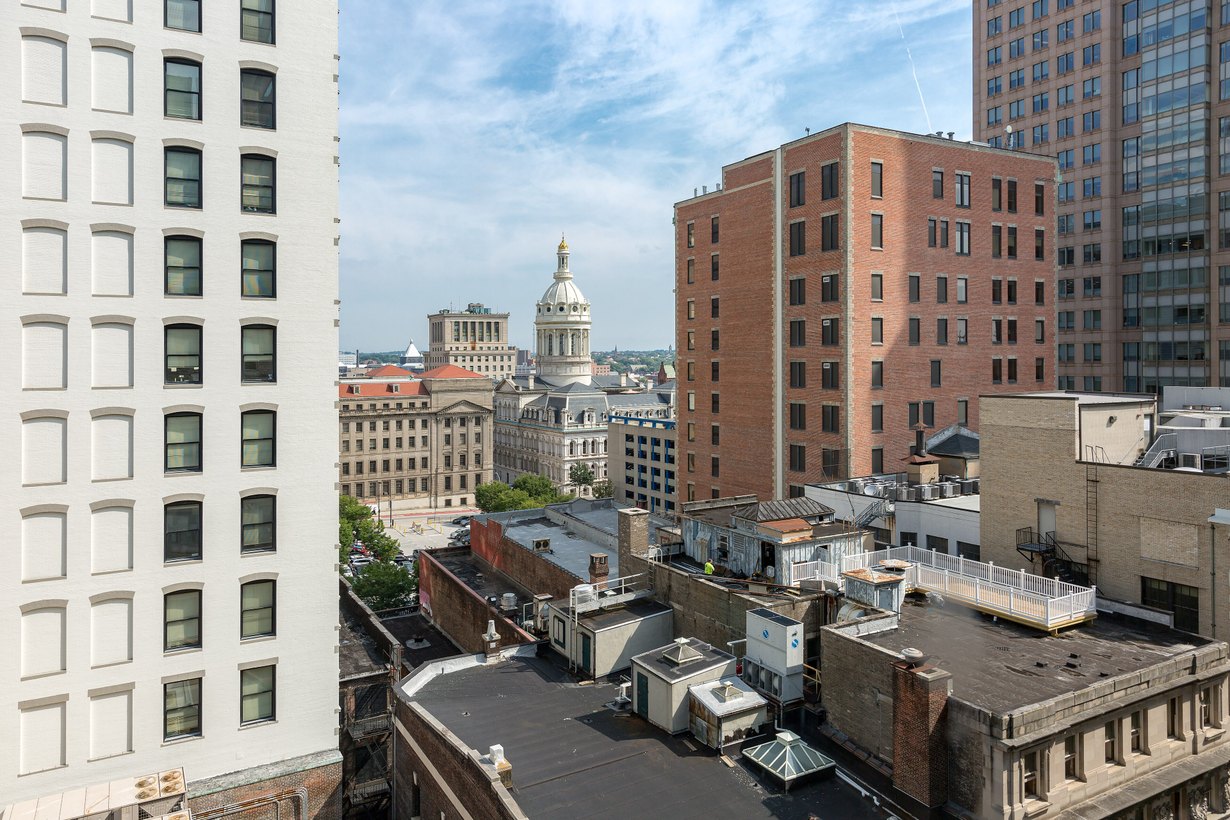
Featured image: Baltimore City Hall’s dome seen above downtown rooftops. Photo: Martin Kraft / Wikimedia Commons, CC BY-SA 4.0.