

Social Security checks will rise 3.6% in January 2027, the result of September inflation data released Wednesday morning, Oct. 14. For Maryland’s roughly 1.13 million beneficiaries, that works out to an average of about $76 more a month, or roughly $86 million in extra benefits flowing into the state every month, though what each household actually sees will depend on Medicare premiums that have not been set yet.
The raise follows a 2.8% cost-of-living adjustment, or COLA, in 2026. On Sunday, The Baltimore Chronicle laid out the forecasts, which centered on 3.5% to 3.6%. Wednesday’s Bureau of Labor Statistics numbers settled the question at the top of that range.
How was the 3.6% COLA calculated?
By law, the COLA is tied to the Consumer Price Index for Urban Wage Earners and Clerical Workers, or CPI-W. The Social Security Administration compares the average of July, August and September with the same three months a year earlier, and rounds to the nearest tenth of a percent.
The September CPI report showed the CPI-W up 3.9% over 12 months, driven largely by gasoline, which rose 9.1% in September alone. Using BLS index values, the third-quarter average climbed from 317.265 in 2025 to 328.746 in 2026, an increase of 3.62%, which rounds to 3.6%. The Motley Fool also reported the 3.6% figure Wednesday morning.
That makes it the largest COLA since the 8.7% raise for 2023, and well above the 3.2% for 2024, 2.5% for 2025 and 2.8% for 2026, according to SSA’s historical table.
How much more will Maryland beneficiaries get?
SSA’s latest county-level data, for December 2025, lets us estimate what a 3.6% raise means across the Baltimore region. The figures below are averages across all beneficiaries, including retired workers, disabled workers, survivors, spouses and children. Your own increase is simply 3.6% of your current gross benefit.
| Area | Beneficiaries | Average monthly benefit (Dec. 2025) | Estimated raise at 3.6% | Estimated 2027 average |
|---|---|---|---|---|
| Maryland (statewide) | 1,133,360 | $2,108 | +$76 | $2,184 |
| Baltimore City | 100,610 | $1,745 | +$63 | $1,808 |
| Baltimore County | 169,745 | $2,139 | +$77 | $2,216 |
| Anne Arundel County | 105,760 | $2,228 | +$80 | $2,308 |
| Howard County | 51,920 | $2,362 | +$85 | $2,447 |
| Harford County | 55,565 | $2,148 | +$77 | $2,226 |
| Montgomery County | 171,015 | $2,342 | +$84 | $2,427 |
| Prince George’s County | 145,135 | $1,996 | +$72 | $2,068 |
Retired workers alone, the largest group at 892,917 Marylanders, averaged about $2,258 a month in the same data, which points to a raise of roughly $81. Baltimore City’s lower average partly reflects a larger share of disabled-worker beneficiaries, about 16% of city recipients compared with about 9% statewide, so city residents will see a smaller dollar increase from the same percentage.
When will the bigger checks arrive?
- SSI recipients: Supplemental Security Income payments for January are normally paid on the first of the month. Because Jan. 1, 2027, is a federal holiday, the first higher SSI payment should arrive Thursday, Dec. 31, 2026.
- Social Security beneficiaries: The increase starts with benefits for December, paid in January 2027. Most people are paid on the second, third or fourth Wednesday of the month depending on birth date; those who started benefits before May 1997 are generally paid on the 3rd.
- Your notice: Last year, SSA said COLA notices would be available in the Message Center of “my Social Security” accounts in late November, with mailed notices as well. A similar schedule is likely this year.
What could shrink the raise?
The biggest unknown is Medicare. Most beneficiaries 65 and older have Part B premiums deducted from their checks. The standard Part B premium is $202.90 a month in 2026, and the Centers for Medicare & Medicaid Services usually announces the next year’s premium in the fall, often in November. Any increase comes straight out of the COLA.
A “hold harmless” rule prevents most people’s net Social Security payment from falling because of a Part B increase, but it does not guarantee a raise. Some Marylanders may also see changes in SNAP or housing assistance calculations because those programs count Social Security as income.
One piece of good news stays the same: Maryland does not tax Social Security benefits, so the full increase is exempt from state income tax. Federal tax may still apply depending on your total income.
What else changes in 2027?
Each fall, SSA pairs the COLA with updated figures for the taxable maximum, earnings limits for working retirees and SSI payment levels. As of Wednesday morning, SSA had not yet posted its 2027 fact sheet. The Baltimore Chronicle will add those numbers here once they are published on ssa.gov/cola.
Why does this decision come out of Baltimore County?
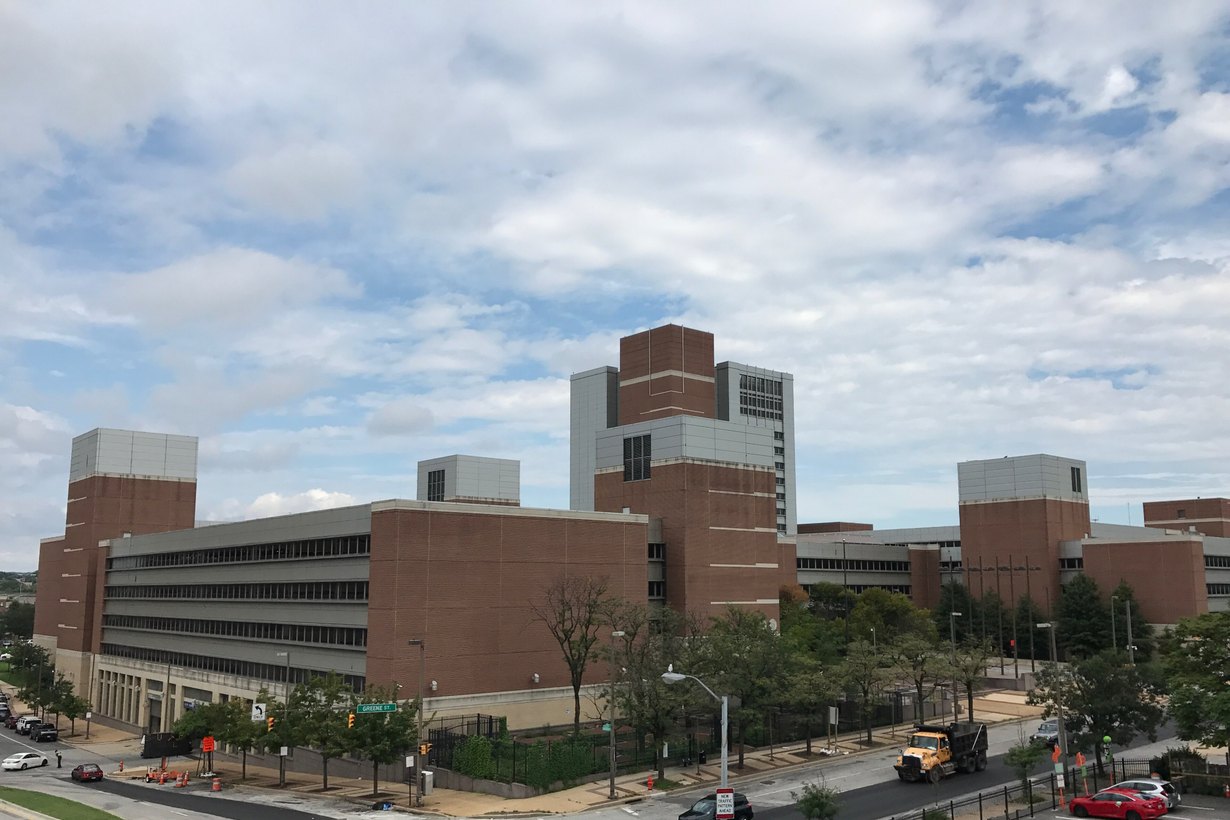
The Social Security Administration is headquartered in Woodlawn, just west of the city line, and also operates the Metro West complex on North Greene Street downtown. The adjustment set here reaches about 75 million Americans who receive Social Security or SSI.
“The purpose of the COLA is to ensure that the purchasing power of Social Security and Supplemental Security Income (SSI) benefits is not eroded by inflation.”
Social Security Administration, COLA information page
How to protect yourself from COLA scams
Every announcement brings calls, texts and emails claiming you must “verify” information to receive the raise. The increase is automatic. SSA warns that no government agency will ask for advance fees through wire transfers or gift cards. Check your new amount only through your own account at ssa.gov or official mail, and report suspected fraud to the SSA Office of the Inspector General at oig.ssa.gov/report or 1-800-269-0271.
Medicare beneficiaries can also read our explainer on the extra Medicare rebate showing up in some Maryland seniors’ accounts.
Featured image: The Social Security Administration’s Metro West complex at 300 N. Greene St. in downtown Baltimore. Photo: Baltimore Heritage / Wikimedia Commons, CC0.