

The Baltimore Streetcar Museum is planning a roughly $28 million move to a historic railroad roundhouse just up Falls Road, with site work that could begin by the end of this year as lease talks with the city are finalized, according to the Baltimore Business Journal. For a volunteer-run museum that has kept Baltimore’s streetcar history rolling near Station North since 1968, it would be its first move in more than half a century.
Here is what is planned, why the museum wants to move, what it will cost and what it means for visitors this fall.
Where is the Baltimore Streetcar Museum moving?
The new campus would be built around the former Maryland and Pennsylvania Railroad roundhouse at 2601 Falls Road, according to the museum’s website. The stone building dates to 1910, according to the project page of Ziger|Snead Architects, the Baltimore firm that drew up the master plan. Railroad workers maintained locomotives there in the early 1900s for the line Baltimoreans knew as the “Ma & Pa.”
The museum’s current home is at 1901 Falls Road, so the move is a short hop north along the Jones Falls valley. WBAL-TV described the project Wednesday as being in its early stages.
Why does the museum need a new home?
The Baltimore Banner reported in 2025 that the museum’s collection is packed into a crowded car house, so vehicles must be pulled outside one at a time to be seen, and that the site is prone to flooding when heavy rain raises the nearby Jones Falls. The roundhouse plan calls for raising the new campus to what the Banner, citing the plan, described as a “safe elevation above predictable flood danger.”
“We are the story of how Baltimore moves.”
Matt Nawn, director of the Baltimore Streetcar Museum, to The Baltimore Banner
At the time, the roundhouse was being used by Baltimore’s transportation department for storage and vehicle parking, and parts of its roof had collapsed, though consultants said the foundation remained sound, the Banner reported.
How much will it cost and who pays?
The total price tag is about $28 million, to be raised over roughly a decade from grants and private donations. The city gave the museum about $165,000 in grants in 2025 to cover the first of six phases, according to the Banner. The museum’s website invites the public to support the project through donations.
| Stage | What is planned |
|---|---|
| Phase 1 | Remove collapsed roof sections and stabilize the roundhouse walls and foundation |
| Site work | Environmental work and raising the campus above predictable flood levels |
| Roundhouse rehab | Exhibit space displaying up to 10 vehicles under the restored timber framework |
| New car house | Track and electrical infrastructure to run rides and move cars around the campus |
| Current site | Existing exhibit space would become “swing space” for events |
The architects’ project page lists 2028 as the target completion for the roundhouse portion. The full campus vision stretches over about 10 years, and timelines for nonprofit capital projects often shift with fundraising.
What makes the museum’s collection special?
The museum was founded in 1966 by members of the Baltimore chapter of the National Railroad Historical Society, and the city built the facility and leased it to the nonprofit. It has been run by volunteers ever since.
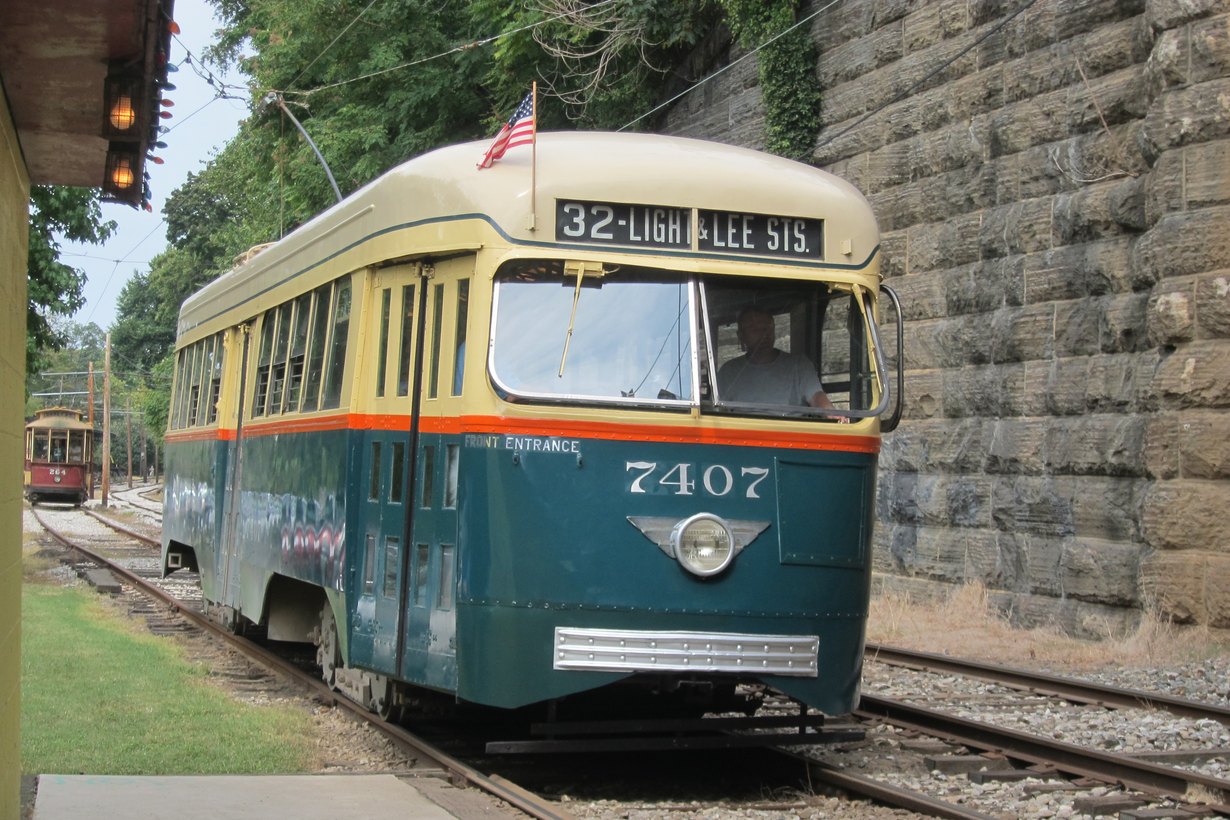
Its cars span nearly a century of Baltimore transit, from an 1859 horse car to modern trackless trolleys. The star is PCC car 7407, the last streetcar to carry riders on Baltimore’s streets. It made its final run in November 1963 on Route 8, between Towson and Catonsville, according to the Banner. The collection also includes an 1896 open car and a 74,000-pound snow sweeper.
The project lands at a time when Baltimore is again debating rail transit, from the Red Line to the city’s long-term transportation plans. A museum about how neighborhoods were once stitched together by streetcars could become a bigger part of that conversation.
Can you still visit this fall?
Yes. The museum lists fall hours of 11 a.m. to 5 p.m. on Sundays at 1901 Falls Road. Upcoming events on its website include:
- Trick or Treat: Oct. 24 and 25, 10 a.m. to 5 p.m.
- Santa’s Streetcar: Saturdays and Sundays in December, with details and tickets to be announced.
Check the museum’s website for admission prices before you go, since hours and fees can change.
What happens next?
According to the Business Journal, lease talks are being finalized and site work could start by year’s end. The museum says initial work will focus on making the roundhouse safe and secure, followed by a phased transformation in later years. Key questions still to watch: the final lease terms with the city, how quickly the museum can raise the remaining money, and whether state or federal historic preservation grants join the city’s early support.
Featured image: PCC car 7407, the last streetcar to run in regular service in Baltimore, operating at the Baltimore Streetcar Museum. Photo: Leonard Adler / Wikimedia Commons, CC BY-SA 3.0.