

Baltimore smoke shops that are caught selling illegal cannabis or other controlled drugs twice within two years can now be taken to a hearing and, if an order is issued, padlocked for up to a year. Mayor Brandon Scott signed Council Bill 26-0193 on Thursday, Oct. 15, giving neighborhoods that have complained about repeat-offender stores a new tool — and giving store owners a clear set of rules for what can get them shut down.
The measure updates the city’s existing “padlock law” so it explicitly covers illegal cannabis activity and adds an independent review step before police can close a business, FOX45 reported. Below is what the law does, who decides, and what it means for residents and businesses.
What does Baltimore’s padlock law for smoke shops actually do?
The law targets a specific pattern: a business that is cited for illegally selling cannabis or a controlled dangerous substance, reopens and is cited again. Council leaders and residents said raids and fines had not stopped some shops from reopening quickly.
Under the bill, a second citation within two years sends the case to a hearing. If the hearing produces an abatement order, the Baltimore Police Department must act on it within 15 days, and the remedy can include closing the business for up to one year, according to FOX45 and CBS News Baltimore. The bill also requires police to report on the actions they take under the law.
How does a smoke shop get padlocked, step by step?
| Step | What happens | Who is responsible |
|---|---|---|
| 1 | A business receives a citation for illegally selling cannabis or a controlled dangerous substance | Baltimore Police Department |
| 2 | A second such citation within two years makes the business eligible for an abatement case | Baltimore Police Department |
| 3 | Police seek an abatement order; a hearing is held | Maryland Office of Administrative Hearings or the city’s Environmental Control Board |
| 4 | If an order is issued, police must begin abatement within 15 days | Police Commissioner Richard Worley |
| 5 | The nuisance is abated, which can include padlocking the store for up to one year | Baltimore Police Department |
The Office of Administrative Hearings is an independent state agency, which supporters say is meant to keep the decision out of the hands of the officers who wrote the citations.
Why did Baltimore pass it now?
Council President Zeke Cohen and Councilmember Antonio Glover introduced the bill on May 11 after a Legislative Investigations Committee hearing found the city had no effective process to padlock problem smoke shops, FOX45 reported. The council heard testimony on Sept. 10 and passed the bill on Sept. 28.
Officials cited Maryland court system data showing about 1,400 businesses in the city are licensed by the state to sell tobacco. That figure covers all licensed tobacco retailers, not only smoke shops, and city leaders have not said how many are suspected of illegal sales. During hearings, residents, teachers and dispensary owners described untested cannabis products, vapes and edibles reaching young people. Earlier this month, the Chronicle reported on an investigation that found Baltimore smoke shops selling restricted THC products.
Cohen framed the bill as aimed at repeat offenders. “Nuisance smoke shops should not be allowed to operate with impunity, especially when they are selling poison to our kids,” he said after the council vote, according to CBS News Baltimore.
“This bill is not about businesses that are following the law. This is about addressing those that are breaking the law and is based on experience and study.”
— Mayor Brandon Scott at Thursday’s bill signing, via FOX45
Does this affect licensed dispensaries and law-abiding shops?
No, according to supporters. The trigger is citations for illegal sales of cannabis or controlled dangerous substances. Maryland’s licensed cannabis dispensaries are regulated by the state, and selling tobacco or vape products legally is not, by itself, grounds for padlocking under this bill. Store owners who receive a citation still go through a hearing before any closure.
Glover, who represents East Baltimore, put the message to shop owners bluntly: “Either you roll with us, or you’re going to get padlocked down. It’s just that simple,” he said, according to WMAR-2 News.
How does this fit with Baltimore’s other smoke shop rules?
City leaders describe the padlock bill as the second part of a three-part plan:
- Zoning (signed this summer): smoke shops must be at least 750 feet from schools, parks and recreation centers. Read more on what changed under the 750-foot rule.
- Enforcement (signed Oct. 15): the padlock process for repeat illegal sales.
- Storefronts (not yet introduced): a planned bill on bright lighting and window signage, according to WMAR-2 News.
When does the law take effect, and how can residents report a shop?
The city has not announced a specific effective date. FOX45 reported the law will take effect once remaining procedural steps are complete. It is also not yet known how many cases police plan to bring in the first months.
City officials ask residents who suspect illegal sales — especially sales to teenagers — to call 911. Neighbors who have tracked a problem store can note dates and details, since the law depends on documented citations rather than complaints alone.
What happens next?
Watch for three things: the effective date, the first abatement cases filed with the Office of Administrative Hearings or the Environmental Control Board, and the police reports the law requires. The storefront signage bill, if introduced, would go through the City Council’s committee process with its own public hearing.
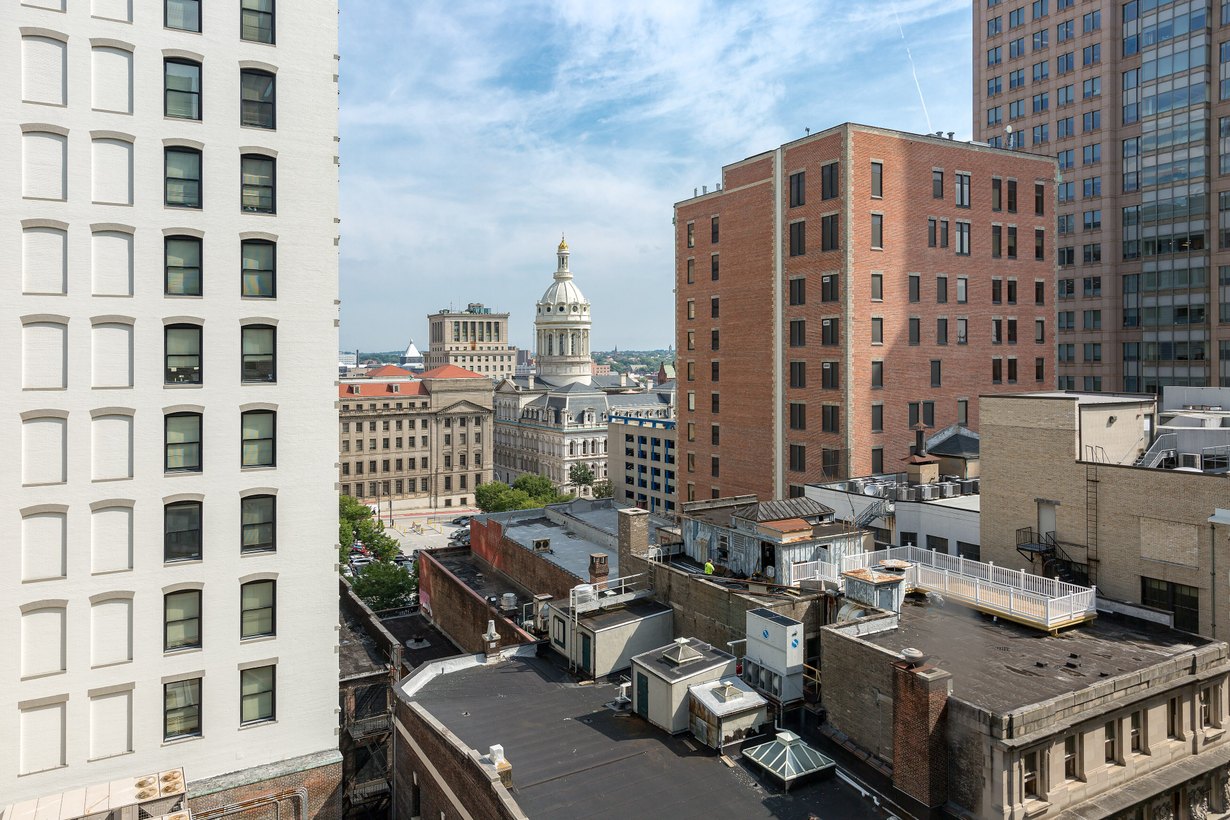
Featured image: Baltimore City Hall seen from downtown. Photo: Martin Kraft / Wikimedia Commons, CC BY-SA 4.0.