

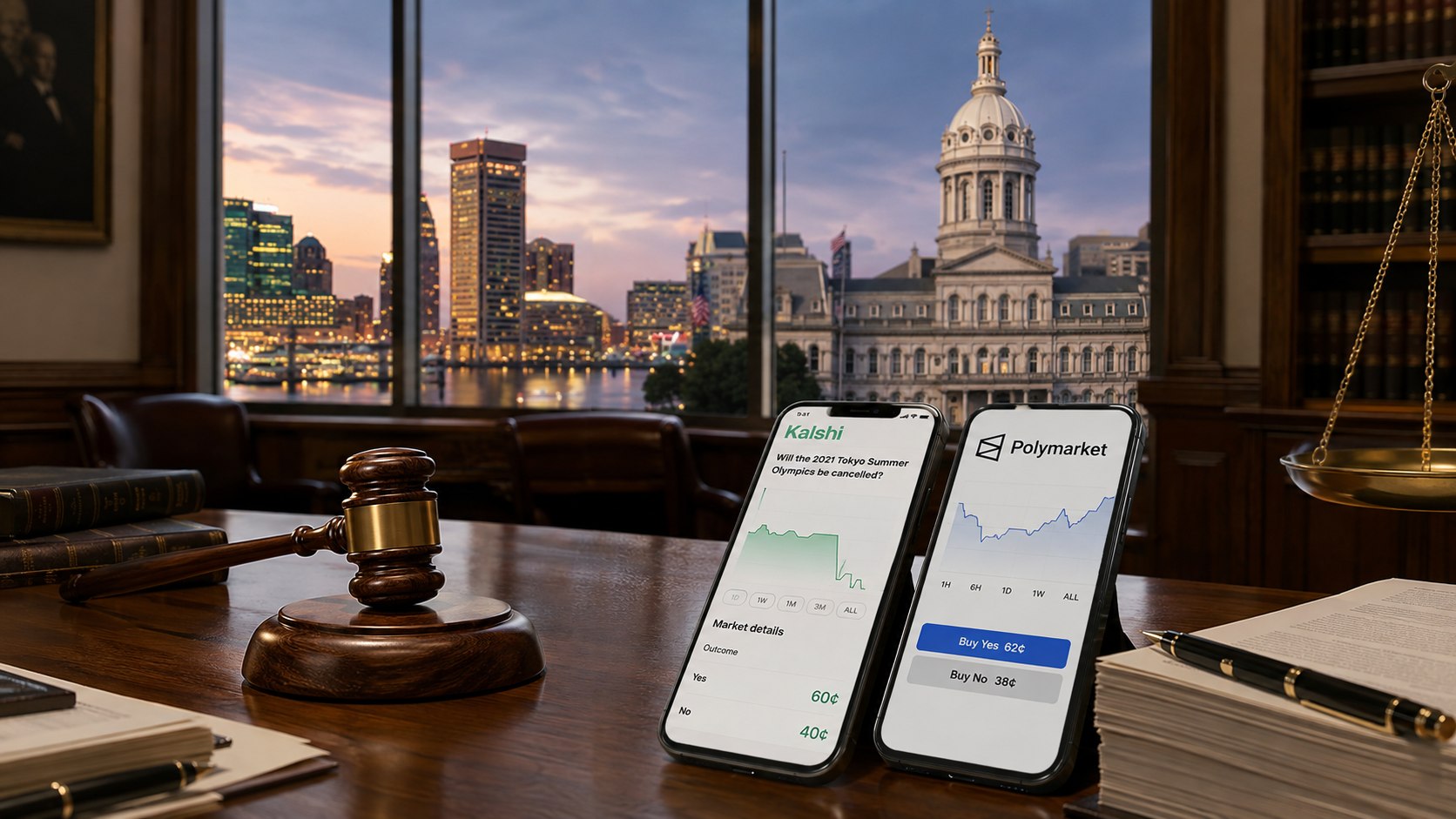
Baltimore sues Kalshi and Polymarket, accusing both prediction-market operators of violating the city’s consumer protection rules. Mayor Brandon Scott and the City Council filed separate lawsuits on August 13. The city claims sports wagers were offered without required local gambling licenses, as reported by Baltimore Chronicle.
The allegations were detailed by CBS Baltimore and the City of Baltimore. The city seeks civil penalties and restitution for affected consumers.
What Baltimore alleges against Kalshi and Polymarket
Baltimore argues that prediction markets function like traditional sportsbooks when they offer sports-related contracts. The lawsuits cite wagers involving winners, point spreads and individual player statistics.
The city’s main allegations include:
- operating sports-betting services without local licenses;
- describing wagers as event contracts or prediction-market trades;
- allegedly misleading consumers about regulatory status;
- avoiding safeguards imposed on licensed sportsbooks.
Baltimore says these practices may expose consumers to financial harm. City officials specifically raised concerns about young adults and people vulnerable to gambling problems.
How Kalshi and Polymarket responded
Both companies reject Baltimore’s interpretation of the law. Kalshi said it operates legally under the jurisdiction of its federal regulator. It described the city’s case as an attempt to revisit litigation already before the Fourth Circuit.
Polymarket argued that CFTC-regulated prediction markets fall under federal law. It opposed creating different regulatory systems across cities and states.
| Issue | Baltimore’s position | Companies’ position |
|---|---|---|
| Sports contracts | Unlicensed betting | Federally regulated trading |
| Regulation | Local laws apply | Federal rules control |
| Consumer protection | Existing safeguards are bypassed | Operations are lawful |
| Legal authority | Baltimore can enforce its ordinance | CFTC has primary jurisdiction |
The dispute therefore reaches beyond 2 companies. It tests where federal derivatives regulation ends and state or local gambling authority begins.
Why the Baltimore lawsuit matters
Prediction markets have expanded rapidly. CBS reported combined monthly Kalshi and Polymarket trading volume reached about $24 billion by April 2026.
Baltimore also joins wider legal pressure on the industry. New York has pursued Kalshi, while New York City is investigating several prediction-market companies.
The central legal question is whether sports event contracts are derivatives, gambling products, or potentially both under different laws.
Earlier we wrote about Baltimore Parking Ticket Appeal 2026: How to Request a Trial and What Evidence You Need