


Maryland SNAP and Medicaid changes will place new work and eligibility rules on thousands of residents beginning in 2027. They could also add tens of millions of dollars to state spending, as reported by the Baltimore Chronicle editorial team.
New SNAP work requirements expand across Maryland
Federal changes have already widened SNAP work requirements. Up to 80,000 additional Maryland residents could be affected, according to the Maryland Department of Human Services.
Affected recipients generally need to work or participate in approved activities for at least 80 hours per month. That equals roughly 20 hours per week. Certain exemptions remain available.
The rules now reach groups that previously received broader exemptions, including:
- adults through age 64;
- some parents of older children;
- veterans;
- people experiencing homelessness;
- some former foster youth.
Some lawful immigrants also face tighter eligibility rules. Refugees and people granted asylum may need permanent resident status to qualify for SNAP.
These changes are already having practical consequences. Maryland officials say more residents must document employment, training or qualifying activities to retain benefits.
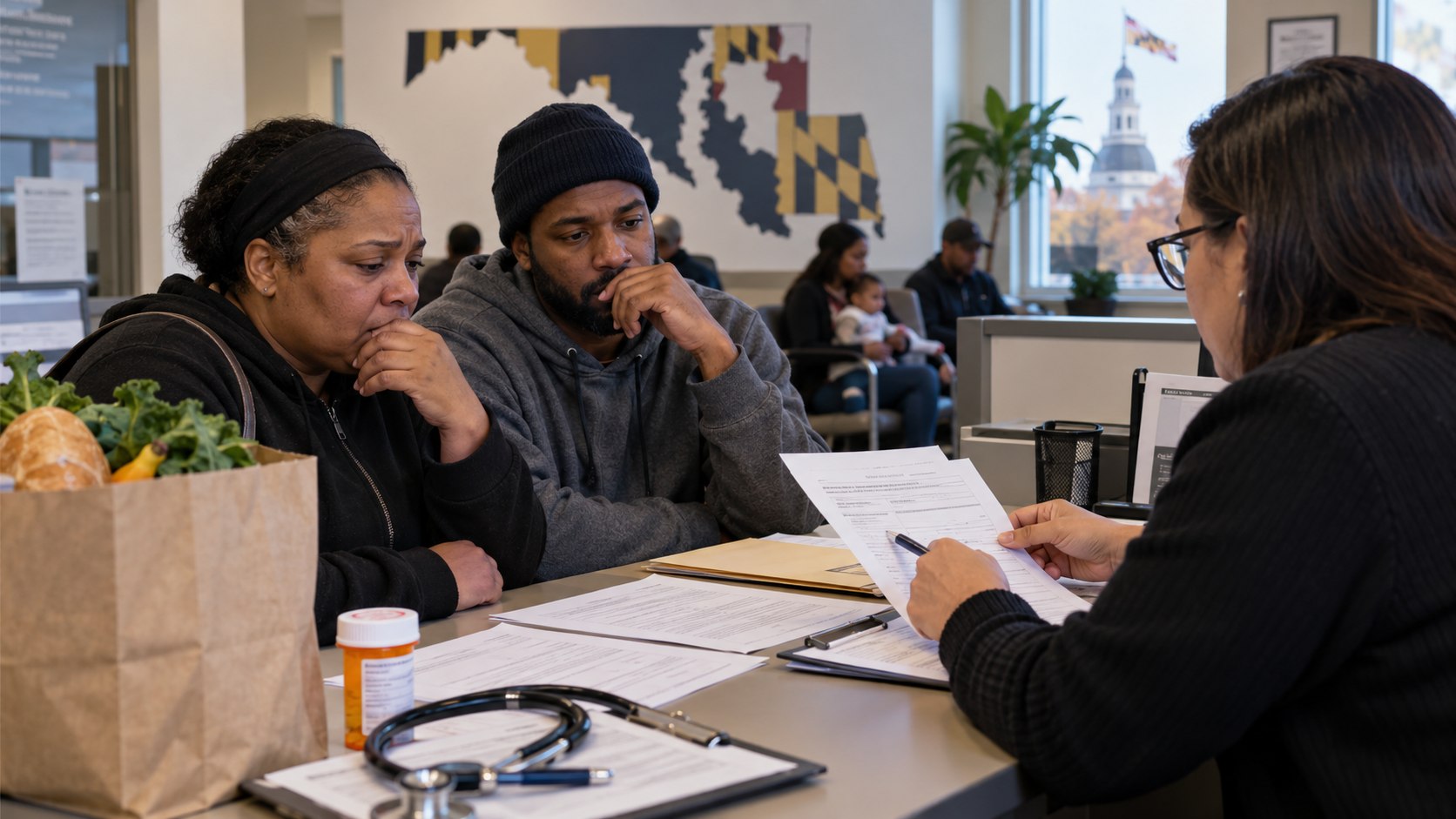
Maryland faces higher SNAP costs
The financial pressure extends beyond households. Beginning October 1, Maryland’s share of SNAP administrative expenses rose from 50% to 75%.
The state budget includes about $43 million for the additional administrative burden during fiscal year 2027. The full-year cost is projected to rise further.
| SNAP change | Potential Maryland impact |
|---|---|
| State administrative share | 75% instead of 50% |
| FY2027 additional funding | About $43 million |
| Additional people under work rules | Up to 80,000 |
| FY2025 payment error rate | 13.08% |
Maryland reduced its SNAP payment error rate from 35.56% in 2022 to 13.08% in 2025. That improvement matters because future federal cost-sharing penalties depend partly on payment accuracy.
Medicaid rules could affect coverage in 2027
Medicaid faces a separate set of federal changes. Maryland says new requirements could apply to hundreds of thousands of members.
Beginning in 2027, some adults may need to demonstrate work, education or other qualifying activities. Maryland Health Connection says affected residents may qualify by earning at least $580 monthly, attending school at least half time or completing 80 hours of approved activities each month.
Eligibility checks for some Medicaid adults will also occur every 6 months rather than once annually.
Children, pregnant residents, people with disabilities and several other groups can qualify for exemptions. State agencies are preparing automated systems and screening tools to handle the more frequent reviews.
For Maryland residents receiving SNAP or Medicaid, the central issue will be documentation. Missing a renewal, work report or eligibility notice could become as consequential as failing to meet the underlying requirement.
Earlier we wrote about Baltimore to use Susquehanna River water as drought strains reservoir supply