


Baltimore ends BGE conduit agreement and will replace it with a higher access fee in 2027. The change could affect future utility bills, although state regulators control any customer rate increase, reports the Baltimore Chronicle.
Why Baltimore is replacing the BGE conduit agreement
The Baltimore Board of Estimates approved the new fee on August 5. It will rise from $2.20 to $4.05 per linear foot on January 1, 2027.
The city owns roughly 700 miles of underground conduits carrying electric and communications infrastructure. BGE is the system’s largest user.
Under the 2023 agreement, BGE funded conduit upgrades instead of paying the traditional franchise fee. The company committed about $120 million through the end of 2026.
Baltimore notified BGE in June that it would not renew those terms. Mayor Brandon Scott cited higher construction costs, greater system needs and recent public safety concerns.
How the old and new conduit arrangements compare
The approved changes alter how BGE compensates Baltimore for using city-owned infrastructure.
| Provision | Current arrangement | From January 1, 2027 |
|---|---|---|
| Access charge | Capital investments replace the standard fee | $4.05 per linear foot |
| Previous fee benchmark | $2.20 per linear foot | More than 84% higher |
| Infrastructure funding | About $120 million through 2026 | Covered through fees and future city planning |
| Customer impact | Included within regulated utility costs | Subject to PSC review |
The higher fee does not automatically appear on customer bills. BGE must seek approval from the Maryland Public Service Commission before recovering added costs through regulated rates.
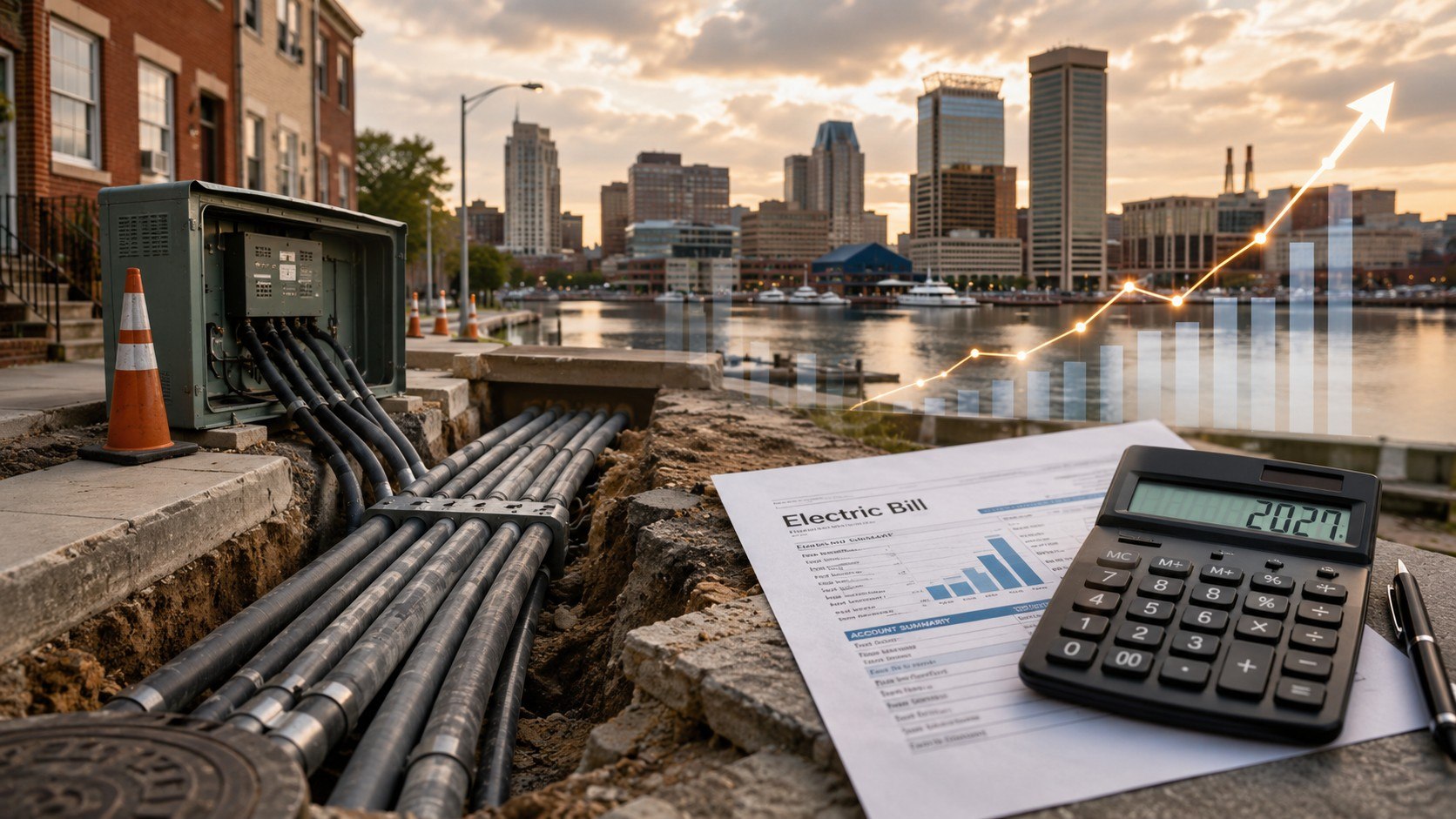
Could Baltimore conduit fees raise BGE electricity bills?
BGE warned that the increased charge could raise customer bills. Company representatives argued that the existing agreement produced infrastructure improvements at a lower cost.
City officials disputed the suggestion that BGE alone could pass the expense to customers. Scott estimated the effect could be around $1 per bill, but no final customer charge has been approved.
The dispute now centers on 3 questions:
- how much revenue Baltimore will receive;
- which conduit repairs receive priority;
- whether regulators allow BGE to recover the fee from customers.
The Maryland Office of People’s Counsel previously criticized the 2023 financing structure. Its analysis found that customers could face substantial long-term costs from BGE earning returns on improvements to city-owned property.
For Baltimore households, the immediate change is administrative. Any actual bill increase will depend on a separate regulatory decision.
What happens next
The existing agreement remains active through December 2026. BGE says it expects to complete approximately $120 million in required investments before then.
Beginning in 2027, the new per-foot charge will govern access unless Baltimore and BGE negotiate different terms. The city must also decide how future conduit maintenance and modernization will be funded.
Earlier we wrote that Maryland sues Trump administration over TANF recipient data access