

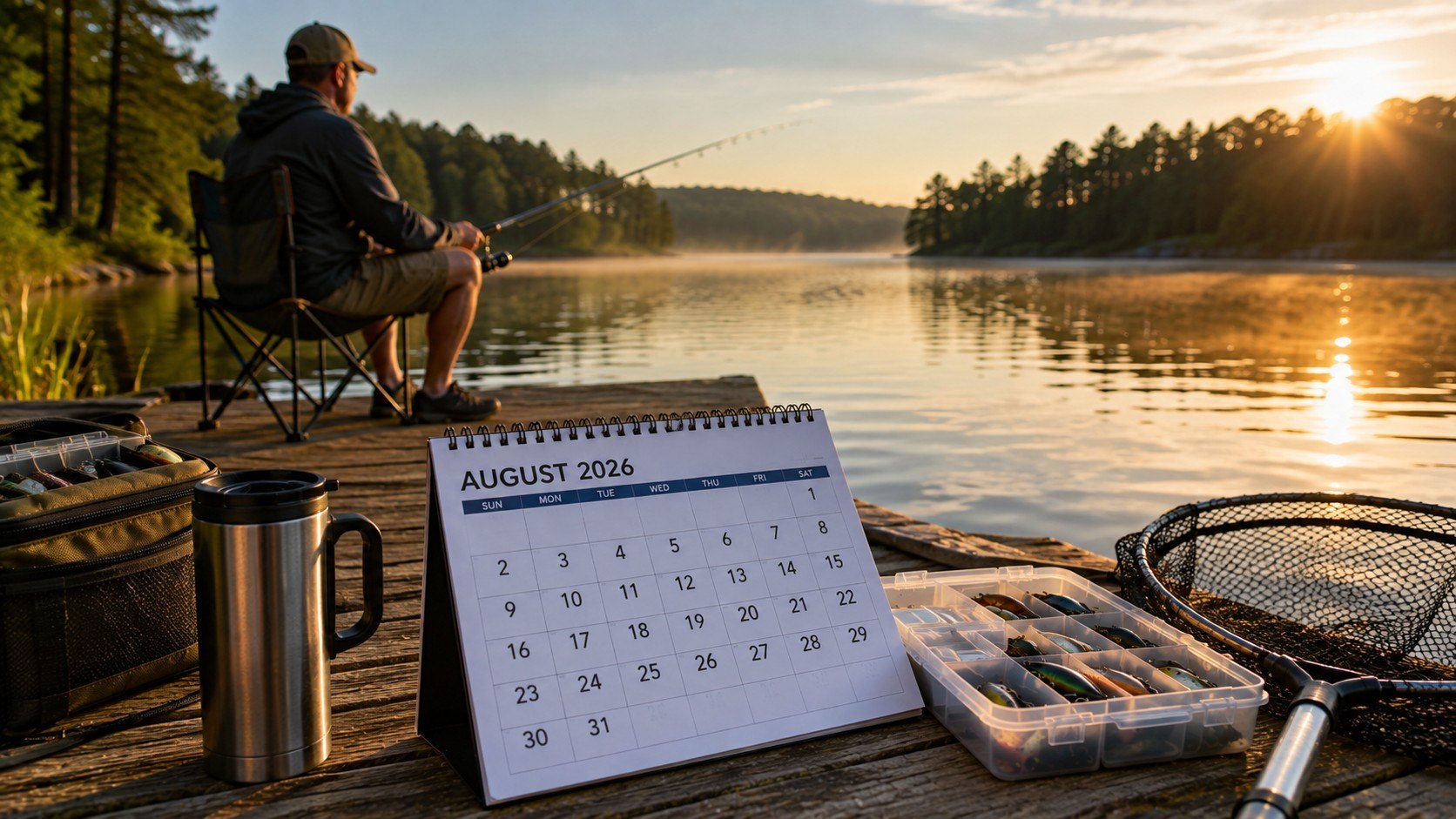
Fishing calendar for August 2026 in the USA points toward a month divided by heat, changing daylight and 4 distinct lunar phases. Early mornings favor freshwater predators, while coastal anglers gain stronger opportunities around tidal movement and late-summer migrations, as noted by the Baltimore Chronicle.
August does not offer one universal “best fishing day” for every state. Water temperature, barometric pressure, current, tides and dissolved oxygen usually matter more than astrology. The lunar calendar remains useful because moonlight and tidal strength can alter feeding windows.
The strongest practical strategy is simple: fish before sunrise, follow local conditions and treat lunar dates as planning markers rather than guaranteed results.
Fishing Calendar for August 2026: Best Periods at a Glance
The following calendar combines lunar phases with typical late-summer behavior. Dates may shift slightly by time zone, especially between the East and West coasts.
| Dates | Moon period | Expected activity | Recommended targets | Best approach |
|---|---|---|---|---|
| August 1–4 | Waning gibbous | Moderate to good | Bass, catfish, walleye, striped bass | Fish before sunrise and after sunset |
| August 5–7 | Last quarter | Variable | Trout, panfish, flounder | Use smaller natural presentations |
| August 8–11 | Waning crescent | Good in low light | Largemouth bass, crappie, redfish | Work shaded cover and deeper edges |
| August 12–14 | New moon | Strong coastal potential | Red drum, snook, striped bass, sharks | Follow moving tides after dark |
| August 15–18 | Waxing crescent | Steady | Bass, bluegill, channel catfish | Target vegetation and drop-offs |
| August 19–22 | First quarter | Improving | Walleye, salmon, tuna, fluke | Cover water with active lures |
| August 23–26 | Waxing gibbous | Good | Catfish, carp, striped bass | Fish evenings and overnight |
| August 27–29 | Full moon | Strong but inconsistent | Sturgeon where legal, bass, coastal predators | Focus on moonrise, tides and night fishing |
| August 30–31 | Waning gibbous | Moderate | Bass, trout, panfish | Return to dawn and dusk sessions |
The U.S. Naval Observatory places the principal August phases around August 5, 12, 19 and 27 in Pacific time. The full moon reaches the East Coast shortly after midnight on August 28.
These periods should not replace a local forecast. A stable overcast morning can outperform a theoretically favorable moon day. A sudden cold front may slow feeding for several hours. Falling pressure before a storm can produce a brief aggressive bite. Wind direction also changes access, water clarity and baitfish position. Anglers should compare the calendar with hourly weather and local fishing reports.
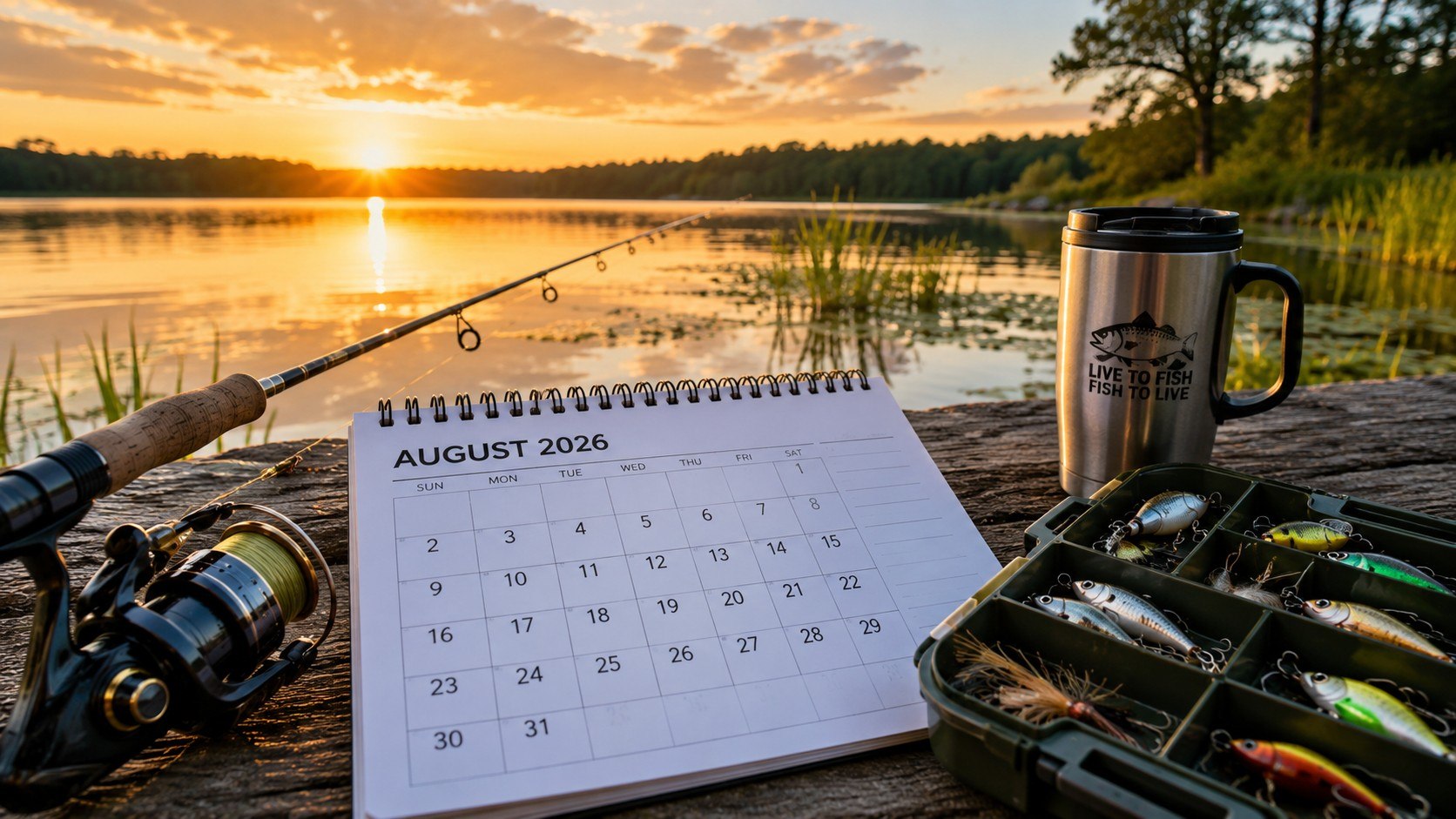
Best Fishing Days in August 2026
The most promising broad windows are August 9–14, August 19–22 and August 26–29. These ranges cover the approach to the new moon, the first quarter and the full Sturgeon Moon.
Useful dates for planning include:
- August 9–11 for predawn bass, crappie and inshore redfish;
- August 12–14 for dark-night coastal fishing and moving tides;
- August 19–22 for active presentations around offshore structure;
- August 26–29 for evening catfish, carp and striped bass;
- August 30–31 for quieter sunrise sessions after the full moon.
The new moon period provides darker nights, which can bring predators closer to shallow water. Coastal success still depends on the relationship between moon phase and local tide times. Around the full moon, fish may feed heavily overnight and become less active after sunrise. Bright nights can therefore disappoint anglers arriving late in the morning. Cloud cover can alter that pattern by reducing moonlight. The best response is to test several depths rather than wait at one familiar spot.
August Fishing Conditions Across the United States
Late summer creates different problems across the country. Northern lakes may retain productive cool-water zones, while southern reservoirs can develop strong thermal layers.
In the Northeast, striped bass often move toward cooler water, current seams and nighttime feeding grounds. Black sea bass, fluke and bluefish remain important coastal targets, although limits vary by state. Connecticut, for example, lists a 2026 black sea bass limit of 4 fish per angler through August 31.
Chesapeake Bay anglers should watch salinity, oxygen levels and afternoon thunderstorms. The waterfront geography described in this Fell’s Point guide shows how closely Baltimore remains connected with the Patapsco River and tidal harbor.
Across the Southeast and Gulf Coast, the first hours after dawn are critical. Redfish, speckled trout, snook and tarpon may feed near passes, grass lines and current-driven bait. NOAA notes that many saltwater anglers need state registration, while tuna and billfish trips may require an additional federal permit.
Western trout waters demand greater caution. Yellowstone introduced afternoon closures on selected rivers during July 2026 because of warm water and low flows. Such restrictions can change quickly during August.
Freshwater Fishing Strategy for August
The most reliable freshwater pattern begins with temperature. Shallow flats can become productive at dawn, then lose oxygen and activity as sunlight intensifies.
Largemouth bass often hold around submerged vegetation, docks, shade lines and the first major drop-off. Topwater lures can work before sunrise. Later, switch to soft plastics, jigs or deep-diving crankbaits.
Walleye anglers should examine deeper points, humps and current areas. Night trolling can produce better results than midday fishing. Crappie commonly suspend near bridge pilings, timber and offshore brush.
Catfish remain a major August target because warm water supports active nighttime feeding. Cut bait, live bait and strong-smelling prepared bait can work near channels or river bends.
When surface water feels unusually warm, reduce handling time and release unwanted fish without extended photography.
The National Park Service warns that high temperatures, low flows and concentrated fish can increase stress and mortality. NOAA recommends minimizing handling and using tools that allow release without removing fish from the water.
Saltwater Fishing Strategy for August
Saltwater anglers should build each trip around tide movement, bait location and safe weather. A favorable lunar phase without current may produce little activity.
A practical trip sequence looks like this:
- Check the state season, size limit and possession limit.
- Compare sunrise with the incoming and outgoing tides.
- Identify channels, points or passes that concentrate bait.
- Carry several lure sizes matching local forage.
- Leave the water before thunderstorms reach the area.
- Record productive tide stages for the next trip.
This approach works because coastal fish rarely feed evenly throughout the day. Current can move shrimp and baitfish into predictable ambush zones. A strong tide may also make certain structures unsafe or unfishable. Smaller lures often become useful when predators focus on young-of-the-year bait. Water clarity should determine leader strength and lure color. Regulations must be checked again immediately before departure.
Florida directs anglers to current freshwater and saltwater rules through its official Fish Rules system. The location function displays regulations for the user’s position.
How the August 2026 Moon May Affect Fishing
The new moon on August 12 creates the darkest major lunar window of the month. In coastal areas, stronger tidal differences may increase water movement around inlets, bays and estuaries.
The first quarter around August 19 often provides a balanced planning period. Evening light increases, but nights remain darker than during the full moon.
The Sturgeon Moon peaks on August 27 or August 28, depending on the U.S. time zone. It also coincides with a partial lunar eclipse.
The traditional name does not mean that sturgeon can be legally targeted everywhere. Sturgeon fisheries are heavily regulated, and several populations receive federal protection. Anglers must check state and federal rules before pursuing any sturgeon species.
August Fishing Safety and Equipment
August weather can turn a normal outing into a dangerous situation. Heat exposure, lightning, dehydration and sudden wind deserve the same attention as tackle.
Carry these essentials:
- fishing license and required permits;
- personal flotation device;
- drinking water and electrolyte drinks;
- sunscreen, hat and lightweight protective clothing;
- pliers, hook cutters and a landing net;
- weather-capable phone or marine radio;
- insulated ice storage for retained fish;
- first-aid supplies and a working flashlight.
A license stored inside a vehicle may not help during an inspection on the water. A flotation device must also be accessible rather than buried under equipment. Ice should be prepared before the first fish is retained. NOAA advises placing harvested fish on ice immediately or using an ice slurry.
Heat exhaustion can develop before an angler notices severe symptoms. Frequent water breaks are more effective than drinking a large amount later. Boats should return before approaching storms reduce visibility. Shore anglers need a clear route away from exposed beaches, piers and open banks. Every group should decide who monitors weather alerts.
“When Thunder Roars, Go Indoors!”
— National Weather Service, official lightning safety guidance for outdoor activities. The agency states that no outdoor location is safe when thunderstorms are nearby.
Baltimore-area anglers can review the regional risks described in this severe thunderstorm safety report.
Aries
Aries anglers may prefer fast-moving techniques, but August rewards controlled decisions. Use topwater lures early, then slow down near deep cover.
Taurus
Taurus suits patient bank fishing and long catfish sessions. Choose stable weather and prepare shade, water and reliable seating.
Gemini
Gemini anglers can test 2 contrasting methods during one trip. Compare shallow reaction baits with deeper finesse presentations.
Cancer
Cancer is well matched with quiet lakes, bays and family outings. Select sheltered water with easy access and verified regulations.
Leo
Leo season covers most of August, but midday heat can undermine ambitious plans. Begin before sunrise and leave before dangerous temperatures develop.
Virgo
Virgo anglers benefit from detailed preparation. Organize permits, tide data, tackle and emergency equipment before reaching the water.
Libra
Libra favors a balanced schedule around dawn and evening. Divide time between active casting and slower structure fishing.
Scorpio
Scorpio is associated with focused night sessions. Full-moon catfish or striped bass fishing may suit that approach where legal and safe.
Sagittarius
Sagittarius anglers may choose new waters or charter trips. Confirm cancellation terms, required permits and fish limits before booking.
Capricorn
Capricorn suits methodical deep-water fishing. Use electronics, depth changes and repeated passes rather than random casting.
Aquarius
Aquarius anglers may enjoy experimenting with modern sonar or unusual lure profiles. Technology should support observation, not replace it.
Pisces
Pisces naturally fits a water-focused calendar, but no zodiac sign predicts actual catches. Weather, habitat, regulations and technique remain decisive.
Frequently Asked Questions
What are the best fishing days in August 2026?
The broad planning windows are August 9–14, August 19–22 and August 26–29. Local weather and tides may change the result.
When is the new moon in August 2026?
The new moon occurs on August 12. It may support productive nighttime and tidal fishing in some coastal areas.
When is the full moon in August 2026?
The full Sturgeon Moon occurs late on August 27 in Pacific time and shortly after midnight on August 28 in Eastern time.
Is fishing always better during a full moon?
No. Fish may feed strongly overnight, then become less active during the morning. Clouds, current, temperature and pressure can override lunar patterns.
What time should I fish during August?
Dawn, dusk and nighttime are usually more comfortable and productive. Midday fishing may still work in deep water, heavy shade or strong current.
Do fishing regulations remain the same throughout August?
Not always. Limits, seasons and emergency closures can change during the month. Verify current rules through the responsible state wildlife agency.
How should fish be released in hot weather?
Keep the fish in water when possible, use wet hands, remove the hook quickly and avoid long photographs. Stop fishing if water temperatures create severe stress.
Earlier we wrote that Мexico vs Colombia at M&T Bank Stadium set for September 26 in Baltimore