

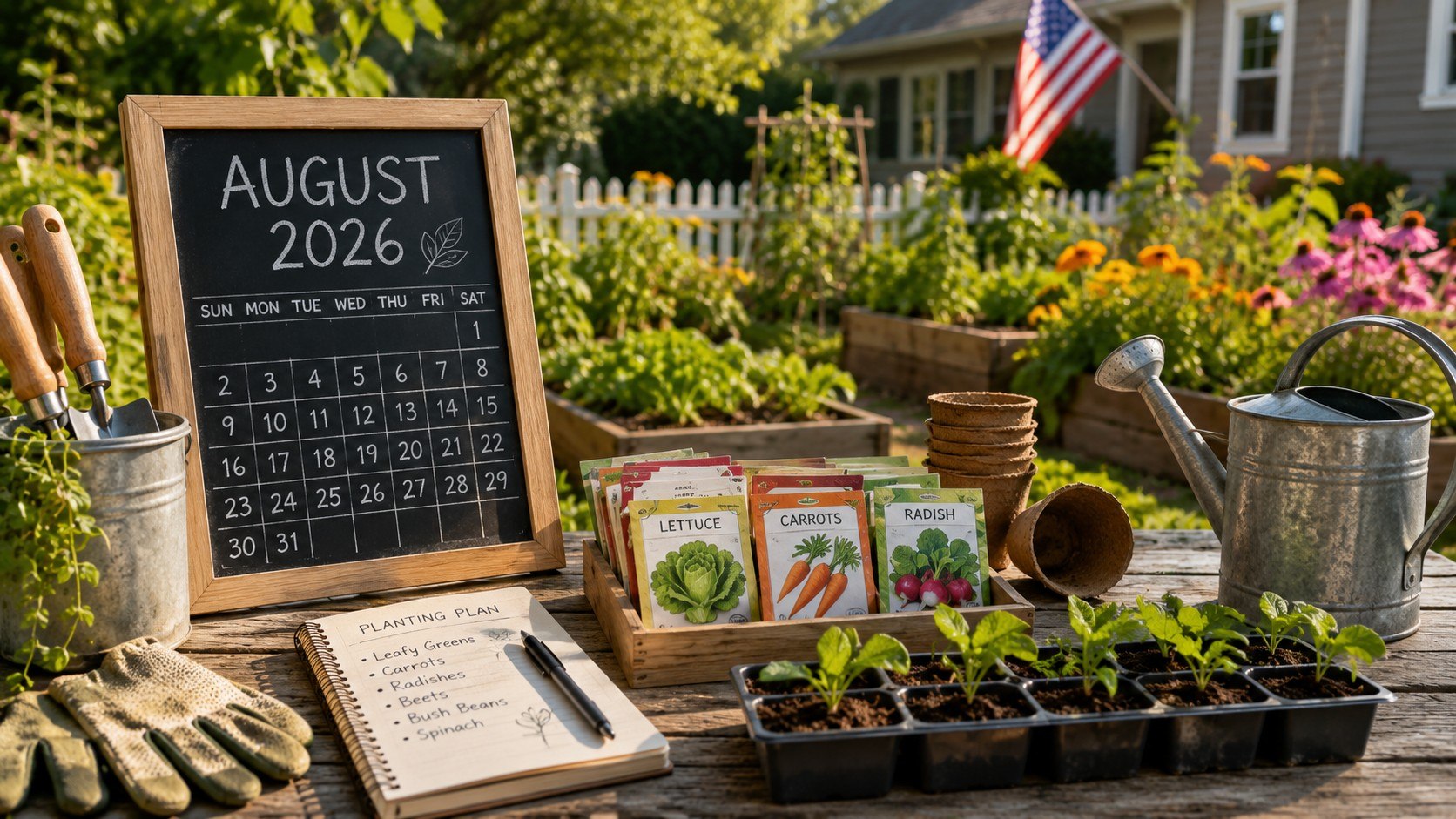
August 2026 planting calendar for the USA marks the shift from summer harvests to the fall garden. Northern growers face shortening days, while southern states still have months of productive weather. The decisive factors are the first frost date, crop maturity, soil temperature, and reliable irrigation, as noted by the Baltimore Chronicle.
August is not one national planting season. A gardener in Minnesota may sow spinach for autumn. Someone in Texas may start tomatoes for a second warm-season harvest. Florida growers can prepare vegetables that northern gardeners stopped planting weeks earlier.
The lunar dates below offer an optional planning system. They should never replace local frost forecasts or seed-packet instructions.
August 2026 Planting Dates and Moon Phases
The month begins under a waning Moon after the July 29 Full Moon. The Last Quarter occurs on August 5. The New Moon arrives on August 12, followed by the First Quarter on August 19. The Full Moon reaches its peak late August 27 in Pacific Time and early August 28 farther east.
| Period | Lunar stage | Suitable garden work |
|---|---|---|
| August 1–4 | Waning Moon | Sow roots, transplant hardy crops, harvest mature produce |
| August 5–11 | Last Quarter period | Weed, cultivate, prepare beds, sow selected root crops |
| August 12 | New Moon | Pause intensive work or prepare the next sowing cycle |
| August 13–19 | Waxing Moon | Sow leafy vegetables and fast aboveground crops |
| August 20–27 | Waxing toward Full Moon | Transplant greens, water deeply, monitor pests |
| August 28–31 | Full and waning Moon | Harvest, sow roots where the season permits, improve soil |
These dates follow lunar gardening tradition rather than established agronomic evidence. Local conditions remain more important than the Moon. Check soil moisture before sowing because August beds can dry within hours. Use shade cloth when midday temperatures threaten young seedlings. Choose short-season varieties when frost may arrive within 60 days. Southern growers should also consider hurricane rainfall and prolonged humidity.
The strongest August garden is not planted on one “perfect” date. It is built around frost risk, seed maturity, water access, and realistic harvest timing.
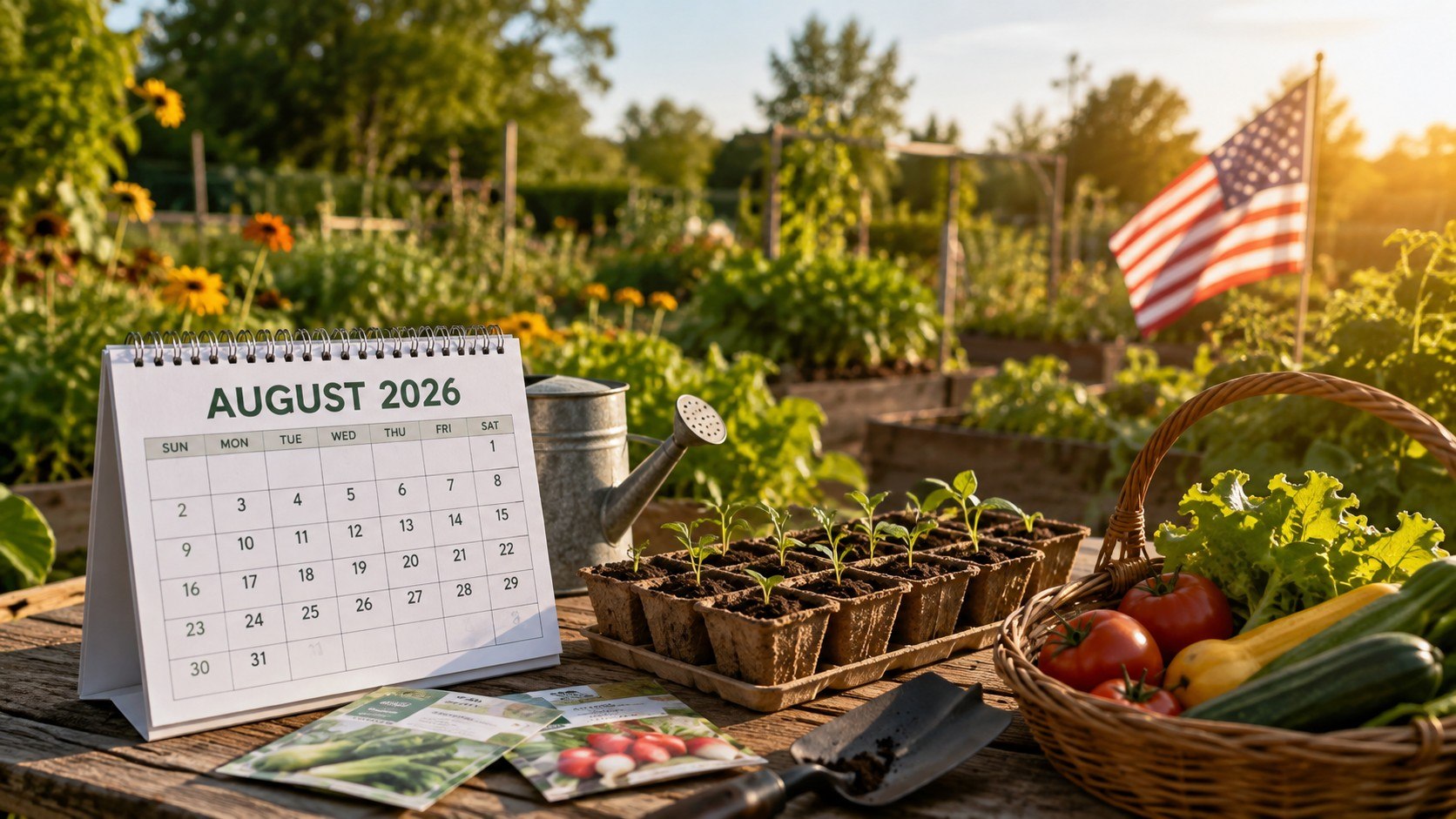
What to Plant in August Across the United States
Cool-season vegetables dominate August sowing in much of the country. University of Minnesota Extension lists kale, beets, broccoli, collards, lettuce, mustard greens, radishes, spinach, and turnips among midsummer options. Several tolerate light frost, while kale and mature cabbage can survive colder conditions.
Useful August choices include:
- radishes with 25–40-day maturity periods;
- baby spinach and heat-tolerant leaf lettuce;
- kale, mustard greens and collards;
- beets and turnips for roots or young leaves;
- cilantro and dill for autumn harvests;
- bush beans in frost-free or long-season areas;
- broccoli, cabbage and cauliflower transplants;
- peas where cool autumn weather lasts long enough.
August sowing requires faster decisions than spring planting. Add the days to maturity to the expected germination period. Then include another 7–14 days because autumn growth slows. Compare that date with your average first frost. Cold-tolerant vegetables may continue afterward. Beans, basil, cucumbers, and other tender plants will not.
Gardeners planning autumn lettuce can use this guide to planting lettuce. Spinach requires different moisture and thinning rules, explained in the spinach growing guide.
Regional August Sowing Guide
The United States includes climates ranging from Alaska’s short season to subtropical South Florida. A ZIP-code forecast is more useful than a generic national date.
| Region | Best August options | Main risk |
|---|---|---|
| Northeast | spinach, radish, lettuce, kale, turnips | early frost and shorter daylight |
| Midwest | kale, mustard, beets, radish, kohlrabi | heat during germination |
| Mid-Atlantic | carrots, beets, lettuce, collards, broccoli | humid weather and pests |
| Southeast | beans, cucumbers, squash, collards, tomatoes | heat, storms and fungal disease |
| Gulf Coast | peppers, tomatoes, beans, herbs, fall brassicas | extreme soil temperatures |
| Southwest | beans, squash, chard, carrots, brassica starts | rapid moisture loss |
| Pacific Northwest | lettuce, spinach, radish, peas, cilantro | dry soil or early cool nights |
| California | choices vary by coast, valley and mountains | major microclimate differences |
Northern gardeners should prioritize quick crops during early August. Mid-Atlantic growers usually have a longer window for roots and greens. Much of the Southeast can begin a second vegetable season. Desert gardeners may need afternoon shade and frequent moisture checks. Coastal California can support crops that fail in hotter inland valleys. Mountain locations may behave like northern states despite their southern latitude.
How to Calculate Your Final Sowing Date
Start with the average first frost date for your location. The USDA Plant Hardiness Zone Map helps describe winter cold, but it does not provide exact frost deadlines. Use a local Extension office or climate service for freeze information.
Follow this sequence:
- Find the crop’s listed days to maturity.
- Add approximately 7–14 days for slower autumn growth.
- Count backward from the expected first frost.
- Adjust for the crop’s cold tolerance.
- Sow earlier when drought, shade, or cool soil may delay growth.
- Keep frost cloth ready for valuable late crops.
A 35-day radish may need closer to 45 days under shorter autumn daylight. Kale can remain productive after light freezes. Bush beans need a wider safety margin because frost kills them. Lettuce may survive light cold but still grow slowly. Transplants reduce waiting time for broccoli and cabbage. Direct sowing usually works better for carrots, radishes, beets, and turnips.
August Seedbed Preparation
Remove spent plants, weeds, and diseased debris before opening a second-season bed. Do not reuse exhausted soil without replenishing nutrients. University Extension guidance recommends working balanced fertilizer or mature compost into beds after earlier crops.
Water the soil before sowing rather than flooding it afterward. Small seeds can wash away under a strong hose. Plant lettuce and spinach slightly deeper during hot weather, following packet limits. A thin mulch can stabilize moisture after germination.
For a garden supporting bees and butterflies, review these pollinator-friendly gardening practices.
August seedlings often fail during their first 72 hours. Consistent surface moisture matters more than occasional heavy watering.
Aries
In traditional lunar gardening, Aries is considered a dry and less productive sign. Use Aries periods for weeding, removing diseased leaves, cultivating paths, and controlling invasive growth. Avoid relying on these dates for expensive seed.
Taurus
Taurus is traditionally classified as a productive earth sign. Gardeners associate it with root crops, sturdy transplants, and long-lasting plants. Beets, turnips, carrots, and hardy greens fit this approach.
Gemini
Gemini is usually treated as a dry, less fertile sign. Use the period for harvesting, clearing beds, training vines, or checking irrigation. It can also suit seed sorting and garden planning.
Cancer
Cancer is regarded as one of the most productive water signs in lunar tradition. It is associated with leafy crops, transplanting, and moisture-loving plants. Lettuce, spinach, kale, and chard are common choices.
Leo
Leo is traditionally considered dry and barren. Schedule pruning, weed control, tool maintenance, or pest inspection. Harvest vegetables intended for prompt storage or preservation.
Virgo
Virgo is linked with flowers, herbs, and careful garden maintenance. It can suit transplanting ornamentals or organizing seedbeds. Some lunar calendars avoid major vegetable sowing during Virgo periods.
Libra
Libra is considered moderately productive. Traditional calendars associate it with flowers, herbs, and balanced root development. It may suit transplanting young brassicas or sowing decorative fall plants.
Scorpio
Scorpio is classified as a fertile water sign. Lunar gardeners often choose it for leafy vegetables and vigorous transplants. Moisture management remains essential during hot August weather.
Sagittarius
Sagittarius is generally considered less fertile. Use its periods for harvesting, cultivating, removing pests, and improving supports. Avoid sowing slow or costly varieties solely because of a lunar date.
Capricorn
Capricorn is traditionally associated with roots, durability, and cold tolerance. Carrots, turnips, beets, and radishes match that symbolism. The actual sowing deadline still depends on frost.
Aquarius
Aquarius is usually described as barren and dry. It is better suited to weeding, clearing, compost management, and equipment repairs. Gardeners can also inspect plants for heat stress.
Pisces
Pisces is regarded as a fertile water sign. Traditional practice connects it with leafy growth and transplanting. Spinach, lettuce, cilantro, and young brassicas are typical choices.
Favorable and Unfavorable Dates in August 2026
Farmers’ Almanac identifies August 1–2 for vines, transplants, and roots. August 5–6 favors transplanting and root crops. August 9–10 is listed for seedbeds, flowers, beets, onions, and turnips.
The same calendar recommends August 16–19 for grains, flowers, leafy vegetables, and selected aboveground crops. August 23–24 is another aboveground planting period. August 28–29 favors vines, transplants, and roots.
August 3–4, 7–8, 11–15, 20–22, 25–27, and 30–31 are treated as limited or non-planting periods. These dates can be used for harvesting, weed control, soil preparation, and pest management.
“Be sure to check your frost dates and learn more about your plant hardiness zone.”
— Farmers’ Almanac, August 2026 Gardening Calendar, guidance accompanying its national planting dates.
The dates are identical across growing zones, which limits their practical precision. A cucumber planted in Maine faces different conditions from one planted in Miami. Treat lunar dates as an organizational layer. Never use them to override dangerous heat, drought, storms, or frost forecasts.
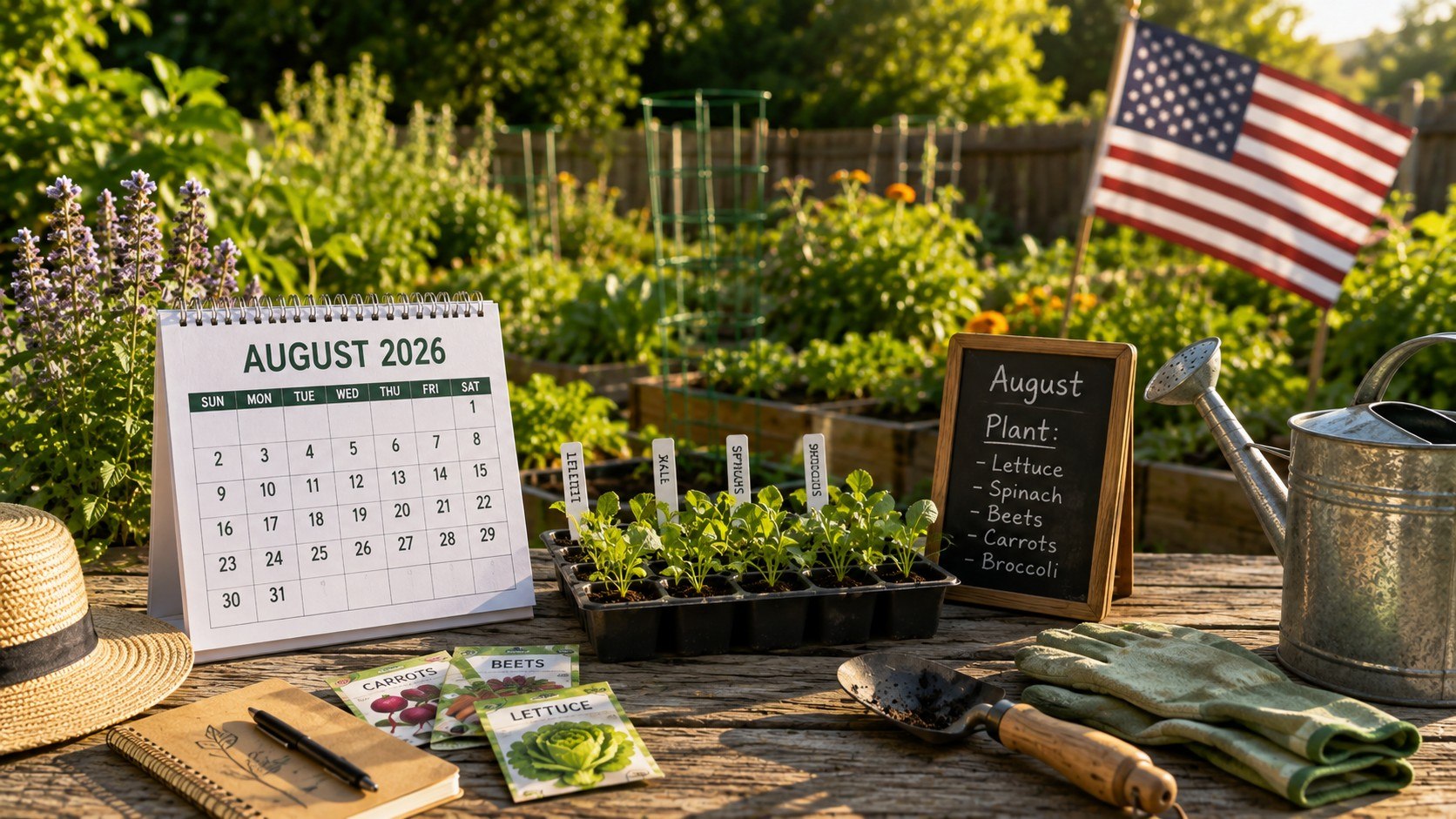
Common August Planting Mistakes
Gardeners often underestimate how slowly plants mature as daylight declines. A packet’s 45-day figure usually reflects favorable conditions. Autumn crops may require additional time.
Other common errors include sowing lettuce into hot, dry soil and planting tender crops too close to frost. Thick sowing also creates weak seedlings and poor airflow. Heavy fertilizer can produce soft foliage vulnerable to pests. Daily shallow watering encourages shallow roots. A better system combines careful variety selection, steady moisture, thinning, and weather monitoring.
FAQ
What vegetables can I plant in August 2026?
Most regions can plant some combination of radishes, spinach, lettuce, kale, beets, turnips, mustard greens, and cilantro. Southern states have more warm-season options.
Is August too late to start a vegetable garden?
No. The available crops depend on frost timing and regional heat. Fast greens and root vegetables remain practical across many states.
What is the best planting date in August 2026?
There is no single national date. Lunar calendars favor several periods, including August 1–2, 9–10, 16–19, 23–24, and 28–29. Local weather takes priority.
When is the New Moon in August 2026?
The New Moon occurs on August 12 at 10:37 a.m. Pacific Time and 1:37 p.m. Eastern Time.
When is the Full Moon in August 2026?
The Full Moon peaks on August 27 at 9:18 p.m. Pacific Time. It occurs on August 28 at 12:18 a.m. Eastern Time.
Should I follow zodiac signs when planting?
Zodiac planting is a traditional method, not a replacement for horticultural planning. Use frost dates, crop maturity, soil moisture, and temperature first.
How often should August seedbeds be watered?
Keep the upper soil layer consistently moist during germination. Frequency depends on heat, wind, soil texture, mulch, and rainfall.
Earlier we wrote about How to Sell on Poshmark 2026: Listing Tips, Seller Fees, Pricing and Shipping Steps