

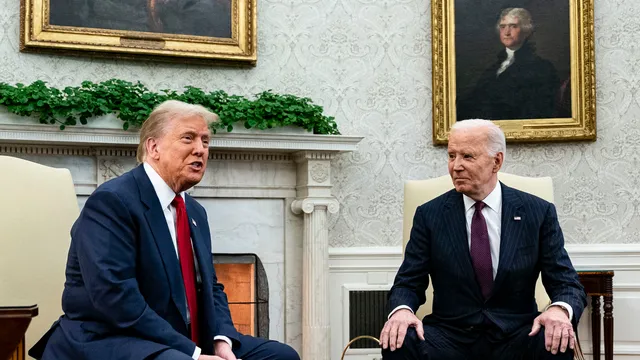
Justice Department prosecutors in Washington have officially abandoned a criminal investigation into former President Joseph R. Biden Jr. regarding his administration’s use of an autopen to sign executive documents, including high-profile pardons issued in January 2025. The inquiry, heavily encouraged by President Trump following his return to office, sought to establish whether Mr. Biden’s aides illegally utilized the device due to alleged cognitive decline in the former president. However, as of March 4, 2026, the U.S. Attorney’s Office for the District of Columbia, led by Jeanine Pirro, determined that no credible evidence of criminal conduct existed, marking a significant failure in the administration’s efforts to utilize the legal system against political rivals. Probes into these matters were quietly shelved after veteran prosecutors expressed skepticism regarding the legal basis for charges under current federal immunity precedents. , reports Baltimore Chronicle via The New York.
Justice Department Pressure and the Origins of the Autopen Inquiry
The Justice Department’s focus on the autopen began shortly after the 2025 inauguration, fueled by claims from President Trump and conservative media outlets. The core of the theory suggested that Joseph R. Biden Jr. lacked the “mental acuity” to consent to the pardons and commutations granted in his final days. Under this premise, the use of an autopen—a device used by presidents since the Eisenhower administration to replicate signatures—was framed as a tool for aides to bypass the president’s actual will.
In June 2025, President Trump signed an executive order specifically directing Attorney General Pam Bondi to investigate Mr. Biden’s mental capacity. This unprecedented move turned a standard administrative tool into the center of a potential felony conspiracy case. Despite this, federal law and a 2005 Justice Department legal opinion have long established that the president may sign legislation and other official documents via autopen.
Legal Barriers: Presidential Immunity and Federal Precedent
The investigation faced two insurmountable legal hurdles that ultimately led to its dismissal in early 2026. First, the Supreme Court’s 2024 ruling on presidential immunity granted broad protection to presidents for “official acts.” Issuing pardons is a core constitutional power of the presidency, making any criminal inquiry into the process of those pardons legally fragile.
Second, prosecutors could not identify a specific federal statute that had been violated. Even if aides assisted in the mechanical process of signing, as Mr. Biden confirmed in a summer 202 summer interview with The New York Times, there was no evidence that the signatures were made against his expressed orders.
Comparative Status of Trump-Era Political Investigations (March 2026)
| Target of Investigation | Allegation | Current Status (March 2026) | Outcome/Action |
| Joseph R. Biden Jr. | Illegal use of Autopen | Abandoned | No indictment sought by U.S. Attorney |
| Six Democratic Lawmakers | Video regarding military orders | Rejected | Grand Jury refused to issue indictment |
| Jerome H. Powell (Fed) | Mismanagement/Conflict | Ongoing | Criminal probe approved by Jeanine Pirro |
| Minnesota Democrats | Conspiracy to impede ICE | Active | Subpoenas currently challenged in court |
| Atlanta Elections Office | 2020 Election Fraud (Debunked) | Search Executed | FBI search based on 2020 claims |
Mechanism of the Investigation: Role of the U.S. Attorney’s Office
The investigation was primarily handled by the U.S. Attorney’s Office in Washington, D.C. Under the leadership of Jeanine Pirro, the office issued numerous demand letters to former Biden aides, seeking internal communications from December 2024 and January 2025. These letters sought to establish a timeline of Mr. Biden’s physical presence and mental state during the signing of clemency grants.
Steps Taken by Prosecutors Prior to Shelving the Case:
- Demand Letters: Sent to the White House Counsel’s office under the previous administration.
- Witness Interviews: Questioning of low-level staffers regarding the mechanical operation of the autopen device.
- Review of Medical Records: Attempts to subpoena health data, which faced immediate legal challenges from Biden’s personal legal team.
- Expert Consultation: Seeking testimony from neurology experts to speculate on “mental acuity” based on public footage—a move rejected by veteran DOJ career staff as “unscientific and biased.”
A significant factor in the collapse of the autopen case was the growing resistance from federal grand juries in the District of Columbia. In late 2025, a grand jury notably refused to indict six Democratic lawmakers who had cautioned military members against following illegal orders. This rare “no bill” signaled to the Justice Department that jurors were skeptical of politically motivated prosecutions.
Knowing that the autopen case was even weaker than the lawmakers’ case, Ms. Pirro’s office opted not to present a potential indictment to a grand jury, effectively “shelving” the matter to avoid another public defeat for the administration.
Earlier we wrote that Trump orders U.S. agencies to halt Anthropic AI amid Pentagon supply chain risk designation