

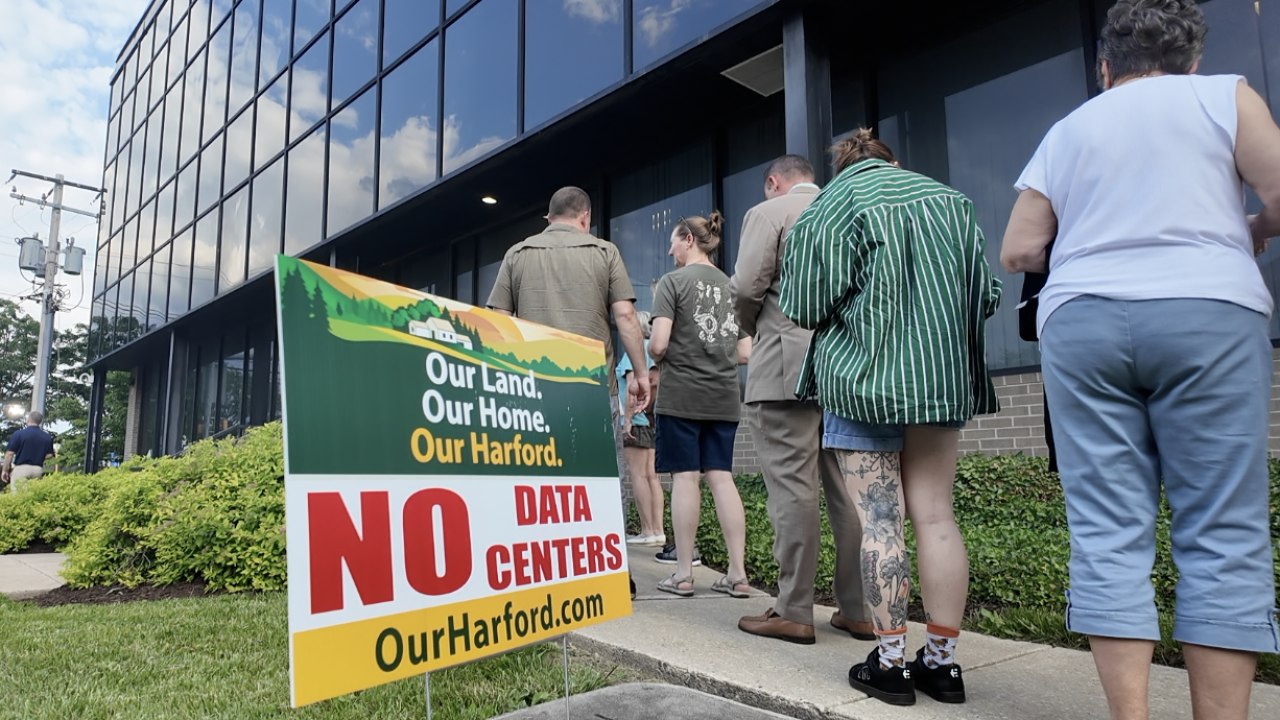
Harford County data center ban is moving from a temporary pause toward a much stronger policy: county leaders are considering emergency legislation that would permanently prohibit data centers under the local zoning code. The shift comes after earlier discussions about a moratorium, which would have delayed new projects while officials drafted rules. County Executive Bob Cassilly now argues that a full ban is needed because officials do not believe the county can protect residents while accommodating large-scale data center development. The issue has become especially sensitive because of concerns about energy use, water demand, noise, infrastructure pressure and long-term effects on nearby communities, as noted by Baltimore Chronicle via WMAR.
Why Harford County is moving from moratorium to ban
The original idea was a data center moratorium, a temporary measure that would give county officials time to review zoning, environmental risks and infrastructure capacity. That approach now appears too limited for some local leaders. Cassilly said the county had studied the issue carefully and concluded that officials could not both protect residents and accommodate the projects. His position turns the debate from regulation to prohibition.
The proposed emergency legislation would make the ban permanent by writing it clearly into the Harford County zoning code. That matters because data centers are not currently listed as specifically permitted uses in the county. Without a clear prohibition, supporters of the ban fear that future administrative decisions or legal interpretations could open the door to approval.
“We’ve done our homework, we looked at this very carefully, and we were just not able to both protect the citizens and accommodate these data centers,” Cassilly said.
Energy, water and infrastructure are central concerns
The strongest argument from county officials is tied to energy consumption. Large data centers can require major power capacity, especially projects connected to artificial intelligence and cloud computing. Cassilly argued that Maryland is not currently positioned to host such facilities responsibly. He also warned that Harford County could be setting itself up for a project that is not workable.
Officials and residents have also raised concerns about water use, environmental impact, backup power systems, road pressure and noise. These worries are not abstract for homeowners living near possible development sites. For them, the debate is not only about technology, investment or tax revenue. It is also about daily life, property values and the character of rural or historic areas.
For many residents, the question is not whether data centers are useful. The question is whether Harford County is the right place for them.
What the proposed ban would change
The emergency legislation would not simply pause approvals. It would place a formal, long-term restriction into county law. That means a future project could not be approved only through administrative interpretation of the zoning code. Supporters see this as a way to close uncertainty before developers move faster than local rules.
Before looking at the key points, it is important to understand why the wording of the legislation matters. In zoning disputes, unclear language can create openings for appeals, reinterpretations and pressure from developers. A written ban would make the county’s position much harder to challenge.
| Issue | Current situation | What the proposed ban would do |
|---|---|---|
| Zoning status | Data centers are not specifically permitted | Permanent prohibition would be codified |
| County policy | Moratorium was previously discussed | Emergency legislation moves toward a ban |
| Main concern | Energy, water, noise and infrastructure strain | Officials aim to prevent future approvals |
| Local impact | Residents fear quality-of-life changes | Ban would block projects in Harford County |
| Development debate | Companies argue for investment benefits | County leaders prioritize resident protection |
This legal change would send a strong signal to developers. It would also put Harford County in a different position than jurisdictions choosing temporary restrictions or negotiated standards. The county is not only asking for more time. It is considering a line that data centers would not be allowed to cross.
Mountain Branch project fuels local debate
The controversy has intensified because of the proposed Mountain Branch AI Energy Campus. The project is linked to the Mountain Branch Golf Course area, where nearby residents have voiced concern. Online, the project is described as a locally owned AI campus designed for Harford County, with strict environmental protections and recorded community benefits.
Bill Vasilakopoulos, owner of Mountain Branch Golf Course, defended the proposal as a highly engineered infrastructure project. He described it as a multi-billion-dollar investment and argued that the county should set strong local standards instead of adopting a moratorium or ban. That position reflects a broader argument often made by data center supporters: local governments can regulate, negotiate benefits and capture investment instead of rejecting projects outright.
“This is a thoughtful, highly engineered, multi-billion dollar next generation infrastructure project, and one of the largest private investments in Maryland history,” Vasilakopoulos said.
Still, residents living near the golf course say promised benefits do not answer their immediate concerns. They want clearer answers about noise, power infrastructure, environmental risks and how close the project would be to homes. In communities with historic properties and open land, even a well-funded project can face resistance if residents believe it changes the area permanently.

Residents support stronger protections
Some Harford County residents have openly backed the proposed permanent data center ban. Kate Perri, who lives on a historic property near Mountain Branch Golf Course, said she supports banning data centers in the county. She acknowledged that data centers may be built elsewhere, but argued Harford County is not the right place.
Her concern is partly about timing. She said companies appear to be pushing projects quickly before communities have all the facts. That fear is common in land-use fights, especially when the proposed development is large, technical and difficult for residents to evaluate without independent analysis.
There are several questions residents are likely to keep pressing as the legislation moves forward:
- How much electricity would a large AI data center need in Harford County?
- Would new infrastructure be required near homes or rural roads?
- How would water demand be managed during dry periods?
- What noise would come from cooling systems and backup equipment?
- Could environmental protections be legally enforced over time?
- Would nearby property owners receive any direct safeguards?
These questions show why the issue has become more than a zoning discussion. For residents, it is about whether local government can protect them before a project becomes too advanced to stop. The emergency legislation is therefore being framed by supporters as preventive action, not just political opposition.
Development supporters want standards, not prohibition
Supporters of the Mountain Branch project argue that a ban may be too blunt. They say Harford County could adopt strict local standards instead. That could include environmental requirements, community benefit agreements, noise limits, energy planning and infrastructure conditions. In their view, rejecting the project could mean losing one of the largest private investments in Maryland history.
This argument has economic weight, but it faces a trust problem. Residents near the proposed site say public promises are not enough unless the long-term effects are fully understood. They also worry that once a massive infrastructure project is approved, local control becomes weaker.
“They talk about all these good things, but the one thing that they never talk about is the impact that it will have on the community and the residents themselves,” landowner Bryan Cornell said.
The political challenge for Harford County is clear. Leaders must decide whether regulation can truly manage the risks or whether the safest option is to block data centers altogether. Cassilly’s comments suggest the administration has moved firmly toward the second option.
What happens next in Harford County
The proposed emergency legislation now places Harford County in the center of Maryland’s growing data center debate. As artificial intelligence projects expand, local governments are being forced to decide how much infrastructure pressure they are willing to accept. The Harford County case is especially notable because officials are not only seeking a pause. They are considering a permanent ban before data centers become an established land use.
For residents, the next stage will likely focus on public hearings, council debate and the exact wording of the zoning change. For developers, the key issue will be whether there remains any path to approval through standards, community benefits or revised proposals. For other Maryland counties, Harford County’s decision may become a reference point in future fights over AI data centers, power demand and local control.
Earlier we wrote about Severe Thunderstorm Watch Baltimore: storms may hit commute before wet Memorial Day weekend