

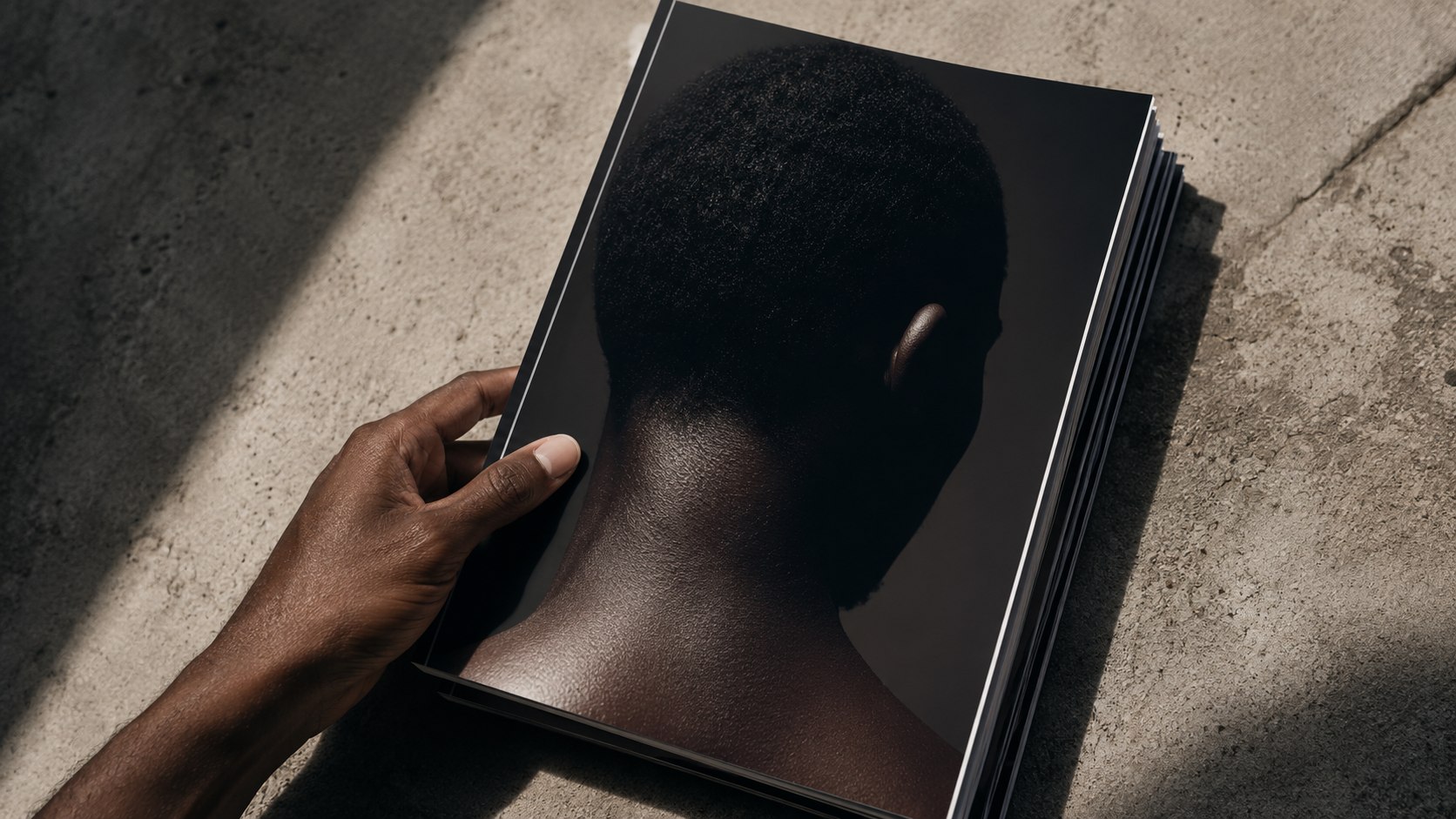
Black Is Magazine is entering a new chapter with its first print issue, a move that turns a digital space for Black photographers into a lasting cultural object. The inaugural edition, titled “Legacy and Continuity in Black Photographic Practice,” arrives as founder Lia J. Latty marks five years of building a platform around Black visual culture, identity and memory. The launch is set for Friday, May 22, from 7 to 9 p.m. at Charm City Cultural Cultivation in Waverly, where visitors can pick up the first issue during an event tied to Artscape weekend. The celebration will also include refreshments, DJ sets and a connection to Latty’s curated group exhibition, The Everyday: Scenes in Baltimore, as Baltimore Chronicle notes.
From Miami to Baltimore: how Lia J. Latty found her visual language
Lia J. Latty was born and raised in Miami, but Baltimore became central to her development as a photographer. She came to the city through the Maryland Institute College of Art, where she studied photography and graduated in 2022. Long before finishing her degree, she was already focused on a larger question: who gets space, visibility and care in visual storytelling.
Her photography often works with Black portraiture, light and personal memory. In projects such as Oreo, Latty photographed Black subjects holding meaningful objects and paired their portraits with handwritten notes. These notes described moments when people felt pushed outside narrow expectations of Black identity. The result was not just portraiture, but a direct challenge to the limits often placed on Black self-expression.
Her work treats the camera not only as a tool of documentation, but also as a way to return dignity, nuance and complexity to the people being photographed.
Why Black Is Magazine began as a digital project
Latty launched Black Is Magazine online in January 2021. The timing matters. The project came after the racial reckoning of 2020, when many young Black artists were rethinking their place inside the art world. Latty wanted to know who her peers were, how they were working and how they could support one another beyond institutional spaces.
The idea also grew from her discovery of the Kamoinge Workshop, a Black photography collective founded in 1963. Learning about that legacy through The Black Photographers Annual pushed her to ask why such histories were not more present in photography education. Black Is became her answer: a magazine built to interview, document and amplify Black photographers in Baltimore and beyond.
Early featured artists included Shan Wallace, Asha Holmes, Kyle Yearwood and Hannah Price. Two of those artists are connected to Baltimore, which helped root the publication in the city’s creative ecosystem.
What makes the first print issue important
The first print issue is more than a new format. It is a statement about permanence. In an era where digital images move quickly and often disappear into feeds, print gives photographs a different weight. Latty has described the issue as a milestone for both herself and the platform, especially after years of doubt about where the project was heading.
Here are the key details readers should know before the launch:
| Item | Details |
|---|---|
| Publication | Black Is Magazine |
| Founder | Lia J. Latty |
| First print issue | “Legacy and Continuity in Black Photographic Practice” |
| Launch date | Friday, May 22 |
| Time | 7-9 p.m. |
| Venue | Charm City Cultural Cultivation, Waverly, Baltimore |
| Related event | Artscape weekend and Scout Art Fair |
| Focus | Black photography, legacy, cultural memory, African diaspora |
This issue is also connected to Black Is Magazine’s fifth anniversary. That timing gives the launch a symbolic charge. The publication is no longer only an emerging digital platform. It is becoming an archive of creative relationships, visual arguments and cultural memory.
Baltimore as a creative base, not a backdrop
Baltimore plays a direct role in the story of Black Is Magazine. Latty has said the city allowed her to grow the project without the pressure of a highly competitive art market like New York. That mattered because Black Is needed time to develop its voice, community and curatorial direction.
The city also offered Latty the Black cultural environment she had been seeking since her years in Miami. While Miami gave her a global perspective, Baltimore gave her a different kind of grounding. It provided proximity to Black artists, Black neighborhoods and Black creative traditions that shaped both her photography and editorial work.
For a platform built around Black photographers in Baltimore, that context is essential. The magazine does not simply report on artists from a distance. It grows through in-person meetings, critique sessions, exhibitions and direct relationships.
A platform that became a community
Black Is has evolved beyond interviews and online publishing. Since August of last year, Latty has hosted “Black Is: Critique & Connect” at Charm City Cultural Cultivation. The event gives Black image-makers a place to receive feedback, discuss work and build professional relationships outside a school setting.
That kind of programming matters because early-career photographers often lack structured support. Not every artist has access to graduate programs, institutional mentors or expensive workshops. A community platform can help fill that gap, especially when it is built around trust and shared experience.
The Black photography community still needs several forms of support:
- More centralized spaces for Black photographers in Baltimore.
- Structured mentorship from established photographers.
- Affordable workshops for artists at the beginning of their careers.
- A community darkroom with accessible film classes.
- More opportunities to show work in print and public exhibitions.
These needs are practical, not abstract. They point to the infrastructure required for a creative scene to survive. Without mentorship, critique and access to tools, many young photographers remain isolated at the exact moment they need guidance most.
Why print matters in the age of AI and social media
The move into print also responds to a larger cultural shift. In 2026, photography exists in a world shaped by social media, artificial intelligence and fast image circulation. Latty’s view is that Black photographers need control over their creative process more than ever. Print helps return attention to craft, patience and ownership.
She argues that AI’s speed can work against mastery. Real photographic practice requires time, obsession, curiosity and technical care. For Black image-makers, that investment is tied to a broader visual tradition. It is not only about making attractive images. It is about contributing to Black visual culture in ways that can be preserved.
Seeing a photograph on a screen is different from seeing it occupy physical space. Print changes the scale, rhythm and emotional force of an image.
That is why the first print issue feels especially relevant. It asks readers to slow down. It asks them to treat Black photography as something worth collecting, studying and protecting.
What readers can expect from the launch
The launch event will bring together the magazine’s editorial history, Baltimore’s art community and the wider Artscape weekend. Guests will be able to get the first print copy, meet other art lovers and experience the atmosphere around Latty’s exhibition work. The related presentation at Artscape’s Scout Art Fair will feature artists Alaina Lurry, Dahveed Wilkins and Reginald Ransom III.
For readers, the key point is clear: Black Is Magazine print issue is not just a publication drop. It is a public claim that Black photographic practice carries legacy, memory and future possibility. The magazine began as a digital answer to absence. Now it is taking physical form as a record that can be held, shared and preserved.
Earlier we wrote about Best Refrigerator Size Guide for 2026: Cu Ft Per Person, Family Needs, and Kitchen Fit