

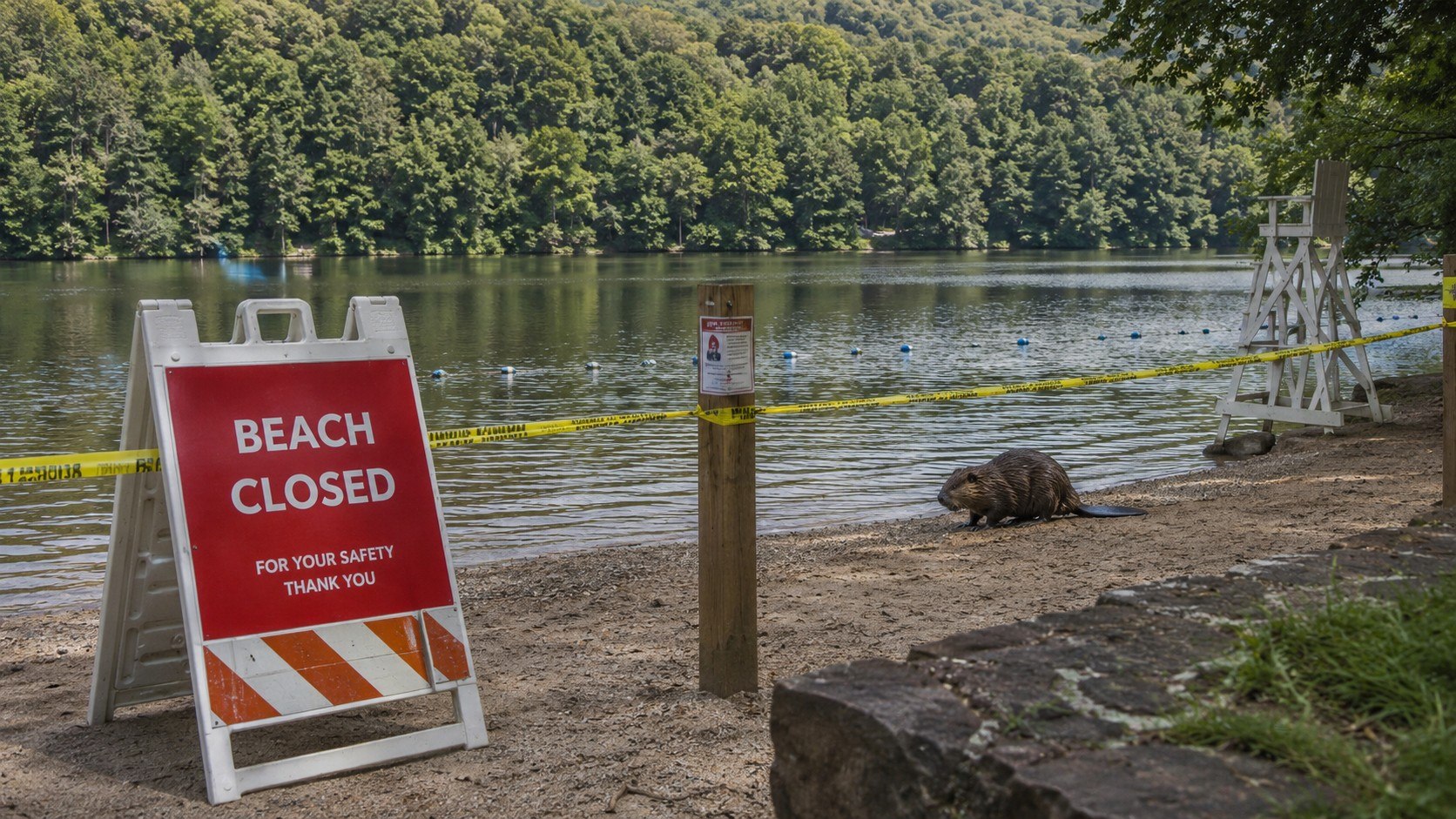
Rabid beaver bite concerns have closed the swimming beach at Cunningham Falls State Park after a 13-year-old boy was attacked. The animal later tested positive for rabies, as the Baltimore Chronicle editorial team notes.
The incident happened around 9:10 a.m. on Sunday, July 26, in the William Houck Area near North Beach. The teenager suffered injuries to his hands and chest. He was airlifted to Johns Hopkins Hospital in Baltimore for treatment.
Why Cunningham Falls swimming beach remains closed
Maryland officials immediately prohibited swimming while park employees and Natural Resources Police searched the lake area. A beaver was recovered later Sunday and transferred through Frederick County Animal Control.
The Maryland Department of Health confirmed the positive rabies test on Monday, July 27. The swimming area will remain closed for several days while wildlife specialists determine whether visitors can safely return.
According to the Maryland Department of Natural Resources park dashboard, Cunningham Falls State Park is partially closed. Other sections of the park remain accessible.
| Location | Current status |
|---|---|
| William Houck swimming beach | Closed |
| Designated swimming area | Swimming prohibited |
| Other park areas | Open |
| Reopening date | Not yet announced |
Officials have not provided a precise reopening date. Visitors should check the state park dashboard before traveling to the lake.
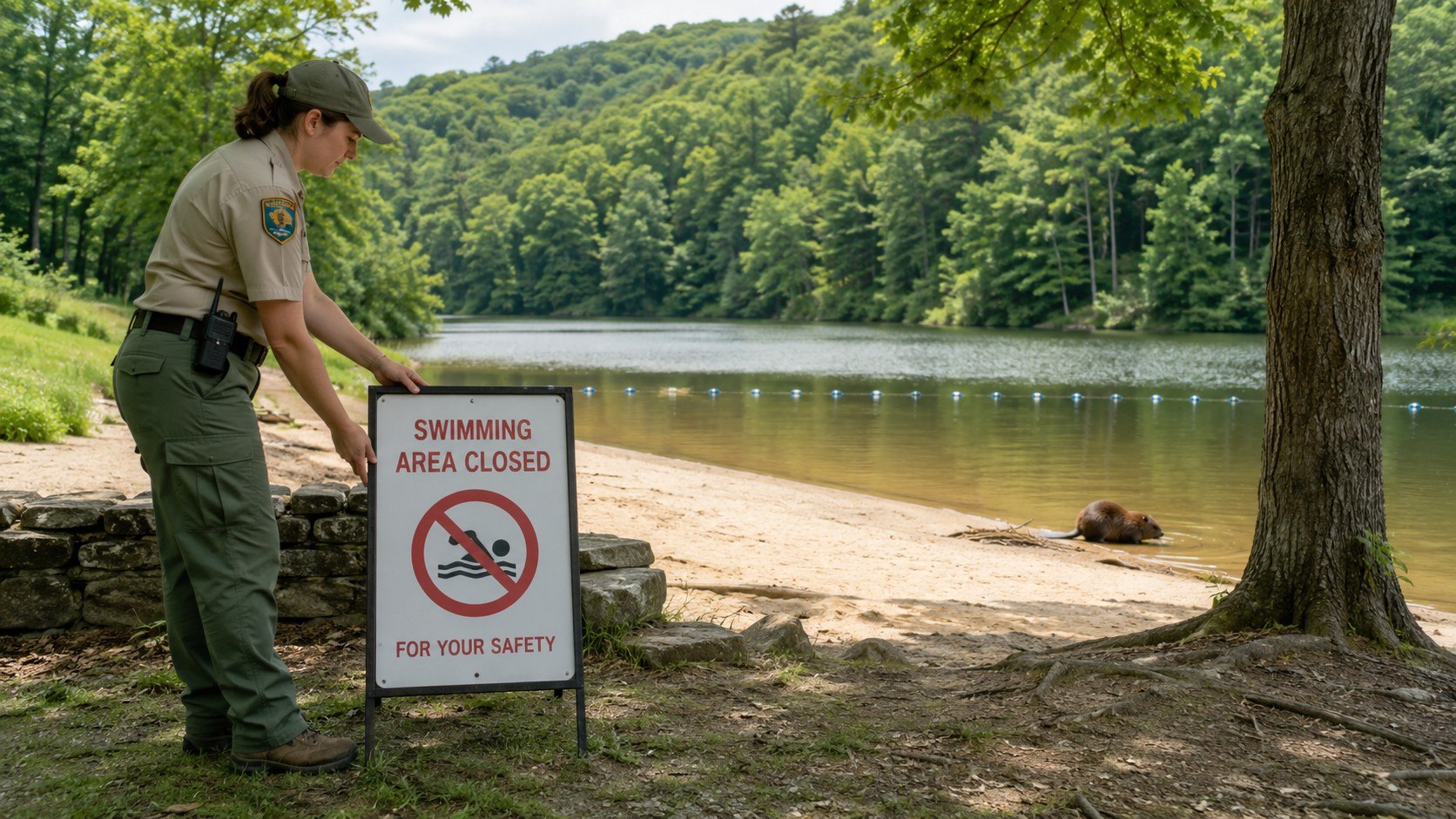
What visitors should do after wildlife contact
Anyone who touched the beaver or encountered suspicious wildlife should contact a healthcare provider immediately. They should also call Frederick County Community Health Services at 301-600-3342.
Officials recommend several immediate steps:
- Wash any bite or scratch thoroughly with soap and water.
- Seek medical advice without waiting for symptoms.
- Report wild animal contact to Animal Control at 301-600-1544.
- Keep pets away from unfamiliar wildlife.
- Contact a veterinarian after possible pet exposure.
Rabies usually spreads through infected saliva, most often following a bite. Prompt post-exposure treatment can prevent the disease before symptoms develop.
Signs of rabies in wild animals
Possible warning signs include excessive salivation, unusual aggression, limping and difficulty eating or drinking. Nocturnal animals appearing during daylight may also require caution.
Barry Glotfelty, Frederick County’s environmental health director, urged residents not to touch or play with unknown animals. Mammals can carry rabies even when their behavior initially appears harmless.
Earlier we wrote about How to Sell a House with a Mortgage in 2026: Payoff, Equity and Closing Steps