

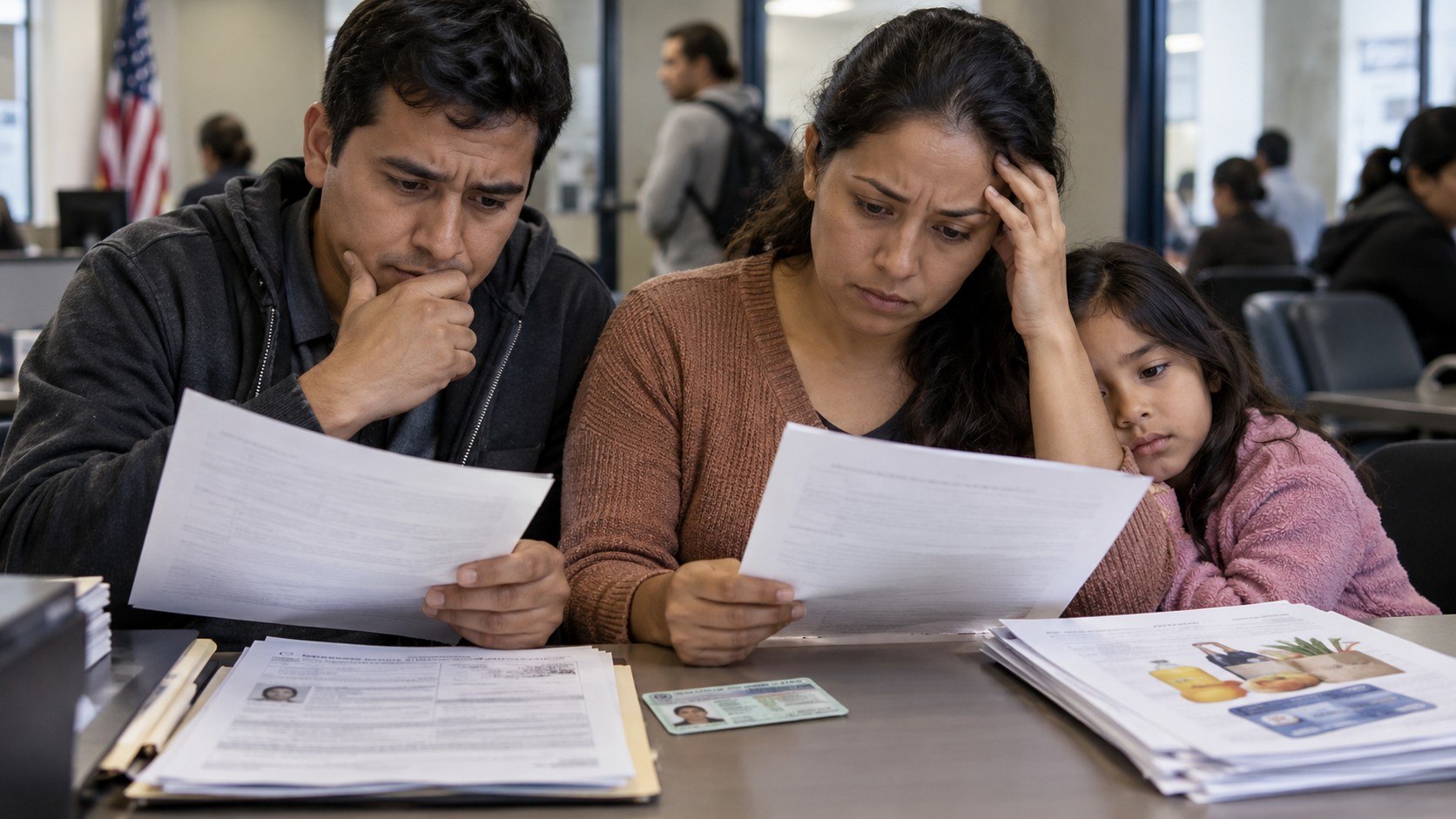
Trump public charge rule changes took effect on September 18, 2026, expanding federal discretion in immigration cases. Officers may now examine broader financial and personal circumstances when assessing green card or visa applicants, according to Baltimore Chronicle. The change follows the Department of Homeland Security’s rescission of the narrower 2022 public charge regulation.
What changes under the public charge rule
The public charge provision has existed in US immigration law for decades. It can make certain applicants inadmissible when officials believe they may become primarily dependent on government assistance.
The 2022 rule placed tighter limits on what officers could consider. In particular, most non-cash benefits were excluded from public charge determinations.
The new approach restores wider case-by-case discretion. USCIS says officers can assess all relevant circumstances when determining future dependence on public support.
Factors may include:
- income and financial assets;
- education and occupational skills;
- employment prospects;
- age and health;
- health insurance coverage;
- use of certain public benefits.
No single factor automatically determines an application. Officers must consider the applicant’s circumstances collectively.

Green card applicants face broader financial review
The policy potentially increases scrutiny for immigrants who use programs such as Medicaid, SNAP or other means-tested assistance. However, receiving a benefit does not automatically produce a denial.
The Federal Register says eligible people remain legally permitted to apply for health or nutrition programs. The immigration consequence depends on the individual public charge assessment.
The rule also changes the role of financial sponsorship. An affidavit of support remains relevant, but it does not necessarily settle the public charge question.
| Issue | Previous 2022 framework | New 2026 approach |
|---|---|---|
| Public benefits | Narrower categories considered | Broader discretion |
| Applicant finances | Total circumstances reviewed | Wider individualized review |
| Sponsor affidavit | Significant evidence | Still relevant, but not decisive |
| Officer discretion | More constrained | Expanded |
For applicants, this means financial circumstances can receive closer examination. The decision remains individualized rather than automatic.
States and cities challenge the Trump public charge rule
The policy is already facing litigation. New York City, Chicago, San Francisco, Seattle and other local governments filed a federal lawsuit on September 14. They argue the rule lacks clear limits and may discourage eligible families from using public services.
New York Attorney General Letitia James is leading a separate challenge with 21 other states and the District of Columbia. The coalition argues that the administration expanded public charge discretion beyond lawful limits.
The administration takes the opposite position. DHS says broader discretion better reflects federal immigration law and congressional requirements concerning self-sufficiency.
The litigation will determine whether the new framework remains in force unchanged.
Earlier we wrote that Toastique Severna Park opening brings gourmet toast café to Anne Arundel County