

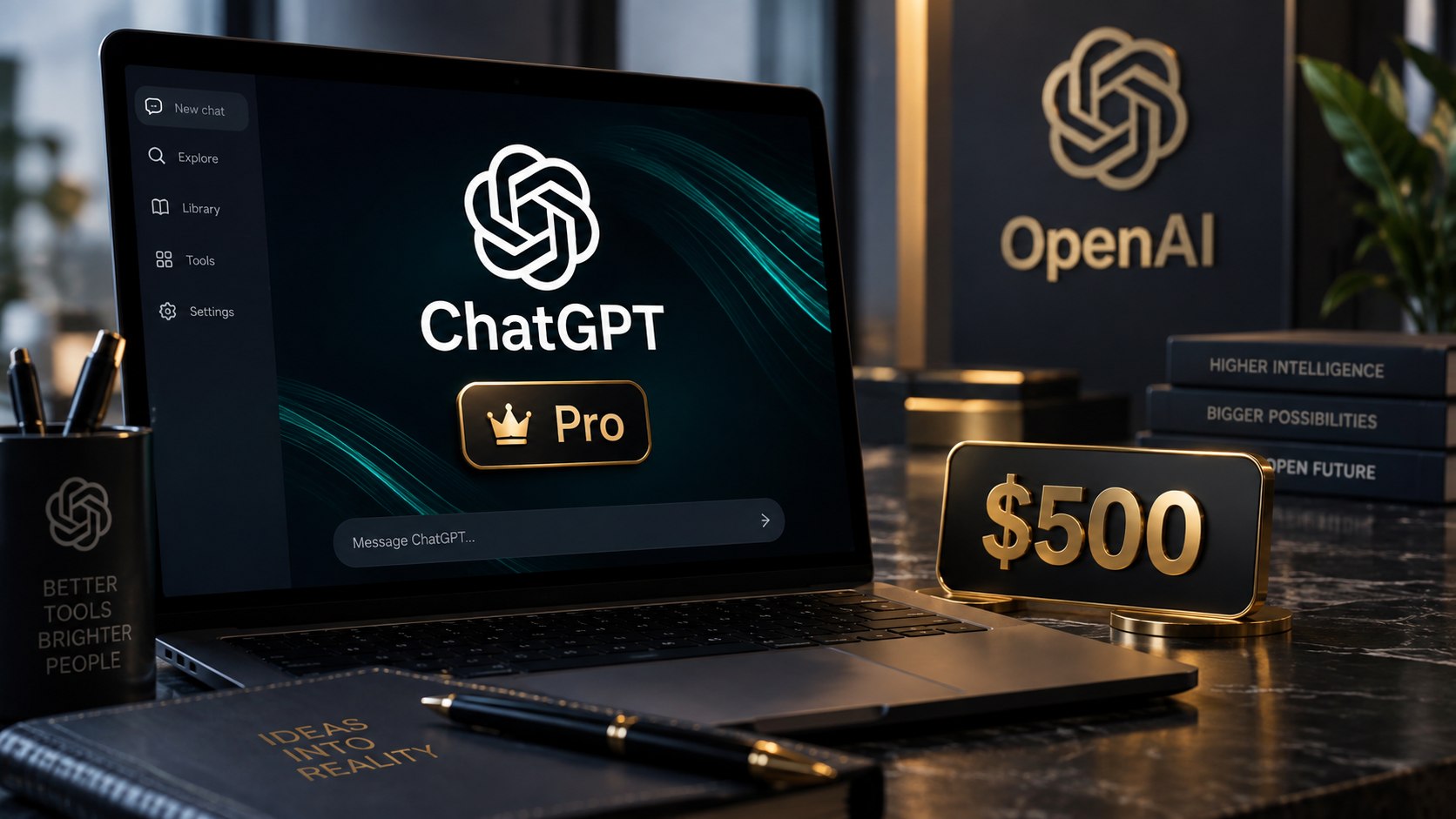
OpenAI DevDay 2026 brought a major expansion of ChatGPT, Codex and the company’s developer platform. The announcements include a $500 subscription, faster GPT-6 Astra access and persistent AI agents, reports Baltimore Chronicle.
OpenAI confirmed the changes in its ChatGPT release notes and developer documentation. Several features are rolling out gradually rather than becoming available to everyone immediately.
ChatGPT Pro 500 adds Astra Ultrafast
The new ChatGPT Pro 500 plan costs $500 per month. It becomes OpenAI’s highest-usage individual Pro tier.
Its main distinction is access to GPT-6 Astra Ultrafast inside ChatGPT Work and Codex. OpenAI says Ultrafast can reach about 300 generated tokens per second in Codex.
The company describes the API version as delivering speeds up to 8 times faster than Standard mode. Actual task duration still depends on tools, browsing and other operations.
Current Pro options now include:
- Pro 100 at $100 per month;
- Pro 200 at $200 per month;
- Pro 500 at $500 per month with Astra Ultrafast.
Pro 200 is again open to new subscribers. OpenAI says usage allowances for some new subscriptions are changing.
GPT-6.1 Sol targets cheaper complex work
Another DevDay release is GPT-6.1 Sol. OpenAI positions it as a lower-cost alternative for coding, computer use and professional tasks.
Standard API pricing is $2 per million input tokens and $10 per million output tokens. That is one-fifth of GPT-6 Astra’s standard token price. OpenAI GPT-6.1 Sol documentation
| Product | Main purpose | Key change |
|---|---|---|
| GPT-6 Astra | demanding reasoning | Ultrafast mode |
| GPT-6.1 Sol | complex work at lower cost | near-Astra positioning |
| Codex Cloud | software development | cloud tasks continue independently |
| Dots | ongoing autonomous work | persistent agent with cloud computer |
These products target different workloads. OpenAI is separating maximum performance, lower-cost reasoning and long-running automation more clearly.

Dots can continue working between conversations
OpenAI also introduced Dots, persistent assistants powered by GPT-6 Astra.
A Dot receives its own cloud computer and can work with connected applications. It can continue making progress after a conversation ends.
Possible tasks include project monitoring, preparing meeting material and handling recurring workflows. Availability is initially limited by plan and region. OpenAI guide to Dots
Codex and external apps get deeper integration
Codex Cloud can continue programming tasks even when the user’s computer is asleep. Projects run inside isolated cloud environments.
Plus and Pro subscribers can also use eligible ChatGPT plan usage in selected external products. OpenAI lists services including Notion, Vercel, Devin, Dactyl, OpenClaw and T3. OpenAI supported apps guide
The Agents API now supports computer interaction. Decisions API, powered by GPT-6 Luna, can select actions from predefined options.
OpenAI is also extending agent infrastructure to AWS through Amazon Bedrock Managed Agents. OpenAI Bedrock Managed Agents documentation
ChatGPT expands into workplace collaboration
ChatGPT Space gives teams a shared location for files, pages and project context. Space is replacing Library for accounts receiving the feature.
Business and Enterprise organizations can also use @ChatGPT directly inside Slack and Microsoft Teams. OpenAI Slack and Teams guide
Together, the DevDay announcements show OpenAI moving beyond individual chat sessions. The focus is shifting toward persistent agents, cloud execution and AI embedded directly into daily work.
Earlier we wrote about Why Your DHL Package Is Stuck at Customs in 2026: Clearance Holds, New U.S. Import Rules and What to Do Next