

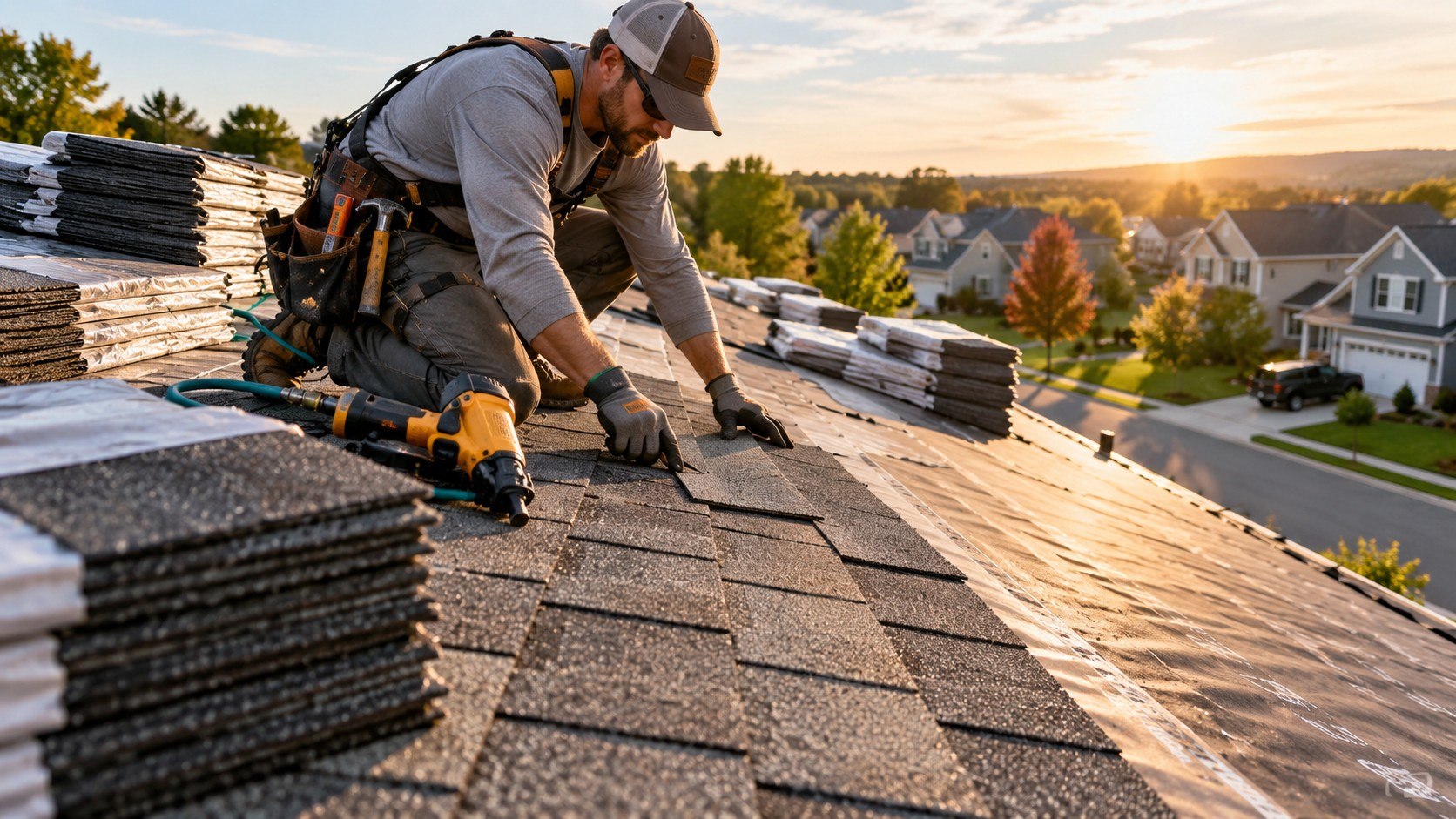
Asphalt shingle prices USA 2026 typically run about $3.50 to $8.50 per sq ft installed for mainstream residential roofing. A basic 3-tab replacement can start near $3.50–$5.50 per sq ft. Architectural shingles commonly land around $4.50–$8.50, while complicated roofs can exceed those ranges. For a 2,000 sq ft roof, that means roughly $7,000–$17,000 before major decking repairs or unusual structural work, as noted by Baltimore Chronicle.
The immediate decision is less about finding the cheapest bundle and more about comparing complete installed bids. Homeowners should separate shingles, tear-off, underlayment, flashing, ventilation, permits, disposal, and damaged decking. For many houses, architectural shingles justify their higher price through thicker construction and broader product choices. A low-priced 3-tab roof remains useful for rentals, garages, short ownership horizons, and tightly controlled budgets.
Key takeaways
- 3-tab shingles generally cost less upfront, but architectural products dominate many residential replacement quotes in 2026.
- Roof geometry, tear-off conditions, labor rates, decking damage, and local code requirements can move prices more than brand choice.
- Compare contractor scopes line by line because a cheaper bid may exclude flashing, ventilation, permits, disposal, or damaged plywood.
Roofing contractors price work by the “square,” which equals 100 sq ft of roof area. A 2,000 sq ft roof therefore contains about 20 roofing squares before waste. Contractors commonly order additional material for valleys, hips, ridges, starter courses, and cutting losses. The required allowance depends heavily on roof geometry.
Budget planning becomes easier when the roof is treated as a construction project rather than a single material purchase. Baltimore Chronicle’s guide to reading a construction estimate explains how exclusions and allowances change the final contract price. Homeowners planning broader projects can also compare roofing costs with the publication’s 2026 US house construction costs.
Asphalt shingle prices USA 2026: What drives the price
1. Architectural versus 3-tab shingles
The largest material decision is usually architectural shingles cost 2026 versus basic 3-tab products. Architectural shingles use laminated construction that creates a thicker, dimensional appearance. GAF Timberline HDZ, Owens Corning Duration, and CertainTeed Landmark are familiar examples in this category. Basic 3-tab lines include products such as GAF Royal Sovereign and Owens Corning Supreme.
Architectural shingles generally carry a higher material and installation price. The gap can become relatively small once labor, tear-off, permits, accessories, and disposal are included. That is why replacing a $10,000 3-tab system with a $12,000 architectural system may present a different value calculation than comparing bundle prices alone.
“Architectural shingles are made by bonding multiple layers of asphalt and fiberglass together.”
GAF, Timberline HDZ product information, describing the construction difference between architectural and 3-tab shingles. Official GAF product page.
2. Roof size and waste
A 1,500 sq ft house does not necessarily have a 1,500 sq ft roof. Pitch, overhangs, attached garages, porches, and additions increase measured roof area. Contractors then add material for cuts and unavoidable waste.
An estimate based only on the home’s interior square footage does not provide enough information to judge the real roofing quantity.
3. Pitch and geometry
A simple walkable gable roof usually costs less to reroof than a steep structure with dormers, valleys, skylights, and intersecting roof sections. More complex geometry increases cutting, flashing, staging, safety equipment, and labor hours.
Very steep roofs also slow installation. Crews need more safety equipment, movement is less efficient, and material handling becomes harder. Those factors can push labor costs well above the price of a simple ranch-style roof.
4. Tear-off and deck repairs
The visible shingles may hide the most expensive surprise. Removing the existing roof can expose rotted plywood or OSB around eaves, chimneys, vents, and old leaks. Replacement decking is commonly priced separately by sheet or sq ft, so the contract should state that unit price before work begins.
Older roofs can also contain several shingle layers. Additional tear-off increases labor, disposal volume, and dumpster costs. Local rules can limit how many layers may remain on a roof.
5. State and local labor costs
Roof replacement cost USA 2026 varies by local wages, insurance expenses, disposal fees, permitting, weather conditions, and contractor demand. California and Northeast markets can price above lower-cost regions. Texas, Florida, Colorado, and Oklahoma also create special considerations because wind and hail exposure may affect product specifications and insurer requirements.
Maryland homeowners can face another layer of local variation. A straightforward suburban roof may price differently from a Baltimore rowhouse requiring restricted access, specialized staging, or additional work around adjoining structures.
6. Roofing system components
Shingles are only the exposed layer. A complete job may include synthetic underlayment, leak barrier, starter shingles, ridge caps, drip edge, flashing, vents, pipe boots, fasteners, and sealants. These components can add hundreds or thousands of dollars to the total project.
Homeowners evaluating several contractors can apply the same screening principles used for larger projects. Baltimore Chronicle’s guide to checking builders, references, contracts, and costs is useful when verifying licensing, insurance, payment schedules, and written scope.
Price breakdown
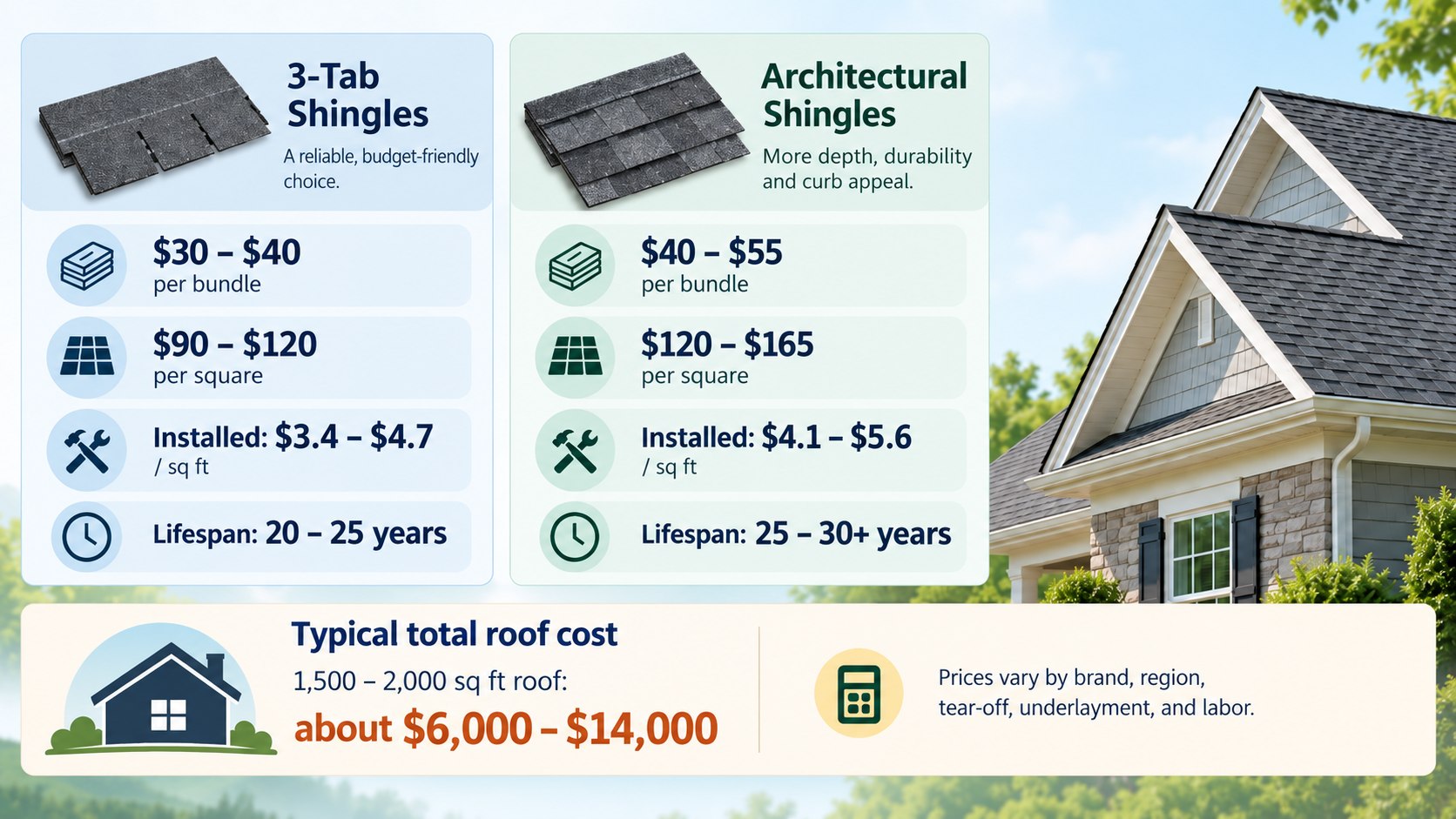
The ranges below are practical 2026 planning figures for conventional US asphalt roofs. They are not contractor quotes. Roof pitch, geographic market, access, code requirements, and damaged decking can move a project outside these bands.
| Line item | Typical 2026 cost | What affects it |
|---|---|---|
| 3-tab asphalt roof | $3.50–$5.50 per sq ft installed | Brand, labor, tear-off, pitch |
| Architectural asphalt roof | $4.50–$8.50 per sq ft installed | Product line, geometry, labor market |
| 1,500 sq ft 3-tab roof | About $5,250–$8,250 | Standard replacement assumptions |
| 1,500 sq ft architectural roof | About $6,750–$12,750 | Accessories and complexity |
| 2,000 sq ft 3-tab roof | About $7,000–$11,000 | Before major hidden repairs |
| 2,000 sq ft architectural roof | About $9,000–$17,000 | Wide regional and scope variation |
These figures demonstrate why asphalt roof cost per square foot works best as a screening tool. It allows homeowners to identify an unusually low or high proposal quickly. It cannot determine which contractor is offering the stronger job.
A $9,500 proposal and a $12,000 proposal may not cover identical work. One could include new flashing, ridge ventilation, permit fees, premium underlayment, and full cleanup. The other might list those items as extras.
Another frequent mistake is comparing 2 bids with different shingle systems. Contractor A may quote an entry-level 3-tab product. Contractor B may use an architectural line with different accessories and warranty requirements. The total price difference then reflects more than labor.
Before signing, ask how decking replacement will be charged. Also confirm whether gutters, satellite equipment, skylights, chimneys, and existing flashing are included. These details reduce change-order disputes after the old roof has already been removed.
The final contract should identify the manufacturer and exact product line. “Architectural shingles” alone is too broad. Product families differ in specifications, available colors, impact classifications, accessory requirements, and warranty terms.
Architectural shingles versus 3-tab in 2026
The choice between 3-tab shingles price 2026 and architectural roofing depends on ownership plans and project priorities. A 3-tab roof offers the lower entry price and a flat, uniform appearance. Architectural shingles create more visual depth and occupy a higher tier in most manufacturer portfolios.
| Feature | 3-tab | Architectural |
|---|---|---|
| Installed planning range | $3.50–$5.50/sq ft | $4.50–$8.50/sq ft |
| Appearance | Flat, repeating pattern | Dimensional, layered profile |
| Best fit | Lowest upfront budget | Typical long-term residential replacement |
| Common examples | Royal Sovereign, Supreme | Timberline HDZ, Duration, Landmark |
Architectural shingles frequently make sense when the homeowner expects to keep the property. The incremental material cost becomes less dominant because labor and removal are required under either option. Appearance can also matter when comparable neighboring houses already use dimensional shingles.
3-tab remains rational when upfront expenditure controls the decision. Detached garages, simple rental properties, and homes scheduled for redevelopment can fit that profile. Availability should still be confirmed locally because dealers do not stock every product line in every market.
Manufacturer specifications deserve attention. GAF lists Timberline HDZ as an architectural shingle and publishes technical details for wind, fire, and installation requirements on its official product page.
Owens Corning markets Duration as an architectural product using its reinforced nailing-zone design. Product selection should still follow local code, roof design, and installer requirements rather than marketing claims alone. Owens Corning roofing information lists current product options and specifications.
“Shingles help protect your home and impact its overall exterior design and curb appeal.”
Owens Corning, official roofing product information, describing the functional and visual role of roofing shingles.
Ways to save in 2026
The best savings usually come from controlling the contract rather than selecting the cheapest shingle. A $1,000 material reduction can disappear quickly after several unpriced change orders. Use comparable written scopes and require each contractor to identify exclusions.
- Get at least 3 detailed bids using the same shingle category and project scope.
- Ask contractors to quote both 3-tab and architectural options when both remain suitable.
- Request unit pricing for plywood or OSB replacement before tear-off begins.
- Keep existing skylights or ventilation components only when their condition supports reuse.
- Schedule non-emergency work when contractors have greater calendar flexibility.
- Confirm whether disposal, permits, flashing, and cleanup are already included.
- Compare warranty requirements before paying for manufacturer-branded accessory packages.
A written scope also makes negotiation more precise. Instead of asking for an undefined discount, homeowners can ask whether the same system costs less with another color or product line. Some colors and shingles have better local availability.
Do not automatically remove essential flashing or water-control components to save money. Roof failures often occur at penetrations, edges, valleys, chimneys, and transitions rather than in the middle of an undisturbed shingle field.
Another useful tactic is separating optional aesthetic upgrades from required repairs. Decorative ridge treatments can be evaluated independently from rotten decking or failed flashing. That prevents safety and water-management work from competing with cosmetic choices.
Insurance questions should be handled before the contract is signed. Some impact-rated products may qualify for discounts under certain policies or state rules. Eligibility should always be confirmed directly with the insurer.
Financing deserves similar scrutiny. A contractor offering a low monthly payment may be quoting a financed price above the cash price. Compare the total amount paid, interest, fees, and early-payment terms rather than focusing only on the monthly figure.
The cheapest roof becomes expensive when missing scope items reappear as mandatory change orders after demolition.
When paying more makes sense
Paying more is reasonable when the additional money purchases a measurable improvement. That could mean a better product specification, necessary deck repairs, stronger water protection, complicated flashing work, or a contractor with a clearly stronger installation record.
- Dimensional shingle pricing can justify the premium when the home will be kept long term.
- Impact-rated products deserve consideration in hail-prone parts of Texas, Colorado, Oklahoma, and neighboring markets.
- More detailed flashing work makes sense around chimneys, dormers, walls, skylights, and complex valleys.
- Higher labor pricing may be justified when roof pitch, access, or urban staging requires additional safety measures.
A larger bid should still explain what the premium buys. Brand name alone is not enough. Ask for the product line, underlayment, ventilation plan, flashing scope, deck-repair rate, disposal method, warranty paperwork, and payment milestones.
Paying for stronger materials while accepting weak installation is a poor trade. Manufacturers specify fastening patterns and compatible components because installation affects system performance. A contractor should be able to explain those requirements clearly.
The same rule applies to premium warranties. Some enhanced manufacturer warranties require specific accessory combinations or credentialed contractors. Verify those requirements before assuming that a higher shingle grade automatically produces broader coverage.
For resale, architectural shingles can also offer a more contemporary appearance than traditional 3-tab patterns. That does not guarantee a dollar-for-dollar return. It can, however, remove an obvious exterior weakness when buyers compare otherwise similar homes.
How to compare roofing quotes
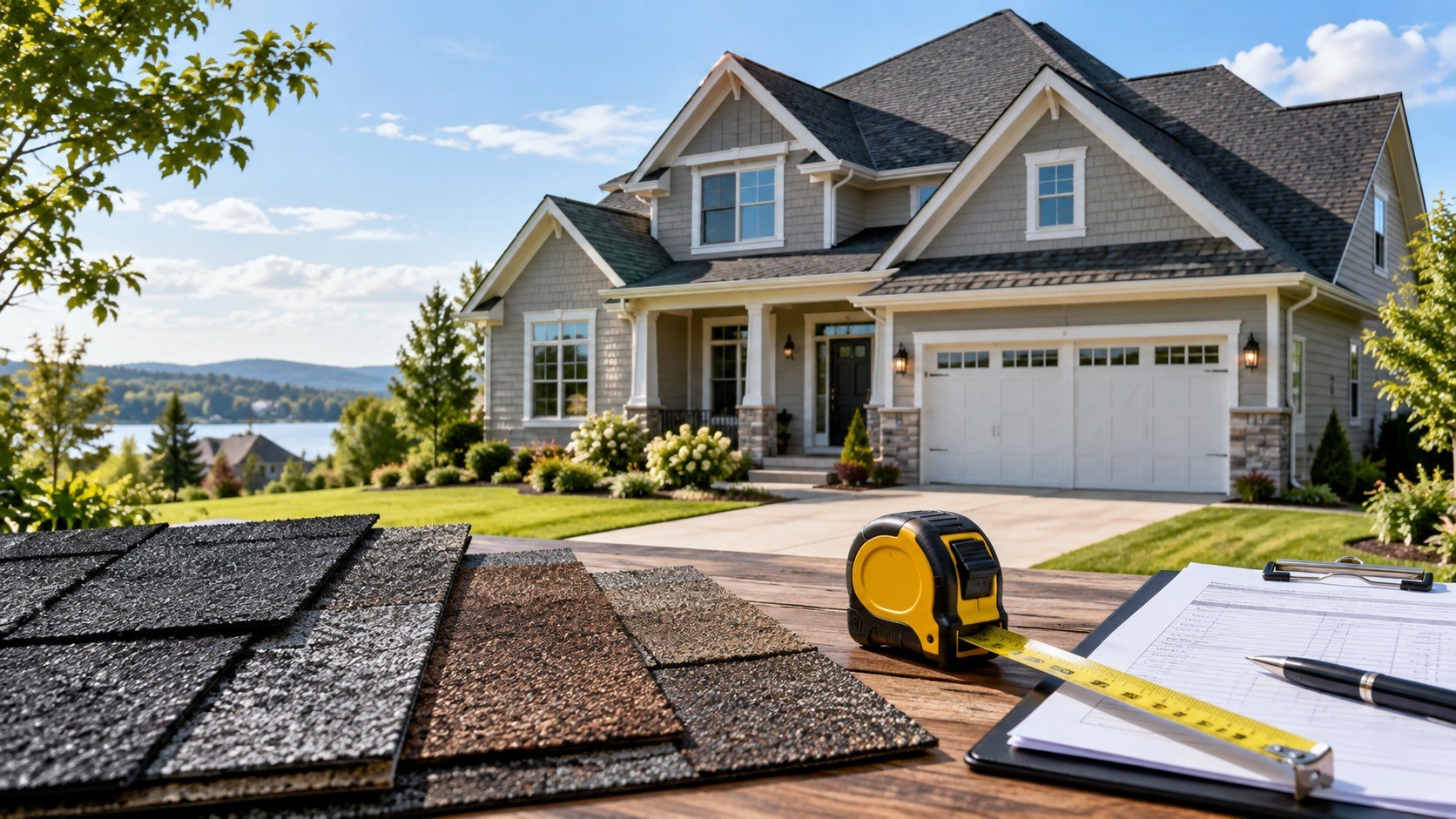
A useful asphalt shingle replacement cost comparison should fit on one worksheet. Each bid needs the same categories so missing items become obvious rather than appearing later as extras.
Check these items before selecting a contractor:
- Measured roof area and number of roofing squares
- Shingle manufacturer and exact product
- Number of existing layers being removed
- Underlayment and leak-barrier specification
- Flashing and ventilation work
- Decking replacement unit price
- Permit and disposal responsibility
- Labor and manufacturer warranty details
- Payment schedule and change-order procedure
A proposal containing only a total price creates unnecessary risk. The homeowner cannot tell whether a competing contractor is quoting a better system or simply more work. Product names and quantities should appear in writing.
Check the roof measurement as well. Satellite measurements are useful, but complicated roofs may still need physical verification. Dormers, additions, low-slope sections, and attached structures can affect both materials and installation methods.
Payment structure matters because roofing is front-loaded with material expenses. A reasonable contract should specify deposits, progress payments, and the amount due after completion. Requirements vary by state, so local contractor rules should be checked.
Finally, compare communication quality. Contractors should answer straightforward questions about insurance, permits, flashing, ventilation, decking, and warranties. Evasive answers before signing usually become harder to resolve after the old shingles are removed.
FAQ
How much does a 2,000 sq ft asphalt shingle roof cost in 2026?
A practical national planning range is about $7,000–$11,000 for 3-tab shingles and $9,000–$17,000 for architectural shingles. Complex roofs, expensive labor markets, or major decking damage can cost more.
Are architectural shingles worth the extra cost?
They often make sense for a primary residence or long ownership period. The upgrade generally provides thicker dimensional construction and wider mainstream product choice. Compare the full installed premium, not only bundle prices.
How many shingles are needed for 2,000 sq ft?
Roofers calculate shingles in roofing squares. A 2,000 sq ft roof equals 20 squares before waste. Exact bundle requirements depend on the manufacturer and product line.
Why can 2 roofing estimates differ by thousands of dollars?
The contractors may be pricing different tear-off work, shingle grades, underlayments, flashing, ventilation, permits, deck repairs, disposal, labor conditions, or warranties. Compare line items before comparing totals.
Is 3-tab roofing still a reasonable choice in 2026?
Yes, when minimum upfront cost is the priority and the product remains suitable and available locally. Architectural shingles generally deserve comparison because labor and tear-off costs apply to both systems.
What should be included in a roof replacement contract?
The contract should identify roof area, materials, tear-off, flashing, underlayment, ventilation, permits, disposal, decking rates, warranty terms, payment milestones, and change-order procedures. Specific state requirements should also be verified.
Earlier we wrote about Famous Quotes About Home by American Authors: 9 Lines and Their Real Meanings