

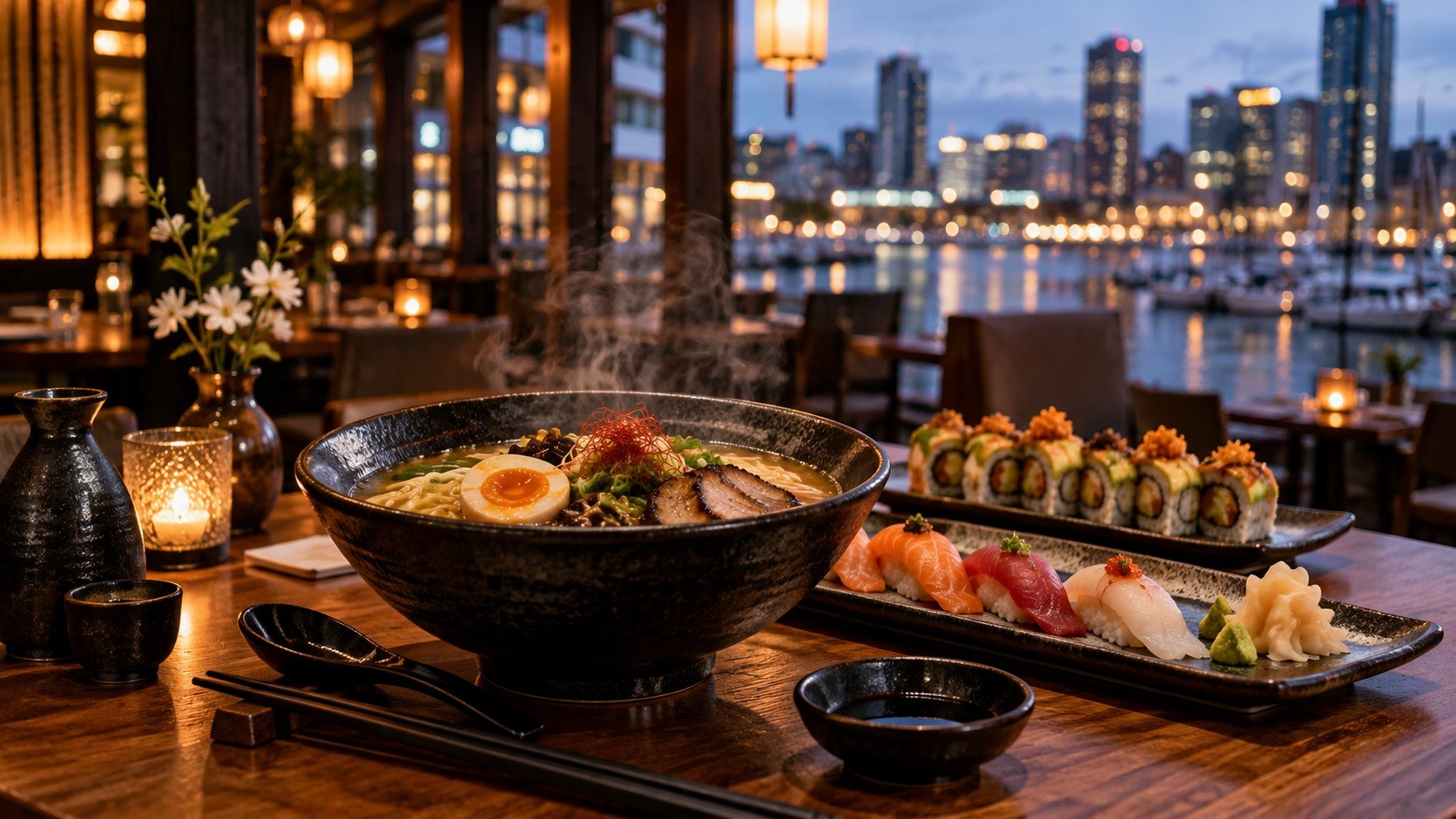
Best Japanese restaurants in Baltimore 2026 are not concentrated in one dining district or one price bracket. Harbor East has polished sushi counters, Federal Hill keeps strong neighborhood institutions, and Greenmount Avenue now offers serious ramen. The useful question is not simply who serves sushi, but where to go for premium nigiri, a quick bowl of noodles, or dinner without a triple-digit check, as noted by the editorial team at Baltimore Chronicle.
The strongest choices also differ sharply in format. Azumi aims at high-end Japanese dining near the waterfront. Shoyou Sushi works on a smaller Federal Hill scale. Toki Underground centers the meal on ramen rather than raw fish. That variety makes Baltimore more interesting than a simple list of sushi bars suggests. Azumi | Houston, TX – Baltimore, MD
Readers focused mainly on rolls and nigiri can also compare the Baltimore Chronicle guide to the best sushi restaurants in Baltimore, while the broader Baltimore restaurant guide for 2026 places these Japanese addresses within the city’s wider dining scene.
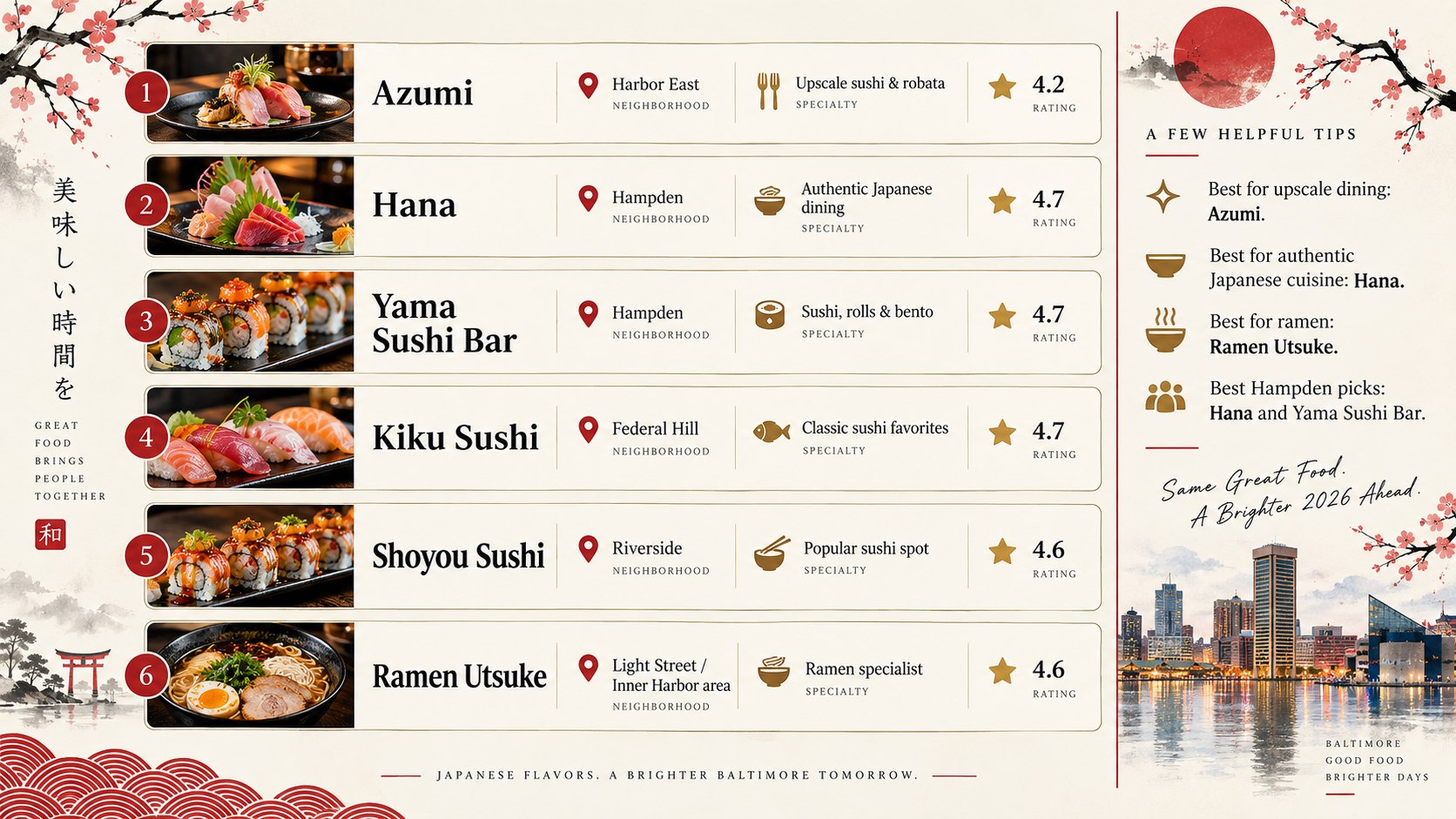
Japanese restaurants in Baltimore compared
A useful shortlist should show what each address does differently. Prices below are practical dining bands rather than fixed checks because drinks, sashimi selections, and chef’s-choice dishes can change the total significantly.
| Restaurant | Area | Address | Best reason to go | Typical price level |
|---|---|---|---|---|
| Azumi | Harbor East | 725 Aliceanna St | Premium sushi, sashimi, waterfront dinner | $$$$ |
| Shoyou Sushi | Federal Hill | 1450 Light St | Creative rolls and nigiri | $$–$$$ |
| Matsuri | Federal Hill | 1105 S Charles St | Traditional menu and lunch options | $$ |
| SUSHIBRUCE YA | Fells Point | 1634 Aliceanna St | Large specialty-roll selection | $$–$$$ |
| Minato | Mount Vernon | 1013 N Charles St | Sushi, sashimi and cooked Japanese dishes | $$ |
| Toki Underground | Greenmount Ave | 2731 Greenmount Ave | Tonkotsu, curry and vegan ramen | $$ |
| Kajiken | Charles Village | 7 E 33rd St | Abura soba and Japanese noodles | $$ |
| Kiku Sushi | Federal Hill | 1017 Light St | Neighborhood sushi at moderate prices | $$ |
The list spans several different Japanese dining styles, so price alone is a poor comparison. Azumi belongs in a different category from a neighborhood sushi counter. Toki Underground and Kajiken make more sense for diners who want noodles rather than a sashimi-focused meal.
Location matters as well. Federal Hill gives diners several Japanese options within a compact area. Harbor East works better for a destination dinner tied to the waterfront. Mount Vernon and the Greenmount corridor offer more casual alternatives away from the Inner Harbor.
Current addresses and operating details should still be checked before leaving home. Restaurant hours can vary by weekday, holiday, and lunch service.
Azumi is Baltimore’s high-end Japanese address
At 725 Aliceanna Street, Azumi is the clearest choice for an upscale Japanese dinner. The restaurant operates inside the Four Seasons complex in Harbor East and serves sushi alongside hot dishes, teppanyaki, seafood, wagyu preparations, sake, and cocktails. Its official site lists service from noon on most weekdays, with later closing times from Thursday through Saturday. Azumi | Houston, TX – Baltimore, MD
The room and price point make Azumi suitable for celebrations, client dinners, or visitors who want Japanese fine dining in Baltimore near the harbor. This is not the place to optimize for the cheapest California roll. The attraction is the broader experience and a menu built around premium ingredients.
“Japanese craft, ingredients and creativity.”
That is how the restaurant describes its approach on its official Baltimore page. The language is promotional, but the menu supports the positioning with sushi, seafood, teppanyaki and a dedicated beverage program. Azumi | Houston, TX – Baltimore, MD
Azumi makes the most sense when the setting matters almost as much as what arrives on the plate.
Its official schedule also lists weekday happy hour from 3 p.m. to 6 p.m. at the bar. That can make the restaurant easier to sample without committing to a long dinner. Azumi | Houston, TX – Baltimore, MD
Shoyou Sushi and SUSHIBRUCE YA favor creative sushi
Federal Hill’s Shoyou Sushi operates at 1450 Light Street. Its menu moves between traditional nigiri and heavily composed specialty rolls. Current examples include a baked lobster roll for $22 and the “How Dare Unagi Me?” roll for $27. Basic miso soup is listed at $3, while edamame starts at $7. shoyousushi.com
For diners searching best sushi in Baltimore, Shoyou is useful because the menu does not force a choice between conventional fish and modern combinations. Nigiri can sit beside baked scallop, lobster, spicy seafood, and soy-paper rolls.
SUSHIBRUCE YA at 1634 Aliceanna Street follows a similarly creative route. Its official menu lists tuna nigiri at $9 for 2 pieces, salmon at $8, and signature rolls between roughly $18 and $28. The restaurant also serves poke bowls and cooked appetizers. sushibruceya.com
Before ordering, 3 distinctions are useful:
- choose nigiri or sashimi when fish quality matters more than sauces;
- choose signature rolls for richer combinations and larger portions;
- ask about allergies because specialty rolls may contain several sauces and seafood ingredients.
These categories sound simple, yet they prevent over-ordering. A dinner built entirely from specialty rolls can become heavy quickly. Mixing nigiri with 1 composed roll usually gives more contrast.
Both restaurants publish allergy notices on their current menus. Shoyou asks guests with dietary restrictions to speak with staff, while SUSHIBRUCE YA notes that not every ingredient appears in menu descriptions. shoyousushi.com
Matsuri and Minato remain practical neighborhood choices
Matsuri Restaurant | Japanese has operated from 1105 South Charles Street in Federal Hill and maintains a broad menu rather than specializing in one format. Sushi, sashimi, teriyaki, rolls, soups and catering all appear in its current offering. The restaurant’s own site identifies Bill Tien as chef and owner. Matsuri Japanese Restaurant
Lunch is particularly useful for value. Current online pricing lists a 2-roll lunch at $14.95 and 3 rolls at $18.95. A chef-selected sushi lunch is listed at $18.95, while a combined sushi-and-sashimi lunch reaches $21.95. Toast
“A true Japanese restaurant on the historic Federal Hill.”
That description comes from the official Matsuri website, which also lists happy hour Monday through Friday. Matsuri Japanese Restaurant
Minato – Sushi Bar offers another broad menu at 1013 North Charles Street in Mount Vernon. Its current dinner menu lists a 12-piece sashimi deluxe at $26.95 and a sushi-sashimi combination at $25.95. Cooked entrées include chicken teriyaki, salmon teriyaki, tonkatsu and several noodle dishes. minatosushibar.com
For diners who do not want an entire meal built around raw fish, Matsuri and Minato are among the more flexible choices.
Toki Underground and Kajiken show another side of Japanese food
Sushi dominates many searches for Japanese food in Baltimore, but it should not define the category. Toki Underground at 2731 Greenmount Avenue is built around ramen, bao, karaage and Japanese-inspired small plates. Its current lineup includes classic tonkotsu ramen, curry ramen, kimchi ramen, mushroom shio and a brothless shiitake-cashew dan dan noodle. Toki Underground
The mushroom shio gives vegetarian and vegan diners a clearer path than many sushi-first restaurants. Toki also lists yam noodles as a possible substitution on several dishes for diners avoiding gluten, although allergy requirements should be discussed directly with staff. Toki Underground
KAJIKEN BALTIMORE at 7 East 33rd Street approaches noodles differently. The chain specializes in abura soba, a brothless Japanese noodle style. Its official location page currently lists Baltimore lunch service from noon to 3 p.m., followed by evening service. Friday and Saturday hours extend later. Kajiken
The distinction matters because ramen and abura soba deliver very different meals:
- Ramen places the broth at the center of the dish.
- Abura soba relies on sauce, oil and toppings mixed directly with noodles.
- Sushi shifts attention toward rice, fish temperature, knife work and seasoning.
For first-time visitors, the choice should start with appetite rather than reputation. A cold evening can make tonkotsu more appealing than sashimi. A quick lunch near Johns Hopkins may make Kajiken more practical.
Noodle restaurants are also easier for mixed groups that include people who dislike raw seafood. That flexibility deserves more attention in Baltimore restaurant searches.
Kiku Sushi adds a lower-key Federal Hill option
Kiku Sushi – Japanese Restaurant sits at 1017 Light Street, also in Federal Hill. Current local listing data places it in a moderate price range, below the luxury tier represented by Azumi.
That geography is useful. Diners staying near the Inner Harbor can reach several Federal Hill Japanese restaurants without committing to Harbor East pricing. It also makes the neighborhood practical when reservations elsewhere are unavailable.
Kiku fits the affordable Japanese restaurants Baltimore search better than premium waterfront dining. The appeal is less about spectacle and more about a straightforward sushi dinner in an established residential neighborhood.
How to choose a Japanese restaurant in Baltimore
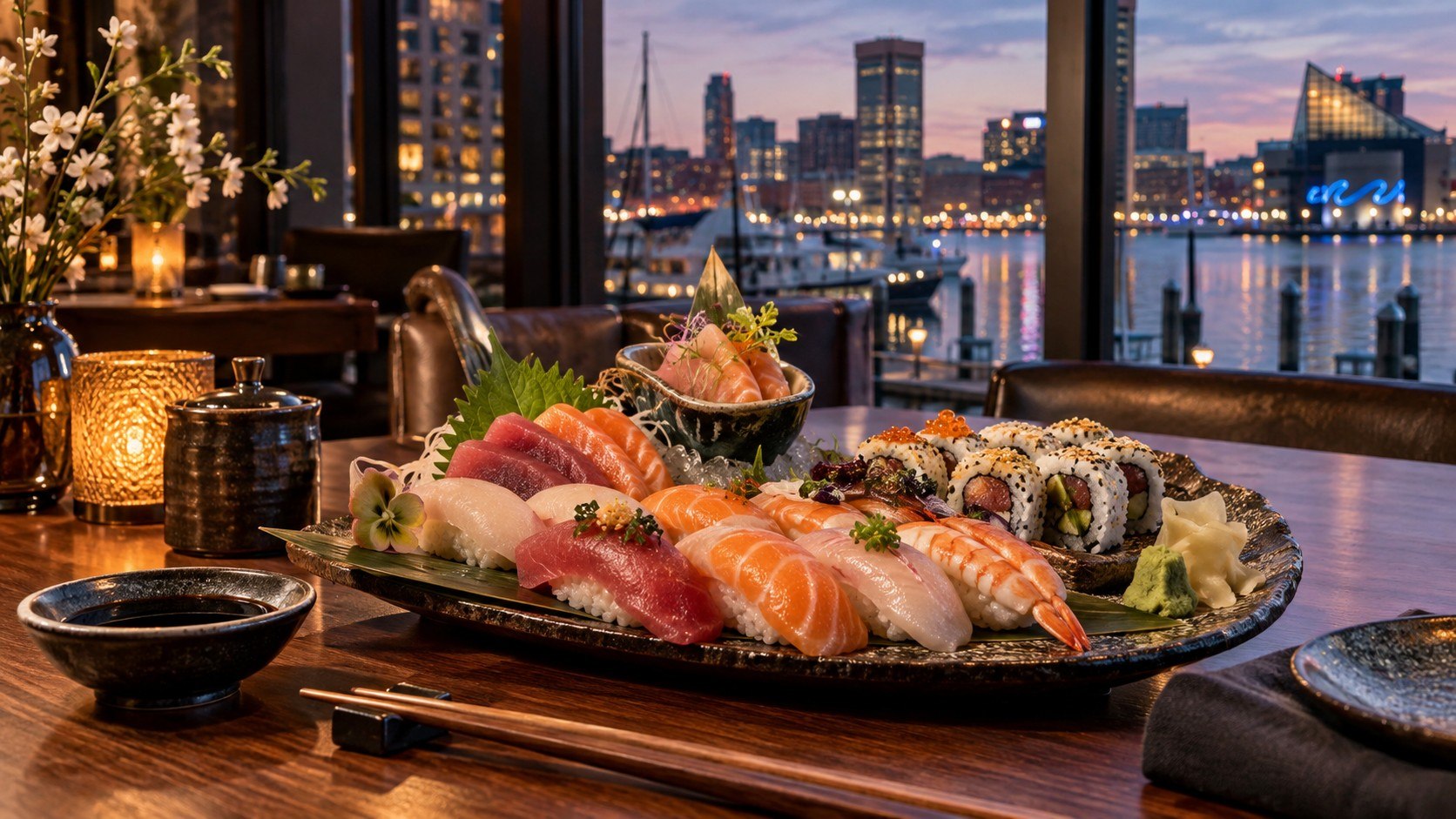
A ranking becomes less useful when the restaurants solve different problems. The better approach is to match the restaurant with the occasion, budget, and type of food wanted.
- For a waterfront occasion, start with Azumi.
- For inventive sushi rolls, compare Shoyou and SUSHIBRUCE YA.
- For traditional variety and lunch specials, consider Matsuri.
- For sushi plus cooked entrées, Minato is flexible.
- For ramen, Toki Underground is the specialist.
- For brothless noodles, Kajiken offers something different.
- For moderate-price neighborhood sushi, Kiku is a practical candidate.
Price also needs context. Two people ordering premium nigiri can spend more than a larger group eating noodles. Alcohol and sake change the bill quickly at higher-end restaurants.
Reservations matter most for destination dinners and busy Friday or Saturday periods. Smaller sushi restaurants may also have limited seating, even when the menu looks casual.
Parking is another practical dividing line. Harbor East has garages and paid options nearby. Federal Hill can require more patience during evenings or events around the stadium district.
The Baltimore Japanese restaurant guide is therefore less about identifying one universal winner. It is about knowing which kitchen fits the meal planned that day.
FAQ
What is the best area for Japanese restaurants in Baltimore?
Federal Hill has one of the strongest concentrations, including Shoyou, Matsuri and Kiku. Harbor East is better suited to upscale waterfront dining.
Where can diners find upscale Japanese food in Baltimore?
Azumi at 725 Aliceanna Street is the clearest luxury option in this selection. Its offering combines sushi, seafood, teppanyaki and a full beverage program. Azumi | Houston, TX – Baltimore, MD
Which Baltimore Japanese restaurants serve ramen?
Toki Underground focuses heavily on ramen and noodle dishes. Minato also lists ramen and udon among its cooked menu options. Toki Underground
Where can diners find Japanese lunch deals?
Matsuri publishes several lunch combinations, including 2-roll and 3-roll specials. Minato also maintains separate lunch offerings with sushi, sashimi and cooked entrées. Toast
Are there Japanese options for people who do not eat raw fish?
Yes. Toki Underground serves ramen, curry, bao and karaage, while Matsuri and Minato carry cooked teriyaki and other hot dishes. Kajiken specializes in noodles rather than raw seafood. Toki Underground
How much should dinner at a Japanese restaurant in Baltimore cost?
Moderate sushi and noodle restaurants often fall around the $20–$40 range before drinks and gratuity. Premium sushi dinners can climb much higher, particularly at Azumi or when ordering several courses of sashimi and nigiri.
Earlier we wrote that Maryland out-of-state license plate crackdown begins October 1 2026 with fines up to $420