

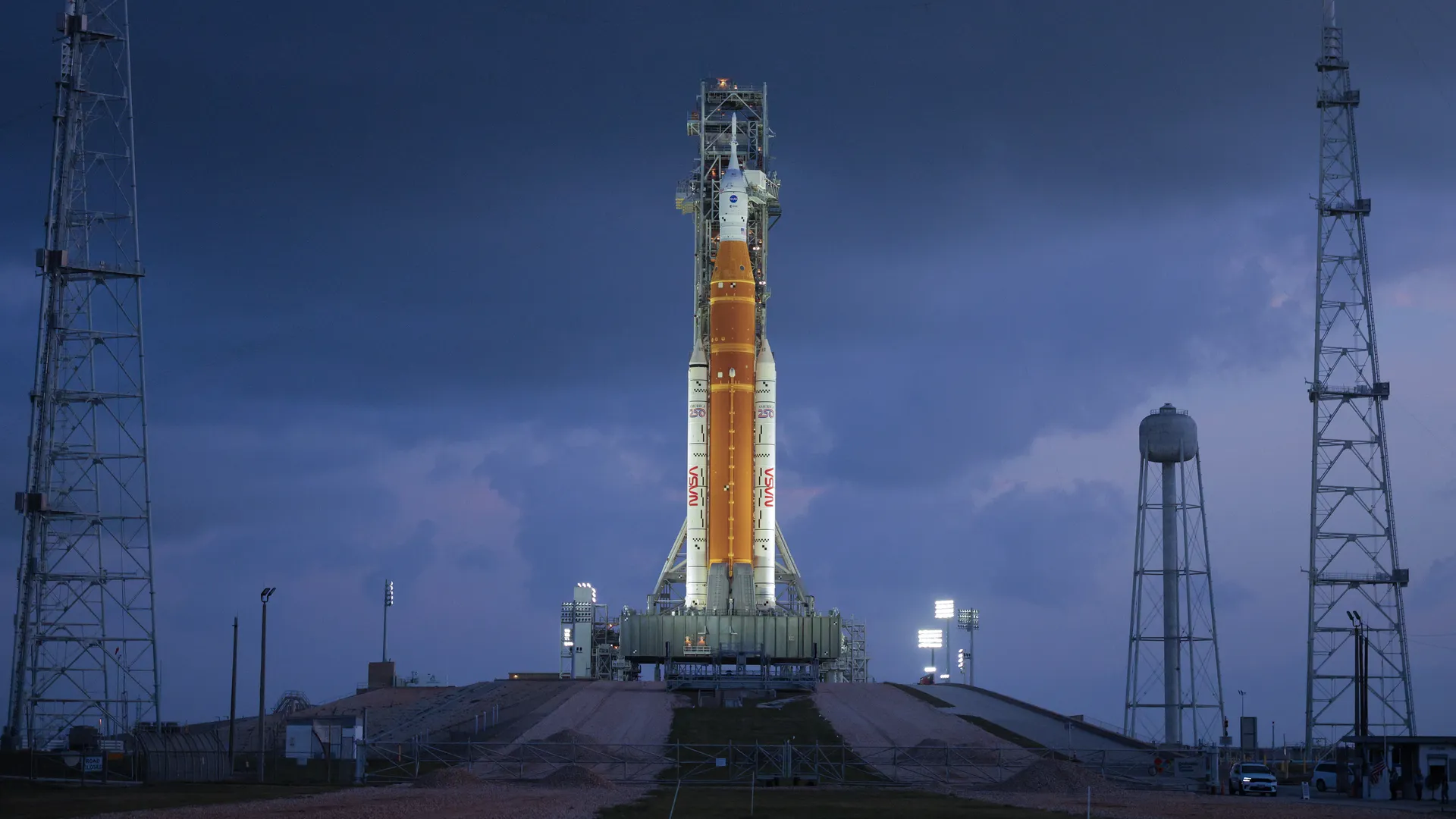
NASA’s Artemis II moon mission lifts off as a historic milestone for humanity’s return to deep space exploration. The powerful Space Launch System rocket ignited the night sky over Florida at 18:35 on April 1. This launch from Cape Canaveral marks the first time humans have headed toward the Moon since 1972. Millions watched the live broadcast on the official NASA YouTube channel as the Orion spacecraft reached orbit. The mission represents a bold leap for the Artemis program and international cooperation. Four brave astronauts are now inside the capsule, beginning their journey into the lunar void. This event signifies a shift from decades of low Earth orbit operations to deep space. Every system on the SLS rocket performed according to strict flight parameters during the ascent, as noted by the Baltimore Chronicle via NASA.
Crew members and the technical heart of the mission
The success of the Artemis II launch depends on the expertise of its diverse and highly trained crew. Commander Reed Wiseman leads the team with extensive experience in orbital mechanics and flight operations. Pilot Victor Glover is the first person of color to participate in a lunar mission. Mission specialists Christina Koch and Jeremy Hansen complete the team, bringing engineering and international perspectives. Their safety is ensured by the advanced life support systems integrated within the Orion spacecraft.
Key facts about the mission architecture:
- Launch vehicle: Space Launch System (SLS) heavy-lift rocket.
- Spacecraft: Orion crew module with European service module.
- Launch site: Kennedy Space Center, Launch Complex 39B.
- Launch time: 18:35 Eastern Time on April 1, 2026.
- Live coverage: Global stream via NASA TV and social media platforms.
The crew underwent years of rigorous training to prepare for this specific flight profile. They practiced emergency procedures and manual docking maneuvers in high-fidelity simulators. Every second of the ascent phase was monitored by mission control in Houston. The integration of the crew module with the rocket was a feat of modern engineering.
Flight trajectory and goals in the lunar vicinity
The primary objective of Artemis II is to test the spacecraft’s limits before future landings occur. Orion will not land on the lunar surface but will perform a complex free-return trajectory. This path uses the Moon’s gravity to sling the spacecraft back toward Earth. The crew will reach a maximum distance of 7500 kilometers from the lunar surface. This perspective will provide invaluable data on radiation protection and deep space communication.
Mission timeline and distance parameters:
| Mission phase | Duration or distance | Primary activity |
| Total mission length | 10 days | System testing and Earth return |
| Lunar flyby distance | 7500 kilometers | High-resolution photography and sensors |
| Earth orbit phase | 24 hours | Systems checkout before TLI |
| Re-entry speed | 40000 kilometers per hour | Heat shield performance test |
During the 10 days in space, the astronauts will manually pilot Orion to verify handling characteristics. They will monitor the radiation levels inside the cabin during the transit through the Van Allen belts. This data is critical for the long-term safety of future Mars missions. The European Service Module provides the necessary power and propulsion for all maneuvers.
Testing life support and future lunar exploration
The Artemis II moon mission serves as the final proving ground for the Orion hardware. Engineers need to ensure that the internal atmosphere remains stable for long durations. Communication delays will be tested to simulate real-world lunar landing conditions. The crew will use high-definition cameras to document the lunar far side in unprecedented detail. These images will help scientists select landing sites for the upcoming Artemis III mission.
Following the lunar flyby, the capsule will prepare for a high-speed atmospheric entry. The heat shield must withstand temperatures of nearly 2800 degrees Celsius upon return. Recovery teams in the Pacific Ocean are already stationed to retrieve the crew. Successful splashdown will confirm that NASA is ready to put boots on the Moon again. This mission proves that the Orion spacecraft is a reliable vehicle for the next generation.
Earlier we wrote that Oracle slashes 30,000 jobs with a cold 6 a.m. email: global layoffs shock tech industry