

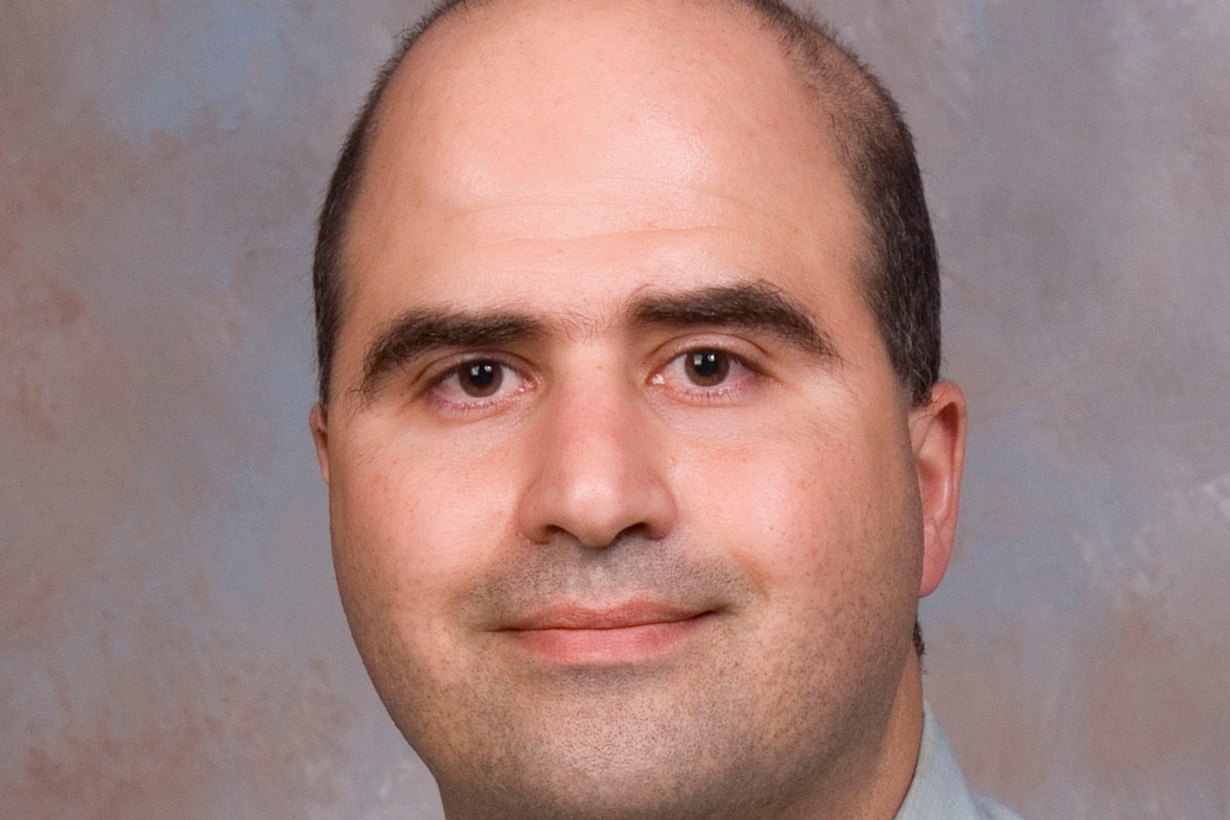
The Army will execute Nidal Hasan by firing squad at 1 p.m. Central time on Thursday, Dec. 3, at Fort Hood, Texas, the base where he killed 13 people and wounded 32 in 2009. Acting Army Secretary Adam Telle announced the date and location this week, and a memo he shared says President Donald Trump approved the execution order on Oct. 2, Military Times reported.
Most coverage has focused on Texas, where the shooting happened, and Kansas, where Hasan sits on death row at Fort Leavenworth. The years that shaped the case played out much closer to Baltimore. Hasan spent roughly 12 years training as an Army doctor in Bethesda and at Walter Reed in Washington, and it was there that classmates and supervisors first raised the concerns a Senate investigation later said were ignored.
When and how will Nidal Hasan be executed?
Under the order, the commandant of the U.S. Disciplinary Barracks at Fort Leavenworth will serve as execution officer. If it goes ahead, it will be the first U.S. military execution since 1961, when Army Pvt. John Bennett was hanged at Fort Leavenworth, and the Army’s first firing-squad execution since Pvt. Eddie Slovik was shot in France on Jan. 31, 1945.
A Pentagon official told ABC News on Oct. 8 that the execution will be live-streamed. Defense Secretary Pete Hegseth said in an interview that he would make sure “people are able to watch it, that it’s public.” John Galligan, a retired Army colonel and Hasan’s longtime civilian attorney, called the plan “political theater.”
Nidal Hasan’s Maryland and D.C. years: a timeline
| Year | What happened |
|---|---|
| 1970 | Born in Arlington County, Virginia |
| 1995 | Graduates from Virginia Tech with a biochemistry degree |
| 1997-2003 | Medical school at the Uniformed Services University of the Health Sciences in Bethesda |
| 2003-2009 | Internship, psychiatry residency and a fellowship at Walter Reed Army Medical Center in Washington; earns a master’s in public health |
| 2007 | Gives a senior-residency presentation titled “The Koranic World View as It Relates to Muslims in the U.S. Military” |
| Dec. 2008 | Federal intelligence captures emails between Hasan and Anwar al-Awlaki; investigators conclude they fit his authorized research |
| July 2009 | Transferred to Darnall Army Medical Center at Fort Hood |
| Nov. 5, 2009 | Opens fire at the Fort Hood Soldier Readiness Center, killing 13 and wounding 32 |
| Aug. 2013 | Convicted on all counts by a military jury, which recommends death |
| March 31, 2025 | U.S. Supreme Court declines his final petition |
| Oct. 2, 2026 | Trump approves the execution order |
During those years Hasan lived near Silver Spring and occasionally attended a mosque there, according to published accounts. Colleagues later described him as isolated and argumentative, and some said comments he made in class and in presentations sounded anti-American.

What the Senate found about Walter Reed and Bethesda
A Feb. 3, 2011, report released by Sens. Joseph Lieberman and Susan Collins of the Senate Homeland Security and Governmental Affairs Committee concluded that both the Defense Department and the FBI had enough information to detect Hasan’s radicalization but failed to act, CBS News reported at the time.
- An instructor and a colleague each described Hasan as a “ticking time bomb.”
- His officer evaluations were “sanitized,” the report found, so the problems never followed him on paper.
- His superiors had the authority to discipline or discharge him, and no one moved to remove him.
A separate review of the FBI’s handling of the case, led by former FBI Director William Webster, was released on July 19, 2012.
The institutions involved are still part of Maryland’s military medical complex. The Uniformed Services University remains in Bethesda, and the old Walter Reed Army Medical Center in Washington closed in 2011 when its work merged with the National Naval Medical Center in Bethesda to form Walter Reed National Military Medical Center.
Why Maryland law has no say
Maryland abolished the death penalty in 2013. Gov. Martin O’Malley announced on Dec. 31, 2014, that he would commute the sentences of the four men left on the state’s death row, and he did so before leaving office in January 2015. Hasan was convicted by an Army court-martial under the Uniform Code of Military Justice, however, so state law does not apply to his case, and the sentence will be carried out in Texas.
What survivors are saying
For people wounded in the attack, the date brings a long case close to its end. Former Army Staff Sgt. Patrick Zeigler, a two-time combat veteran who was shot four times and spent nearly a year recovering, told Military Times what he remembers most:
“He looked me straight in the eyes as he pointed the gun at me.”
Patrick Zeigler, Fort Hood survivor
Hasan admitted to the shooting at his court-martial and said he acted in support of the Taliban. It is not yet clear whether his attorneys will file further legal challenges before Dec. 3.
Featured image: Nidal Hasan in 2007, when he was an Army captain completing his training in Bethesda and at Walter Reed. Photo: Uniformed Services University of the Health Sciences / public domain via Wikimedia Commons.