

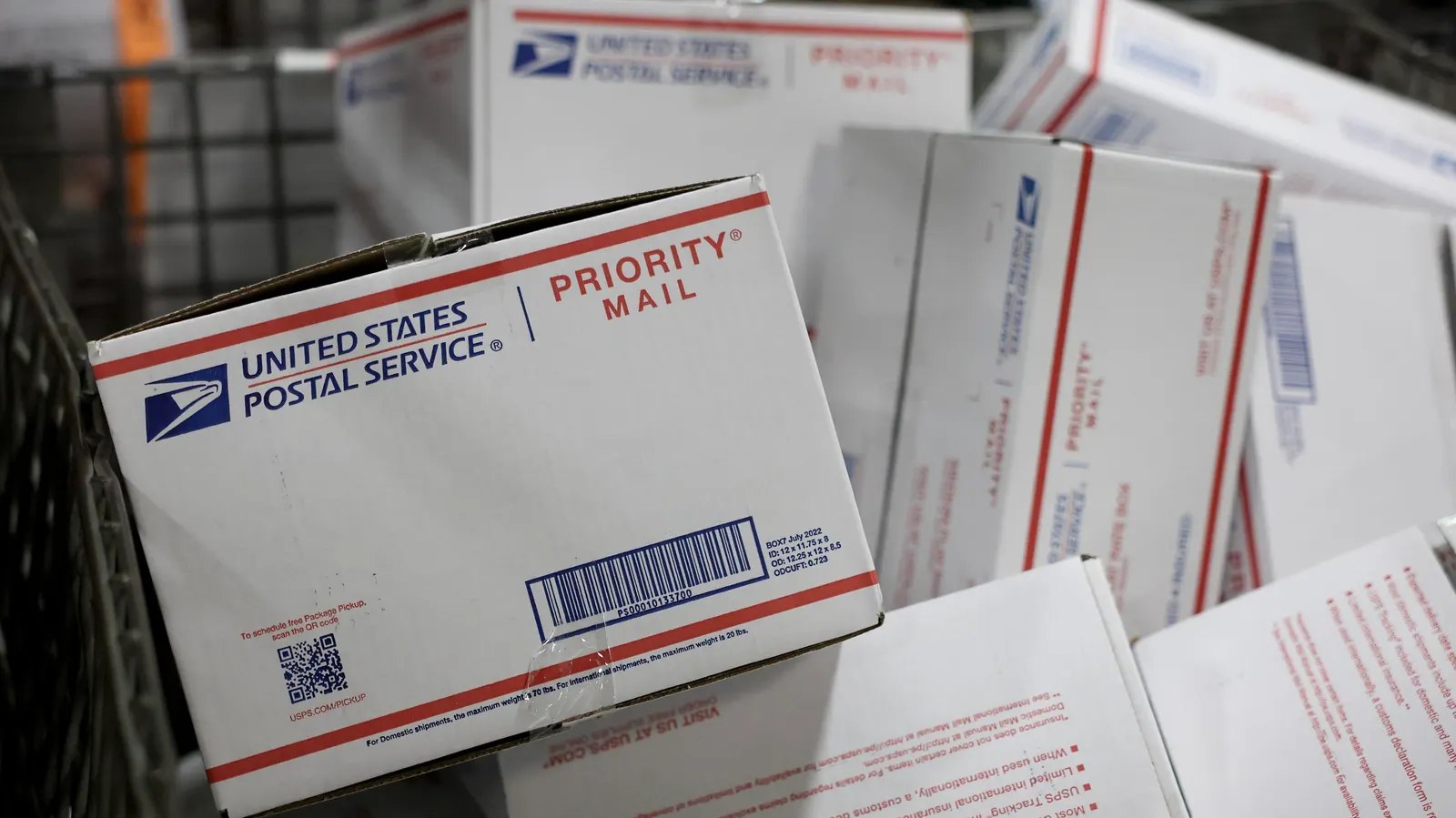
Most people comparing USPS priority vs ground advantage 2026 should choose Ground Advantage when price matters more than receiving the package within three days. Priority Mail is better for time-sensitive shipments, heavy items that fit Flat Rate packaging, and deliveries where a shorter expected transit window justifies the higher postage, аs noted by Baltimore Chronicle.
Both services accept packages weighing up to 70 lbs, include USPS Tracking, provide insurance with eligible shipments, and reach addresses throughout the United States. The practical difference is speed: Priority Mail generally takes 2–3 days, while Ground Advantage generally takes 2–5 days.
Key takeaways
- Ground Advantage usually costs less and works well for routine shipments that can arrive within two to five business days.
- Priority Mail offers a shorter expected delivery window, free USPS-branded packaging, and Flat Rate options for dense items.
- Package dimensions can matter more than actual weight because both services may apply dimensional-weight pricing and size-related fees.
USPS prices changed in 2026, affecting Priority Mail, Ground Advantage, Flat Rate packaging, and other domestic services. Retail prices start around $11.00 for Priority Mail and $7.90 for Ground Advantage, but the final charge depends on weight, dimensions, shipping zone, packaging, and how the label is purchased.
The Baltimore Chronicle guide to USPS rates for First-Class Mail and Priority Mail in 2026 provides additional prices for letters, envelopes, Flat Rate boxes, and common domestic shipments.
At a glance
| Feature | Priority Mail | USPS Ground Advantage |
|---|---|---|
| Expected delivery | 2–3 days | 2–5 days |
| 2026 retail starting price | About $11.00 at a Post Office | About $7.90 at a Post Office |
| Maximum weight | 70 lbs | 70 lbs |
| Tracking | Included | Included |
| Included insurance | Available with eligible shipments | Available for eligible merchandise |
| Packaging | Own packaging or free Priority Mail packaging | Own unbranded packaging required |
| Flat Rate option | Yes | No standard retail Flat Rate boxes |
| Hazardous materials | Limited by air-transport rules | Suitable for many ground-only HAZMAT items |
| Delivery guarantee | No | No |
| Best use | Urgent, valuable, or dense shipments | Low-cost routine shipping and lightweight packages |
Neither service offers the money-back delivery guarantee associated with Priority Mail Express. A displayed delivery date is an estimate based on origin, destination, acceptance time, transportation conditions, and USPS service standards.
USPS Priority vs Ground Advantage 2026 by speed
Priority Mail normally has an expected delivery window of 2–3 days. Ground Advantage uses a wider 2–5-day window, although nearby packages may still arrive within two or three days.
The difference becomes more noticeable on longer routes. A shipment traveling from Maryland to Pennsylvania may have similar estimated arrival dates under both services, while a package going from New York to California is more likely to show a meaningful Priority Mail advantage.
Priority Mail is the stronger choice when a package contains replacement parts, documents, a birthday gift, legally mailable medication, or supplies needed for scheduled work. Ground Advantage is usually sufficient for clothing returns, books, nonurgent household items, online resale orders, and products without a firm arrival deadline.
Paying for Priority Mail buys a shorter expected delivery window, not a guaranteed arrival date.
USPS publishes destination-specific estimates through its Service Standards tools. Checking the origin and destination ZIP Codes is more reliable than assuming Priority Mail will always save exactly two days.
Priority Mail costs, pros, and ideal users
USPS Priority Mail rates are based on weight and shipping zone when customers use their own box. The farther the destination and the heavier the package, the higher the price generally becomes.
Retail prices start at about $11.00 in 2026. USPS also offers Flat Rate envelopes and boxes, which charge a fixed national price for qualifying contents weighing up to 70 lbs.
Common 2026 retail examples include a Flat Rate Envelope at about $12.90, a Small Flat Rate Box at about $13.65, and a Medium Flat Rate Box at about $24.80. Senders should verify the final price before mailing because USPS can revise rates during the year.
Commercial rates purchased through Click-N-Ship or approved postage platforms can be lower than Post Office retail prices. The savings vary by package, zone, account, and current USPS rate schedule.
Priority Mail advantages
- Expected delivery in two to three days for most domestic routes.
- Free USPS Priority Mail boxes and envelopes for eligible shipments.
- Flat Rate packaging can reduce costs for small, dense items traveling long distances.
- Tracking, Package Pickup, and insurance with eligible shipments.
- No separate residential-delivery, rural-delivery, or Saturday-delivery surcharge.
Priority Mail disadvantages
- Higher starting price than Ground Advantage.
- No money-back delivery guarantee.
- Flat Rate packaging can cost more than weight-and-zone pricing for lightweight nearby shipments.
- Large boxes may trigger dimensional-weight pricing or additional size fees.
- Priority Mail-branded packaging cannot be used with Ground Advantage.
Priority Mail fits freelancers sending client materials, parents mailing deadline-sensitive items to college students, homeowners ordering an essential repair component, and online sellers who advertise faster handling.
It can also be economical when a heavy item fits securely inside a Small or Medium Flat Rate Box. The sender pays the applicable Flat Rate price rather than a rate that increases with distance and package weight, subject to USPS limits and packaging rules.
Ground Advantage costs, pros, and ideal users
USPS Ground Advantage prices start at about $7.90 at a Post Office in 2026. Online commercial pricing may be lower, particularly for lightweight packages and sellers who purchase labels electronically.
Packages up to 15.999 oz use ounce-based weight tiers and shipping zones. Packages above 15.999 oz are generally charged by the pound, with fractions handled according to USPS pricing rules, up to the 70-lb limit.
Ground Advantage requires the sender to provide suitable packaging. A plain corrugated box, padded mailer, or durable shipping envelope can be used, but free Priority Mail packaging is reserved for Priority Mail postage.
Ground Advantage advantages
- Lower starting postage for most routine domestic packages.
- Expected delivery within two to five days.
- Tracking, forwarding, return-to-sender service, and insurance for eligible merchandise.
- Package Pickup from eligible home and business addresses.
- Service to all 50 states, military addresses, territories, possessions, and Freely Associated States.
- Ground transportation for many hazardous materials that cannot travel by air.
Ground Advantage disadvantages
- Potentially slower delivery than Priority Mail across multiple shipping zones.
- No free service-specific boxes or envelopes.
- No standard retail Flat Rate option.
- No guaranteed delivery date.
- Shipments to Alaska, Hawaii, offshore destinations, and remote ZIP Codes may take longer.
Ground Advantage suits eBay and Etsy sellers, households returning merchandise, renters forwarding belongings, and small businesses shipping nonurgent orders. It is often the better value for packages under 1 lb, especially when the destination is nearby.
How weight and dimensions change the price
The 70-lb maximum does not mean a large but lightweight box will be priced only by its scale weight. USPS may use dimensional weight shipping when a package exceeds 1 cubic foot, or 1,728 cubic inches.
To find cubic volume, multiply length by width by height. A box measuring 18 × 14 × 10 inches has a volume of 2,520 cubic inches, so dimensional-weight rules may apply even if the contents weigh only a few pounds.
- Measure the package’s length, width, and height after it is sealed.
- Round the measurements according to current USPS rules.
- Multiply the three measurements to calculate cubic inches.
- Compare the actual weight with the billable dimensional weight.
- Enter the weight and dimensions in the USPS calculator before purchasing postage.
As of 2026, packages longer than 22 inches may face additional charges. Higher fees can apply above 30 inches, while parcels exceeding 2 cubic feet may receive another surcharge.
Nonstandard shapes can also affect the price. Tubes, rolls, metal containers, wooden boxes, and packages that cannot remain stable on automated equipment may require additional handling.
For bulky shipments, compare the total quoted prices rather than relying on each service’s advertised starting rate. Reducing a box by several inches often saves more than switching from Priority Mail to Ground Advantage.
Insurance, tracking, pickup, and packaging
Both options include USPS package tracking. Tracking events can show acceptance, movement through processing facilities, arrival at the local Post Office, and final delivery.
Ground Advantage includes insurance for eligible merchandise. Priority Mail also includes insurance with most eligible shipments, although coverage limits, exclusions, and documentation requirements apply.
Additional insurance can be purchased for qualifying packages when the contents exceed the included amount. The sender should keep the mailing receipt and proof of the item’s value until delivery is confirmed.
Insurance does not guarantee payment for every missing or damaged item. A claim may require the tracking number, receipt, sales invoice, photographs, original packaging, and evidence of damage.
Prohibited contents, insufficient packaging, missing documentation, or filing outside the permitted claim window can lead to a denial. USPS lists current service features and restrictions on its official domestic mail and shipping services page.
Free Package Pickup is available for both services at eligible addresses. Customers can also hand packages to a carrier, use an approved collection point when package dimensions allow, or take shipments to a Post Office.
Priority Mail customers may order free USPS-branded supplies. Ground Advantage customers must use their own packaging, but reusing a sturdy box is acceptable after removing or covering old labels, barcodes, hazardous-material markings, and unrelated service branding.
What to do when tracking information is missing
A shipping receipt or online label normally contains the USPS tracking number. Retailer order pages, marketplace accounts, confirmation emails, and text messages may also store it.
When the number cannot be found, the Baltimore Chronicle guide on how to track a USPS package without a tracking number explains how to check receipts, retailer accounts, Informed Delivery, and sender records.
USPS Informed Delivery can show incoming package information connected to an eligible verified address. It does not display every shipment, but it can help homeowners and renters monitor packages when the sender has not provided a tracking link.
The step-by-step guide to USPS Informed Delivery signup in 2026 covers address eligibility, identity verification, account setup, and package notifications.
A package that stops receiving scans is not automatically lost. Tracking updates can pause between facilities, during long-distance ground transportation, on federal holidays, or when a barcode is damaged.
Which should you buy in 2026?
If the lowest price is the priority and delivery within five days is acceptable, choose Ground Advantage.
If the package should arrive within two or three days, choose Priority Mail and check the ZIP Code-specific estimate before paying.
If a small box contains a dense item traveling several states away, compare Priority Mail Flat Rate with regular Priority Mail and Ground Advantage.
If the package weighs less than 1 lb and is not urgent, Ground Advantage will often provide the lowest USPS price.
If the contents must travel by ground because of hazardous-material restrictions, use Ground Advantage when USPS rules permit the item.
For most households and occasional sellers, the best process is to pack the item first and compare exact quotes using the same dimensions, weight, origin ZIP Code, and destination ZIP Code. The service name alone does not determine the cheapest result.
A kitchen scale and tape measure reduce the risk of postage adjustments. The final decision should reflect the package’s actual size, required arrival window, contents, and value.
Frequently asked questions
Is Ground Advantage always cheaper than Priority Mail?
No. Ground Advantage usually has the lower starting price, but Priority Mail Flat Rate may cost less for a compact, heavy package traveling a long distance. Exact quotes depend on weight, dimensions, zone, and label-purchase method.
How much faster is Priority Mail than Ground Advantage?
Priority Mail generally takes 2–3 days, compared with 2–5 days for Ground Advantage. On nearby routes, both services may show the same estimated delivery date.
Can Ground Advantage ship a 50-lb package?
Yes. Ground Advantage accepts mailable packages weighing up to 70 lbs. Large dimensions can increase the price through dimensional-weight calculations and nonstandard-size fees.
Does Priority Mail include a guaranteed delivery date?
No. Standard Priority Mail delivery estimates are not money-back guarantees. Customers needing a guaranteed service should compare Priority Mail Express availability, terms, and price.
Can Priority Mail boxes be used for Ground Advantage?
No. USPS-provided Priority Mail packaging must be mailed with the corresponding Priority Mail service. Ground Advantage shipments require the sender’s own plain or otherwise eligible packaging.
Are 2026 USPS prices the same online and at the Post Office?
No. Post Office retail prices are generally higher than eligible commercial rates available through Click-N-Ship and approved shipping platforms. The final amount depends on the mailing date, package measurements, weight, zone, and current USPS pricing
Earlier we wrote about How to Find a Real Estate Agent in USA: 8 Steps for 2026