

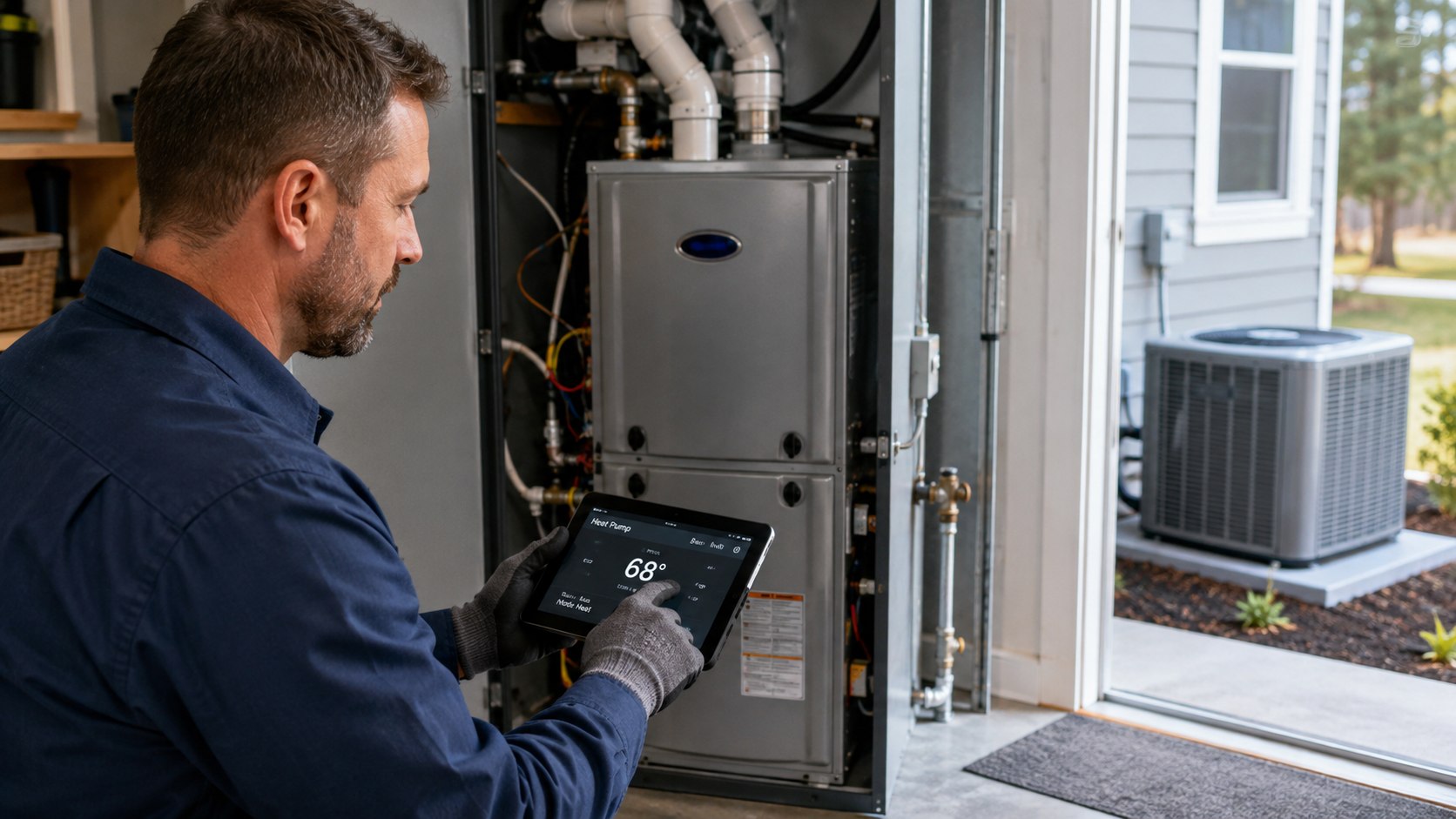
Furnace vs heat pump 2026 USA comes down to climate, existing equipment, and local energy prices. Most homeowners replacing both heating and cooling should price a heat pump first, while a gas furnace remains attractive in very cold areas with affordable natural gas, as noted by Baltimore Chronicle.
A heat pump can heat and cool with one system. A furnace provides only heat, so a home that needs summer cooling also requires an air conditioner. In 2026, that difference can change both the installation bill and long-term operating costs.
Key takeaways
- Heat pumps make the strongest case in moderate and warm climates, especially when replacing an aging furnace and central AC together.
- Gas furnaces remain competitive in colder states when natural gas is affordable and existing gas infrastructure is already usable.
- The federal Section 25C home-improvement credit ended for property placed in service after December 31, 2025.
The purchase should not begin with a brand name. Homeowners need a heating and cooling load calculation, comparable contractor quotes, and current local electricity and gas rates.
A lower equipment price can disappear after duct repairs, electrical upgrades, permit costs, or a separate AC replacement. Installation quality also matters as much as the logo on the cabinet.
Carrier, Trane, Lennox, Rheem, Bryant, Goodman, Mitsubishi Electric, and Daikin all sell equipment across several performance tiers. The model, sizing, controls, contractor setup, and local parts support affect real ownership costs.
For a house with both an aging furnace and an aging AC unit, replacing 2 machines with one heat pump deserves a serious quote before another furnace is ordered.
At a glance
The following comparison uses broad 2026 US planning ranges. Actual prices vary by house size, climate, electrical capacity, ducts, permits, contractor labor, and equipment tier.
Baltimore Chronicle’s guide to new HVAC costs in 2026 places furnace installations around $3,800–$12,000 and heat pumps around $6,000–$25,000.
| Factor | Gas furnace | Heat pump |
|---|---|---|
| Typical 2026 installed cost | About $3,800–$12,000 | About $6,000–$25,000 |
| Provides cooling | No | Yes |
| Best climate fit | Cold and very cold regions | Warm, mixed, and many cold climates |
| Main energy source | Natural gas, propane, oil, or electricity | Electricity |
| Efficiency measure | AFUE | HSPF2, SEER2, COP |
| Cold-weather output | Strong and predictable | Model-dependent |
| Summer equipment | Separate AC usually required | Cooling is built in |
| Typical repair exposure | Burner, igniter, blower, heat exchanger | Compressor, refrigerant circuit, controls, fans |
| Indoor combustion | Usually yes with fuel-burning models | No for standard electric air-source systems |
A furnace appears cheaper when the comparison includes heating equipment only. That can be misleading when the central air conditioner also needs replacement.
A complete furnace-and-AC project may approach the cost of a heat-pump system. This matters most in homes where both existing units are nearing the end of their service lives.
Heat pump quotes can also include hidden project costs. Older houses may need a new electrical circuit, panel work, duct corrections, or supplemental heating equipment.
Cold-climate models usually cost more than basic systems designed for mild winters. Existing infrastructure can therefore reverse the calculation.
A Maryland home with aging heating and cooling equipment presents a different case from a Minnesota house with a newer AC and an established high-efficiency gas furnace. Local utility rates deserve equal attention.
Baltimore Chronicle’s guide to lowering electric bills in 2026 shows why state and utility differences matter when estimating HVAC costs.
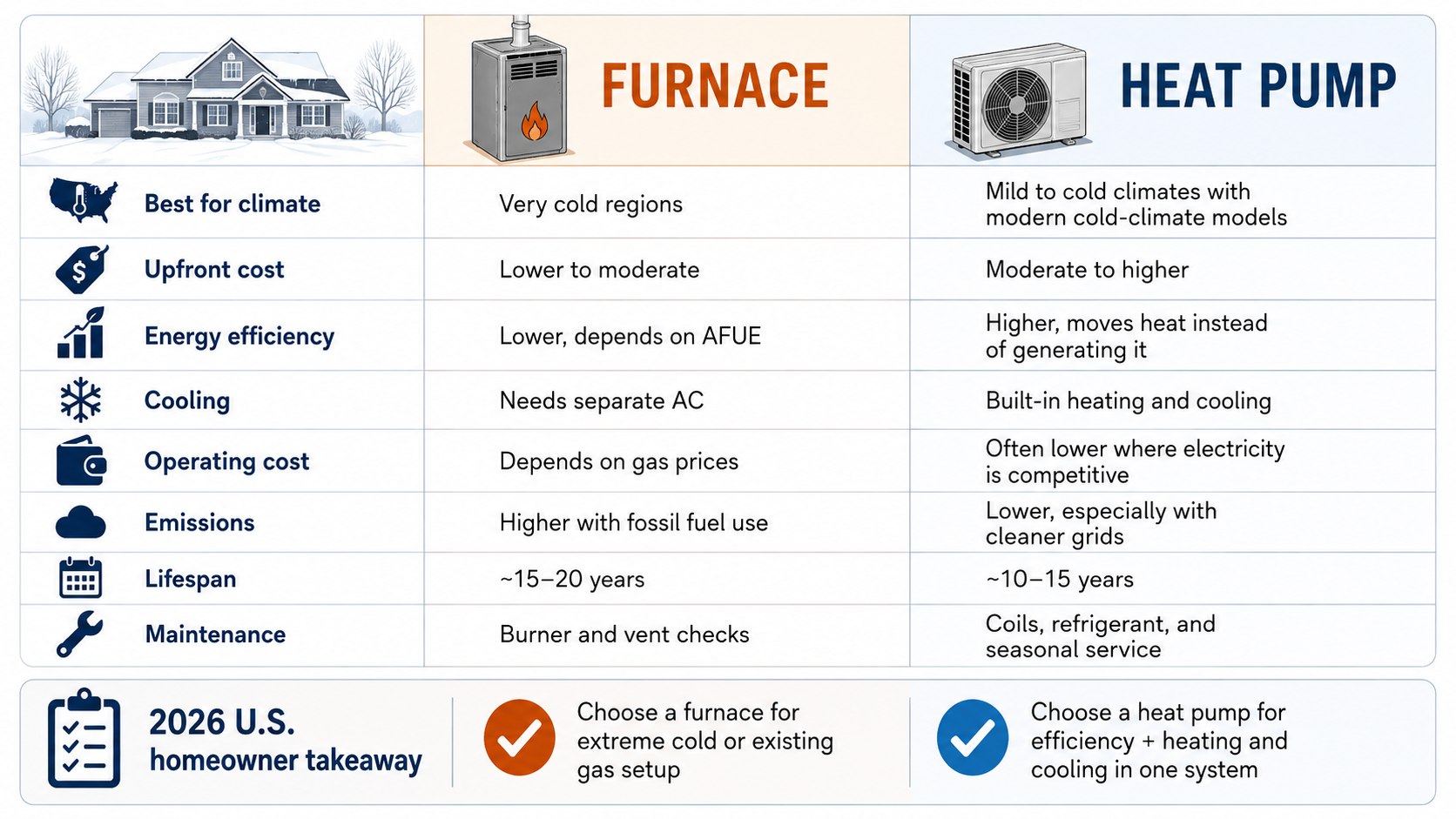
Furnace vs heat pump 2026 USA cost and efficiency
A fuel-burning furnace creates heat. A heat pump moves heat between indoors and outdoors through a refrigeration cycle.
That engineering difference explains why heat pump efficiency can exceed the apparent 100% ceiling associated with electric resistance heating. A heat pump moves existing heat rather than producing all of it directly.
The US Department of Energy describes heat pumps as an energy-efficient alternative to furnaces and air conditioners across different climates. Modern equipment can operate in cold weather, although capacity and efficiency still decline as outdoor temperatures fall.
The official Department of Energy heat-pump guidance also describes dual-fuel systems that combine a heat pump with a furnace.
A heat pump is economically strongest when it replaces 2 aging systems rather than competing with a furnace in isolation.
For gas furnaces, AFUE describes how much fuel energy becomes usable heat over a heating season. A 95% AFUE furnace converts most of its fuel input into indoor heat, but the homeowner still pays for every therm consumed.
Heat pumps use different measurements. HSPF2 measures seasonal heating performance, SEER2 addresses cooling performance, and COP compares delivered heat with electricity consumed under specific conditions.
Heat pump vs gas furnace cost therefore cannot be decided from efficiency labels alone. Electricity can be expensive in states such as California, while favorable natural gas prices can strengthen the furnace case elsewhere.
Heat pump advantages, disadvantages, and ideal homes
The biggest heat-pump advantage is consolidation. One system can provide winter heating and summer cooling, reducing the need for separate furnace and AC replacements.
Modern cold-climate systems are also more capable than older heat pumps. ENERGY STAR cold-climate criteria require qualifying models to demonstrate meaningful low-temperature performance.
According to ENERGY STAR specifications, qualifying cold-climate equipment must satisfy performance requirements measured at 5°F.
- Pros: heating and cooling from one system, no on-site combustion, strong efficiency, ducted and ductless options.
- Cons: higher initial cost in some projects, possible electrical upgrades, lower output as outdoor temperatures fall.
- Ideal user: a homeowner replacing both furnace and AC in a warm, mixed, or moderately cold climate.
A heat pump can also make strong financial sense when replacing electric resistance heating. Electric furnaces and baseboards generate heat directly, while heat pumps transfer it.
Cold states require more careful equipment selection. Maine, Minnesota, Wisconsin, Michigan, Vermont, and upstate New York are not automatic exclusions for heat pumps.
They are locations where low-temperature capacity data matters more. Homeowners should ask what the system can deliver at 17°F, 5°F, and below 0°F.
The contractor should also explain when auxiliary electric resistance heat or a backup furnace activates. That balance point can materially change winter energy bills.
Service complexity is another factor. Heat pumps contain compressors, reversing valves, refrigerant circuits, electronic controls, and outdoor coils that operate during winter.
Cold-climate certification does not eliminate the need to size equipment for the actual house, insulation level, ductwork, and local winter design temperature.
Gas furnace advantages, disadvantages, and ideal homes
A gas furnace vs heat pump comparison becomes closer in areas with long and severe winters. Furnaces maintain strong heating output when outdoor temperatures fall sharply.
They also deliver the warmer supply air many homeowners associate with traditional forced-air heating. That does not automatically make them cheaper, but it affects comfort preferences.
The strongest furnace case appears when the home already has a sound gas connection, usable venting, good ductwork, and a relatively new central air conditioner.
Replacing only a failed furnace can cost far less than converting an entire HVAC system.
- Pros: dependable cold-weather capacity, familiar service network, straightforward replacement in gas-equipped homes.
- Cons: no cooling, combustion equipment requires proper venting, and a separate AC remains necessary.
- Ideal user: a cold-climate homeowner with affordable gas and existing furnace infrastructure in good condition.
Aging ductwork still deserves inspection. Installing an expensive furnace cannot correct poor airflow, disconnected ducts, undersized returns, or major leakage.
Homebuyers should also examine HVAC condition before treating an existing furnace as an asset. Baltimore Chronicle’s guide to home inspections in the USA explains how furnaces, heat pumps, ducts, and related components fit into a typical property inspection.
Combustion safety remains part of furnace ownership. Gas equipment needs correct venting, proper burner operation, a sound heat exchanger, and functioning carbon-monoxide protection.
Climate changes the answer
No national recommendation works equally well from Miami to Minneapolis. Searches for the best heating system for US climate should begin with winter temperatures, cooling demand, insulation, and local utility rates.
| Region example | What usually deserves the first quote | Main reason |
|---|---|---|
| Florida, coastal Georgia | Heat pump | Long cooling season and mild winters |
| Maryland, Virginia | Heat pump or dual fuel | Mixed heating and cooling loads |
| Texas | Heat pump | Heavy cooling demand with generally moderate winters |
| California | Heat pump | Favorable climate in many areas, but electricity prices matter |
| New York, Pennsylvania | Cold-climate heat pump or dual fuel | Cold winters require low-temperature analysis |
| Minnesota, North Dakota | Furnace, dual fuel, or verified cold-climate heat pump | Extreme winter conditions increase backup-heat importance |
These regional examples are starting points rather than equipment-sizing rules. Two houses on the same street can have different heating loads because of insulation, windows, air leakage, orientation, and additions.
Cooling demand can also tilt the economics toward a heat pump. A household replacing a 15-year-old AC gains more from a combined system than someone with a 3-year-old high-efficiency air conditioner.
High electricity prices can move the calculation in the opposite direction. California is an obvious example because electricity rates can materially affect heating economics.
Natural gas bills need the same scrutiny. The correct comparison includes the commodity rate, delivery charges, and fixed monthly fees.
Insulation improvements can sometimes reduce the HVAC size a home needs. Lower heating loads may allow smaller equipment and lower operating costs.
What 2026 incentives change the calculation
Homeowners searching older guides will often find references to a federal heat-pump tax credit of up to $2,000. That information is outdated for new systems placed in service in 2026.
The IRS states that the Section 25C Energy Efficient Home Improvement Credit does not apply to qualifying property placed in service after December 31, 2025.
Official details appear in the IRS guidance on the credit changes.
For a 2026 installation, an expired federal tax credit should not be subtracted from the contractor’s price.
State, utility, and local programs may still exist. Eligibility can depend on household income, equipment efficiency, utility territory, approved contractors, or geographic location.
Rebates should therefore be treated as confirmed money only after eligibility is documented. An old promotional brochure should not be used as the basis for a 2026 household budget.
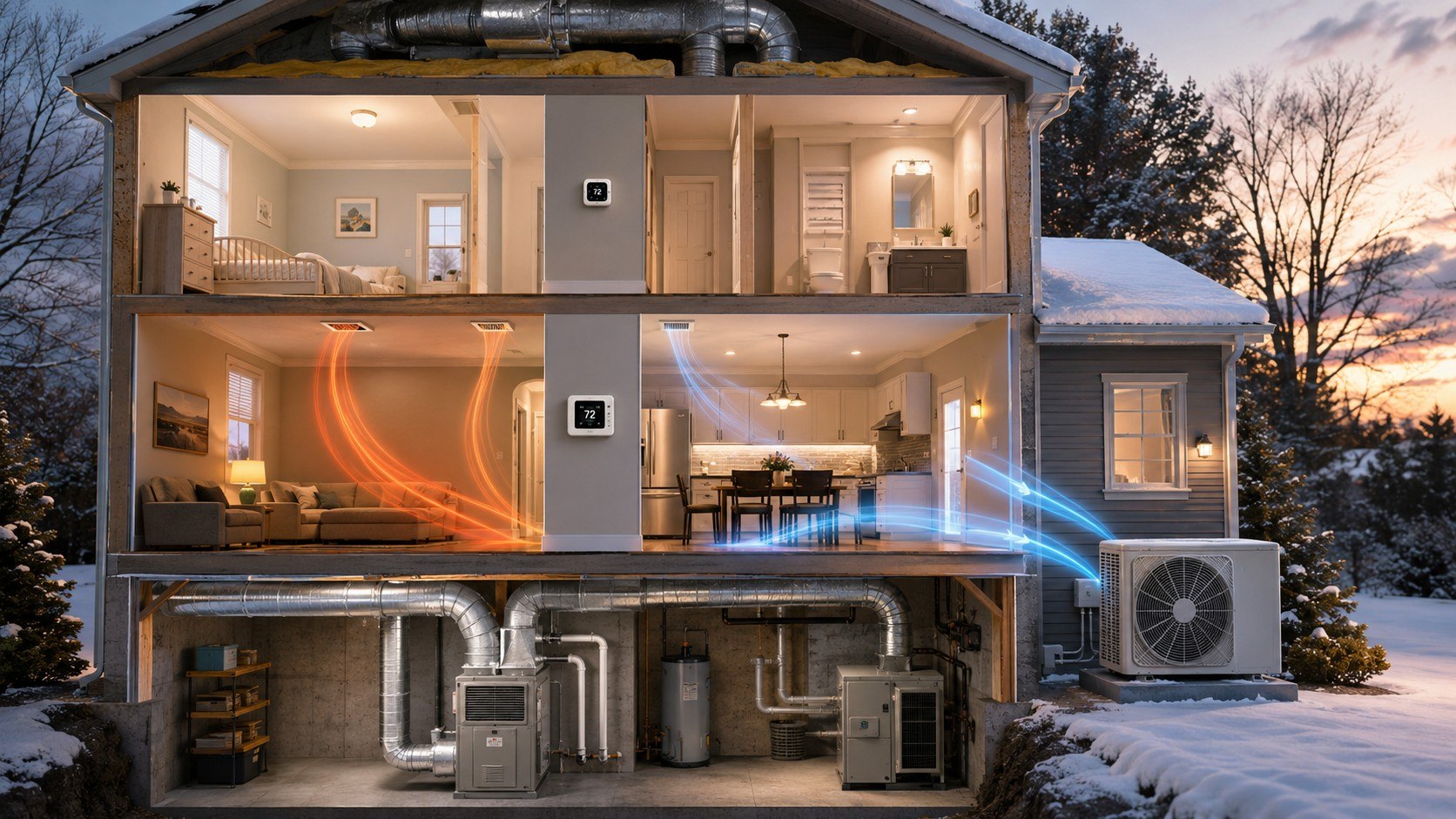
Which should you buy in 2026
The decision becomes easier when the household starts with its existing equipment rather than a generic national ranking.
- If both the furnace and AC are near failure, compare a heat pump with a complete furnace-and-AC replacement.
- If winters are mild or moderate, use a heat pump as the baseline quote.
- If winters are severe, compare cold-climate heat pumps, dual fuel, and a high-efficiency furnace.
- If the AC is relatively new but the furnace failed, replacing only the furnace may preserve capital.
- If electricity is costly and gas is cheap, calculate annual operating costs before choosing electrification.
Homeowners should request at least 3 comparable bids. Each quote should list exact model numbers, capacity, efficiency ratings, permits, electrical work, duct modifications, disposal, and warranty terms.
Ask for a Manual J or equivalent load calculation rather than accepting sizing based only on square footage. A 2,000 sq ft home does not automatically require one specific HVAC capacity.
The complete project scope matters more than the sticker price. A furnace-only quote should not be compared directly with a heat-pump quote that replaces both heating and cooling.
Repair exposure also deserves attention. A cheaper installation can become less attractive if local technicians lack parts or experience with that specific model.
The final comparison should include planned ownership time, AC age, repair history, utility rates, climate, and likely electrical upgrades. That gives a more realistic 10-year picture than installation price alone.
FAQ
Is a heat pump cheaper than a furnace in 2026?
Not always at installation. A furnace alone can cost less, while a heat pump provides both heating and cooling.
When both the furnace and AC need replacement, compare the heat pump with the combined cost of replacing both systems.
Do heat pumps work below freezing?
Yes. Modern cold-climate heat pumps are designed to operate below freezing.
ENERGY STAR cold-climate criteria include performance requirements at 5°F. Backup heat may still be useful during more extreme weather.
What is the cheapest heating option for a cold state?
There is no universal winner. Existing gas infrastructure, electricity rates, natural gas prices, insulation, and winter temperatures all affect the answer.
Dual-fuel systems can be competitive when a heat pump handles moderate weather and a furnace takes over during severe cold.
How long should a furnace or heat pump last?
Service life depends on equipment quality, installation, runtime, climate, maintenance, and repair history.
Replacement should not be based on age alone. Parts availability, efficiency, repair frequency, and the condition of connected systems also matter.
Is there a federal heat pump tax credit in 2026?
The Section 25C credit does not apply to qualifying property placed in service after December 31, 2025, according to the IRS.
State, utility, or local incentives may still be available in 2026.
What should be checked before signing an HVAC contract?
Confirm model numbers, load calculations, SEER2 and HSPF2 ratings, labor, permits, duct modifications, electrical work, warranties, disposal, and commissioning.
All competing quotes should describe approximately the same project scope before prices are compared.
Earlier we wrote about DIY Wallpaper Installation: How to Prep Walls, Apply Paste and Avoid Gaps