

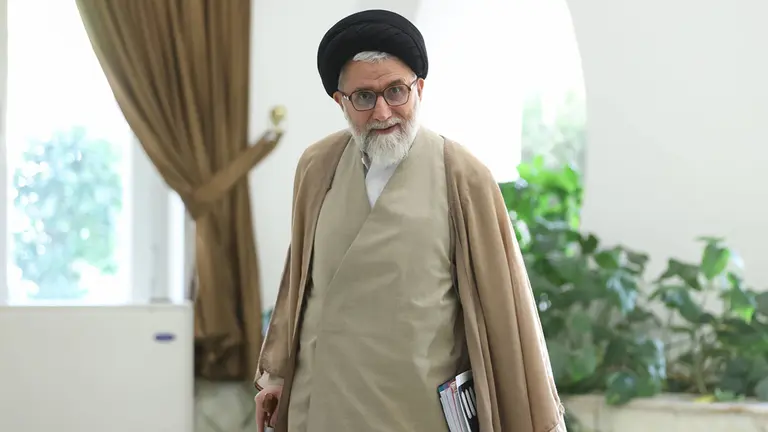
Israel has announced the death of Iran’s Intelligence Minister Esmail Chatib, marking the latest high-profile loss within the Iranian leadership. The announcement came a day after the deaths of Iran’s influential security chief Ali Laridschani and Basij militia leader Gholamresa Soleimani. Israeli Defense Minister Israel Katz stated that the army had authorization from Prime Minister Benjamin Netanyahu to carry out targeted operations against any senior Iranian official without further approval, reports Baltimore Chronicle with reference to tagesschau.
The killing of Laridschani is considered the most significant blow to Tehran’s leadership since the death of Iran’s Supreme Leader Ayatollah Ali Khamenei at the start of the war in late February. Chatib’s death follows Israel’s ongoing policy of targeted attacks on members of Iran’s top leadership.
Iranian Foreign Minister Abbas Araghtchi responded by asserting that the country’s operational capabilities remain intact despite the loss of senior leaders. Speaking to Al Jazeera, Araghtchi emphasized that the United States and Israel fail to recognize the Islamic Republic as a resilient political system that is not dependent on individual figures.
In Tehran, citizens and government supporters gathered for mourning ceremonies. State television footage showed crowds surrounding a truck carrying coffins through the city center, reportedly including Laridschani’s coffin and that of his son, who was also killed in the Israeli strikes. State media reported mourning for the Basij militia commander and the crew of an Iranian warship previously sunk by the U.S. near Sri Lanka.
Russia condemned the targeted killings of Iran’s leadership. Kremlin spokesman Dmitry Peskov described Laridschani’s death as murder and stated that Moscow unequivocally opposes any actions aimed at assassinating or eliminating Iranian officials.
In response, the Islamic Revolutionary Guard Corps launched rockets targeting central Israel, resulting in two deaths near Tel Aviv, according to Israeli authorities. Multiple locations were hit overnight, including a residential building in Ramat Gan by cluster munitions. Israel and Iran accused each other of deploying these particularly destructive weapons.
The United States and Israel continued attacks across various regions in Iran, including Tehran, Lorestan province, Hamedan, and Fars province. Moscow reported that a building near the Russian-built Bushehr nuclear facility was struck, but no damage or radiation increase occurred. This marks the first attack on Bushehr since the conflict began on February 28, with Russia condemning the violation of international security principles.
Israel also expanded airstrikes to Beirut, Lebanon, where at least twelve people were killed and a ten-story building near the city center destroyed. The attacks reportedly occurred without warning, following earlier rocket launches by Hezbollah.
German Foreign Minister Johann Wadephul and his French counterpart Jean-Noël Barrot called for de-escalation, warning of potential global consequences. Wadephul emphasized skepticism regarding a peaceful transfer of power in Iran, citing previous conflicts in Iraq and Libya as examples where foreign military interventions did not produce democratic governance.
Earlier we wrote about Cuba Blackout 2026: Millions Without Power Amid Oil Shortages and U.S. Sanctions