

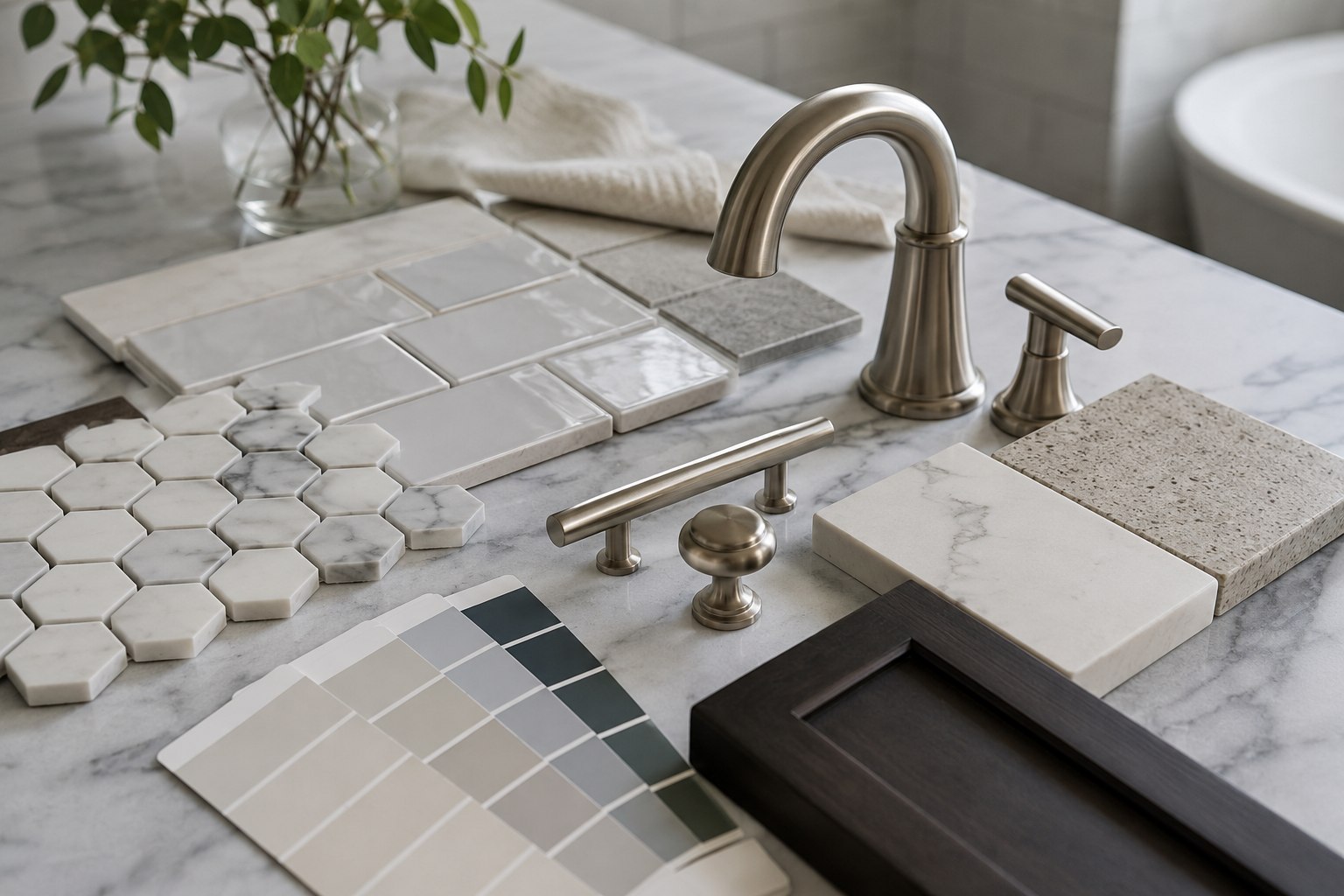
A bathroom remodel in the USA in 2026 usually costs $3,000 to $8,000 for a light refresh, $9,000 to $25,000 for a typical midrange remodel, and $30,000 to $80,000+ for a full gut or luxury primary bathroom, аs noted by Baltimore Chronicle.
The final price depends on the scope. A powder room with new paint, toilet, faucet, and lighting is a small project. A 5-by-8 ft hall bath with a tub-to-shower conversion costs more. A full primary bathroom remodel with new tile, waterproofing, electrical work, custom glass, and premium fixtures becomes a construction-level project.
Key Takeaways
- Most 2026 bathroom remodels cost $9,000 to $25,000 when the layout stays the same.
- Moving plumbing, adding custom tile, or upgrading electrical can raise the price quickly.
- Labor, waterproofing, permits, demolition, and hidden repairs often matter more than fixture brands.
Homeowners comparing remodeling budgets with broader property expenses can also review Baltimore Chronicle’s guide to Baltimore property taxes, bills, and homeowner exemptions. Financing decisions often overlap with mortgage costs, tax obligations, and long-term property maintenance planning.
Bathroom Remodel Cost by Project Type
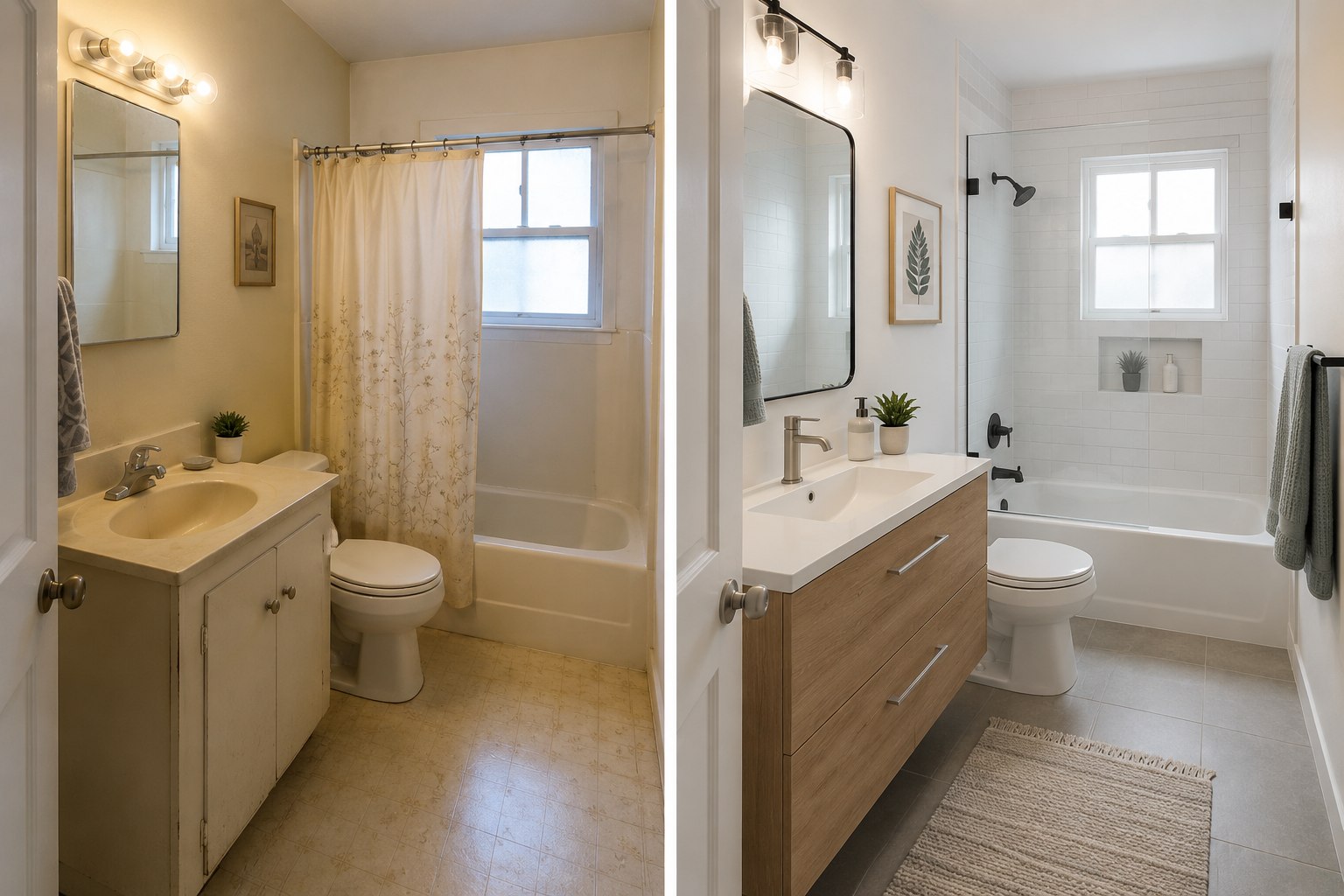
A cosmetic refresh usually costs $3,000 to $8,000. This may include paint, a stock vanity, a toilet, faucet, mirror, light fixture, fan replacement, and new flooring. It works best when the bathroom has no leaks, mold, or hidden wall damage.
A midrange bathroom remodel usually costs $9,000 to $25,000. This range often includes a new tub or shower, vanity, countertop, toilet, flooring, lighting, exhaust fan, fixtures, plumbing labor, electrical work, tile installation, and debris removal.
A full gut remodel usually costs $30,000 to $80,000 or more. This level may include demolition to studs, new plumbing, new wiring, framing repairs, waterproofing, custom shower glass, premium tile, heated floors, and a new layout.
| Scenario | Typical 2026 Cost | Best Fit |
|---|---|---|
| Cosmetic refresh | $3,000–$8,000 | Paint, vanity, fixtures, lighting |
| Small full bath remodel | $8,000–$18,000 | 5-by-8 ft bath, stock materials |
| Midrange hall bath | $12,000–$25,000 | New tub or shower, vanity, tile |
| Primary bath remodel | $25,000–$60,000 | Larger space, double vanity, glass |
| Full gut or luxury bath | $45,000–$80,000+ | Layout changes, custom tile, premium finishes |
Small bathrooms are not always cheap because many trades work in a tight space. A plumber, electrician, tile setter, carpenter, painter, glass installer, and general contractor may all be involved in one compact room.
Homeowners buying older houses in historic areas should also compare renovation potential before starting large projects. Baltimore Chronicle’s guide to Pigtown Baltimore housing and renovation quality explains how property condition can directly affect remodeling costs and contractor scope.
What Drives Bathroom Remodel Prices
Scope and Demolition
The cheapest projects leave walls, drains, supply lines, and electrical circuits in place. Costs rise when contractors remove tile, open walls, replace subflooring, repair framing, or discover water damage near the tub, toilet, vanity, or shower pan.
Demolition also adds labor, debris disposal, dust protection, and cleanup. A low quote that excludes demolition or hauling can become more expensive once work begins.
Labor and Region
Bathroom remodel pricing varies sharply by state and metro area. California, New York, Massachusetts, Washington, New Jersey, and parts of Maryland often have higher labor rates than many markets in the Midwest or South.
Rural areas may have lower hourly rates, but specialized plumbers, electricians, tile setters, and glass installers may charge more when travel time is long.
Plumbing and Electrical Changes
Moving a toilet, shifting a shower drain, adding a second sink, or converting a tub to a curbless shower can change the budget fast. Plumbing changes are expensive because they often require demolition, framing access, subfloor work, and inspections.
Electrical upgrades may include GFCI outlets, recessed lighting, illuminated mirrors, fan timers, dedicated circuits, or heated floor wiring. Older homes may need wiring corrections before new fixtures pass inspection.
Tile, Waterproofing, and Shower Systems
Tile is one of the biggest price variables. Basic ceramic tile costs much less than large-format porcelain, marble, mosaic niches, herringbone layouts, or full-height shower walls.
Waterproofing is not the place to cut costs. Poor waterproofing can damage framing, drywall, ceilings, and flooring outside the bathroom.
A bathroom is one of the most expensive rooms per square foot because it combines plumbing, electrical work, waterproofing, ventilation, tile, cabinetry, and finish materials in a small space.
The EPA lead renovation program also affects some remodeling projects in homes built before 1978, especially when walls, paint, or old materials are disturbed during demolition.
Typical Bathroom Remodel Price Breakdown
A useful contractor estimate separates labor, materials, allowances, permits, demolition, disposal, and change-order rules. A vague quote can look cheaper until the homeowner learns that tile, shower glass, vanity tops, permits, or electrical repairs were excluded.
| Line Item | Typical 2026 Cost |
|---|---|
| Design consultation or layout planning | $300–$2,500 |
| Demolition and debris disposal | $800–$3,500 |
| Rough plumbing | $1,000–$6,000 |
| Electrical, lighting, outlets, fan | $800–$4,500 |
| Bathtub or shower replacement | $2,000–$12,000 |
| Tile floor and shower tile | $2,500–$18,000 |
| Vanity, countertop, sink, faucet | $800–$7,500 |
| Toilet installed | $250–$1,200 |
| Shower glass or door | $900–$4,000 |
| Permits and inspections | $100–$2,000+ |
| Contingency | 15%–25% of project budget |
A midrange 5-by-8 ft bathroom often looks simple on paper but requires several trades. The more coordination required, the more important the general contractor’s scheduling and project management become.
Hidden Costs That Catch Homeowners
Hidden costs usually appear when the original quote is unclear. A “complete bathroom remodel” may not include every finish, inspection, fixture, or repair.
Common hidden costs include:
- Permit and inspection fees.
- Water damage behind tubs, toilets, vanities, and shower walls.
- Subfloor replacement after old flooring is removed.
- Tile allowance overages.
- Shower glass upgrades after final measurement.
- Freight, delivery, and restocking fees.
- Condo or HOA approval requirements.
- Temporary bathroom arrangements in one-bathroom homes.
Financing can also raise the real cost. Monthly payments may look affordable while interest, origination fees, deferred-interest terms, or credit-card APRs increase the final amount paid.
The Federal Trade Commission also recommends comparing written contractor estimates and avoiding pressure tactics during home renovation planning. Its official guide on avoiding home improvement scams explains common warning signs homeowners should watch for before signing contracts.
Ways to Save on a Bathroom Remodel in 2026
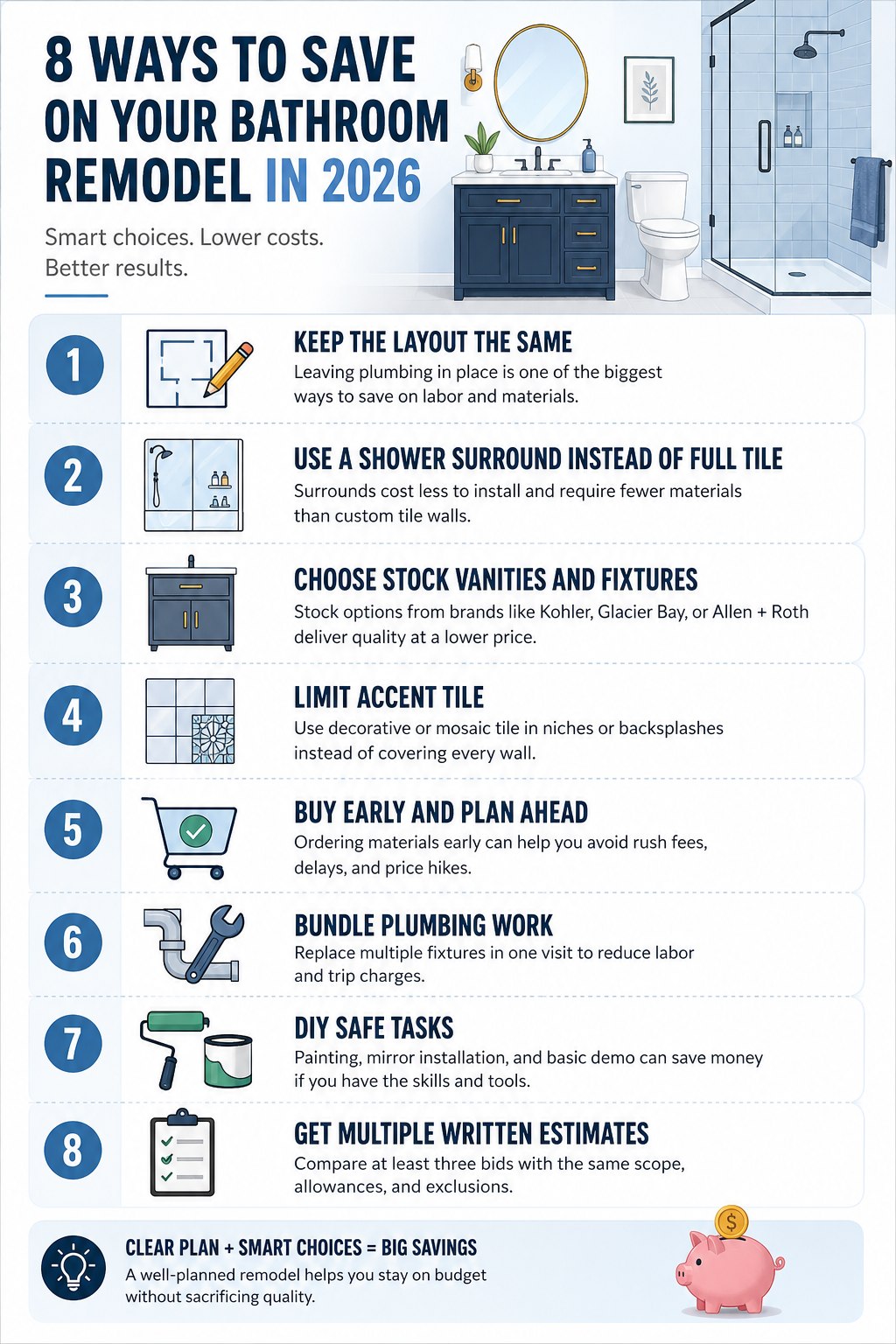
The best savings usually come from reducing complexity, not from buying the cheapest fixtures. Cheap materials can fail early, while smart planning can remove thousands from the estimate.
- Keep the toilet, shower, and vanity in the same locations.
- Use a quality shower pan or tub surround instead of full custom tile.
- Choose stock vanities when custom storage is not required.
- Limit accent tile to a niche, backsplash, or small feature wall.
- Buy fixtures early to avoid rush shipping.
- Bundle plumbing fixture replacements.
- Handle painting or accessory installation only when skills allow.
- Get at least three written estimates with the same scope.
Online calculators can provide a starting point, but local quotes matter more. A bathroom remodel in Texas, Ohio, or North Carolina may price very differently from one in California, New York, or Massachusetts.
Homeowners preparing a property for resale may also compare renovation priorities with Baltimore Chronicle’s article about best Baltimore neighborhoods for first-time buyers. Bathroom upgrades often improve listing appeal in competitive housing markets.
When Paying More Makes Sense
Paying more makes sense when the upgrade protects the structure. Proper waterproofing, a correctly sloped shower pan, quality valves, and professional tile installation are cheaper than repairing a leak later.
Accessibility upgrades may also justify the cost. A curbless shower, blocking for future grab bars, better lighting, a comfort-height toilet, and a wider entry can help homeowners use the bathroom safely for longer.
Ventilation is another practical upgrade. A quiet exhaust fan with the right capacity helps reduce moisture, peeling paint, mildew, and odors.
Daily-use items deserve stronger budgets than decorative pieces. Faucets, shower valves, drawer slides, toilets, and exhaust fans work every day. A mirror or trendy light fixture is easier to replace than a failed valve inside a tiled wall.
Brand Choices and Product Tiers
Brand selection affects price, repairability, and replacement parts. Delta, Moen, Kohler, American Standard, Toto, Grohe, Hansgrohe, Brizo, Duravit, and Woodbridge appear often in 2026 bathroom quotes, but they sit in different price tiers.
A budget remodel may use a stock vanity, a basic American Standard toilet, and a Delta or Moen faucet. A midrange remodel may use Kohler, Toto, Moen, Delta, or Hansgrohe fixtures with quartz, porcelain tile, and a semi-custom vanity.
A luxury remodel may include custom cabinetry, stone slabs, premium shower systems, wall-mounted toilets, heated floors, and frameless glass.
Local parts availability matters. A premium imported fixture can become frustrating if a replacement cartridge takes weeks to arrive.
Bathroom Remodel Budgeting Checklist
A bathroom remodel budget should be built before demolition. The goal is to avoid a low starting estimate that becomes expensive through rushed decisions and change orders.
- Define the project as a refresh, midrange remodel, or full gut.
- Measure the room and list every fixture.
- Decide whether the toilet, shower, tub, and vanity will move.
- Set allowances for tile, vanity, countertop, faucet, toilet, lighting, and shower glass.
- Confirm whether permits, drawings, inspections, demolition, and hauling are included.
- Add a 15% to 25% contingency.
- Confirm payment schedule, warranty, insurance, license, and change-order rules.
A realistic 2026 bathroom remodel budget is not just the contractor’s base price. It includes product decisions, site conditions, local code requirements, and surprises that may appear after walls or floors are opened.
FAQ
What is the average bathroom remodel cost in the USA in 2026?
Most bathroom remodels in 2026 cost $9,000 to $25,000 for a midrange project with the same layout. Cosmetic updates can start around $3,000, while full gut or luxury primary bathrooms can exceed $45,000.
Can a bathroom be remodeled for under $10,000 in 2026?
Yes, but the scope must stay limited. Under $10,000 usually means no layout changes, limited tile, stock fixtures, basic flooring, and little hidden damage.
What is the most expensive part of a bathroom remodel?
Labor, tile, plumbing changes, and waterproofing usually drive the highest costs. A custom shower can become the most expensive single feature.
Is a tub-to-shower conversion cheaper than a full remodel?
Often, yes. A tub-to-shower conversion can cost less when the drain location stays similar and the rest of the bathroom remains mostly unchanged.
How much should be kept aside for surprises?
A 15% to 25% contingency is practical for most 2026 bathroom projects. Older homes, water damage, pre-1978 paint, condo rules, or layout changes justify the higher end.
Is a bathroom remodel worth it before selling a home?
A clean, functional, neutral bathroom can help a home show better. Before selling, repairs, ventilation, working fixtures, and broad-appeal finishes usually matter more than luxury upgrades.
Earlier we wrote about How to Buy a House in USA 2026