

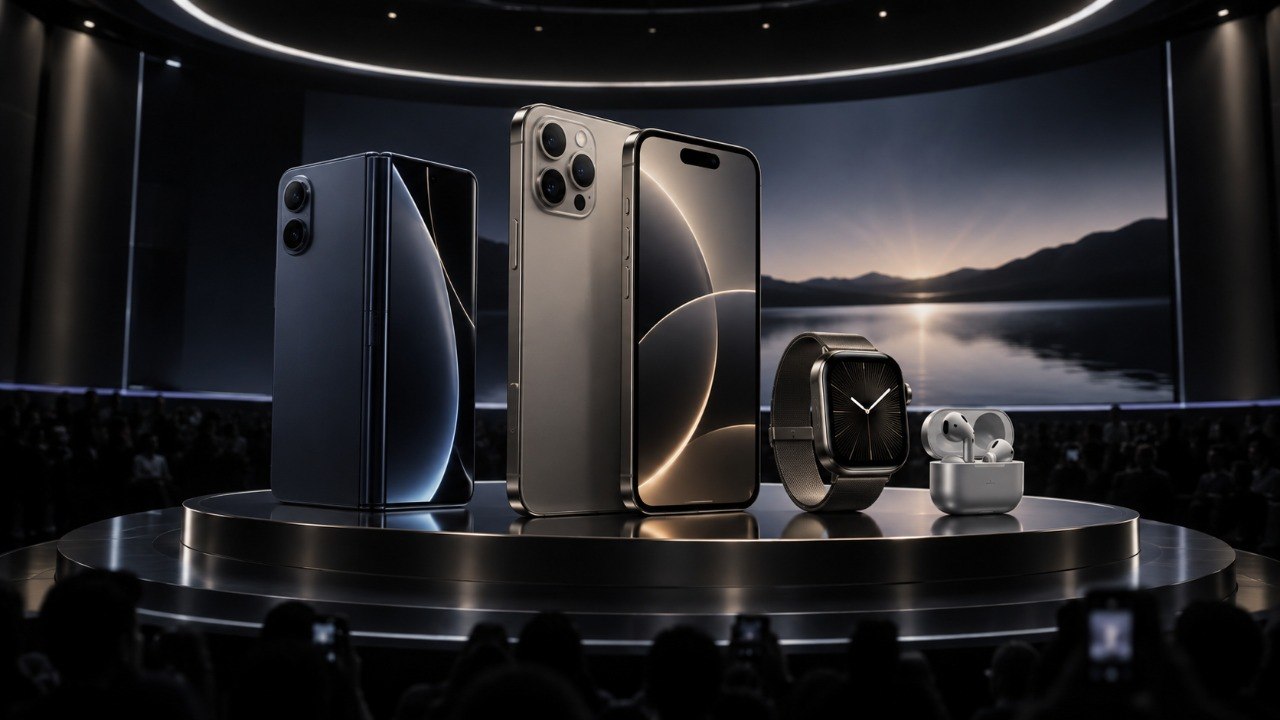
Apple 2026 event brought a change that went beyond the usual annual processor and camera upgrades. On September 9, Apple unveiled its first foldable iPhone, refreshed the Pro lineup, introduced new watches and AirPods, and put new CEO John Ternus on stage for his first major product launch. The event made clear that Apple now sees foldable hardware and artificial intelligence as parts of the same ecosystem, as noted by the Baltimore Chronicle.
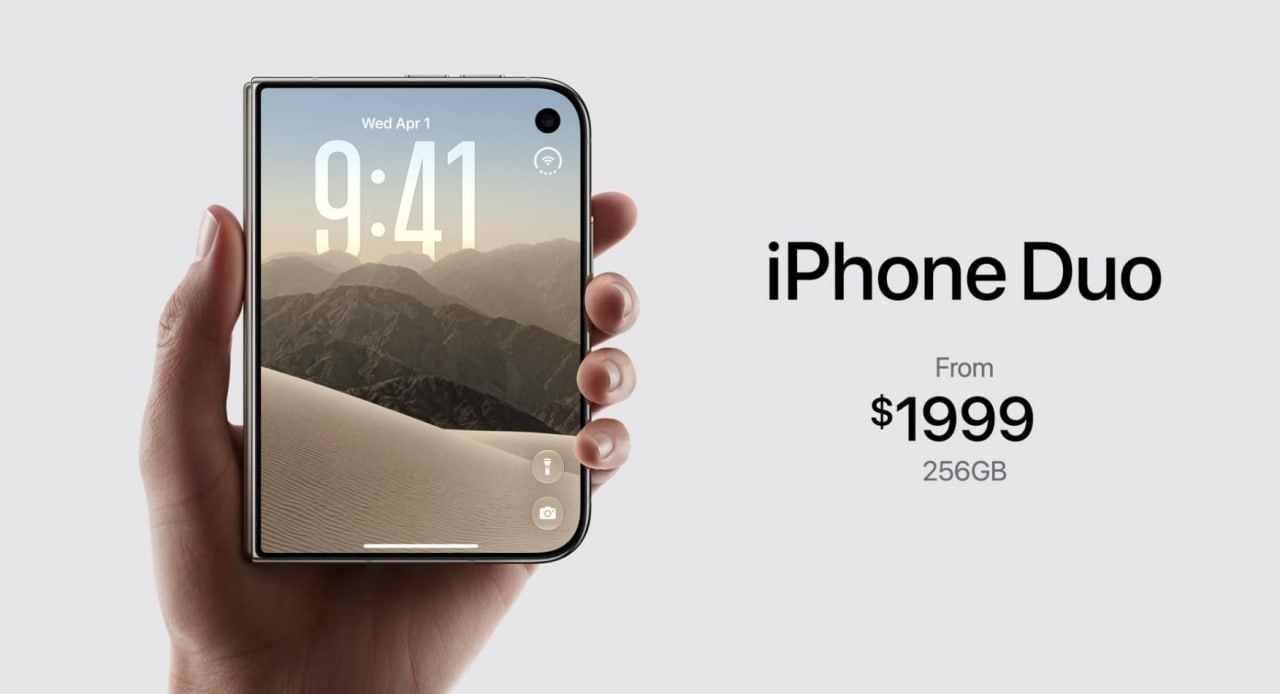
The centerpiece was the iPhone Duo, a $1,999 foldable device with a 7.6-inch inner screen. Apple also introduced iPhone 18 Pro and Pro Max with the A20 Pro chip and variable-aperture cameras. Apple Watch Series 12, Watch Ultra 4 and AirPods 5 expanded AI features beyond the phone.
This was not an event built around one faster iPhone. Apple introduced a new category inside its most important product family.
iPhone Duo becomes Apple’s first foldable iPhone
The iPhone Duo is Apple’s first attempt to compete directly in the book-style foldable market. When closed, it uses a 5.4-inch outer display. Opening the device reveals a 7.6-inch inner screen designed for video, games and multitasking.
Apple says the inner display is its largest ever fitted to an iPhone. The company also calls the Duo its thinnest iPhone when unfolded. The device uses a titanium frame and a precision hinge, while its two displays share the same aspect ratio. That allows applications to move between screens without dramatic changes in layout. Full specifications are detailed in Apple’s official iPhone Duo announcement.
The design creates several practical operating modes:
- the outer screen works like a compact conventional smartphone;
- the unfolded display provides more room for several applications;
- partially folding the device can create a self-supporting viewing position;
- the larger screen gives games and video considerably more usable space;
- the folding structure creates new positions for taking photographs.
Unlike recent premium iPhones, the Duo uses Touch ID rather than Face ID. The fingerprint reader sits in the side button. Apple has also built a vapor chamber and dual-battery architecture into the unusually thin body.
These decisions show how tightly space is constrained inside a foldable phone. A second display and hinge consume internal volume that conventional smartphones can use for batteries and sensors. Apple therefore redesigned several familiar iPhone components rather than simply folding an existing Pro model. Durability will become one of the most important issues once the Duo reaches customers. Repair costs and long-term hinge performance will also influence whether the format moves beyond early adopters.
“iPhone Duo is the most transformational change to iPhone since the original.”
John Ternus, Apple CEO, in Apple’s September 9, 2026 iPhone Duo announcement.
A20 Pro turns the foldable into more than a large screen
The Duo runs on the 2-nanometer A20 Pro processor. Apple says its 6-core CPU is up to 20% faster than A19 Pro. The 7-core GPU is rated up to 40% faster and more efficient.
A dual 16-core Neural Engine handles local AI workloads. Apple also says memory bandwidth has increased by 50%.
That matters because foldable hardware creates a different workload. Two displays can remain active, applications can share the larger workspace and AI models increasingly operate on the device itself.
- A20 Pro manages conventional CPU workloads.
- The GPU handles gaming and graphics across the larger display.
- The Neural Engine processes supported AI tasks locally.
- The vapor chamber helps maintain performance during longer workloads.
- Apple’s display engine controls transitions between the inner and outer screens.
The Duo also uses Apple-designed N1 wireless hardware for Wi-Fi 7, Bluetooth 6 and Thread. A C2 modem manages cellular connectivity and supports mmWave in the United States.
The real test for the foldable iPhone will be sustained daily use, not the visual impact of opening it for the first time.
iPhone 18 Pro focuses on cameras, battery and AI
The iPhone 18 Pro and iPhone 18 Pro Max look considerably more familiar. Their important changes are inside the chassis and camera system.
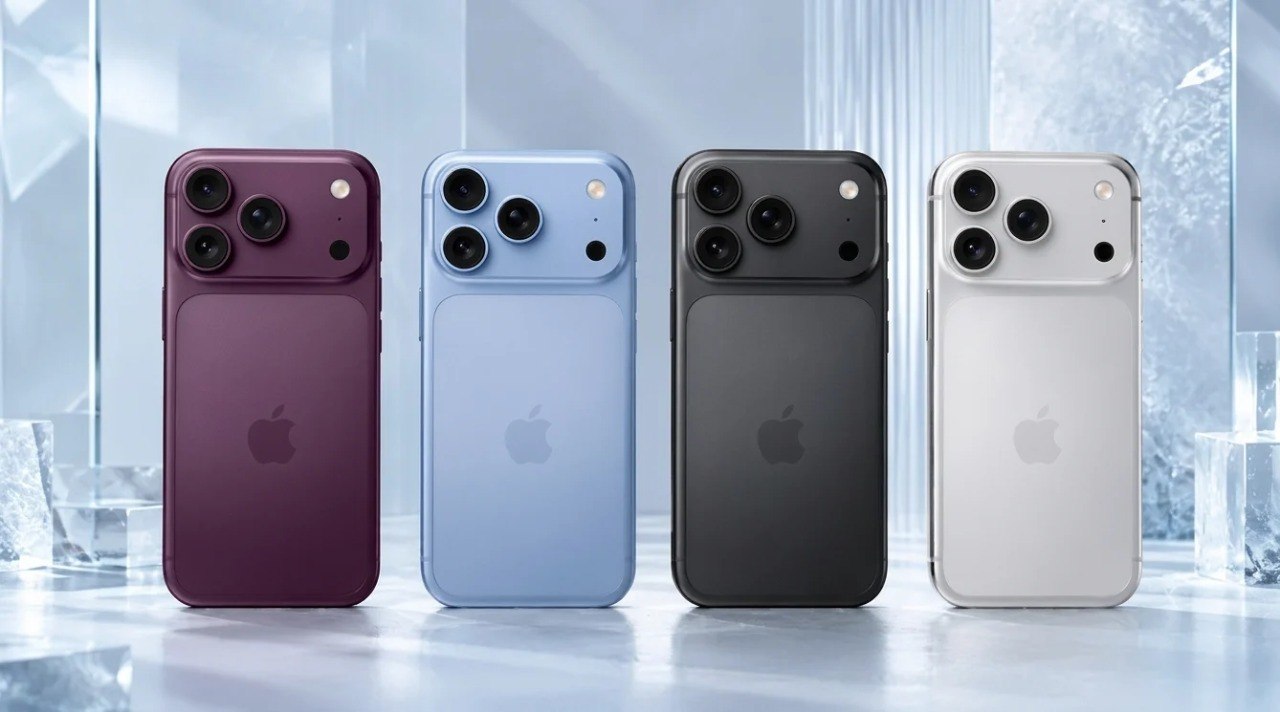
Both models receive A20 Pro, a redesigned thermal system and a smaller Dynamic Island. Apple says the Dynamic Island can handle several simultaneous activities more effectively. Storage begins at 256GB.
The main photographic change is a 48MP Fusion Main camera with variable aperture. Instead of relying entirely on computational processing, the camera can physically control the amount of light entering the lens. That gives photographers greater influence over exposure and depth of field.
Apple has also expanded Pro camera controls. The approach moves the iPhone closer to dedicated camera workflows without abandoning automatic photography.
According to Apple’s iPhone 18 Pro announcement, the lineup comes in black, silver, glacier and burgundy.
| Device | Processor | Key feature | U.S. starting price | Availability |
|---|---|---|---|---|
| iPhone Duo | A20 Pro | 7.6-inch foldable display | $1,999 | October 23 |
| iPhone 18 Pro | A20 Pro | 48MP variable-aperture camera | $1,199 | September 18 |
| iPhone 18 Pro Max | A20 Pro | Up to 45 hours video playback | $1,299 | September 18 |
| Apple Watch Series 12 | S11 | Health Sensing System | $399 | September 18 |
| Apple Watch Ultra 4 | S11 | Extended fitness and GPS features | $799 | September 18 |
| AirPods 5 | H3 | Open-ear ANC and Live Translation | $129 | September 18 |
The $800 difference between iPhone 18 Pro and Duo is substantial. Buyers are effectively paying for a new mechanical format, second screen and redesigned internal architecture. The Pro remains the conventional flagship for photography and battery life. The Duo targets customers willing to accept higher cost for a larger portable workspace. Apple is therefore segmenting its premium range by usage rather than simply screen size. That strategy resembles the separation already established between standard Apple Watch models and the Ultra family.
Apple Watch Series 12 puts health data ahead of design changes
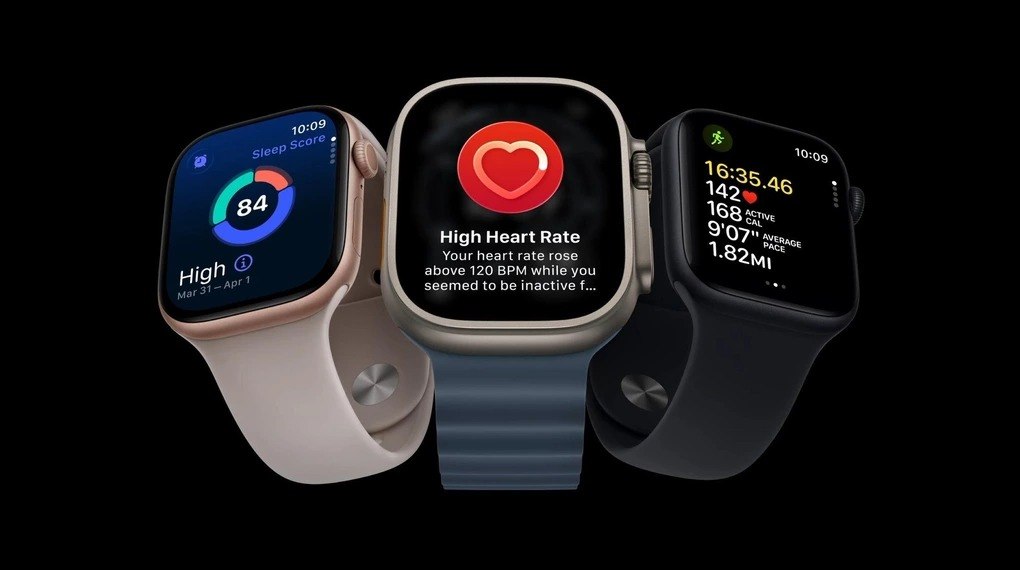
The Apple Watch Series 12 introduces Apple’s new Health Sensing System. It increases the frequency of heart-rate and heart-rate-variability measurements and uses those signals for a new readiness score.
One detail differs from early reports surrounding the launch. The official specification lists the S11 chip, not S12. That distinction matters because inaccurate chip names can easily spread through summaries of product events.
The redesigned Health app will add a Longevity section and Health Age feature. Health Age compares selected measurements with patterns associated with a user’s chronological age.
Series 12 also introduces Audio Intelligence features. They are designed to detect relevant sounds and assist with recalling information from conversations. Siri AI brings personal-context functions to the watch when the required hardware and language support are available.
Apple says the new health capabilities complement existing ECG, sleep, workout and safety functions. The company explains the Health Sensing System in its official Apple Watch Series 12 release.
Apple describes readiness as an insight based on higher-frequency heart-rate and HRV measurements rather than a medical diagnosis.
Apple, Apple Watch Series 12 product announcement, September 9, 2026.
Apple Watch Ultra 4 and AirPods 5 extend the same strategy
Apple Watch Ultra 4 uses the same S11 generation and Health Sensing System but aims at longer outdoor activities. Apple states that workout tracking can reach up to 45 hours. The device also expands satellite and navigation capabilities.
The starting U.S. price remains $799. Natural and black titanium versions are available.
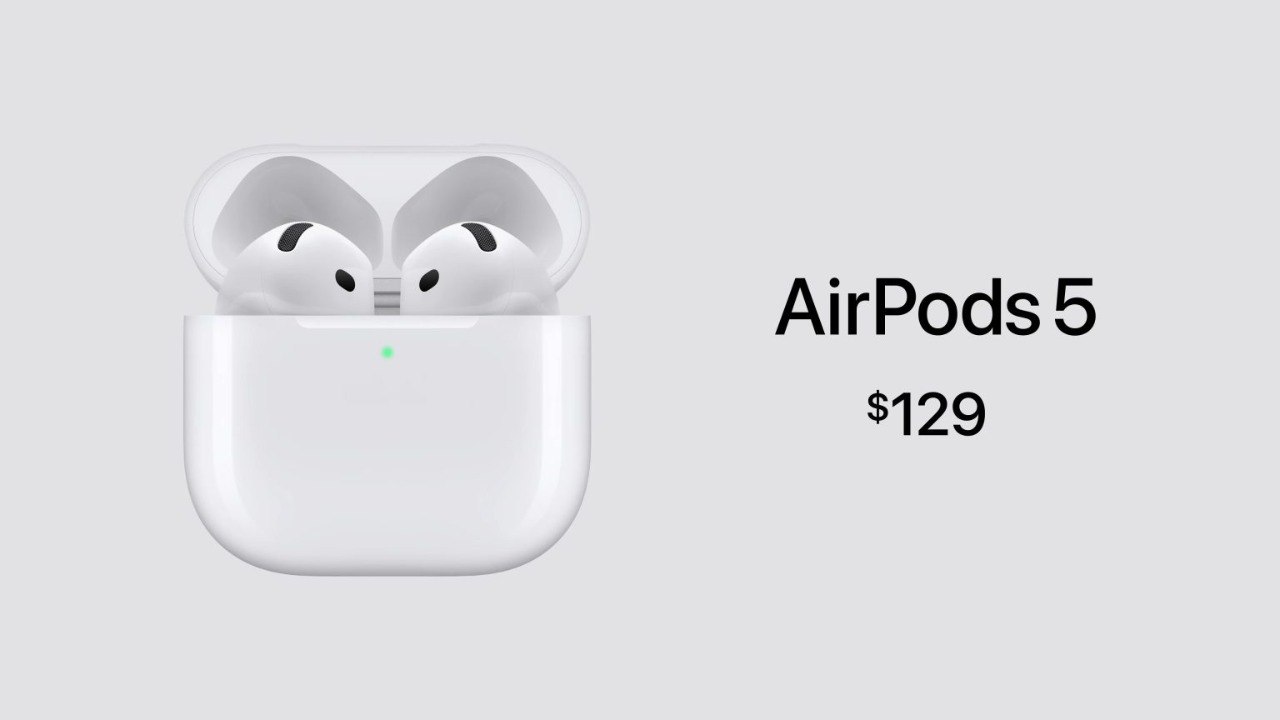
AirPods 5 take AI into a different setting. The new H3-powered earbuds combine improved open-ear Active Noise Cancellation with Siri AI and Live Translation.
Important upgrades include:
- ANC that Apple says removes up to 50% more outside noise than AirPods 4 with ANC;
- a new multiport acoustic architecture;
- next-generation Adaptive EQ;
- hands-free Siri AI access;
- Live Translation for supported languages;
- USB-C and wireless charging support.
The standard U.S. price starts at $129. Apple says playback with ANC can reach 22 hours when the charging case is included.
These additions make AirPods more dependent on software services rather than audio hardware alone. Translation is particularly significant because it connects microphones, speech recognition, AI processing and language models. Its practical value will depend heavily on supported languages and real-world recognition quality. Users considering an upgrade primarily for translation should check language availability first.
John Ternus opens his tenure with Apple’s riskiest iPhone
The presentation carried another unusual feature. John Ternus Apple CEO had formally taken over on September 1, only 8 days before the event.
Apple announced the succession in April 2026. Tim Cook moved to executive chairman, while Ternus joined the board as CEO. Apple’s current leadership page lists Ternus as chief executive and Cook as executive chair.
Ternus joined Apple’s product design team in 2001. He became a hardware engineering vice president in 2013 and entered the executive team in 2021. His engineering background gives the Duo launch added significance because the product depends heavily on mechanical design, materials and durability.
The leadership transition also separates 2 responsibilities that Tim Cook held for years. Ternus manages Apple as CEO, while Cook remains involved at board level and in selected policy relationships.
Launching a foldable iPhone days after a CEO transition gives Ternus an unusually visible first chapter.
The Baltimore Chronicle’s earlier coverage of Apple’s eSIM strategy provides useful context. Apple has previously removed familiar hardware conventions when it believed software could replace them.
Its report on Apple’s planned 2025–2026 product pipeline also showed how the company was broadening development beyond the annual iPhone cycle.
Apple 2026 prices and release dates
Apple has divided the autumn launch into 2 waves. The conventional hardware arrives first, while the foldable Duo follows more than a month later.
iPhone 18 Pro pre-orders open September 12. Retail availability begins September 18. Apple Watch Series 12, Ultra 4 and AirPods 5 also reach stores on September 18.
iPhone Duo follows a separate schedule. Pre-orders begin October 16, with U.S. availability from October 23.
That gap may give Apple additional time to manage production of a mechanically complex device. Foldable displays, hinges and dual-screen assemblies create manufacturing demands that do not exist on conventional iPhones. Apple has not presented the Duo as a replacement for the Pro models. Its $1,999 price positions it as a separate premium category.
FAQ about the Apple 2026 event
What did Apple announce in September 2026?
Apple announced iPhone Duo, iPhone 18 Pro, iPhone 18 Pro Max, Apple Watch Series 12, Apple Watch Ultra 4 and AirPods 5. The announcements were made on September 9, 2026.
How much does iPhone Duo cost?
The iPhone Duo price starts at $1,999 in the United States. Apple offers 256GB, 512GB, 1TB and 2TB configurations.
When will iPhone Duo be released?
Pre-orders open October 16, 2026. General availability begins October 23 in more than 70 countries and regions.
What is new in iPhone 18 Pro?
Its major upgrades include the A20 Pro chip, variable aperture on the 48MP main camera and improved thermal management. Pro Max offers up to 45 hours of video playback.
Did Apple announce the regular iPhone 18?
No standard iPhone 18 was included among Apple’s principal September 9 hardware announcements. The event concentrated on the Pro models and the new foldable Duo.
Who is Apple’s CEO in 2026?
John Ternus became CEO on September 1, 2026. Tim Cook moved to the role of executive chairman.
Earlier we wrote about Why Old Wood Furniture Turns Blotchy After Staining and How to Refinish It Correctly