

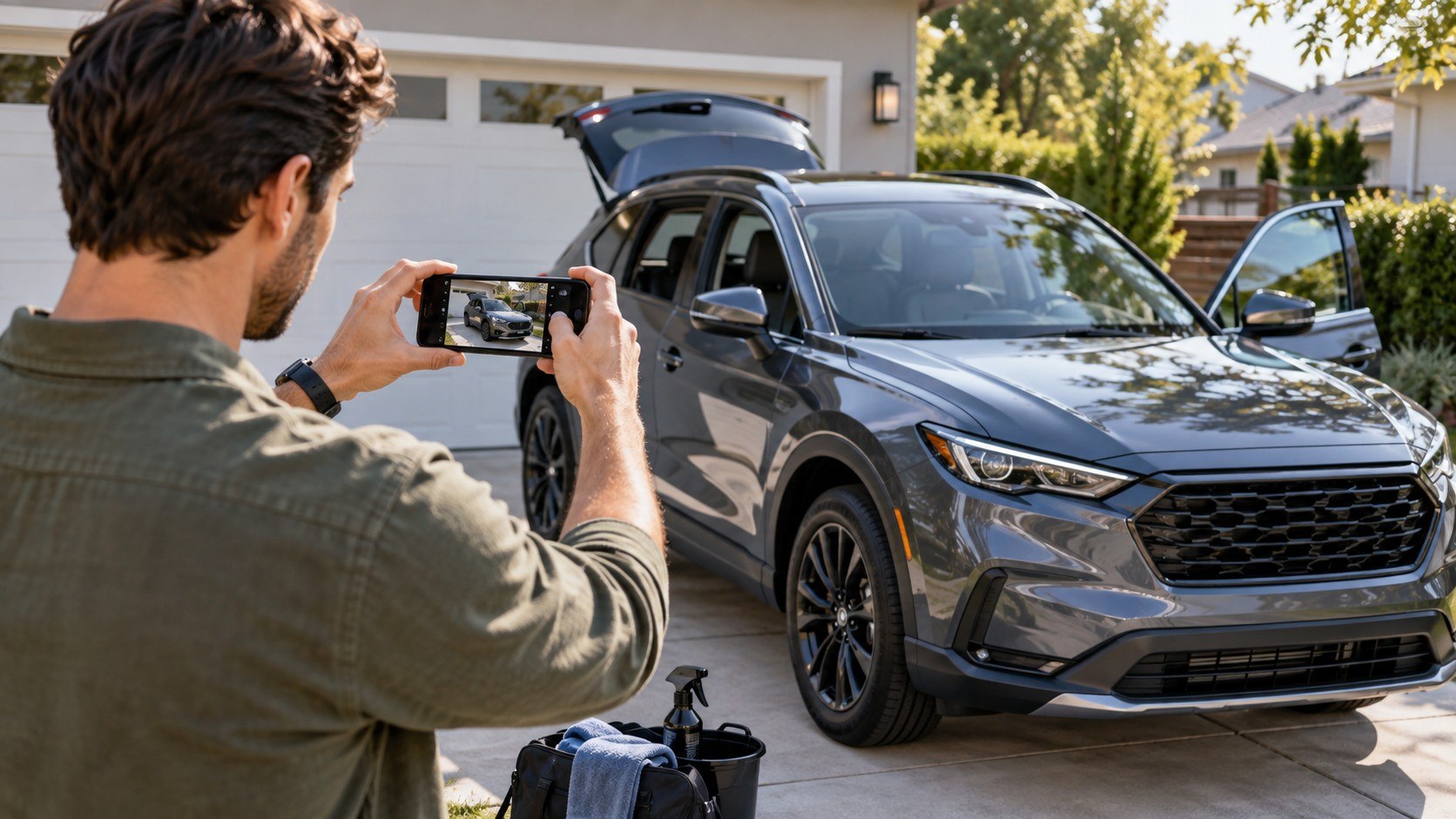
How to list a car on Turo 2026 starts with 3 checks: host eligibility, vehicle eligibility, and realistic profit after costs. Most owners can complete the listing process in about 30–60 minutes if documents and photos are ready, as noted by Baltimore Chronicle.
Turo requires US hosts to be at least 21 years old. The vehicle generally must be 12 years old or newer and have fewer than 130,000 miles when first listed. It also needs a clean title, legal registration, insurance, and a fair market value within Turo’s limits. Those requirements should be checked before spending money on detailing, accessories, or professional photos.
Key takeaways
- Confirm vehicle age, mileage, title status, registration, insurance, and financing restrictions before creating the listing.
- Compare expected host revenue with cleaning, depreciation, maintenance, insurance, parking, and delivery costs before setting your rate.
- Use accurate photos, realistic availability, and clear pickup rules because listing quality directly affects booking decisions.
A profitable listing requires more than a competitive daily price. Owners must account for mileage, tires, cleaning, depreciation, and possible downtime. Turo also changes earnings structures and platform rules over time. Local demand can differ sharply between Phoenix, Seattle, Baltimore, Dallas, and smaller markets.
The platform should therefore be treated as a small vehicle-rental operation, not passive cash. Owners who already track vehicle expenses have a clearer advantage.
What you need
- A Turo account and identity information.
- A qualifying vehicle registered in the United States.
- Current vehicle insurance and registration.
- License plate details and accurate vehicle specifications.
- At least 10 clear vehicle photos as a practical target.
- Access to financing or lease documents, if applicable.
- About 30–60 minutes for setup and listing review.
- A realistic budget for cleaning, maintenance, and operating costs.
Gathering these items first prevents repeated interruptions during setup. Financing documents deserve particular attention because some lenders restrict commercial or car-sharing use.
Insurance also deserves a separate review. Personal policies may treat peer-to-peer vehicle sharing differently from ordinary personal driving. Registration and license plate details must match the actual vehicle.
Owners should also photograph existing cosmetic damage before accepting any reservation. Keep maintenance invoices, tire records, inspection paperwork, and service receipts. Those documents can become important when a vehicle’s condition is questioned.
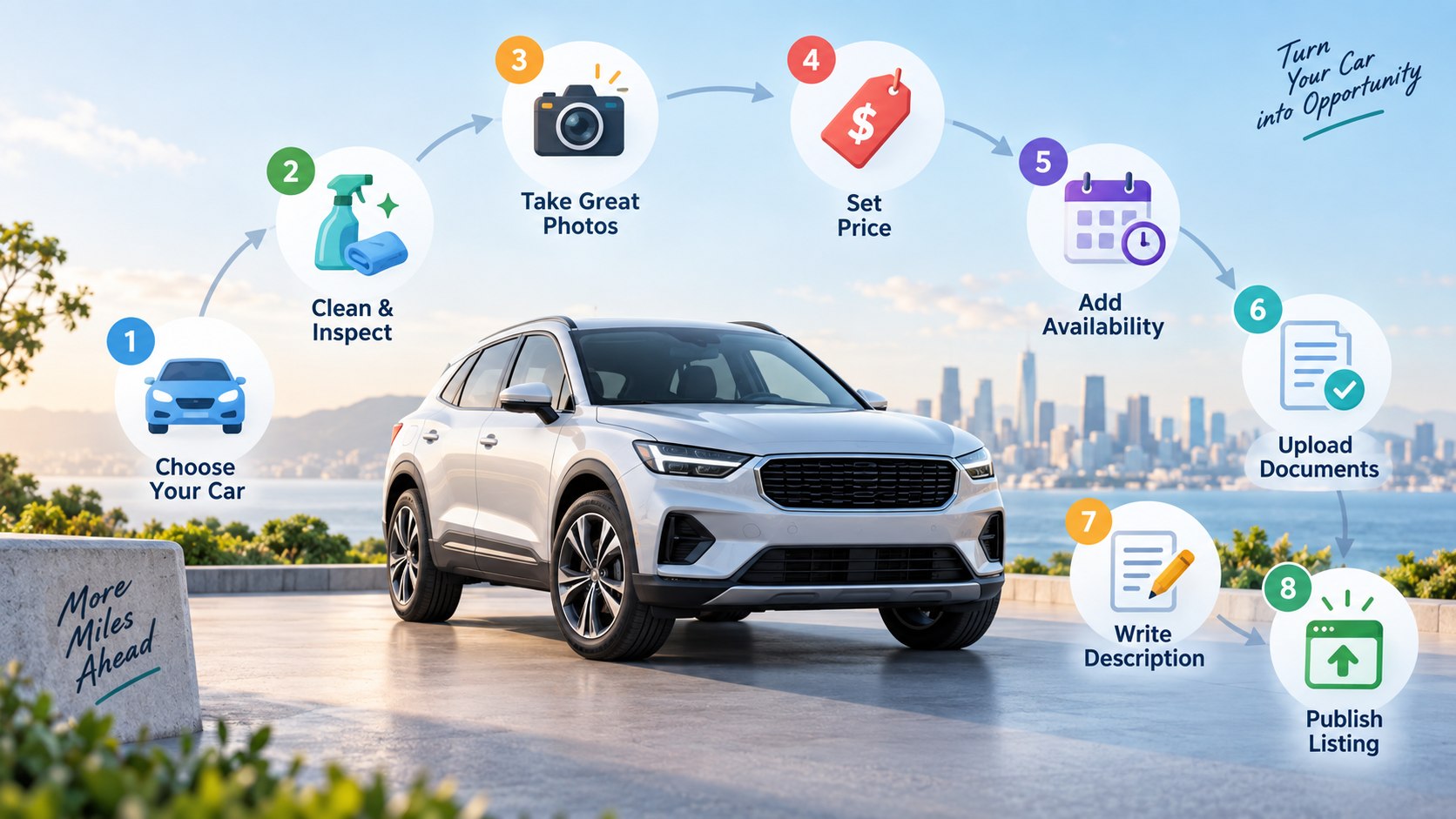
Step 1: How to List a Car on Turo 2026 and Check Eligibility
Start with Turo’s current US eligibility rules before entering the vehicle into the platform. As of 2026, the car generally cannot be more than 12 years old at initial listing. It must also have fewer than 130,000 miles.
The vehicle must have a clean title and cannot have previously been declared a total loss. Its fair market value generally cannot exceed $200,000. Classic and specialty vehicles can follow separate criteria.
“Your vehicle can’t be more than 12 years old.”
Turo US vehicle eligibility guidance.
The common mistake is assuming a mechanically sound older car automatically qualifies. Platform eligibility and mechanical condition are separate questions.
Why it matters: an ineligible vehicle can stop the process before pricing or photos matter. Owners should also confirm their state registration and inspection requirements.
New York vehicles, for example, face specific inspection requirements. High-value vehicles may also face tracking requirements. Turo can require an activated OEM tracker for certain high-value vehicles.
Step 2: Verify Insurance, Financing, and Legal Permission
Before becoming a Turo host in 2026, review the documents governing the vehicle. Turo tells owners to check financing or lease agreements before sharing a financed or leased car.
This matters because platform approval does not override a lender’s contract. A lender or leasing company can impose restrictions that Turo does not control. The same principle applies to personal insurance.
Check these issues in order:
- Read the loan or lease agreement for car-sharing restrictions.
- Ask the insurer how peer-to-peer rental affects coverage.
- Confirm state registration and inspection remain current.
- Check local airport rules before advertising airport delivery.
- Save written answers from lenders or insurers when possible.
Do not assume standard personal insurance automatically covers every off-trip or business-related situation. Turo’s host arrangements apply under their own terms and periods.
Airport delivery creates another layer of rules. Many airports require designated pickup areas, permits, or specific procedures.
The common mistake is treating platform protection as identical to personal auto insurance. They are separate arrangements with different conditions.
Step 3: Create the Listing and Upload Strong Photos
The practical Turo listing requirements include accurate vehicle information and clear images. Hosts enter the license plate, make, model, year, features, pricing settings, availability, and trip preferences.
Turo recommends clear, high-resolution photos that show the vehicle from multiple angles. A practical listing should include the exterior, wheels, seating areas, dashboard, cargo space, and notable features.
Do not hide dents, scratches, worn seats, or wheel damage. Accurate documentation protects both the listing’s credibility and the host’s records.
“Successful hosts have at least 10” vehicle photos.
Turo US listing guidance.
A Tesla Model 3 listing should show charging equipment and screen condition. A Toyota Sienna should show third-row seating and cargo space. A Ford Bronco listing should clearly show roof configuration and installed equipment.
The common mistake is using attractive photos that do not document the actual vehicle. Misrepresenting features, mileage, trim, location, or condition can trigger penalties.
Step 4: Set Pricing Without Confusing Revenue With Profit
Turo host earnings depend on price, utilization, market demand, booking lead time, protection choice, and operating costs. The daily rate shown to guests is not the same as host profit.
Turo uses dynamic pricing across listings. Its system considers the vehicle, comparable bookings, search demand, local supply, seasonality, and other factors.
The 2026 earnings structure can vary by market. Host shares depend on the selected plan, local rules, and booking conditions. Owners should check current terms before publishing a price.
| 2026 factor | What it changes | What the host should check |
|---|---|---|
| Earnings plan | Host share and damage responsibility | Current plan terms before each pricing decision |
| Booking lead time | Can affect host share in select markets | Advance-booking rules for the vehicle’s city |
| Daily price | Revenue and booking competitiveness | Comparable local vehicles and seasonal demand |
| Delivery | Extra revenue and additional operating time | Fuel, parking, airport fees, and return mileage |
| Trip length | Utilization and discount level | Whether longer bookings remain profitable |
A $70 daily price does not mean the host keeps $70. Platform share, maintenance, cleaning, depreciation, and taxes reduce the usable amount.
Financed SUVs can look profitable before depreciation is included. Economy vehicles may produce smaller revenue but lower operating costs.
Longer bookings can reduce handoffs and cleaning frequency. They can also add mileage faster than short local rentals.
The common mistake is setting a rate by copying the cheapest nearby listing. Profit should be calculated from the vehicle’s own costs.
Step 5: Choose an Earnings Plan and Calculate Your Risk
Choosing a Turo earnings plan 2026 is a risk decision, not simply a revenue decision. Higher host shares generally come with greater financial responsibility after eligible physical damage.
Turo offers several US earnings plans. The exact host share and damage responsibility depend on the plan and market.
For example, higher-earning plans can require the host to absorb a larger amount before protection applies. The exact current terms should always be checked before selecting a plan.
A higher percentage becomes less attractive when one repair bill can absorb months of expected profit.
Turo’s trip protection structure also includes liability coverage subject to plan, state, and airport conditions. Exact limits can differ by jurisdiction.
The common mistake is choosing the highest host share without keeping cash available for damage responsibility. A host should model both ordinary months and one bad incident.
Step 6: Set Availability, Pickup Rules, and Prepare for the First Trip
A strong listing needs reliable availability. Set pickup hours, advance notice, trip buffers, minimum trip length, delivery areas, and calendar availability realistically.
Do not offer 8 a.m. airport delivery if the vehicle cannot reliably reach the airport then. Frequent host cancellations can damage operations and customer trust.
Before every trip, hosts should confirm pickup details, inspect mechanical condition, clean the vehicle, and provide the agreed fuel or charge level. Detailed pre-trip photos are equally important.
Those photos should include the odometer, fuel or battery level, wheels, bumpers, windshield, interior, and existing damage. Take them close to the reservation start time.
US hosts may also need to complete required onboarding or host orientation before a new listing goes live. The common mistake is finishing the listing but overlooking this final requirement.

Troubleshooting Common Turo Listing Problems
Most listing problems can be traced to eligibility, documentation, account setup, or inaccurate vehicle information. Check the basic issue before repeatedly changing the listing.
- Vehicle rejected for age: standard vehicles generally must meet Turo’s current age limit.
- Mileage is too high: new listings must remain within Turo’s mileage requirements.
- Listing cannot go live: confirm required host onboarding has been completed.
- Financed vehicle raises questions: review the lender contract instead of assuming car sharing is permitted.
- Bookings remain weak: compare total price, photos, availability, delivery options, and similar nearby vehicles.
Weak demand does not automatically mean the daily price is too high. Poor photos can reduce clicks before price matters.
Limited availability can also prevent the vehicle from appearing in practical searches. Excessive delivery restrictions can narrow the audience further.
Market conditions matter as well. An SUV near Denver airport serves different demand than the same vehicle in a small rural market.
Hosts should measure revenue against total vehicle costs each month. Gross bookings alone do not show whether the operation is profitable.
When a rule or protection term looks unclear, check Turo’s current US guidance before changing the vehicle or spending money.
FAQ About Listing a Car on Turo in 2026
How old can a car be to list on Turo in 2026?
Standard US vehicles generally must meet Turo’s current age requirement when first listed. Classic and specialty vehicles may qualify under different rules.
How many miles can a car have for Turo?
New listings generally must remain below Turo’s mileage threshold. Vehicles already on the platform can be treated differently under continuing eligibility rules.
How much does a Turo host make?
There is no reliable national profit figure for every vehicle. Revenue depends on price, bookings, plan selection, market, season, delivery, mileage, and operating expenses.
Can a financed car be listed on Turo?
Possibly, but the financing agreement controls whether the owner has permission. Turo advises hosts to review financing or lease documents before listing.
Does Turo require insurance from hosts?
Yes. US hosts must maintain valid vehicle insurance and comply with applicable legal requirements. Turo’s trip-related protection arrangements do not eliminate that obligation.
What cars usually make sense for a first Turo listing?
There is no universal winner. Toyota, Honda, Tesla, Ford, Chevrolet, and Jeep models can serve different markets. Operating cost and local demand matter more than brand alone.
Earlier we wrote about How to Lower Your Phone Bill in 2026: MVNO and Prepaid Plans Explained