

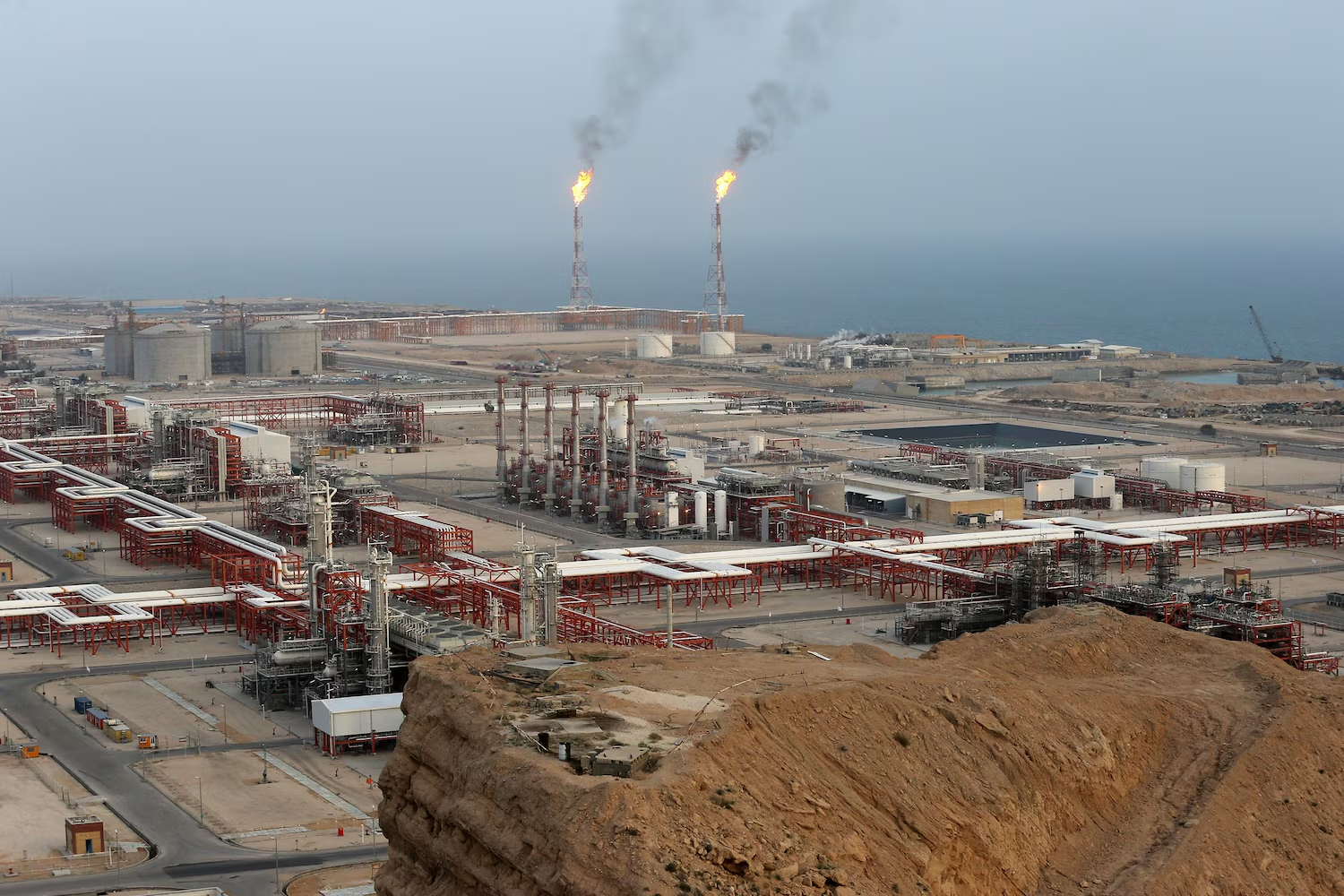
Iran has carried out a series of retaliatory attacks on critical energy infrastructure in Gulf states after Israel struck the South Pars gas field, one of the world’s largest gas reserves, on Wednesday, prompting a surge in oil prices and raising regional tensions, reports Baltimore Chronicle via Reuters. Iranian authorities issued evacuation orders for multiple energy facilities in Qatar, Saudi Arabia, and the United Arab Emirates, declaring them “direct and legitimate targets,” according to semi-official Mehr News Agency. The Islamic Revolutionary Guard Corps also issued a statement warning that repeated notices had been given to neighboring rulers about the risks of engaging in such actions.
The Qatari Foreign Ministry strongly condemned both Israel’s initial strike and Iran’s subsequent attacks, describing them as “a dangerous escalation, a flagrant violation of the state’s sovereignty, and a direct threat to national security and regional stability.” QatarEnergy’s liquefied natural gas (LNG) facilities in Ras Laffan Industrial City were among the hardest hit, marking the most severe assault on the country’s energy infrastructure since the start of the conflict. Fires and extensive damage were reported, affecting operations that normally account for about 20% of the world’s LNG shipments, according to the U.S. Energy Information Administration.
Saudi Arabia and the UAE also reported targeted strikes on their energy infrastructure. The Saudi Ministry of Defense confirmed missile and drone attacks on key facilities, while the UAE Ministry of Foreign Affairs stated that the Habshan gas facilities in Abu Dhabi were hit, calling the actions “a direct threat to regional security, stability, and global energy supply.”
The escalation follows Israel’s attack on the Iranian portion of the South Pars gas field, which Iran shares with Qatar. Iranian authorities identified a list of targets including LNG terminals like Ras Laffan and refineries producing gasoline, diesel, and jet fuel, though crude oil facilities were reportedly spared. Kpler analyst Matt Smith noted that potential disruptions could affect over 1.25 million barrels per day of regional oil refining capacity, representing just over 1% of global refining output, while consumer gas prices could see disproportionate effects, according to Patrick De Haan of GasBuddy.
In response, former U.S. President Donald Trump issued a statement warning that the United States could take action if Qatar’s LNG facilities are attacked again. Trump stated that the U.S. would “massively blow up” the South Pars gas field only if Iran launched further attacks on innocent Qatari infrastructure. He emphasized avoiding escalation due to long-term implications for Iran, but underscored that further aggression would prompt a decisive response.
The strikes come amid continued tension in the Strait of Hormuz, a key shipping route for nearly 20% of the world’s oil, which remains effectively blocked and disrupting the global energy supply. Following the events, U.S. oil prices rose nearly 3% to $99 per barrel, while global oil increased around 5% to $108 per barrel, reflecting market reactions to the heightened instability in the region.
Earlier we wrote that Hollywood Western star Matt Clark dead at 89 following complications from back surgery