

A washing machine’s lifespan is the amount of time it can reliably clean clothes before repairs become frequent, performance declines, or replacement becomes the more economical option, аs noted by Baltimore Chronicle.
If your washer is making unusual noises, leaving clothes wet, leaking water, or displaying recurring error codes, the short answer is that most washing machines in the United States last about 10 to 15 years. Some premium models can exceed that range with proper maintenance, while heavily used units may fail sooner. For homeowners and renters facing a repair decision right now, age, repair cost, and overall condition are the three factors that matter most.
Key Takeaways
- Most residential washing machines last between 10 and 15 years depending on usage, maintenance habits, and build quality.
- If repair costs approach 50% of replacement cost, replacement is often the better financial decision in 2026.
- Leaks, excessive vibration, and repeated breakdowns are common signs that a washer is nearing the end of its lifespan.
As appliance prices and repair labor costs continue to rise in 2026, understanding how long do washing machines last 2026 can help households avoid unexpected expenses and plan replacements before a major failure disrupts daily life.
How Long Do Washing Machines Last 2026?
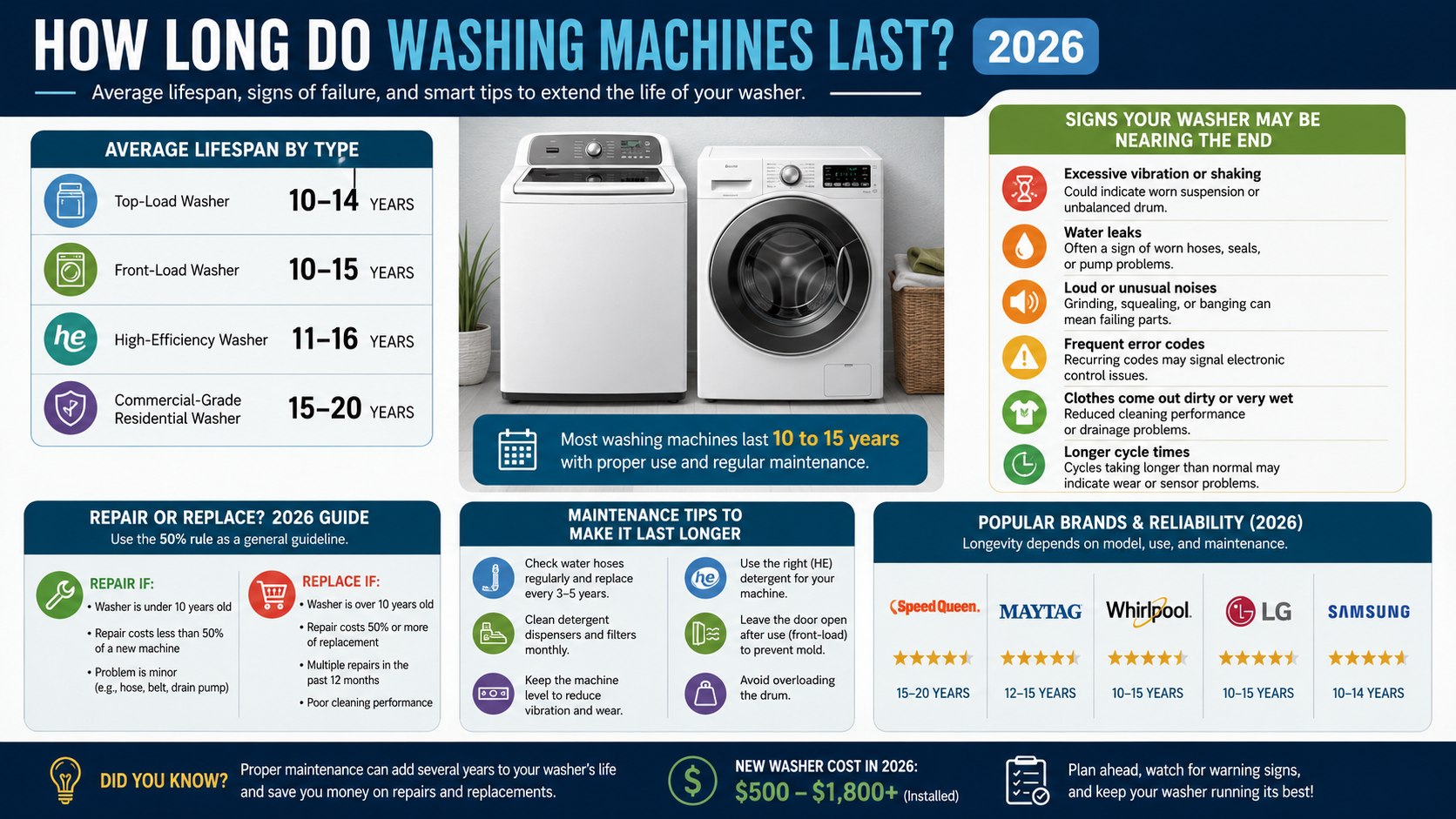
The average washing machine lifespan remains relatively stable in 2026. Most residential units operate effectively for 10 to 15 years under normal household use, though some commercial-grade residential models can operate for much longer.
| Washer Type | Typical Lifespan | Usage Conditions |
|---|---|---|
| Top-load washer | 10–14 years | Moderate household use |
| Front-load washer | 10–15 years | Regular maintenance required |
| High-efficiency washer | 11–16 years | Proper detergent use |
| Commercial-grade residential washer | 15–20 years | Heavy-duty construction |
Major brands such as Whirlpool, LG, Samsung, GE Appliances, Maytag, and Speed Queen generally fall within these ranges, although individual models vary considerably. Homeowners comparing appliance reliability across categories may also find our guide to Best Refrigerator Brands 2026 USA useful when evaluating which manufacturers consistently deliver long service life.
Several factors influence longevity:
- Number of loads per week
- Water quality
- Maintenance frequency
- Machine capacity
- Installation quality
- Brand and component design
A family of five running multiple loads daily will typically experience faster wear than a single-person household using the machine twice per week.
In Plain English
Think of a washing machine like a family vehicle.
A well-maintained car can easily exceed 150,000 miles, while a neglected vehicle may develop expensive problems much sooner. Washing machines work similarly. The motor, pump, bearings, suspension system, electronics, and hoses all experience wear every time a load runs.
Most people do not replace a washer because it suddenly stops forever. More often, small issues begin appearing: louder spin cycles, longer wash times, occasional leaks, or electronic glitches. Those warning signs accumulate until repairs become difficult to justify.
In practical terms, a 12-year-old washer that needs a $700 repair may be comparable to a high-mileage vehicle requiring a major transmission replacement.
How It Actually Works
Every wash cycle creates mechanical and electrical stress inside the appliance.
Motors and Drive Systems Wear Down
The drive motor powers drum movement. Over thousands of cycles, bearings, belts, and motor components gradually wear. Excessive vibration accelerates this process.
Pumps Handle Thousands of Gallons
Drain pumps move large volumes of water throughout the machine’s life. Small debris, lint buildup, and foreign objects can shorten pump lifespan.
Electronic Controls Age
Modern washers rely heavily on circuit boards and sensors. While these systems improve efficiency, they also introduce components that can fail outside warranty periods.
Water Exposure Creates Risks
Even minor leaks can damage internal components. Mineral buildup from hard water can also affect valves, sensors, and heating elements in certain models.
Maintenance Changes Outcomes
Cleaning filters, inspecting hoses, avoiding overloads, and using the correct detergent can add years to a washer’s usable life.
Many appliance technicians report that neglected maintenance is one of the most common causes of premature washing machine failure.
Signs Your Washing Machine Is Nearing the End of Its Life
The biggest mistake homeowners make is waiting for complete failure. Most machines provide warning signs months or even years before replacement becomes necessary.
| Warning Sign | Potential Cause | Severity |
| Excessive shaking | Suspension wear or drum imbalance | Moderate |
| Water leaks | Hose, seal, or pump failure | High |
| Loud grinding noises | Worn bearings | High |
| Frequent error codes | Electronic control issues | Moderate to high |
| Clothes remain dirty | Mechanical performance decline | Moderate |
| Long cycle times | Sensor or control problems | Moderate |
If multiple symptoms appear simultaneously, replacement often becomes more practical than continued repairs.
Who It Matters To In 2026
Homeowners Preparing for Major Expenses
A washer replacement can cost anywhere from roughly $500 to over $1,800 in 2026 depending on brand, features, and installation requirements. Knowing the expected lifespan helps households budget proactively.
Renters Evaluating Appliance Problems
Renters often encounter aging appliances in apartment units. Understanding common failure signs helps determine whether a maintenance request is justified.
Families With Heavy Laundry Demands
Parents managing large weekly laundry volumes place significantly more wear on machines. Lifespan estimates may be shorter for households running multiple loads daily.
Repair or Replace? The 2026 Decision Framework
Not every malfunction requires replacement.
Many common repairs remain affordable, especially on relatively new machines. However, age matters.
- If the washer is under 5 years old, repair is often the first choice.
- If the washer is 5 to 10 years old, compare repair costs against replacement costs.
- If the washer exceeds 10 years and requires a major repair, replacement often makes more financial sense.
- If repeated repairs occur within a short period, replacement usually reduces long-term expenses.
- If energy and water efficiency are substantially lower than newer models, upgrading may reduce utility costs.
A commonly used industry guideline suggests reconsidering repairs when the repair bill approaches roughly half the cost of a comparable replacement unit.
Consumers comparing replacement options often research reliability across several appliance categories before making a purchase. Our detailed comparison of Samsung vs LG vs Whirlpool Fridge 2026 explores warranty coverage, long-term ownership costs, and durability expectations that can also help inform washer-buying decisions.
Consumers can review appliance efficiency information through the ENERGY STAR program at https://www.energystar.gov.
How to Make a Washing Machine Last Longer
Proper maintenance can significantly extend appliance life.
Maintenance Checklist
- Inspect water supply hoses twice per year.
- Replace aging rubber hoses before cracks appear.
- Clean detergent dispensers regularly.
- Run manufacturer-recommended cleaning cycles.
- Avoid overloading the drum.
- Use high-efficiency detergent when required.
- Level the machine to reduce vibration.
- Leave the door open after cycles on front-load models.
- Remove lint and debris from accessible filters.
- Address leaks immediately.
Manufacturer maintenance guidance is available through support resources from companies such as Whirlpool, LG, Samsung, and Maytag. Product-specific recommendations should always take priority over general advice.
Common Myths
- Myth: More detergent cleans better.
Correction: Excess detergent can increase residue buildup and mechanical stress. - Myth: Front-load washers always last longer.
Correction: Lifespan depends more on maintenance and usage than loading style alone. - Myth: A noisy washer always needs replacement.
Correction: Some noises result from inexpensive repairs such as leveling adjustments. - Myth: New washers are less durable than older models.
Correction: Durability varies by design, brand, and maintenance practices. - Myth: Small leaks are harmless.
Correction: Even minor leaks can lead to costly component damage over time.
What Appliance Experts Expect in 2026
Washing machines sold in 2026 continue to emphasize water efficiency, energy savings, and smart connectivity. Features such as remote monitoring, leak detection, and predictive maintenance alerts are becoming more common across major brands.
Smart appliances are also becoming part of larger connected-home ecosystems. Readers interested in broader automation trends may find How to Automate Household Chores: 7 Most Effective Ways useful for understanding how technology is reducing routine household work throughout the home.
While these technologies can improve convenience, they also increase dependence on electronic components. As a result, future repair decisions may increasingly involve software and control board replacements rather than purely mechanical repairs.
The U.S. Department of Energy continues to publish appliance efficiency standards and consumer information at https://www.energy.gov.
FAQ
How many years should a washing machine last?
Most residential washing machines last approximately 10 to 15 years with normal use and proper maintenance.
What brand of washing machine lasts the longest?
Longevity varies by model, but brands frequently associated with long service life include Speed Queen, Maytag, Whirlpool, LG, and certain GE Appliances models.
Is it worth repairing a 12-year-old washing machine?
It depends on repair cost and condition. Major repairs on machines older than 10 years often make replacement a stronger financial choice.
How do I know when my washer needs replacing?
Repeated breakdowns, large leaks, grinding noises, expensive repairs, and declining cleaning performance are common indicators.
Can regular maintenance really extend washer life?
Yes. Proper cleaning, hose inspections, balanced loads, and prompt repairs can help prevent premature component failure.
Do front-load or top-load washers last longer?
Neither design consistently outlasts the other. Usage habits, maintenance, and build quality generally have a greater impact on lifespan.
Earlier we wrote about How a Buyer’s Agent Works in 2026: Roles, Fees, and Benefits