

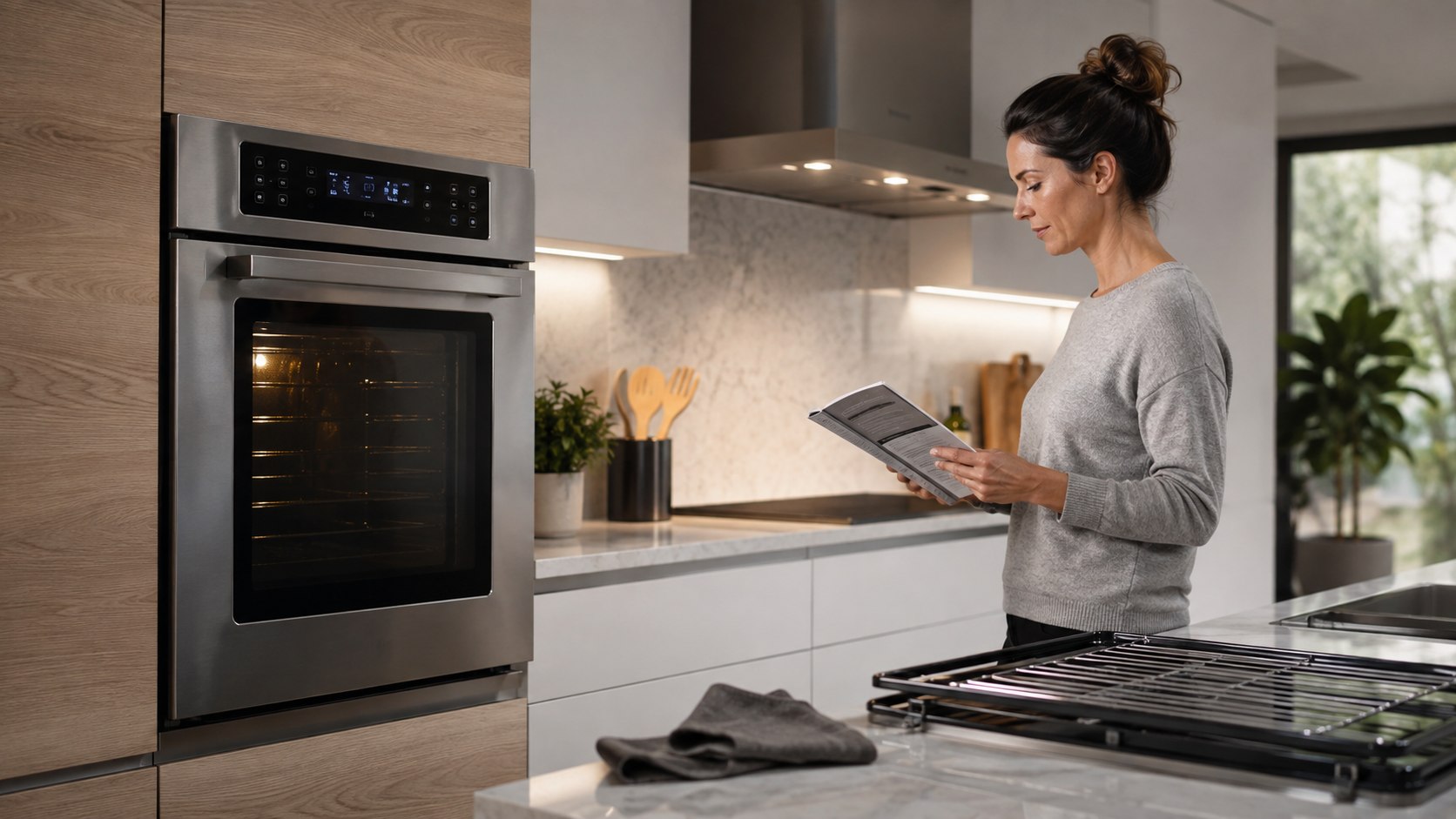
Self cleaning oven safe to use 2026 means using the oven’s factory cleaning cycle only when the appliance is undamaged, correctly prepared, and operated according to its manual. For most modern US ovens, the feature is designed for normal household use. However, the cycle creates extreme heat, odors, and sometimes smoke, so preparation matters, as noted by the Baltimore Chronicle editorial team.
The practical answer is simple. Use self-clean only when the oven works normally, the cavity has no heavy grease deposits, and ventilation is available. Remove items the manufacturer excludes. Do not leave the home while the cycle runs. Owners of older or malfunctioning ovens should consider manual or steam cleaning instead.
Key takeaways
- A self-cleaning cycle is generally safe when the oven is undamaged and the manufacturer’s instructions are followed.
- Heavy grease, blocked vents, damaged door seals, unusual electrical behavior, or previous overheating are reasons to avoid the cycle.
- Steam cleaning or manual cleaning is usually the lower-heat option for light residue and routine maintenance.
Self-clean is therefore not a setting to start automatically whenever an oven looks dirty. Preparation determines how much smoke and heat the appliance produces. A lightly soiled oven creates fewer problems than one coated with grease. Ventilation also affects comfort inside the home. The owner’s manual remains the controlling instruction for a specific GE, Whirlpool, Maytag, KitchenAid, Samsung, LG, or Frigidaire model.
In plain English
Think of a self-cleaning oven as a fireplace with a tightly controlled cleaning program. Instead of dissolving baked-on food with chemicals, it raises the cavity temperature enough to turn residue into removable ash. The door normally locks during the hottest portion.
That explains both the convenience and the concern. The oven is deliberately operating under more severe thermal conditions than normal baking. Heat around the appliance can increase, while burnt food may produce odor or visible smoke.
The feature itself is not the main risk. Problems usually begin when excessive grease, forgotten cookware, damaged components, or poor ventilation are added to extreme heat.
Readers comparing cleaning methods can also see Baltimore Chronicle’s guide to cleaning a dirty oven without oven cleaner. Lower-temperature cleaning makes more sense when the mess is still manageable.
How it actually works
A conventional high-temperature self-clean cycle uses pyrolytic heat. Food deposits are heated until much of the organic residue becomes a small amount of ash. Whirlpool describes the process as using very high temperatures to burn soil into powdery residue.
First, the user removes loose debris and excluded accessories. GE says cookware, probes, foil, silicone liners, pans, and most racks should come out unless the manual identifies the racks as self-clean compatible.
Next, the oven locks its door and begins heating. Cycle duration varies by model and selected soil level. The oven then needs additional cooling time before the door unlocks.
After cooling, the remaining ash can usually be wiped away with a damp cloth. The process avoids aggressive scrubbing, but it does not eliminate preparation or cleanup.
There is also a different technology called steam clean. It uses water and much less heat to soften light deposits. Whirlpool’s AquaLift system, for example, uses water in the oven cavity rather than a full pyrolytic cycle.
Is a self cleaning oven safe to use 2026?
For an oven in good condition, the answer is generally yes. The safest decision depends less on the calendar year than on the appliance’s condition, its manual, and the amount of residue inside.
The comparison below shows when different approaches make sense.
| Situation | Best approach | Main concern |
|---|---|---|
| Light fresh spills | Manual wipe-down | No need for extreme heat |
| Moderate softened residue | Steam-clean cycle | May require wiping afterward |
| Hard baked-on residue | Self-clean if manual permits | Heat, smoke, odors |
| Heavy grease accumulation | Remove excess first | Smoke or possible ignition |
| Damaged gasket or door | Do not self-clean | Improper sealing |
| Electrical faults or error codes | Repair first | Possible component failure |
Do not treat the self-clean button as a substitute for inspection. Look at the door seal before starting. Check whether the controls have shown errors. Remove thick deposits that can smoke heavily. Make certain ventilation openings are unobstructed. Stop using the feature if the appliance behaves abnormally.
Homeowners renovating an older kitchen should also consider appliance condition within the larger project. Baltimore Chronicle’s 2026 kitchen remodeling cost guide explains where appliance replacement fits within broader renovation budgets.
What are the real risks?
The most noticeable issue is heat. During a pyrolytic cycle, the cavity becomes much hotter than during ordinary baking. Exterior surfaces and the surrounding kitchen can also become warmer.
Smoke is another concern. A large amount of grease or burnt food may generate substantially more smoke than a lightly soiled cavity. Whirlpool specifically recommends cleaning before the oven becomes heavily soiled and keeping the kitchen ventilated.
There is also a mechanical issue. High temperatures place greater thermal stress on door locks, wiring, control boards, fans, and other components. That does not mean the cycle automatically damages ovens. It does mean an already failing appliance deserves caution.
“If you have a fire in your oven, turn it off.”
— U.S. Fire Administration, oven fire safety guidance.
The USFA guidance is especially relevant when food residue ignites. Keep the door closed rather than opening it to inspect the flames. Opening the door can introduce additional oxygen. Turn the appliance off. Call emergency services if the fire does not remain contained. Do not resume using a damaged oven until its condition is assessed.
Who it matters to in 2026
Families with children or pets
Children and pets should stay away from the range during a cleaning cycle. The USFA recommends maintaining a 3-foot safety zone around cooking equipment. That rule is useful during self-clean because accessible surfaces may become unusually hot.
Parents should also avoid starting the cycle immediately before a busy meal. Choose a period when the kitchen can remain clear and supervised.
Renters
Renters should identify the model before experimenting with cleaning modes. The manual may be available online using the model number located around the oven frame or storage drawer.
If the door will not lock, an error code appears, or the appliance smells electrically burnt, report the problem. Do not attempt a high-temperature cleaning cycle to test whether the problem disappears.
Owners of older appliances
An older oven is not automatically unsafe. Age becomes relevant when combined with brittle wiring, damaged seals, unreliable locks, cooling-fan problems, or repeated control errors.
If an oven already has unexplained shutdowns or temperature problems, self-clean should not become a diagnostic experiment.
Replacement may make more sense when several components are failing. Owners removing nearby appliances can also review Baltimore Chronicle’s built-in microwave removal guide for electrical and mounting precautions.
How to use self-clean safely
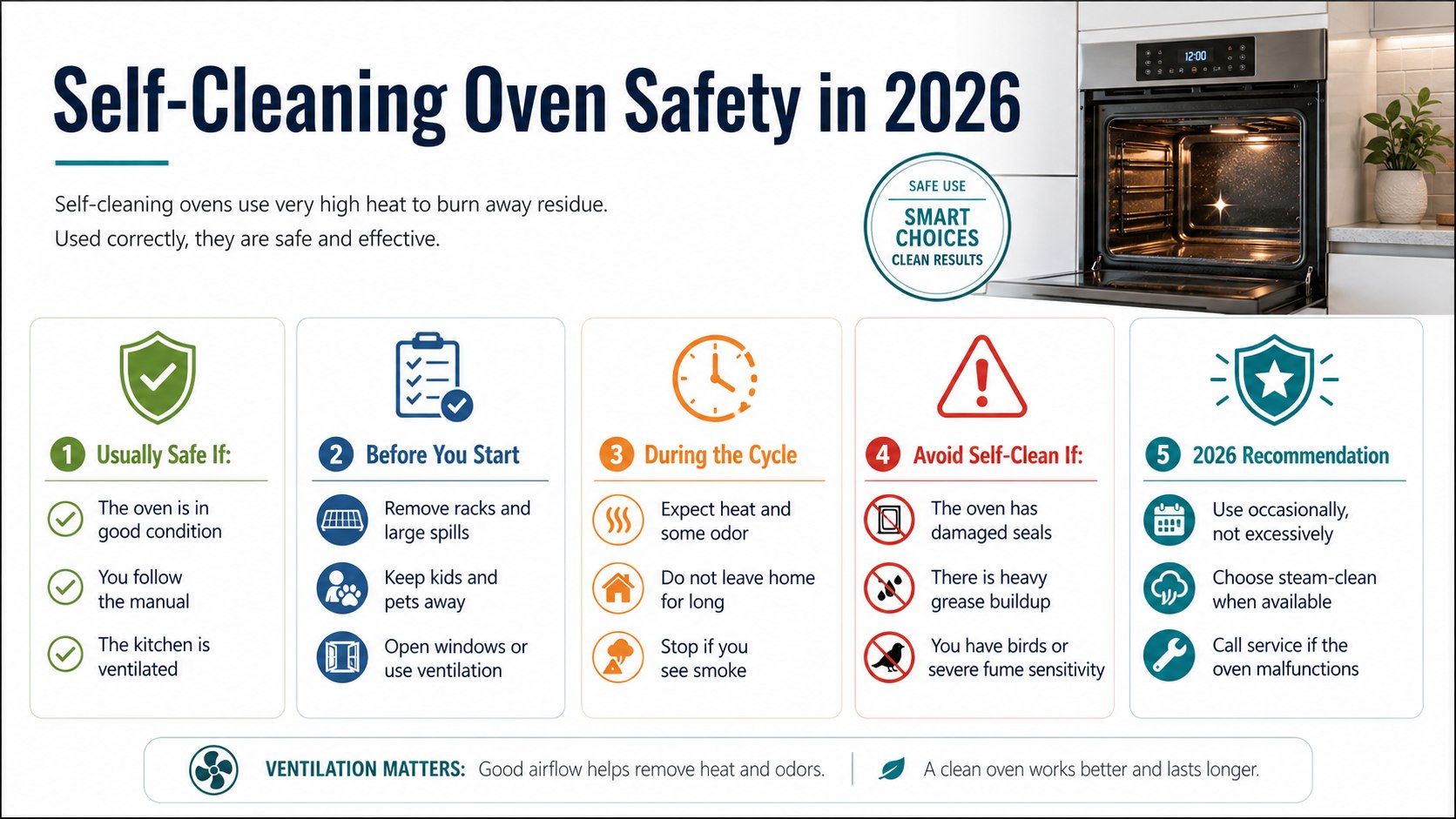
Preparation should take only a few minutes, but every step reduces avoidable problems. Check your model’s manual before using this checklist.
- Remove pans, foil, silicone liners, temperature probes, and other stored items.
- Remove oven racks unless the manual explicitly says they can remain during self-clean.
- Wipe out loose crumbs and large grease deposits before starting.
- Check the door gasket for obvious tearing, displacement, or damage.
- Make sure the oven vent is not covered or blocked.
- Run the range hood or open windows when additional ventilation is needed.
- Keep children and pets away from the appliance.
- Remain at home and periodically check for unusual smoke, odor, or malfunction.
Do not add ordinary commercial oven cleaner unless the manufacturer specifically approves it. Whirlpool advises against commercial chemicals in self-cleaning ovens. GE provides similar restrictions for its self-clean models. Never place aluminum foil over the oven floor during the cycle. Silicone liners can also be unsuitable. Let the appliance cool completely before wiping away ash.
The exact procedure can differ even between models from the same brand. Some ovens permit certain racks to stay inside. Others require every rack to be removed. Steam-clean programs follow different instructions again. Model-specific documentation should therefore override generic internet advice.
Common myths
Several persistent claims make self-clean oven safety sound simpler than it is. The reality is more conditional.
- Myth: Self-clean always damages the oven. Correction: manufacturers design compatible models to perform the cycle, but existing faults can matter.
- Myth: Nothing needs removing first. Correction: many manufacturers require removal of racks, cookware, foil, liners, and accessories.
- Myth: More dirt makes self-clean more useful. Correction: heavy grease can produce more smoke and should be reduced first.
- Myth: The door can be opened if smoke appears. Correction: do not defeat the locking system or open an oven containing fire.
- Myth: Steam clean and self-clean are identical. Correction: steam cleaning normally uses much lower heat and targets lighter residue.
These differences explain why generic advice can create confusion. “Self-cleaning” describes several manufacturer-specific systems. A method suitable for one Whirlpool model may not match another appliance. The same distinction applies to removable racks and liners. Check the manual whenever accessories or cleaning chemicals are involved. When uncertainty remains, use the lower-temperature cleaning method.
When you should skip the self-clean cycle
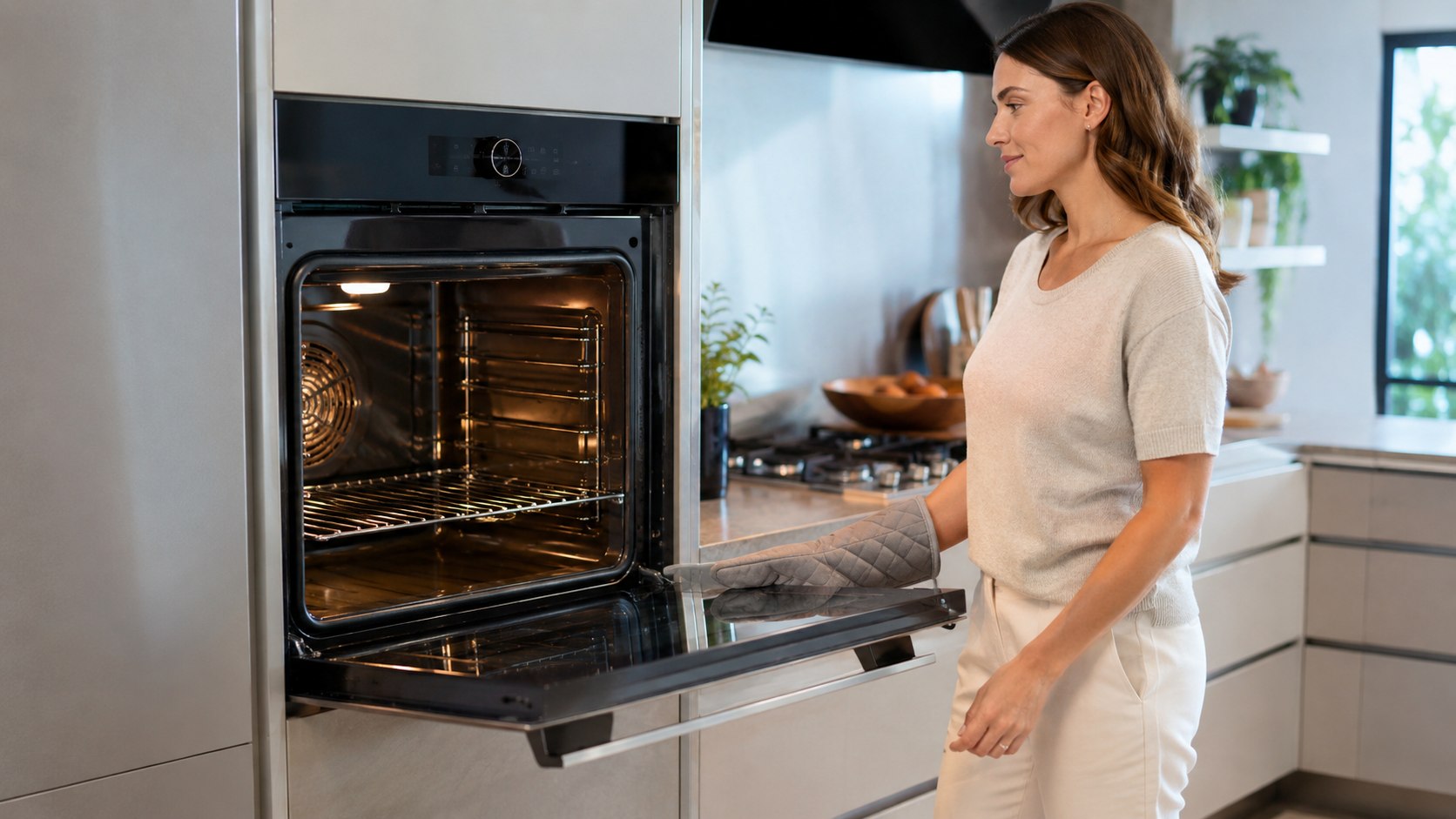
A conservative cleaning method is preferable when the oven gives warning signs. Consider manual cleaning or professional service when the door is damaged, controls malfunction, or heavy grease remains.
Also avoid running self-clean immediately before an important event. A component that is already near failure may reveal the problem under prolonged high heat. Giving yourself time for repairs is more practical than discovering an oven fault before Thanksgiving dinner.
For ordinary residue, oven steam cleaning offers a useful middle ground. Manual cleaning can be even simpler when spills are addressed soon after the oven cools.
FAQ
Can a self-cleaning oven catch fire?
Food or grease residue can ignite inside an oven. Heavy deposits increase concern, which is why manufacturers advise removing excess soil first. If an oven fire occurs, turn the oven off and keep the door closed.
Can I leave the house while the oven self-cleans?
It is safer to remain home and monitor the appliance. A self-clean cycle involves prolonged high temperatures and may produce smoke or unusual odors.
Should oven racks stay inside during self-clean?
It depends on the model. GE says most racks should be removed unless specifically identified as self-clean or no-scrub racks. Check the owner’s manual.
Is the smell from a self-cleaning oven normal?
Some odor can occur as residue is heated. Heavy smoke, electrical burning smells, repeated fault codes, or abnormal operation require more caution.
Is steam cleaning safer than self-cleaning?
Steam cleaning generally operates at substantially lower temperatures. It is useful for lighter soil, but it may not remove heavily baked-on deposits.
How often should I use the self-clean function?
There is no universal schedule for every appliance. Use it when the level of baked-on residue justifies the cycle and your manufacturer’s instructions permit it.
Earlier we wrote about Baltimore Parking Ticket Appeal 2026: How to Request a Trial and What Evidence You Need