

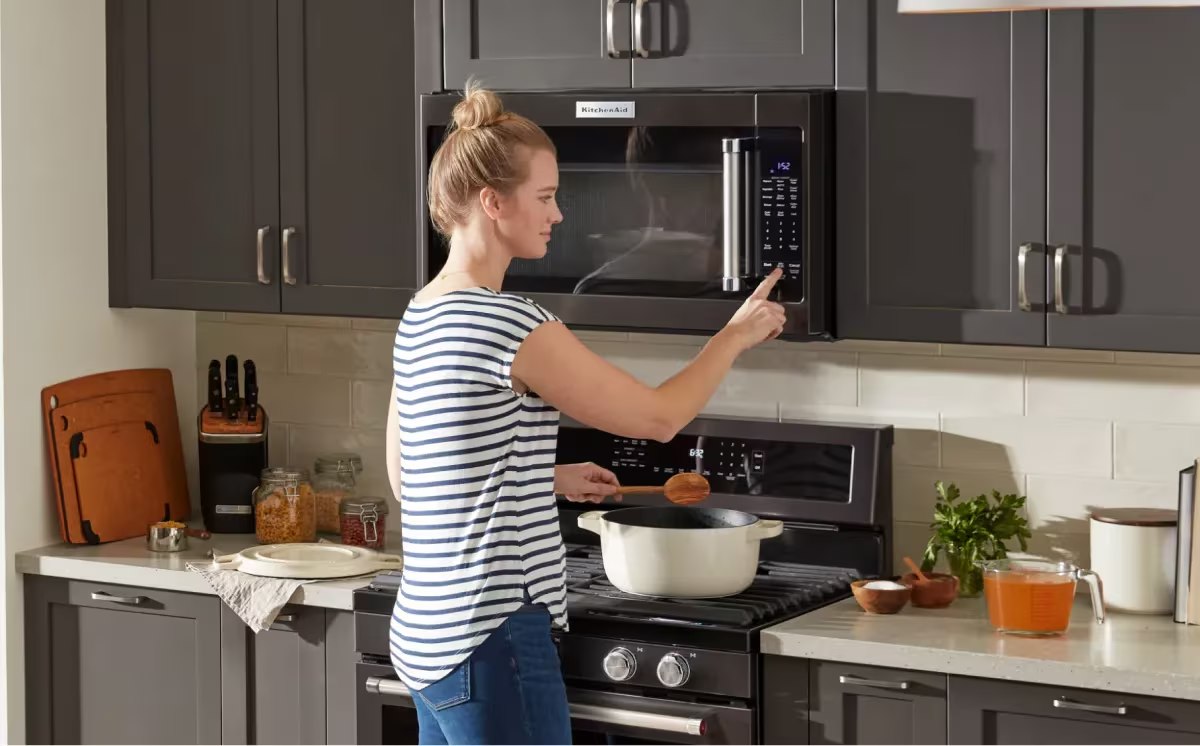
How to remove a built-in microwave safely depends on whether it sits inside a trim kit or hangs above the range. Most homeowners can complete the job in 45–90 minutes by disconnecting the power, supporting the appliance, and releasing its screws or mounting bracket, as noted by the Baltimore Chronicle editorial team.
The critical rule is simple: never remove the final fastener while the microwave is unsupported. An over-the-range model may weigh 50–75 pounds and can pivot forward as soon as its upper cabinet bolts are released. Use 2 adults, protect the cooktop, and stop if you find damaged wiring or an unfamiliar hardwired connection.
Key takeaways
- Identify the installation type before removing screws because trim-kit and over-the-range models use different mounting systems.
- Disconnect and verify the power before touching wiring, metal trim, mounting bolts, ventilation parts, or the wall bracket.
- Use 2 adults because the appliance’s full weight can shift forward when the final fastener is removed.
What you need before removing the microwave
Prepare the work area before opening the cabinet or loosening decorative trim. Using the correct driver bit matters because a stripped upper bolt can turn a routine removal into a cabinet repair.
- Phillips and flat-head screwdrivers
- 1/4-inch or 5/16-inch nut driver
- Socket set with an extension
- Drill with an adjustable low-torque setting
- Non-contact voltage tester
- Painter’s tape and permanent marker
- Moving blanket, cardboard, or thick towels
- Stable step stool
- Work gloves and safety glasses
- Small bags for screws and mounting hardware
- 1 capable adult helper
Allow about 45 minutes for a familiar installation and up to 2 hours for damaged fasteners, painted-in trim, concealed screws, or tight ductwork. A do-it-yourself removal may cost nothing beyond basic supplies.
Professional appliance removal commonly costs about $100–$250 in 2026, although rates vary by location and scope. Labor may cost more in California, New York, Maryland, Massachusetts, Washington, and other higher-cost markets.
Haul-away, electrical repairs, duct modifications, and cabinet work are often billed separately. Ask whether removal is included when ordering a replacement microwave from a retailer or appliance installer.
Protect the range, countertop, cabinets, and floor before starting. A loose fastener can chip a glass cooktop, while a shifting microwave may dent stainless steel or crack a ceramic surface.
If the removal is part of a larger kitchen project, review the Baltimore Chronicle guide on how to install kitchen cabinets yourself. It explains cabinet alignment, wall attachment, leveling, and other issues that may affect the microwave opening.
Step 1: Identify the microwave and mounting system
Open the cabinets around the appliance and inspect the microwave from above, below, and along both sides. Look for decorative trim, upper cabinet bolts, side screws, a rear wall plate, a power cord, and ventilation ductwork.
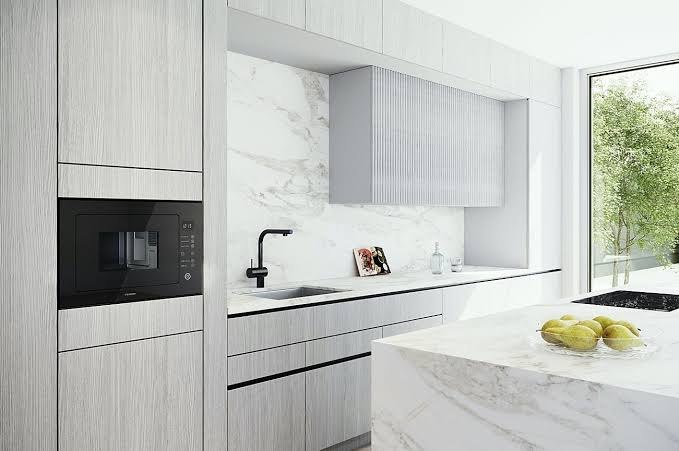
This inspection matters because the term built-in microwave can describe several different installations. A countertop-style microwave placed inside a trim kit usually slides forward after the frame and base fasteners are removed.
An over-the-range microwave normally hangs from a rear wall bracket. Long bolts through the cabinet above hold its front edge in position.
Microwave drawers and wall oven combinations require different procedures. A microwave integrated into a wall oven assembly may need professional service because both appliances can share trim, electrical connections, or structural supports.
| Installation type | Common visible clues | Typical release method |
|---|---|---|
| Trim-kit built-in microwave | Decorative frame around the front | Remove frame, base screws, and support rails |
| Over-the-range microwave | Upper bolts, vent below, rear wall plate | Remove upper bolts, tilt forward, lift from bracket |
| Microwave drawer | Drawer-style front in a lower cabinet | Remove side screws and slide the chassis forward |
| Wall oven combination | Microwave attached above an oven | Follow model-specific service instructions |
Find the model number before removing any hardware. It is commonly printed inside the door opening, along the control panel edge, or on an interior frame label.
Search the manufacturer’s support site for the installation instructions rather than relying only on the user manual. Installation documents usually show bolt locations, bracket hooks, trim components, and ventilation configurations.
Brands such as GE, Whirlpool, KitchenAid, Frigidaire, LG, Samsung, Bosch, and Panasonic use different fastener patterns. Even 2 models with the same 30-inch width may require different mounting plates.
Photograph the model label, cabinet opening, vent connection, and visible screws. These images will help when installing a replacement or explaining the setup to a contractor.
Do not remove random cabinet screws. They may secure a shelf, filler panel, or the cabinet itself rather than the microwave.
Step 2: Disconnect and verify the electrical supply
Unplug the microwave from the receptacle inside the cabinet above or beside it. If the plug is inaccessible, switch off the labeled circuit breaker before proceeding.
Press the microwave’s fan, light, and control buttons after disconnecting power. None of them should operate.
Use a non-contact voltage tester near any exposed cable, outlet, or junction box. This step matters because a dark display does not always prove that the appliance is electrically safe.
A failed display, internal fuse, or damaged control board can leave energized components inside the cabinet. Never rely on the screen alone.
Most residential microwaves use a cord-and-plug connection. However, older renovations and some combination appliances may be hardwired directly into a junction box.
Stop and contact a licensed electrician if you find connected conductors instead of a removable plug. The same applies when the outlet is loose, scorched, melted, or warm.
Renters should review their lease or contact the property manager before removing a landlord-owned microwave. Cabinet alterations and electrical work may require written approval.
Step 3: Remove loose parts, trim, and ventilation connections
Remove the glass turntable, roller ring, cooking racks, and other loose accessories. Tape the door closed with painter’s tape so it cannot swing open while the appliance is being lowered.
Empty the cabinet above the microwave. This gives you access to the plug, upper bolts, washers, exhaust adapter, and ductwork.
For a trim-kit installation, locate screws along the top, sides, or lower ventilation grille. Support the trim while removing the final screw because thin metal frames can bend easily.
If the frame appears stuck, inspect it for paint, grease, or caulk. Score sealed edges carefully with a utility knife or release them with a plastic putty knife.
Avoid using a metal pry bar near painted MDF, veneer, thermofoil, or finished wood. Excessive pressure can chip the surface or pull the cabinet finish away from the substrate.
When the microwave vents outdoors, loosen the exhaust adapter or duct connector before moving the appliance. Pulling against attached sheet metal can crush the duct or damage the cabinet opening.
Photograph the direction of the blower and duct connection. A replacement microwave may need to be configured for upward, rear, or recirculating ventilation before installation.
Step 4: Support the appliance before releasing fasteners
Place a moving blanket or thick cardboard over the protected work surface. Do not use a glass cooktop as the microwave’s primary support.
Position 1 person below the appliance and another at the upper cabinet. The lower person should support the front and bottom edges while the upper person loosens the fasteners.
For an over-the-range model, loosen each upper bolt but leave several threads engaged. Confirm that the helper has a secure grip before removing either bolt completely.
This sequence matters because the front of the microwave may drop as soon as the last bolt is removed. The wall bracket normally supports only the rear lower edge during removal.
Do not rely on stacked boxes as the only support. They may slide, collapse, or block the downward angle needed to release the appliance from its mounting plate.
For a trim-kit model, grip the microwave beneath the chassis. Do not pull it by the door handle because the handle and hinges are not designed as lifting points.
Step 5: Release the mounting bolts, rails, or bracket
Remove the upper cabinet bolts slowly while your helper supports the appliance. Store the bolts, washers, trim screws, vent adapter, and other parts in labeled bags.
On an over-the-range microwave, allow the front edge to tilt downward after the top bolts are removed. Keep control of the movement and do not let the appliance swing.
Lift the rear edge slightly to disengage the slots or hooks from the microwave mounting bracket. Both sides should release before the microwave is moved away from the wall.
For a trim-kit model, remove any screws securing the base pan or side rails. Slide the appliance forward evenly while another person feeds the power cord through the cabinet opening.
The cord can catch on a sharp hole, outlet, screw, or duct edge. Pulling harder may damage the plug or cabinet finish.
- Keep the top bolts partly threaded until the helper has a stable grip.
- Remove the final bolts while holding the microwave level.
- Tilt the front downward only as far as the cabinet permits.
- Lift the rear edge clear of both bracket hooks.
- Guide the power cord through the cabinet opening.
- Lower the appliance onto a padded surface.
Move slowly and agree on each action before changing the angle. One person should direct the movement so both helpers lift and lower at the same time.
Keep fingers away from the narrow gap between the microwave and the wall. That space can close suddenly when the appliance pivots.
If the unit binds, lift it slightly and inspect the bracket again. One hook may still be engaged, or the power cord may be trapped.
Never twist the microwave sideways while one side remains attached. This can deform the appliance chassis, damage drywall, or tear the mounting plate from its anchors.
Step 6: Inspect the wiring, wall, cabinet, and mounting bracket
After removal, inspect the outlet, power cord, cabinet floor, ventilation opening, drywall anchors, studs, and rear wall plate. Photograph the empty opening before discarding any hardware.
Look for heat discoloration, loose receptacles, scorched plugs, grease buildup, water damage, cracked cabinet panels, stripped holes, or missing support.
Damage around the microwave opening may reveal a wider installation problem. Loose outlets, overheated wiring, unsupported cabinets, and failed wall anchors should be corrected before another appliance is installed.
Homeowners planning additional repairs can review the Baltimore Chronicle explanation of what a home inspection includes. It outlines how electrical, structural, ventilation, moisture, and safety concerns may be evaluated.
Do not automatically reuse the old bracket because the replacement microwave has the same width or brand. Manufacturers may change the hook positions, bolt spacing, wall templates, and load requirements between models.
A new over-the-range microwave typically includes its own mounting plate, cabinet template, fasteners, and exhaust adapter. Use the parts specified for the exact model.
Confirm that the wall and cabinet can support the new appliance. Many installations require the bracket or bolts to connect with wall studs or other approved structural support.
Deep upper cabinets may also require a manufacturer-approved bump-out kit. Check the new model’s required clearances, door movement, ventilation route, and cabinet depth before ordering.
Troubleshooting common removal problems
Stop pulling if the microwave does not move as expected. Resistance usually indicates a remaining fastener, trapped cable, attached duct, sealed trim edge, or bracket hook.
- The microwave tilts but will not lift away: Raise the rear slightly and check both wall-bracket hooks.
- An upper bolt spins without rising: Apply light downward pressure while turning the bolt slowly.
- The trim frame remains attached: Inspect behind grilles and along the side flanges for hidden screws.
- The power cord is trapped: Feed slack from above while moving the appliance only 1–2 inches.
- The bracket pulls from drywall: Support and lower the microwave before attempting any wall repair.
- You find hardwired conductors: Keep the breaker off and contact a licensed electrician.
Do not apply more force until you identify the obstruction. Thin cabinet panels can split around a spinning bolt, especially when a washer has sunk into particleboard.
A putty knife placed carefully beneath a bolt head may provide enough tension to remove it. Avoid damaging the cabinet surface or enlarging the hole unnecessarily.
Painted or caulked trim should be scored with a sharp blade held nearly parallel to the cabinet. This reduces chipped paint and torn veneer.
If the mounting plate has already pulled away from drywall, continue supporting the microwave. Never attempt to repair a failed anchor while the appliance remains suspended.
Professional help is sensible when the microwave sits above a gas range, the cabinet is damaged, wiring appears overheated, or the appliance is integrated with a wall oven. These situations combine weight, electricity, cabinetry, and sometimes gas-line risks.
When professional removal is the safer choice
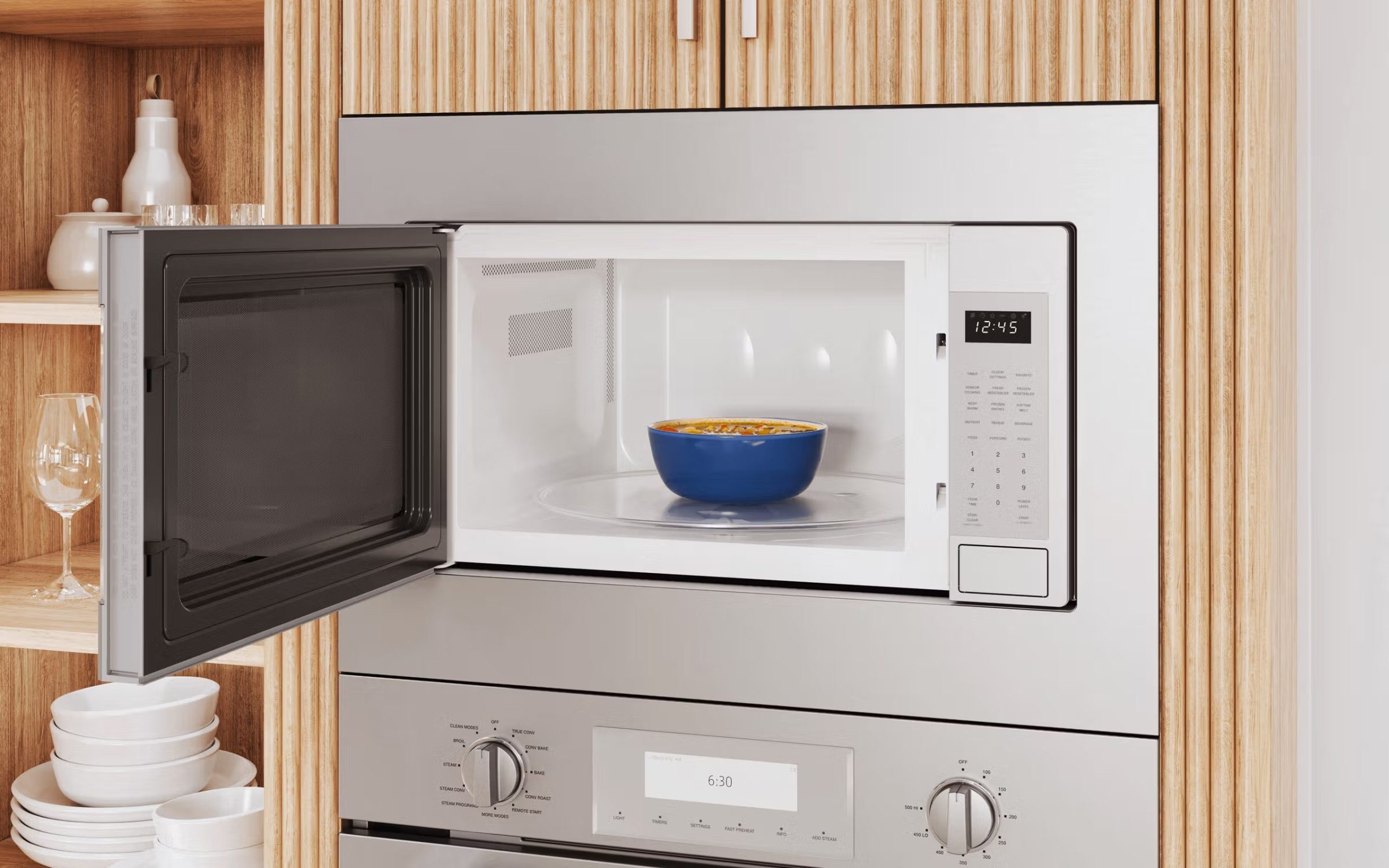
A straightforward plug-in microwave may be suitable for a careful homeowner. More complicated installations should be handled by an appliance installer, electrician, cabinet contractor, or qualified handyman.
Ask for professional help when the microwave is hardwired, unusually heavy, installed above a damaged cooktop, or attached to deteriorated cabinets. The same applies when access is limited or no helper is available.
Request a written estimate when removal reveals damaged drywall, altered ductwork, unsafe wiring, or cabinet repairs. The document should separate labor, materials, disposal, electrical work, and possible change orders.
Before approving the work, read the Baltimore Chronicle guide on how to read a construction estimate. Compare the scope of work, exclusions, payment schedule, and repair responsibilities rather than judging bids only by the final price.
In 2026, a simple microwave removal may remain near the lower end of the $100–$250 service range. Electrical repairs, duct changes, cabinet reinforcement, disposal, and replacement installation can increase the total.
FAQ
Can 1 person remove a built-in microwave?
A small trim-kit microwave may be manageable for 1 experienced person. However, a second adult is strongly recommended for every over-the-range model because the weight shifts during bracket release.
Where are the screws on a built-in microwave?
Trim-kit screws may sit along the frame, behind a lower grille, inside the cabinet opening, or beside the support rails. Over-the-range models usually have long bolts through the upper cabinet and a mounting plate behind the appliance.
Do I need an electrician to remove a microwave?
An electrician is usually unnecessary for a microwave connected by a standard plug. Hire one when the appliance is hardwired or when the outlet, plug, cable, or surrounding materials show damage.
Can I reuse the old microwave mounting bracket?
Reuse it only when the new manufacturer’s instructions identify that exact bracket as compatible. Matching width, finish, or brand does not guarantee matching hooks, bolt locations, or capacity.
How much does built-in microwave removal cost in 2026?
Standalone service often costs about $100–$250 in 2026. Disposal, electrical repairs, wall restoration, duct modifications, and cabinet work may add separate charges.
How should I dispose of an old microwave?
Check retailer haul-away programs, municipal appliance collection, and approved electronics recyclers. Disposal rules differ by city, county, and state, so verify local requirements before leaving the appliance at the curb.
Can an over-the-range microwave be used on a countertop?
Do not use it permanently on a countertop unless the manufacturer specifically approves that setup. Its ventilation, underside, stability, and clearances may depend on wall-mounted installation.
Earlier we wrote about How to Do Amazon Flex 2026 Step by Step: Signup, Approval, Blocks, and First Route