


Argentina out of the 2026 World Cup has become a viral demand after millions of football fans backed an online petition. Its organisers accuse FIFA and match officials of favouring Lionel Messi’s team. The campaign intensified after Argentina’s disputed comeback against Egypt, while separate financial investigations placed the Argentine Football Association under pressure, as reported by the Baltimore Chronicle.
The slogan suggests an imminent expulsion. Yet no official FIFA decision supports that interpretation. The petition has no disciplinary authority, and allegations concerning refereeing remain unproven. Separate investigations into AFA finances concern administrators and commercial transactions rather than player eligibility or match results.
Argentina therefore remains in the tournament. The controversy is serious as a crisis of public confidence, but it is not currently a formal disqualification case.
Why “Argentina Out” Became a Global Campaign
The campaign is hosted on ArgentinaOut.com, an independent website that explicitly states it is not affiliated with FIFA, any football association, or any player. Its central claim is that referees have treated Argentina and Lionel Messi more favourably than other teams.
By July 15, more than 6 million signatures had reportedly been recorded. The number grew rapidly after Argentina’s dramatic match against Egypt in the round of 16. Argentina recovered from a 2–0 deficit and scored 3 late goals, advancing after several disputed decisions.
The petition’s organisers focus on several recurring complaints:
- disputed VAR interventions during Argentina matches;
- alleged leniency toward Argentine players;
- decisions involving Lionel Messi;
- Egypt’s disallowed goal against Argentina;
- a rejected Egyptian penalty appeal;
- wider suspicions that FIFA benefits commercially from Messi’s continued participation.
These points explain why the Argentina out petition became popular. They do not demonstrate match manipulation. A petition measures public anger, not the evidential standard required for a FIFA sanction.
The organisers present their accusations as established facts. However, they have not published referee communications, financial evidence, disciplinary documents, or proof of coordination between FIFA and Argentina.
After the campaign passed several million signatures, it became a story beyond social media. International media reported its scale, increasing pressure on FIFA to explain controversial decisions more clearly.
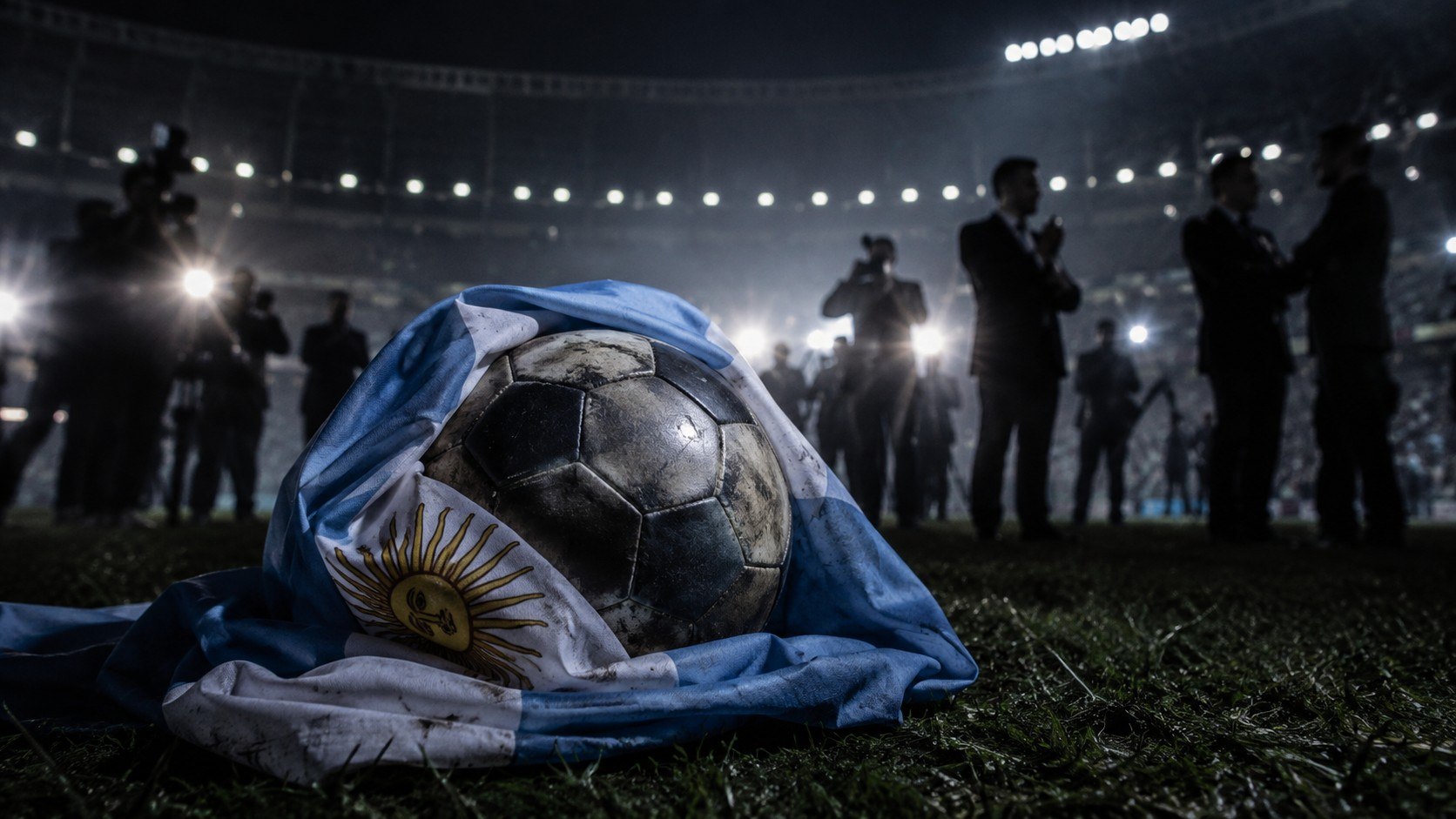
The Egypt Match That Fuelled the Argentina Out Petition
Argentina’s victory over Egypt became the central episode in the dispute. Egypt led 2–0 before the defending champions scored 3 times during the closing stages.
Egypt’s coaching staff challenged several decisions. The most prominent complaints concerned a disallowed Egyptian goal and contact involving Mohamed Salah before Argentina’s decisive attack.
FIFA refereeing chief Pierluigi Collina later rejected allegations of bias. He said VAR correctly identified an infringement before the disallowed goal. He also defended the decision not to award Egypt a penalty, describing the Salah incident as normal football contact.
The controversy can be separated into 3 different questions:
| Issue | What critics claim | What is established |
|---|---|---|
| Egypt’s disallowed goal | VAR unfairly protected Argentina | FIFA says a foul occurred during the build-up |
| Salah penalty appeal | Egypt was denied a clear penalty | Officials judged the contact insufficient |
| Late Argentine comeback | The sequence appeared suspicious | No evidence of match manipulation has been published |
| Petition signatures | Millions want Argentina removed | Signatures do not create a FIFA disciplinary process |
| FIFA favouritism | Messi’s presence benefits the tournament | Commercial benefit alone does not prove improper intervention |
The disputed decisions remain open to football analysis. Refereeing judgements can be criticised without proving institutional corruption.
VAR also does not eliminate controversy. It reviews specified incidents and applies football’s laws through human interpretation. Two observers can view the same contact differently, especially when judging intensity or intent.
However, an incorrect decision would still not automatically justify expulsion. FIFA would need evidence of deliberate manipulation, corruption, ineligible participation, or another serious regulatory breach.
Can a Petition Really Get Argentina Out of the World Cup?
An online petition cannot compel FIFA to remove a national team. FIFA’s disciplinary bodies operate under tournament regulations and the FIFA Disciplinary Code.
A disqualification would usually require a documented violation. Examples may include fielding an ineligible player, government interference, refusal to play, falsified documents, doping breaches, or proven match manipulation.
For a formal process to begin, several steps would normally be required:
- FIFA or another authorised body receives credible evidence.
- A disciplinary investigation is opened.
- The relevant association is informed of the allegations.
- Evidence and written submissions are examined.
- A disciplinary body issues a reasoned decision.
- The association may use available appeal procedures.
None of these stages has been publicly announced in connection with the viral petition. There is no official statement saying FIFA is considering Argentina’s removal because of referee favouritism.
A large signature count can create reputational pressure. It cannot replace evidence, jurisdiction, hearings, or a binding disciplinary ruling.
The campaign may still influence public debate. FIFA could publish additional explanations, referee audio, or technical assessments. Those responses would address transparency, not necessarily Argentina’s eligibility.
The Separate FBI-Linked Investigation Into AFA
The petition controversy overlaps with a different scandal involving the Argentine Football Association, known as AFA. Reports indicate that investigators in the United States are examining financial operations linked to AFA’s commercial activities.
CBS Sports reported that the preliminary inquiry concerns at least $260 million processed through the US financial system. Another $57 million in transfers reportedly lacked a clearly identified purpose in documents reviewed by Argentine media. No criminal charges had been announced against AFA leaders at the time of publication.
Investigators are reportedly examining the relationship between AFA and TourProdEnter LLC. The Florida company handled international sponsorship and commercial agreements connected with the association.
The reported areas of scrutiny include:
- sponsorship and media-related payments;
- transfers through US banks;
- the ultimate recipients of certain funds;
- payments involving companies with unclear operational roles;
- whether American fraud or money-laundering laws were breached.
These are allegations under examination, not proven crimes. The FBI and US prosecutors had not announced indictments against AFA, its president Claudio Tapia, or other senior officials.
The inquiry also differs fundamentally from the refereeing controversy. One concerns potential financial misconduct by football administrators. The other concerns claims about decisions made during matches.
Why the Financial Scandal Is Unlikely to Remove Argentina
A financial investigation involving a federation does not automatically invalidate the national team’s results. Investigators would need to establish specific wrongdoing, while FIFA would need a separate regulatory basis for sporting sanctions.
The current position can be summarised clearly:
| Development | Current status | Immediate threat to Argentina |
|---|---|---|
| Viral removal petition | Private online campaign | No direct legal effect |
| Refereeing allegations | Publicly disputed and denied by FIFA | No announced disciplinary case |
| Reported US financial inquiry | Preliminary examination | No automatic sporting penalty |
| Argentine domestic investigations | Active judicial scrutiny | Focused mainly on AFA governance |
| Criminal charges in the US | None publicly announced | No current basis for expulsion |
| FIFA exclusion decision | Not announced | Argentina remains eligible |
CBS Sports reported that the American inquiry was not expected to affect Argentina’s current World Cup campaign. The alleged conduct concerns financial operations rather than player registration or tournament eligibility.
Even serious allegations against federation officials would not necessarily punish players. FIFA can sanction individuals, impose fines, suspend officials, or take action against an association. The chosen measure depends on the proven offence and applicable rules.
Removing a team during the knockout stage would be an exceptional decision. It would also affect opponents, scheduling, broadcasting contracts, ticket holders, and the integrity of completed matches.
AFA Was Already Facing Investigations Before the Tournament
The latest reports did not emerge in isolation. Argentine federal police raided AFA headquarters and numerous football clubs in December 2025.
Those searches formed part of an investigation into alleged money laundering and tax evasion involving the financial company Sur Finanzas. More than 30 raids targeted AFA premises, clubs, private locations, and electronic records.
A separate controversy concerned a luxury property near Pilar. Investigators found a heliport, stables, and 54 vehicles, including Ferraris and Porsches. A criminal complaint alleged that the property could be connected with AFA officials through intermediaries.
Reuters also reported allegations involving unpaid taxes and accounting entries worth hundreds of millions of dollars. AFA rejected accusations of wrongdoing and portrayed the investigations as politically motivated.
“We are on the right path.”
AFA, public statement reported by Reuters, January 2026. The association cited Argentina’s sporting achievements while responding to criticism and investigations.
The disputes are intensified by AFA’s conflict with President Javier Milei’s government. Milei supports allowing Argentine clubs to adopt private, for-profit ownership models. AFA has defended the traditional member-owned structure.
What Would Have to Happen for Argentina to Be Disqualified?
The phrase Argentina out of World Cup 2026 would become realistic only after a major change in the evidence or official process.
A credible disqualification scenario would require at least one of these developments:
- proof that matches were deliberately manipulated;
- evidence connecting AFA officials with corrupt refereeing decisions;
- a serious eligibility violation involving registered players;
- a FIFA suspension of AFA under applicable statutes;
- refusal by AFA to comply with a binding FIFA decision;
- a disciplinary ruling ordering removal from the competition.
No such finding has been announced. Financial irregularities alone would also need to fall within FIFA’s jurisdiction and justify a team-level punishment.
FIFA could investigate governance concerns without changing tournament results. It could also cooperate with national authorities, request documentation, or sanction officials individually.
The distinction between allegations and evidence is decisive. Viral claims may prompt scrutiny, but disciplinary proceedings require verifiable records and legally defensible findings.

What Fans Should Check Before Sharing “Argentina Out” Claims
Readers should examine the source before accepting posts announcing Argentina’s expulsion.
Reliable confirmation would appear through:
- an official FIFA media release;
- a published disciplinary decision;
- a statement from AFA;
- tournament schedule changes;
- reporting by several independent news agencies;
- direct confirmation from the relevant court or law-enforcement authority.
A screenshot of a petition counter is not confirmation. Neither are anonymous social media posts, edited referee clips, or headlines that confuse an investigation with a conviction.
The Argentina Out campaign openly describes itself as independent from FIFA. Its website advocates removal but does not report an official case.
Claims about the reported financial inquiry should also preserve legal accuracy. The investigation remains preliminary, and no US charges had been announced. Saying AFA has already been convicted would be false.
FAQ
Is Argentina out of the 2026 World Cup?
No. FIFA has not announced Argentina’s suspension or disqualification. The team remains eligible to compete.
Why do fans want Argentina removed?
Campaigners allege referee favouritism, particularly after disputed decisions during Argentina’s match against Egypt. Those allegations remain unproven.
How many people signed the Argentina Out petition?
International reports said the campaign had passed 6 million signatures by July 15, 2026. The figure is displayed by a private website, not FIFA.
Can FIFA remove Argentina because of the petition?
FIFA can only impose sanctions through its regulations and disciplinary procedures. Petition signatures alone have no binding effect.
Is the FBI investigating the Argentine Football Association?
Several media organisations reported a preliminary US investigation into AFA-linked financial transactions. No criminal charges had been publicly announced.
Could the AFA financial case affect Lionel Messi and the players?
There is currently no reported basis for such an outcome. The inquiry concerns federation finances rather than player eligibility.
Was Argentina proven to have manipulated the Egypt match?
No. No evidence of match manipulation has been published. FIFA’s refereeing chief defended the disputed decisions.
What happens if AFA officials are charged?
Possible consequences would depend on the charges, evidence, jurisdiction, and FIFA rules. Individual sanctions would not automatically disqualify the national team.
Earlier we wrote about World Cup 2026 Semifinals Schedule: Match Dates, Kickoff Times and How to Watch in the USA Online