

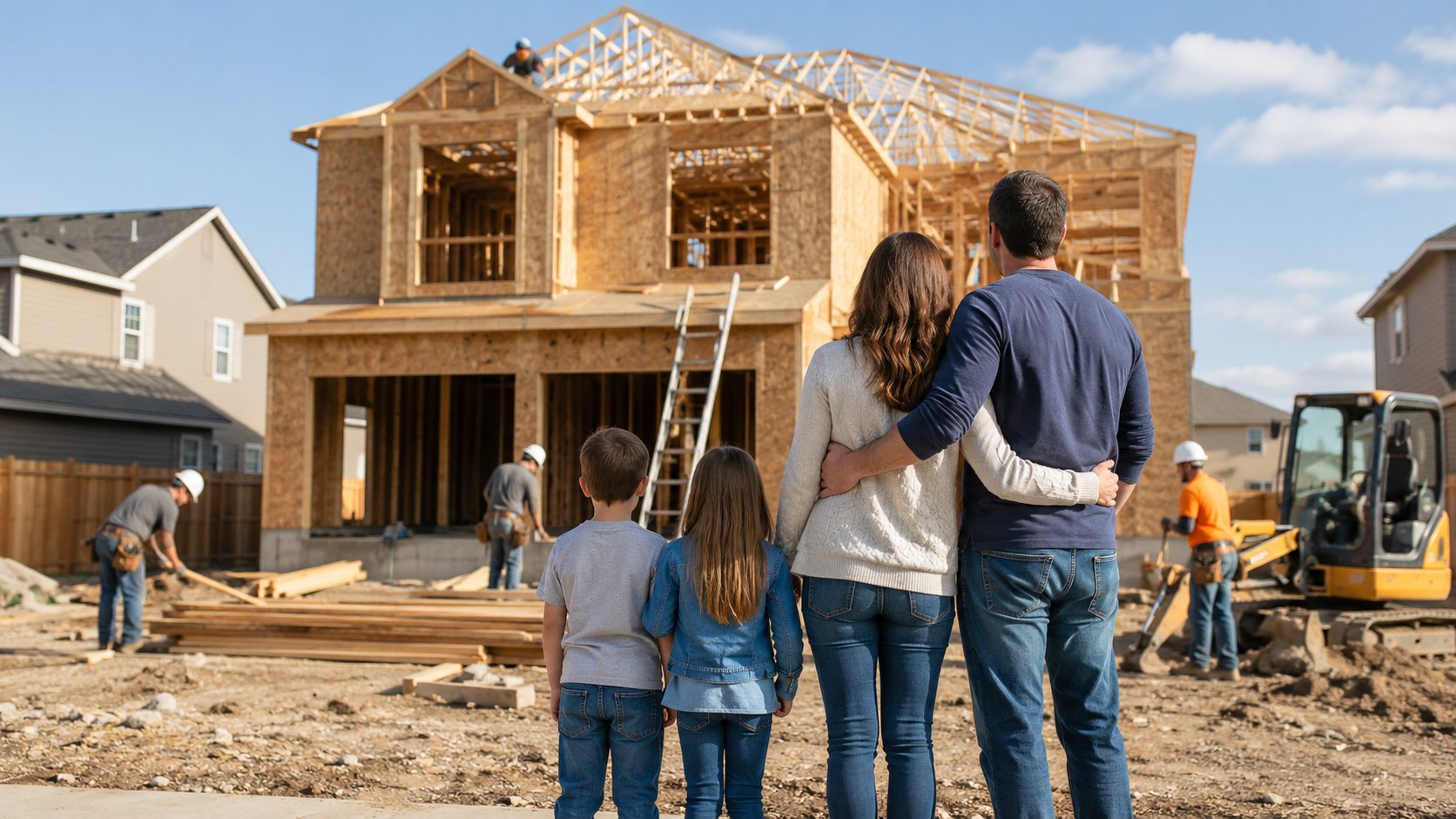
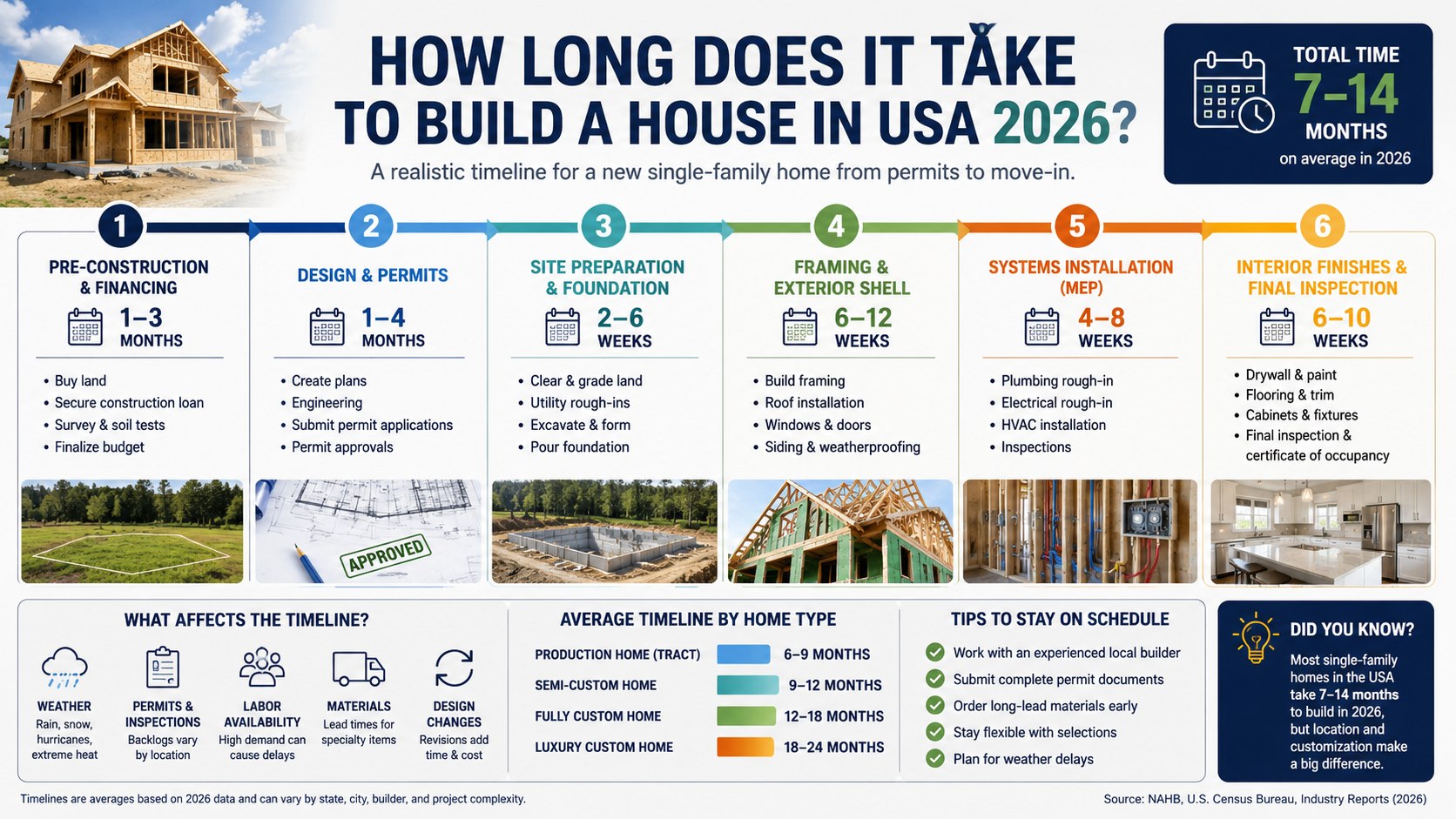
Building a new home in the United States usually takes between 7 and 14 months in 2026, depending on the location, weather, labor availability, permit approvals, and whether the home is production-built or fully custom. Some homes in Texas or Arizona move faster because of climate and permitting efficiency, while projects in states like California or New York often take longer, аs noted by Baltimore Chronicle.
This guide explains the real construction timeline step by step, where delays usually happen, and what homeowners can do to keep a project on schedule. It also covers weather risks, inspections, financing, and average building costs across the US.
Key takeaways
- Most single-family homes in the US take 7–14 months from permits to final inspection in 2026.
- Weather, permit delays, and labor shortages create more timeline problems than material shortages in most states.
- Custom homes usually take 4–8 months longer than production homes from builders like D.R. Horton or Lennar.
What You Need Before Starting a Home Build
- Construction loan or cash financing
- Land ownership or signed lot agreement
- Architectural plans and engineering documents
- Builder contract and insurance paperwork
- Permit applications approved by the local building department
- Budget buffer of at least 10%–15%
- Time for inspections, utility hookups, and weather delays
Many buyers underestimate pre-construction time. In some counties, permit approval alone can take 30–120 days in 2026. The US Department of Housing and Urban Development continues to track regional housing supply pressure that affects builder capacity nationwide.
Homeowners comparing timelines should also review related topics like construction material pricing in 2026 and construction loan rates in the USA.
Average House Construction Timeline in the USA
The total timeline depends heavily on the type of home. A tract home built in a planned subdivision moves much faster than a custom home on undeveloped land.
| Project Type | Typical Timeline in 2026 | Common Delay Factors |
|---|---|---|
| Production home | 6–9 months | Permit backlogs, inspections |
| Semi-custom home | 9–12 months | Design changes, weather |
| Fully custom home | 12–18 months | Engineering, specialty materials |
| Luxury custom build | 18–24 months | Imported finishes, complex systems |
Builders such as D.R. Horton, Lennar, and Pulte Homes often complete homes faster because they use standardized floor plans and maintain relationships with subcontractors and suppliers.
Buyers searching for new home construction timeline USA data should also account for regional labor conditions. Florida, Texas, Nevada, and Arizona continue to experience strong construction demand in 2026, creating scheduling pressure for electricians, roofers, and HVAC installers.
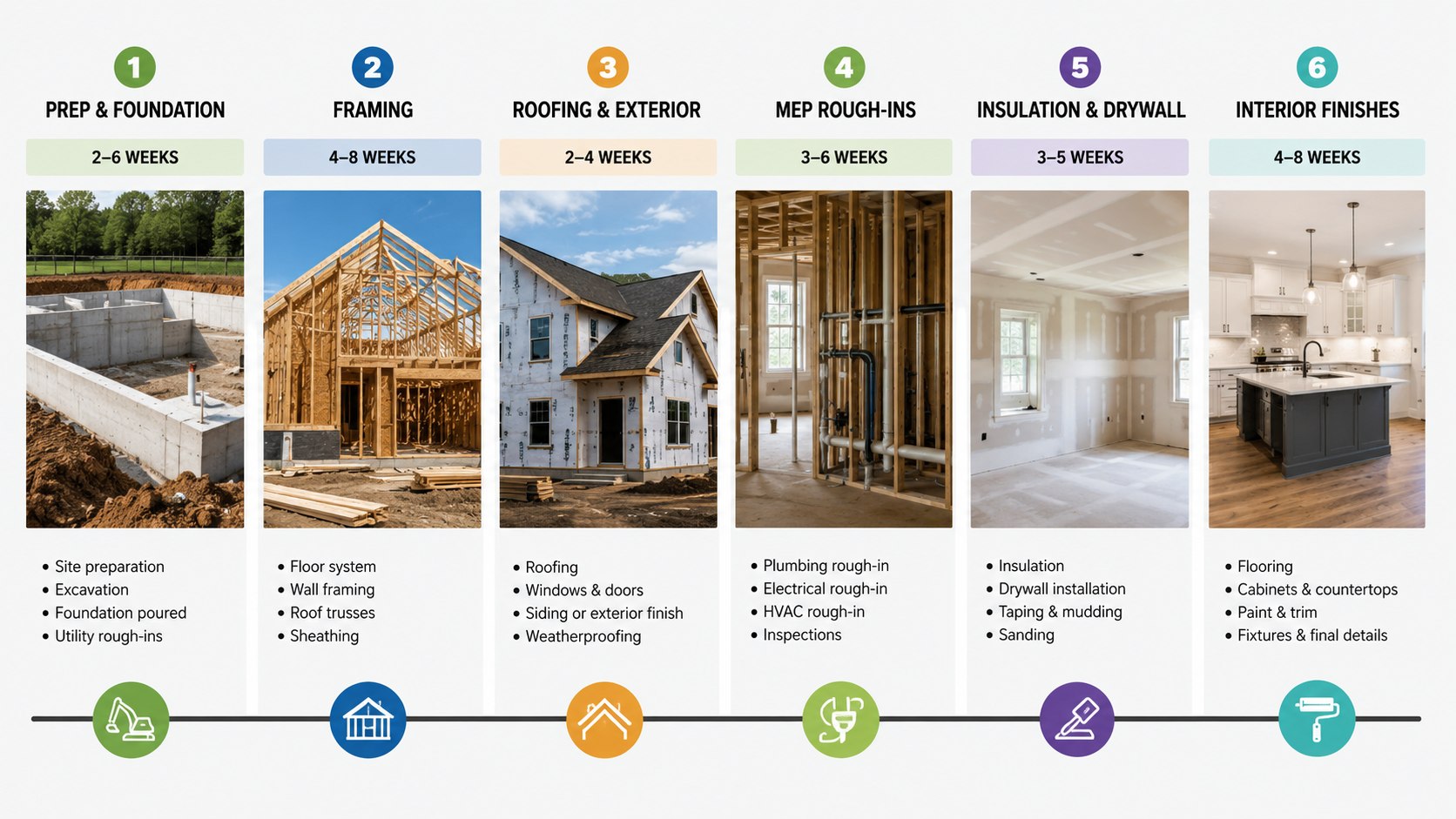
Step 1: Buy Land and Secure Financing
The process starts with selecting land and obtaining financing approval. Construction loans usually require detailed cost estimates, contractor agreements, and appraisal documentation before funds are released.
This stage matters because lenders control payment schedules during construction. Delays in financing paperwork can postpone permits and contractor scheduling.
A common mistake is underestimating site preparation costs. Rural lots may require septic systems, grading, drainage work, or utility trenching that add weeks to the project.
Typical Timeline
- Lot purchase: 1–4 weeks
- Construction loan approval: 30–60 days
- Survey and soil testing: 1–3 weeks
Buyers evaluating affordability should compare building versus buying a house in 2026 before committing to land purchases.
Step 2: Create Plans and Apply for Permits
Architects and engineers finalize blueprints, structural calculations, and energy compliance documents before local authorities issue permits.
This stage matters because cities and counties enforce zoning, fire safety, and structural regulations differently. Permit approval speed varies sharply across the country.
A common mistake is changing floor plans after permit submission. Even small revisions can restart review timelines.
| State | Typical Permit Timeline | Notes |
|---|---|---|
| Texas | 2–6 weeks | Often faster in suburban counties |
| Florida | 4–10 weeks | Hurricane codes increase review time |
| California | 2–6 months | Environmental reviews common |
| New York | 1–4 months | Dense municipalities move slower |
The Internal Revenue Service also provides guidance on deductions and tax considerations related to mortgage interest and property ownership during construction.
Step 3: Site Preparation and Foundation Work
Crews clear the lot, excavate the foundation area, install utility lines, and pour concrete footings or slabs.
This phase matters because foundation quality affects every later stage of the build. Drainage problems discovered later can become expensive structural repairs.
A common mistake is scheduling concrete pours during heavy rain periods. Wet conditions slow curing and may force crews to reschedule inspections.
Weather Delays During Foundation Work
Weather has a direct impact on the house building timeline 2026. Snow, frozen ground, hurricanes, and prolonged rainfall can stop excavation equipment and concrete work.
- Midwest winters delay foundation excavation
- Gulf Coast storms interrupt concrete schedules
- Pacific Northwest rainfall slows framing and roofing
- Southwest heat can affect concrete curing timing
Foundation work usually takes 2–6 weeks depending on lot conditions and weather exposure.
Step 4: Framing, Roofing, and Exterior Shell
Framing crews build walls, roof systems, staircases, and structural supports. Roofers and window installers then close the exterior shell.
This stage matters because the project becomes weather-protected after roofing and windows are complete. Interior trades can begin safely afterward.
A common mistake is delaying material orders. In 2026, windows, garage doors, and specialty roofing products still carry extended lead times in some regions.
Buyers researching how long does it take to build a custom home often discover that framing delays create a chain reaction affecting plumbers, electricians, and drywall installers.
Typical Timeline
- Framing: 4–8 weeks
- Roof installation: 1–2 weeks
- Windows and exterior doors: 1–3 weeks
- Siding and weatherproofing: 2–4 weeks
Step 5: Plumbing, Electrical, and HVAC Installation
Licensed subcontractors install pipes, wiring, breaker panels, air conditioning systems, and ventilation components before insulation and drywall.
This stage matters because every system must pass inspection before walls close. Failed inspections create costly reopening work.
A common mistake is changing outlet locations or lighting plans late in the process. Last-minute revisions slow electricians and inspection approvals.
Many homeowners building in southern states now prioritize larger HVAC systems because of rising summer temperatures. In northern states, energy-efficient insulation packages remain a major factor affecting long-term utility costs.
Readers comparing efficiency upgrades may also want to review energy-efficient home upgrade options.
Step 6: Interior Finishes and Final Inspection
Drywall, flooring, cabinetry, paint, appliances, and fixtures are installed during the final stage of construction.
This phase matters because finish delays are common in 2026. Cabinets, countertops, and specialty appliances often arrive later than expected.
A common mistake is scheduling a move-in date before the certificate of occupancy is approved. Municipal inspections can add unexpected waiting periods.
Average Final Stage Timeline
- Drywall and paint: 2–4 weeks
- Cabinets and countertops: 2–5 weeks
- Flooring and fixtures: 2–4 weeks
- Final inspections: 1–3 weeks
For many buyers, this stage determines the practical answer to average time to build a house in America. Delays here often feel longer because homeowners are already preparing to move.
How Weather Affects Home Construction in 2026
Weather remains one of the biggest variables in the home construction process USA. Even experienced builders cannot fully control climate disruptions.
Hurricane exposure along the Gulf Coast increases scheduling uncertainty between June and November. Northern states often lose several workable weeks during winter because frozen ground prevents excavation and concrete placement.
Wildfire risk also affects projects in parts of California, Colorado, and Oregon. Temporary permit suspensions or utility restrictions can interrupt construction schedules.
Builders increasingly use weather-monitoring software and flexible subcontractor scheduling to reduce downtime. National builders with larger crews usually recover faster from weather interruptions than smaller independent contractors.
“The biggest schedule risk in residential construction is rarely one major event. It’s multiple small delays stacking together across inspections, labor, and weather.”
Troubleshooting Common Delays
- Permit approvals taking too long: Ask the builder whether third-party permit expediters are available in your county.
- Repeated inspection failures: Verify that subcontractors are licensed and familiar with local building codes.
- Material backorders: Choose in-stock finishes instead of custom imports when timelines matter more than design uniqueness.
- Weather interruptions: Build extra time into contracts during hurricane or winter seasons.
- Budget overruns: Maintain a contingency reserve of at least 10% for labor and material increases.
What Usually Delays a House Build the Most?
As of 2026, labor scheduling and local permitting create more delays than raw material shortages in most parts of the United States. Skilled subcontractors remain in high demand, especially electricians, plumbers, and HVAC technicians.
Design changes also extend timelines quickly. Homeowners who repeatedly modify layouts, finishes, or structural features during construction often add several months to the project.
Buyers searching for construction delays in USA housing should pay close attention to builder contracts, weather clauses, and inspection scheduling responsibilities before signing.
FAQ
How long does it take to build a 2,000 sq ft house in the US?
A standard 2,000 sq ft production home typically takes 7–10 months in 2026. Custom homes of the same size may require 12 months or longer.
What state builds houses the fastest?
Texas, Arizona, and parts of Nevada often move faster because of simpler permitting systems, dry weather, and strong subcontractor availability.
Can weather add months to a home construction project?
Yes. Hurricanes, flooding, snowstorms, and wildfire restrictions can delay projects by several weeks or even months depending on the region.
Is it faster to buy or build a house in 2026?
Buying an existing home is usually faster. Building allows customization but often requires at least 7–14 months from planning to occupancy.
What is the slowest part of building a house?
Permit approvals, inspections, and interior finish scheduling are among the most common bottlenecks in residential construction.
How much does it cost to build a house in the USA in 2026?
As of 2026, many builders report average construction costs between $140 and $250 per sq ft depending on region, finishes, labor rates, and land costs.
Earlier we wrote about Refrigerator Not Cooling? DIY Fixes and Common Causes in 2026