


A refrigerator that stops cooling can ruin groceries fast and lead to expensive repairs if the problem goes unchecked for several days. Most cooling failures come from dirty condenser coils, blocked airflow, broken fans, damaged door seals, or thermostat issues that homeowners can often fix without calling a technician, аs noted by Baltimore Chronicle.
This guide explains how to fix a refrigerator not cooling with step-by-step DIY troubleshooting that usually takes less than two hours. It also covers repair costs in 2026, warning signs of compressor failure, and when replacing the appliance makes more sense financially.
Key takeaways
- Dirty condenser coils remain one of the most common causes of refrigerator cooling problems in US homes.
- Most DIY refrigerator repairs cost under $75 and require only basic household tools.
- Compressor repairs can cost up to $1,500 in 2026, making replacement a better option for older appliances.
What You Need
Before starting, gather a few basic tools and supplies:
- Vacuum with brush attachment
- Coil cleaning brush
- Screwdriver set
- Flashlight
- Thermometer
- Warm water and soap
- Replacement air filter if required
- 1–2 hours of time
- Up to $75 for common DIY repairs
Regular appliance maintenance also helps reduce long-term electricity costs, especially for older refrigerators that run continuously. Baltimore homeowners dealing with rising utility bills may also want to read this guide on how to lower home energy bills.
Common Reasons a Refrigerator Stops Cooling
Most refrigerators from Whirlpool, GE, Samsung, LG, Frigidaire, and KitchenAid use similar cooling systems, which means the same problems appear repeatedly across different brands.
| Problem | Typical Symptoms | Average DIY Cost |
|---|---|---|
| Dirty condenser coils | Warm fridge, hot exterior walls | $10–$20 |
| Blocked air vents | Freezer cold, fridge warm | $0 |
| Faulty thermostat | Inconsistent temperatures | $50–$180 |
| Damaged door gasket | Condensation and constant running | $40–$120 |
| Compressor failure | No cooling at all | $600–$1,500 |
According to the US Department of Energy, refrigerators work most efficiently when condenser coils remain clean and airflow stays unobstructed.
Step 1: Check the Temperature Settings
Start with the simplest possible fix because accidental thermostat changes happen more often than major mechanical failures. Power outages, cleaning sessions, or overloaded shelves can easily change temperature controls without anyone noticing.
Set the refrigerator compartment to 37°F and the freezer to 0°F, then wait several hours for temperatures to stabilize. Lowering the setting too aggressively can freeze airflow components and create new cooling problems.
Step 2: Clean the Condenser Coils
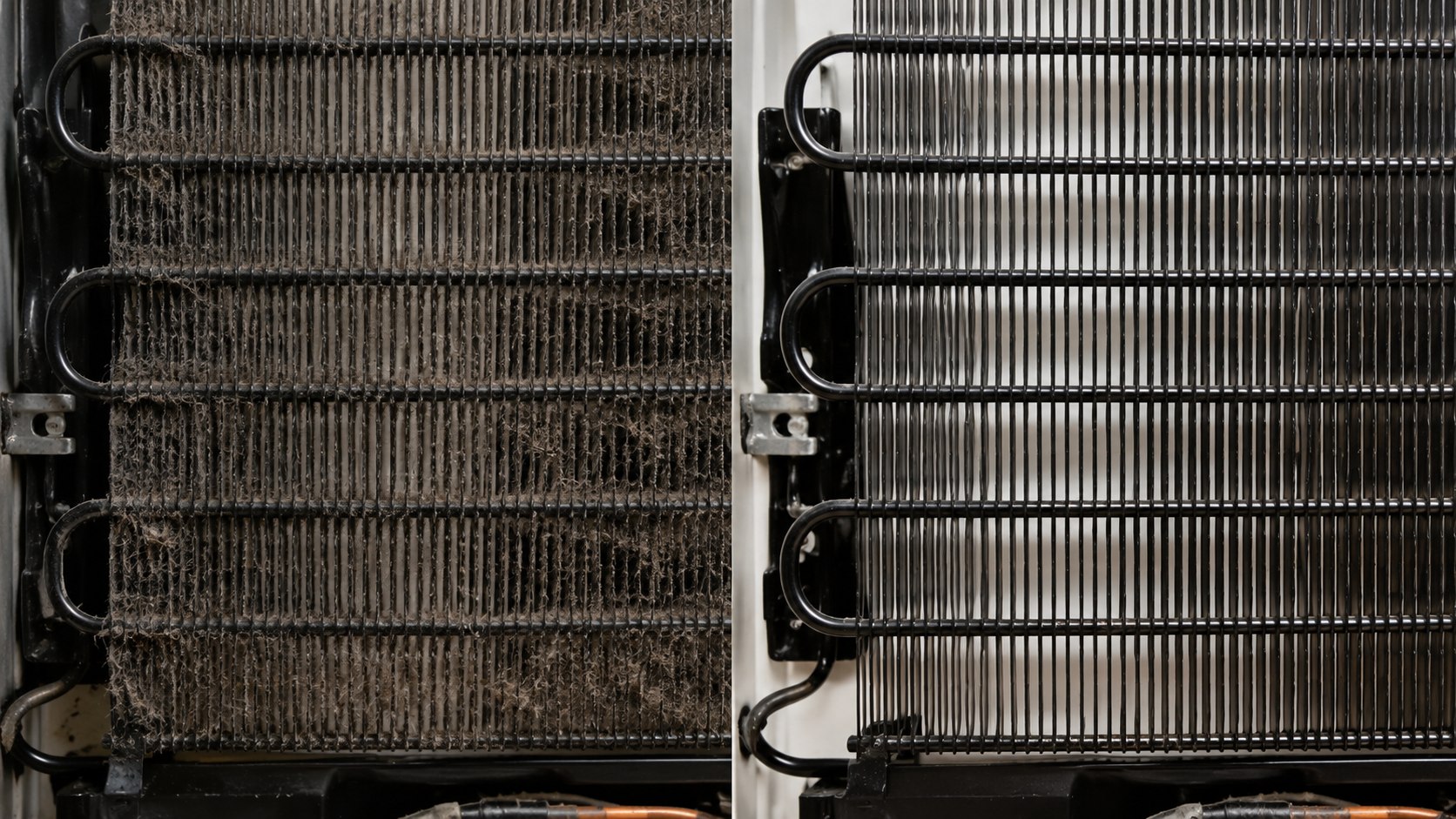
Dirty condenser coils are one of the leading reasons behind searches for refrigerator not cooling DIY solutions in the US. Dust, grease, and pet hair trap heat around the coils and force the compressor to work harder.
Unplug the refrigerator and locate the coils behind the rear panel or lower front grille. Use a vacuum and coil brush to remove dirt from every side, including underneath the appliance where buildup often collects.
This maintenance step improves cooling efficiency and can reduce electricity usage at the same time.
How Often to Clean Refrigerator Coils
- Every 6 months in standard households
- Every 3–4 months in homes with pets
- Monthly in garages or dusty workspaces
More maintenance advice is available in this Baltimore Chronicle article on how much it costs to build and maintain a house in 2026, which breaks down ongoing homeownership expenses.
Step 3: Inspect the Door Gasket
A damaged refrigerator gasket allows warm air to enter constantly, forcing the appliance to run longer while temperatures remain unsafe for food storage.
Close the refrigerator door on a dollar bill and try pulling it out slowly. If the bill slides out easily, the gasket may no longer seal correctly.
Clean the seal using warm soapy water and inspect the edges for cracks or gaps. Many homeowners replace expensive components before checking this simple rubber seal.
Step 4: Clear Blocked Air Vents
Modern refrigerators rely on cold air moving between the freezer and refrigerator compartments. When vents become blocked by food containers or overpacked shelves, airflow drops and cooling performance suffers.
Move large grocery items away from vents and leave enough open space for air circulation. Pizza boxes, gallon milk jugs, and frozen bulk food packages commonly create airflow restrictions.
A freezer that still feels cold while the refrigerator compartment warms up often points to blocked vents or airflow issues.
Step 5: Check the Evaporator Fan
If the freezer works but the refrigerator section stays warm, the evaporator fan may have stopped circulating cold air.
Open the freezer door and listen for the fan motor. Some refrigerators automatically stop the fan when the door opens, so press the door switch manually while checking for sound or airflow.
Signs of a Bad Evaporator Fan
- Grinding or clicking noises
- Weak airflow from refrigerator vents
- Freezer stays cold while fridge warms up
- Intermittent cooling cycles
Replacement evaporator fan motors for brands like Samsung, Whirlpool, and GE usually cost between $60 and $250 in 2026 depending on the model.
Step 6: Defrost Ice Buildup
Heavy frost accumulation behind freezer panels can block airflow completely and prevent cold air from reaching the refrigerator compartment.
Unplug the refrigerator and leave the doors open for several hours to melt the ice naturally. Place towels around the appliance to absorb melting water and avoid damaging nearby flooring.
Never scrape frost with knives or sharp tools because refrigerant line damage can turn a minor issue into a major repair.
| Frost Pattern | Likely Cause |
|---|---|
| Thin, even frost | Normal operation |
| Thick ice wall | Defrost system failure |
| Frost in one corner | Possible sealed system issue |
Step 7: Test the Start Relay and Compressor
If the refrigerator still does not cool after cleaning and airflow checks, the compressor or start relay may be failing.
Locate the compressor near the bottom rear section of the appliance and listen for repeated clicking sounds. Clicking every few minutes often signals a failed start relay.
Compressor-related repairs are among the most expensive appliance repairs in the US, especially on older refrigerators.
Repair vs Replacement in 2026
- Repair refrigerators under 5 years old if repair costs stay below $700.
- Replace refrigerators older than 10 years when compressor repairs exceed half the replacement cost.
- ENERGY STAR refrigerators can reduce electricity costs by $100–$300 annually compared to older models.
The official ENERGY STAR refrigerator guide includes updated efficiency information and certified appliance lists for 2026.
Some homeowners reduce large repair risks through appliance protection plans and warranty coverage. Before paying for a major compressor replacement, compare the maintenance costs discussed in this Baltimore Chronicle guide on custom home costs vs production homes.
How Much Refrigerator Repairs Cost in 2026
Repair costs vary widely depending on the state, labor market, and appliance brand. Homeowners in California, Massachusetts, and New York typically pay higher technician rates than households in Texas, Ohio, or Tennessee.
Typical refrigerator repair pricing in 2026 includes:
- Thermostat replacement: $100–$350
- Fan motor repair: $150–$400
- Door gasket replacement: $100–$300
- Compressor replacement: $600–$1,500
- Service call and diagnostics: $90–$180
Emergency same-day repair visits often cost significantly more during summer months when appliance demand increases.
Troubleshooting
- Freezer cold but refrigerator warm: Check evaporator fans and blocked vents first.
- Refrigerator runs constantly: Inspect condenser coils and door gaskets.
- No sound from the appliance: Test the outlet, breaker panel, and power cord.
- Food freezes inside the refrigerator: Adjust thermostat settings and improve airflow spacing.
- Water leaking underneath: Inspect the drain line and defrost pan.

When to Call a Professional
DIY troubleshooting solves many cooling problems, but sealed refrigerant systems require licensed technicians under federal EPA regulations.
Call a professional immediately if you notice:
- Burning electrical smells
- Compressor overheating
- Refrigerant leaks
- Repeated breaker trips
- Persistent clicking after replacing the relay
Samsung and LG refrigerators with inverter compressors may also require authorized service providers to maintain warranty coverage.
FAQ
Why is my refrigerator running but not cooling?
Dirty condenser coils, blocked vents, failed evaporator fans, and thermostat issues are the most common causes. Compressor failure is less common but significantly more expensive.
Can unplugging a refrigerator reset it?
Yes. Leaving the refrigerator unplugged for 5–10 minutes can reset electronic control boards after power surges or software errors.
How long should a refrigerator last?
Most refrigerators in US households last between 10 and 15 years with regular maintenance and coil cleaning.
Is it worth repairing a 12-year-old refrigerator?
Usually not if repairs exceed $500–$700 in 2026. Older refrigerators also consume more electricity and tend to develop additional problems over time.
How fast does food spoil in a warm refrigerator?
According to USDA food safety guidance, refrigerated food becomes unsafe after roughly 4 hours above 40°F.
Can a dirty water filter affect refrigerator cooling?
In some refrigerator models, clogged filters can reduce airflow and interfere with ice maker performance or cooling efficiency.
Earlier we wrote about How to Back Up iPhone to Mac with Finder and Encryption in 2026