

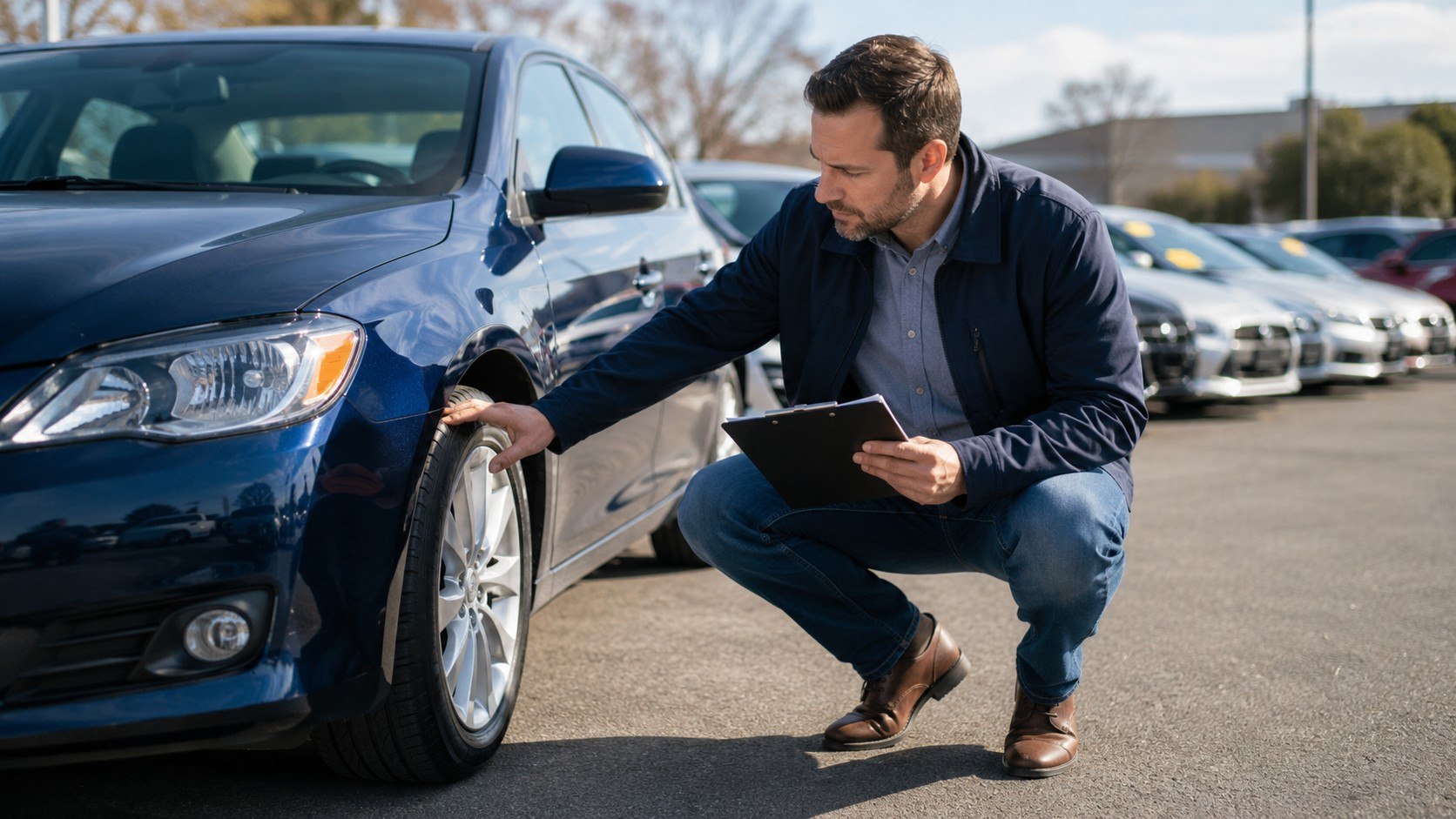
How to buy a used car safely in USA 2026 comes down to 3 protections: verify ownership, inspect the vehicle independently, and control payment. A careful buyer can complete the essential checks within 1–2 days, although title processing may take longer. Never transfer the full price before confirming the VIN, lien status, title, and inspection results, as noted by Baltimore Chronicle.
This guide covers private sellers, dealerships, financed vehicles, and cash purchases. It focuses on 2 checks buyers often misunderstand: the pre-purchase inspection, commonly called a PPI, and the lien check.
Key takeaways
- Match the VIN across the vehicle, title, seller identification, history report, and sale documents before paying.
- Hire an independent mechanic for a PPI, even when the seller provides service records or dealership certification.
- Confirm every lien is released through the lender or state process before accepting the title or transferring funds.
What You Need Before Buying a Used Car
Prepare your documents and accounts before contacting sellers. This reduces pressure when a promising Toyota, Honda, Ford, Chevrolet, Subaru, or Tesla appears.
- A valid driver’s license or accepted state identification.
- Proof of insurance or an insurer ready to activate coverage.
- The vehicle’s 17-character VIN.
- A phone, email account, and secure document storage.
- Access to an approved vehicle-history provider.
- A trusted mechanic who performs pre-purchase inspections.
- A flashlight, paper towels, tire-pressure gauge, and phone charger.
- A written bill of sale accepted by your state.
- Money for the PPI, title charges, taxes, registration, and insurance.
- At least 2–4 hours for inspection, testing, and document review.
Do not reserve your entire budget for the advertised price. Government charges vary by state, county, vehicle value, and registration status. Insurance can also change sharply between a Toyota Corolla, Ford F-150, Jeep Wrangler, and Tesla Model Y.
Keep an additional repair reserve. A used car may need tires, brakes, fluids, a battery, or delayed maintenance soon after purchase. The seller’s asking price does not reveal the complete first-year cost.
A clean-looking vehicle can still carry an unpaid loan, flood history, hidden structural damage, or an expensive mechanical defect.
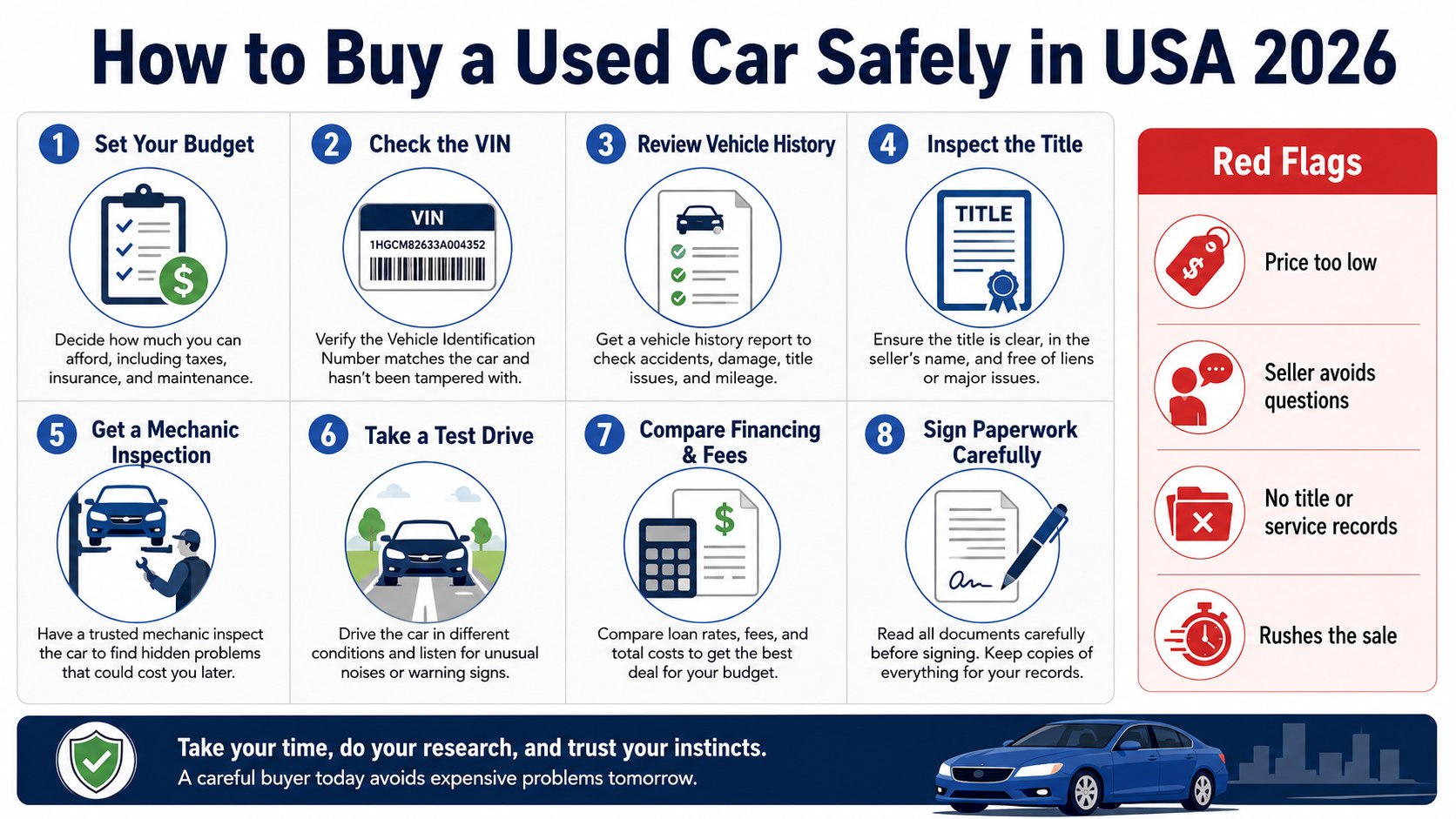
How to Buy a Used Car Safely in USA 2026: The 8-Step Process
Step 1: Set the Full Budget, Not Just the Car Price
What to do: Calculate the maximum purchase price after adding tax, title, registration, insurance, inspection, and immediate maintenance. Obtain an insurance estimate using the exact VIN when possible.
Why it matters: A $15,000 car can require considerably more cash before it becomes legal and reliable.
Common mistake: Do not spend every available dollar on the vehicle itself. Leave funds for repairs and state charges.
Buyers using financing should compare the total loan cost, not only the monthly payment. Longer terms can make an expensive car appear affordable while increasing total interest.
Step 2: Verify the Seller and the Vehicle Identity
What to do: Request the VIN, seller’s legal name, title status, mileage, service records, and reason for selling. Compare the VIN on the dashboard, driver’s door label, title, and listing.
Why it matters: VIN differences can indicate document errors, replaced parts, theft, or attempted title fraud.
Common mistake: Never accept a seller’s promise to provide the title after payment. Ownership must be verified before the deal.
For private sales, compare the seller’s identification with the owner named on the title. A spouse, friend, mechanic, or reseller cannot automatically sign for the legal owner.
Review Baltimore Chronicle’s guide to car title transfers in the USA before meeting the seller. It explains title signatures, lien releases, state filing, and transfer costs.
Step 3: Run a VIN History and Title Check
What to do: Obtain a vehicle history report and review title brands, odometer entries, total-loss records, salvage activity, and ownership changes. Use the federal NMVTIS approved provider list to locate authorized report sellers.
Why it matters: NMVTIS data can expose salvage, junk, flood, total-loss, and title-brand records reported by participating sources.
Common mistake: Do not treat one report as a mechanical inspection. History databases cannot contain every crash, repair, or maintenance event.
Read each event chronologically. A vehicle that moved rapidly between Florida, Texas, New York, and another state deserves closer examination. Repeated title changes can be legitimate, but they may also conceal branding or resale activity.
Check Baltimore Chronicle’s guide to reading a CARFAX report before buying. It explains mileage gaps, auction entries, damage records, and ownership patterns.
Step 4: Confirm There Is No Unresolved Lien
What to do: Inspect the title for a lienholder and ask the seller whether money remains owed. Confirm the release through the lender, state DMV, MVA, RMV, or electronic lien system.
Why it matters: An unpaid lender may retain a legal claim against the vehicle after the buyer pays the seller.
Common mistake: A history report does not always provide complete current lien information. Verify through the relevant state and lender.
The safest financed-car transaction usually occurs at the lender’s branch. The buyer can confirm the payoff, send funds correctly, and document the release process.
Never hand the seller full payment while accepting only a payoff promise. Request a current payoff statement containing the account reference, expiration date, and lender instructions.
| Title or lien situation | Safe action | Warning sign |
|---|---|---|
| Paper title with no lien listed | Match seller ID, VIN, signatures, and state requirements | Seller’s name differs from the title |
| Paper title showing a released lien | Require the original release document or state-recorded release | Photocopy, screenshot, or handwritten claim |
| Electronic title with active loan | Complete payoff through the lender’s verified process | Seller requests direct cash without lender contact |
| Dealer-held title | Review the purchase contract and title-processing obligations | Dealer refuses written delivery deadlines |
| Lost title | Require the legal owner to obtain a duplicate | Seller offers only a bill of sale |
| Salvage or rebuilt title | Verify state inspection, insurability, repairs, and resale limits | Listing describes the title as clean |
A lien problem is not solved by writing “paid in full” on a bill of sale. The lender or state record must show that the secured interest was released.
Electronic title procedures differ between California, Florida, Texas, Maryland, Arizona, and other states. Ask the agency which document proves release in that jurisdiction.
Keep copies of the payoff statement, payment receipt, lender confirmation, title, and seller identification. Store these records outside the vehicle.
Avoid cash when the ownership trail remains incomplete. A cashier’s check can also be risky when issued before final verification.
The safest payment sequence follows the paperwork. Confirm ownership first, complete the lender process second, and release remaining funds last.
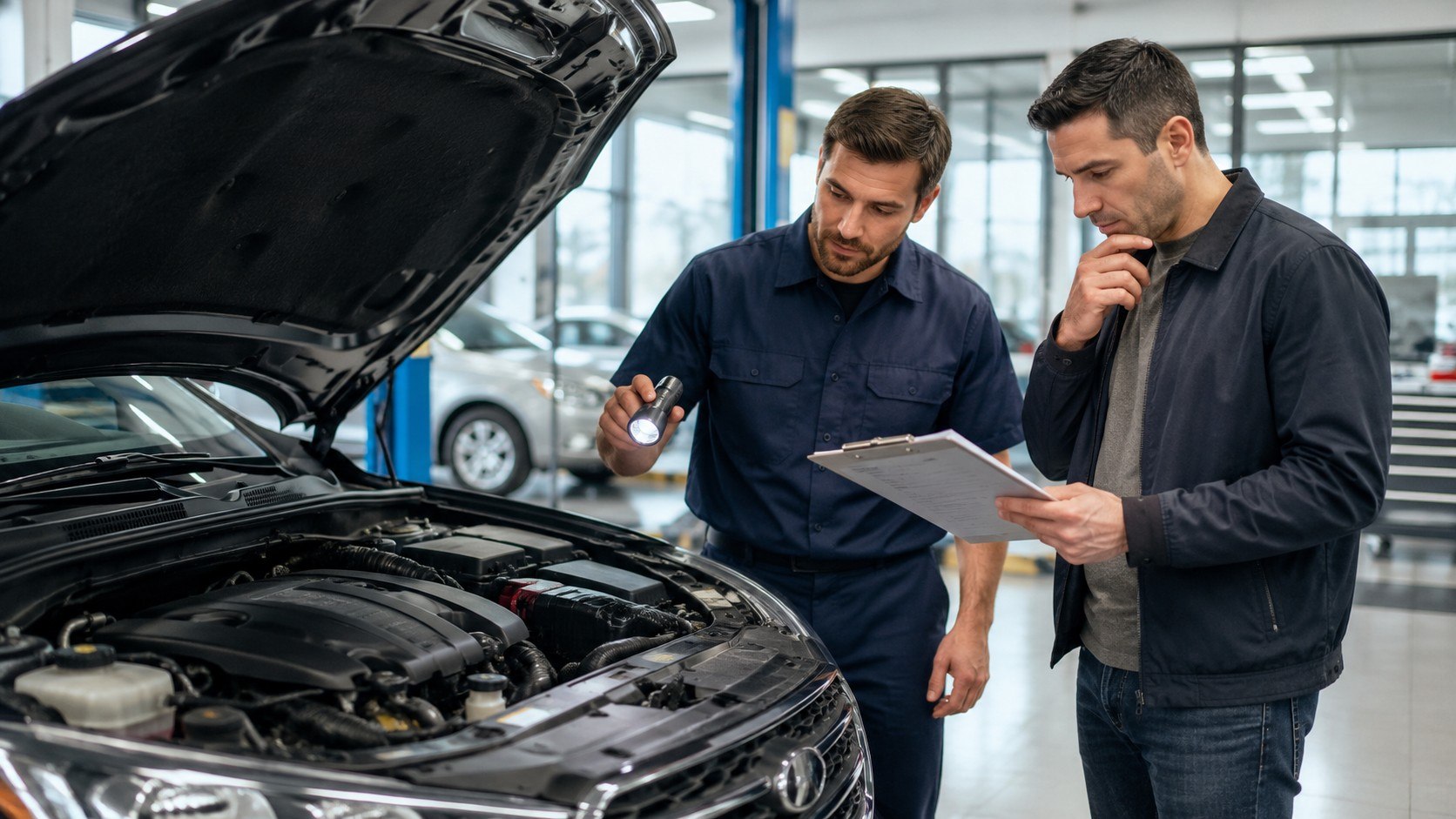
Step 5: Arrange an Independent Pre-Purchase Inspection
What to do: Hire an independent mechanic to perform a pre-purchase inspection. Ask for a written report covering safety, mechanical condition, structural damage, leaks, tires, brakes, electronics, and diagnostic codes.
Why it matters: A PPI can reveal defects that remain invisible during a short parking-lot inspection.
Common mistake: Do not use only the seller’s mechanic. Independence matters because the inspector should answer to the buyer.
A standard inspection may take 60–120 minutes. Pricing varies by region, vehicle type, shop, and inspection depth. Verify the current quote before booking.
Specialist inspections can cost more for Porsche, BMW, Mercedes-Benz, Land Rover, Tesla, diesel trucks, modified vehicles, or classic cars. That extra cost may prevent a much larger repair.
Ask whether the inspection includes:
- A scan of all available control modules.
- A lift inspection of the frame, suspension, exhaust, and underbody.
- Brake-pad and tire-tread measurements.
- Fluid condition and visible leak checks.
- Battery and charging-system testing.
- Cooling, heating, and air-conditioning operation.
- Evidence of repainting, welding, corrosion, or flood exposure.
- A road test at city and highway speeds.
- Photos and estimated repair priorities.
After receiving the report, separate safety issues from maintenance and cosmetic defects. Failed brakes require immediate action, while a scratched bumper usually does not.
Request price estimates for urgent repairs. Use those figures to renegotiate or leave the deal.
Do not assume a dealership certification replaces an independent inspection. Certification programs differ between manufacturers, franchise dealers, and independent lots.
A seller who refuses a reasonable PPI creates a major warning sign. The inconvenience of inspection is smaller than the risk of engine, transmission, frame, or battery failure.
The inspection fee is not wasted when you reject a bad car. It purchased information before the expensive commitment.
Step 6: Test-Drive the Car Under Real Conditions
What to do: Start the vehicle cold, drive on local streets, reach highway speed, brake firmly, reverse, park, and test every control.
Why it matters: Some defects appear only during startup, acceleration, braking, steering, or higher-speed operation.
Common mistake: Do not let the seller warm the engine before arrival. Cold starts can expose smoke, noise, weak batteries, and rough operation.
Check dashboard warning lights before starting. Every main warning light should illuminate briefly and then switch off normally.
Listen for clunks, grinding, humming, rattling, or delayed transmission engagement. Confirm the steering tracks straight and braking feels stable.
Step 7: Review the Contract, Buyers Guide, and Warranty
What to do: Read every document before signing. For dealer purchases, compare the FTC Buyers Guide with the contract, warranty, financing terms, and advertised price.
Why it matters: Verbal statements can disappear once the final contract controls the transaction.
Common mistake: Do not sign blank forms or documents containing unexplained fees, optional products, or missing promises.
“Spoken promises are difficult to enforce. Ask the dealer to put all promises in writing.”
Federal Trade Commission, Buyers Guide for used-car dealer transactions.
The FTC’s official used-car guidance explains Buyers Guides, warranties, history reports, financing, and dealer disclosures. The guide should state whether the vehicle is sold “as is” or with warranty coverage.
Check the out-the-door price. Dealer documentation fees, protection packages, service contracts, financing products, and accessories can change the final amount.
Step 8: Complete Payment and Title Transfer Together
What to do: Exchange payment only when the signed title, lien release, bill of sale, keys, and required disclosures are ready. File the title and registration application within your state’s deadline.
Why it matters: Possession of the car does not automatically establish clear legal ownership.
Common mistake: Do not drive for weeks using the seller’s plates, insurance, or incomplete title documents.
Meet at a bank, lender, DMV office, MVA branch, county tax office, or licensed title service when possible. Secure locations also reduce payment and identity risks.
Before leaving, photograph or scan the signed title and bill of sale. Confirm the odometer entry, sale price, date, names, signatures, and VIN.
Used-Car Checks by Purchase Type
| Purchase type | Main protection | Common risk | Best meeting point |
|---|---|---|---|
| Licensed dealership | Buyers Guide, written warranty, final contract | Added products or changed financing terms | Dealership finance office |
| Private seller with clear title | Seller ID, title match, PPI, bill of sale | Undisclosed damage or title jumping | DMV office or bank |
| Private seller with loan | Lender-controlled payoff and lien release | Paying the seller before clearing the lien | Lender branch |
| Out-of-state vehicle | State title rules, VIN verification, tax review | Inspection, emissions, or registration delays | Buyer’s state title agency |
| Rebuilt vehicle | Repair records, specialist PPI, insurance quote | Structural damage and limited coverage | Inspection shop and title office |
Dealer purchases provide more paperwork but not automatic protection from every defect. Read the warranty and financing documents separately.
Private sales can offer lower prices, although the buyer carries more verification responsibility. State consumer protections may differ from dealer rules.
Out-of-state purchases require additional planning. Confirm tax credit, emissions testing, VIN inspection, temporary permits, and title acceptance before traveling.
Rebuilt vehicles may be legal and usable after proper repairs. However, financing, insurance, resale value, and safety evaluation can become more difficult.
Complete the insurance quote before paying. Some carriers restrict comprehensive or collision coverage for rebuilt vehicles.
Troubleshooting Used-Car Purchase Problems
Stop the transaction when a document, inspection, or payment issue remains unresolved. Most serious losses begin when the buyer accepts an informal workaround.
- The seller has no title: Require a duplicate title or state-approved ownership process before payment.
- The title shows an active lien: Contact the lender using independently verified details and arrange a controlled payoff.
- The seller refuses a PPI: Leave the deal unless the vehicle can be independently inspected before purchase.
- The VIN does not match: Stop immediately and contact the relevant motor-vehicle agency when necessary.
- The dealer changes the price: Request the complete out-the-door price and remove unauthorized products before signing.
Do not let a deposit create false commitment. A deposit should have written terms covering refund conditions, inspection rights, and the deadline.
Save screenshots of the listing before it disappears. They can document advertised mileage, condition, price, warranty, and included equipment.
Communicate through traceable channels when possible. Text messages and emails create a better record than telephone conversations.
Report suspected dealer misconduct to the appropriate state regulator or attorney general. Serious fraud may also justify an FTC complaint.
For private fraud, preserve documents and payment records. Contact local law enforcement or the title agency when identity or vehicle theft is suspected.
FAQ
How much does a pre-purchase inspection cost in 2026?
Prices depend on location, vehicle type, and inspection depth. A basic PPI often costs less than a specialist inspection for luxury, electric, or classic vehicles. Request a written 2026 quote and confirm what testing is included.
Can I check whether a used car has a lien by VIN?
A VIN history report may provide useful title information, but it may not reveal every current lien. Check the title, state motor-vehicle records, and lender documentation before paying.
Should I buy a used car with a rebuilt title?
Only after reviewing repair documentation, obtaining a specialist inspection, and confirming insurance. Rebuilt vehicles may carry safety, financing, coverage, and resale limitations.
Is CARFAX enough when buying a used car?
No. CARFAX and similar reports depend on available reported data. Combine the report with NMVTIS information, a lien check, document verification, and an independent PPI.
What payment method is safest for a private car sale?
A verified bank transaction or cashier’s check exchanged during the documented title transfer can reduce risk. For financed cars, direct lender payoff is safer than paying the seller.
Can a seller legally sell a car that still has a loan?
Yes, but the lender’s secured interest must be resolved. Use a verified payoff process and obtain proof that the lien will be released.
Earlier we wrote about How to Sell a House with a Mortgage in 2026: Payoff, Equity and Closing Steps