

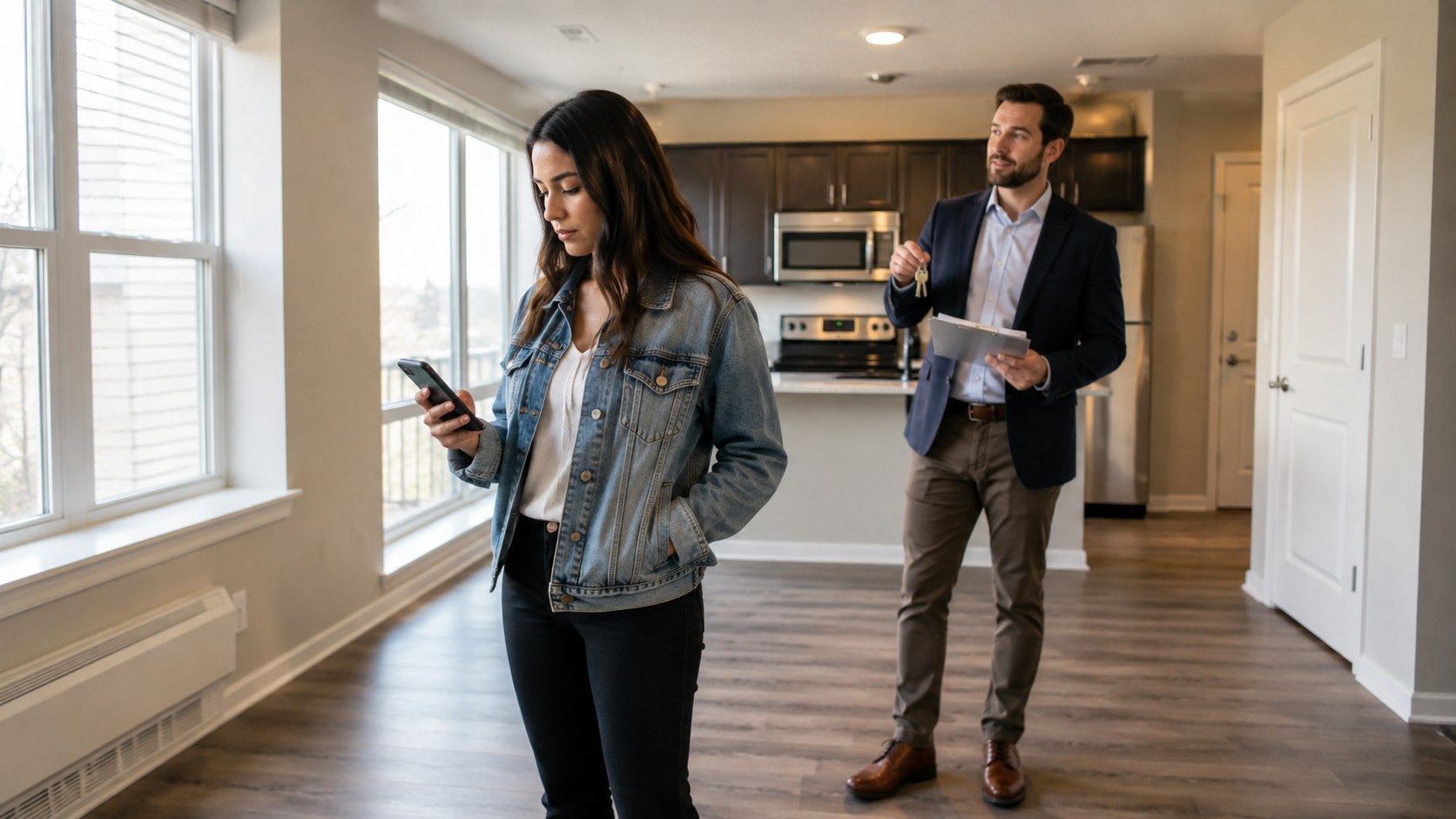
How to find an apartment in USA without scams starts with 3 checks: compare the price, verify the property, and verify the person collecting money. A careful renter can complete the basic screening in about 20–30 minutes before applying. Never treat an attractive Zillow or Apartments.com listing as proof that the person contacting you controls the property, as noted by the editorial team at Baltimore Chronicle.
Use Zillow, Apartments.com, property-management websites, and local listings to discover apartments. Then independently confirm the address, landlord, price, viewing access, lease terms, and payment method. If someone wants money before those checks, stop the transaction.
Key takeaways
- Search the full street address separately before paying any application fee, deposit, holding fee, or first month’s rent.
- Listings priced far below nearby apartments deserve additional verification, especially when the landlord creates urgency.
- Never pay a supposed landlord through cryptocurrency, gift cards, or required wire transfers before independently verifying the rental.
The platform where you found an apartment is only the starting point. Scammers can copy photographs and descriptions from legitimate advertisements. They can also change the phone number and email address. Some even use genuine homes currently listed for sale. A clean-looking listing therefore does not replace independent verification.
What you need
- A Zillow or Apartments.com account for searching and comparison.
- Google Maps or another mapping service for checking the address.
- Your phone for calls, photographs, and video tours.
- Photo identification for legitimate applications.
- Recent pay stubs, income records, or employment documentation.
- A realistic monthly housing budget, including utilities and required fees.
- 20–30 minutes for verification before submitting money or sensitive information.
Keep your documents ready, but do not send everything immediately. A legitimate application may eventually require identification and financial information. That does not mean every person answering a listing should receive your Social Security number. Confirm the property and recipient first. Keep screenshots of the advertisement and important messages.
Rental searches become safer when discovery and payment are treated as separate stages. Finding an apartment is not the same as verifying it.
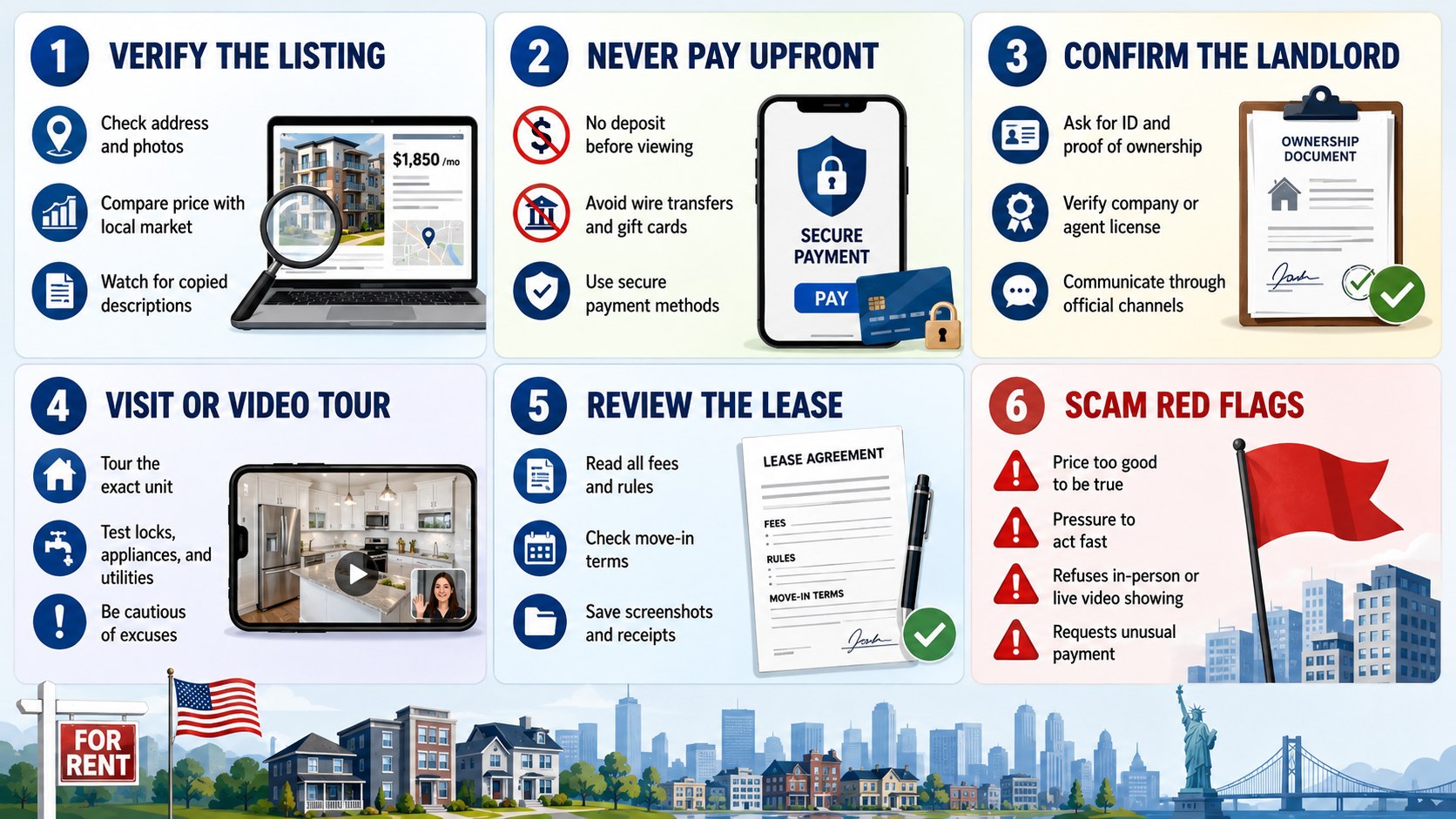
Step 1: How to Find an Apartment in USA Without Scams Starts With Price Checks
Start by comparing several similar apartments within the same neighborhood. Match bedrooms, bathrooms, approximate square footage, amenities, parking, and building type. Zillow and Apartments.com make that comparison easier because many competing listings appear together.
Why it matters: fake listings often use unusually attractive prices to generate quick responses. The Federal Trade Commission says scammers may advertise properties below market rent to attract renters.
A useful comparison needs local context. Baltimore Chronicle’s 2026 Baltimore rental guide found major price differences between neighborhoods. One-bedroom apartments ranged from roughly $800–$1,200 in some lower-cost areas to $1,800–$2,400 or more elsewhere.
The same principle applies nationally. A $1,400 apartment may be ordinary in one Ohio market and suspiciously cheap elsewhere. California, New York, Texas, Florida, Maryland, and other states have very different rental markets.
Common mistake: assuming a bargain must be legitimate because several professional photographs appear in the listing.
Step 2: Search the Address Outside Zillow or Apartments.com
Copy the complete street address and search it independently. Look for the same property on another rental platform, the management company’s website, county records, and real estate sales pages.
Why it matters: the FTC describes a common fake apartment listing method where criminals copy legitimate advertisements. They replace the real agent’s contact information with their own.
| What you find | Risk level | What to do next |
|---|---|---|
| Same rent and same management company | Lower | Contact the company independently |
| Same apartment with different phone numbers | High | Verify through the official company website |
| Property listed for sale, not rent | High | Stop and investigate ownership |
| Price far below comparable units | Medium to high | Request viewing and ownership verification |
| Address cannot be verified | Very high | Do not send money |
Differences do not automatically prove fraud. Property managers sometimes syndicate listings across several websites. Prices can also change during leasing campaigns. However, different contact names require an explanation. Different payment instructions require even more scrutiny. A missing address is another serious warning sign. Treat unresolved inconsistencies as a reason to walk away.
Step 3: Verify the Landlord or Property Manager
Do not rely only on the phone number supplied inside the advertisement. Search the management company’s official name independently and call its published office number.
Why it matters: a scammer can impersonate a real leasing agent. A recognizable company logo proves very little when copied into an email or message.
If the building is operated by a national company such as Greystar, AvalonBay, Equity Residential, or another large manager, locate its official property page yourself. Ask whether the unit number is genuinely available.
Private landlords require a different check. County assessor or property-tax records may help identify the recorded owner. Availability varies by jurisdiction. The FTC also recommends checking public ownership records when dealing with a private landlord.
Common mistake: calling a verification number supplied by the same stranger being verified. Independent contact information is essential.
Before paying a deposit, also understand what local law permits. Baltimore Chronicle’s guide to security deposit rules in 2026 explains why limits differ between states.
Step 4: See the Apartment Before Sending Money
Request an in-person tour whenever practical. Confirm the building number, apartment number, condition, appliances, locks, parking, and utilities.
Why it matters: refusing every reasonable viewing request is one of the clearest rental scam red flags. Scammers often claim they are overseas or temporarily unavailable.
A video tour is useful when moving hundreds of miles. Ask the agent to show specific details live. Request the apartment number, view from a window, kitchen sink, building hallway, and exterior entrance.
Self-guided tours require caution. The FTC warns that scammers may exploit legitimate self-tour systems. Access to a lockbox therefore does not automatically prove ownership.
Common mistake: believing possession of a door code proves the person has authority to lease the apartment.
The FTC advises renters to investigate listings before paying and to walk away when someone pressures them into a rapid decision.
Source: Federal Trade Commission, Consumer Advice, rental listing scam guidance.
Step 5: Read the Lease and Calculate the Real Move-In Cost
Ask for the complete lease before transferring a large deposit. Confirm the legal landlord, rental address, monthly rent, lease term, security deposit, utilities, parking, pet charges, and required recurring fees.
Why it matters: a fake lease can look convincing. The document still needs to match the verified owner or management company.
Do not focus only on advertised rent. A legitimate $1,650 apartment could also require parking, utilities, pet rent, or building fees. Those charges should appear clearly before you commit.
The FTC’s 2026 guidance also tells renters to ask which mandatory fees are excluded from advertised rent. Get important charges in writing.
Common mistake: signing immediately because the agent says another applicant is ready to take the apartment.
If a move is already approaching, Baltimore Chronicle’s moving checklist also covers address changes, transportation, utilities, and arrival logistics.
Pressure is not verification. A genuine apartment can still be lost to another applicant, but fear of missing out should never replace basic checks.
Step 6: Pay Only After the Property and Recipient Are Verified
Confirm exactly who receives the payment and why. Match the payment recipient with the lease, property manager, or verified landlord.
Why it matters: the FTC rental scam guidance identifies unusual payment demands as a major warning. Gift cards, cryptocurrency, and required wire transfers provide little practical recovery protection.
The FTC reported nearly 65,000 rental scam reports since 2020, with approximately $65 million in reported losses. The agency says this likely represents only part of the actual harm. Its rental scam analysis also found that many victims encountered copied or fabricated listings.
Use payment methods connected to a documented business or contractual relationship. Keep receipts and confirmation emails. Never send extra money because someone suddenly claims the deposit must arrive within minutes.
Common mistake: assuming Zelle, Venmo, Cash App, or another familiar payment service guarantees the recipient is legitimate.
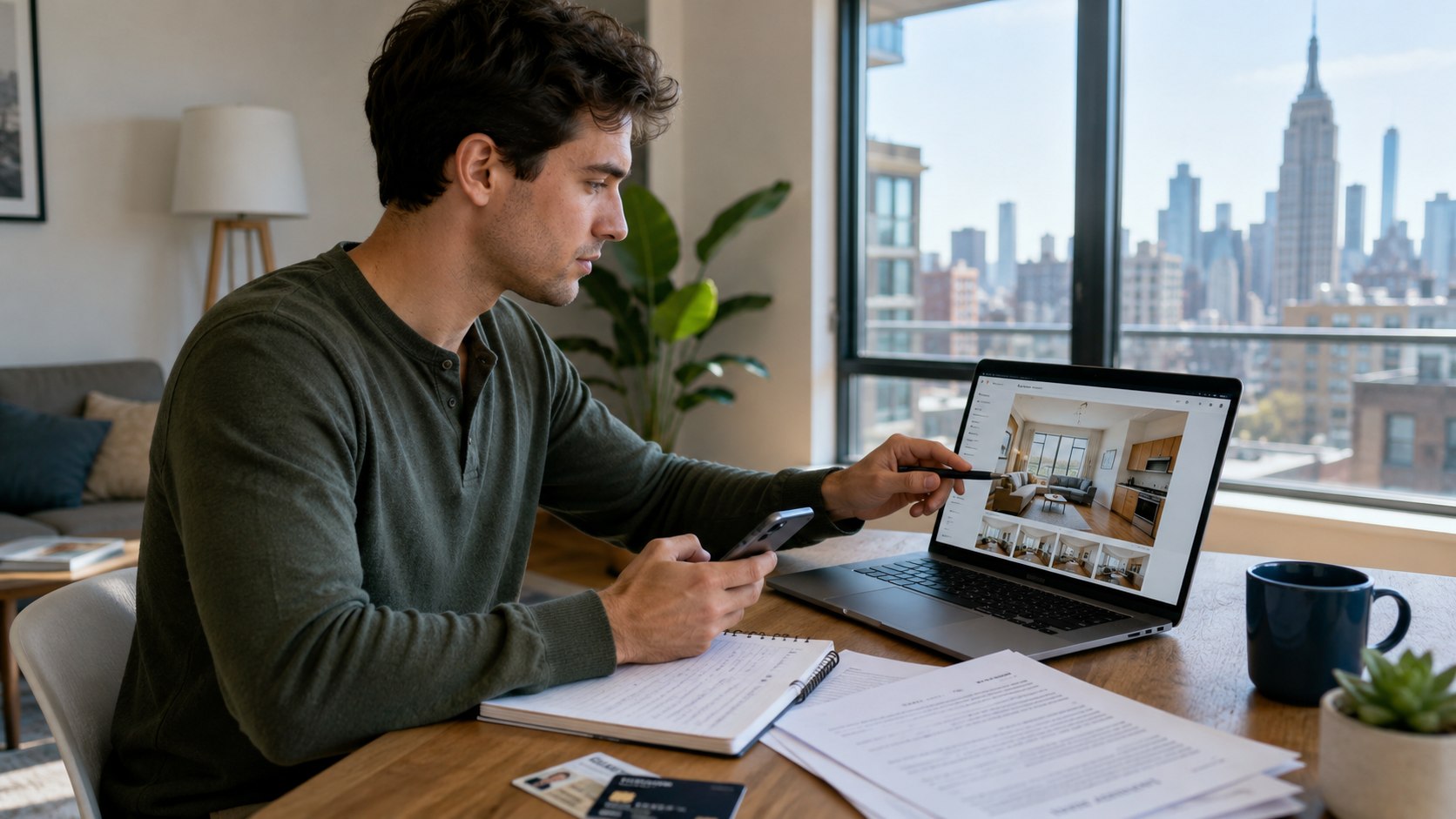
Troubleshooting: What to Do When Something Feels Wrong
Rental scams are rarely exposed by one detail alone. Look for combinations of inconsistent pricing, identity problems, unusual payment instructions, and artificial urgency.
- The landlord refuses a viewing: request a live tour or independently verified local representative.
- The same apartment appears under different names: contact the legitimate property manager directly.
- The owner claims to be overseas: verify ownership before continuing and never treat the story as proof.
- Someone demands crypto or gift cards: stop the transaction and preserve screenshots.
- Your documents were already sent: monitor accounts and consider identity-protection steps if sensitive data was exposed.
Save the listing URL before it disappears. Take screenshots of payment requests and conversations. Record the email address and phone number used. Report the listing to the platform where you found it. You can also report suspected rental fraud through the Federal Trade Commission. If money was transferred, contact the payment provider immediately.
FAQ About Finding Apartments Without Rental Scams
Is Zillow safe for apartment hunting?
Zillow is a legitimate property marketplace, but individual listings still require verification. Treat Zillow as a discovery platform rather than proof of ownership. Search the address separately and verify the landlord before paying.
Is Apartments.com safer than Craigslist or Facebook?
Established rental platforms provide useful listing infrastructure, but no platform removes every risk. The same verification rules apply. Check the address, management company, viewing access, lease, and payment recipient.
How can I tell whether an apartment listing is fake?
Look for unusually low rent, inconsistent contact information, refused tours, copied photographs, urgent payment requests, and unusual payment methods. Several red flags together create a much stronger warning.
Should I pay an application fee before viewing an apartment?
Application practices vary by property and market. Before paying, confirm that the property exists and the company actually manages it. Understand exactly what the fee covers.
Can a legitimate landlord ask for a security deposit?
Yes. Security deposits are normal, but state rules differ. Verify the landlord, lease, amount, and payment recipient before transferring money. Check current law in your state during 2026.
What should I do if I already paid a rental scammer?
Contact the bank or payment provider immediately and ask whether the transfer can be stopped. Preserve messages, receipts, and screenshots. Report the account to the platform and submit a fraud report to the FTC.
Finding an apartment without scams requires more than spotting strange grammar or an unbelievable price. The strongest defense is independent verification before money or sensitive documents change hands. Use Zillow and Apartments.com to search widely, but verify narrowly. A legitimate rental should survive basic questions about its address, owner, lease, viewing access, and payment recipient.
Earlier we wrote about How to Cancel Postmates Uber One 2026: Renewal Deadline, Refunds and Troubleshooting