

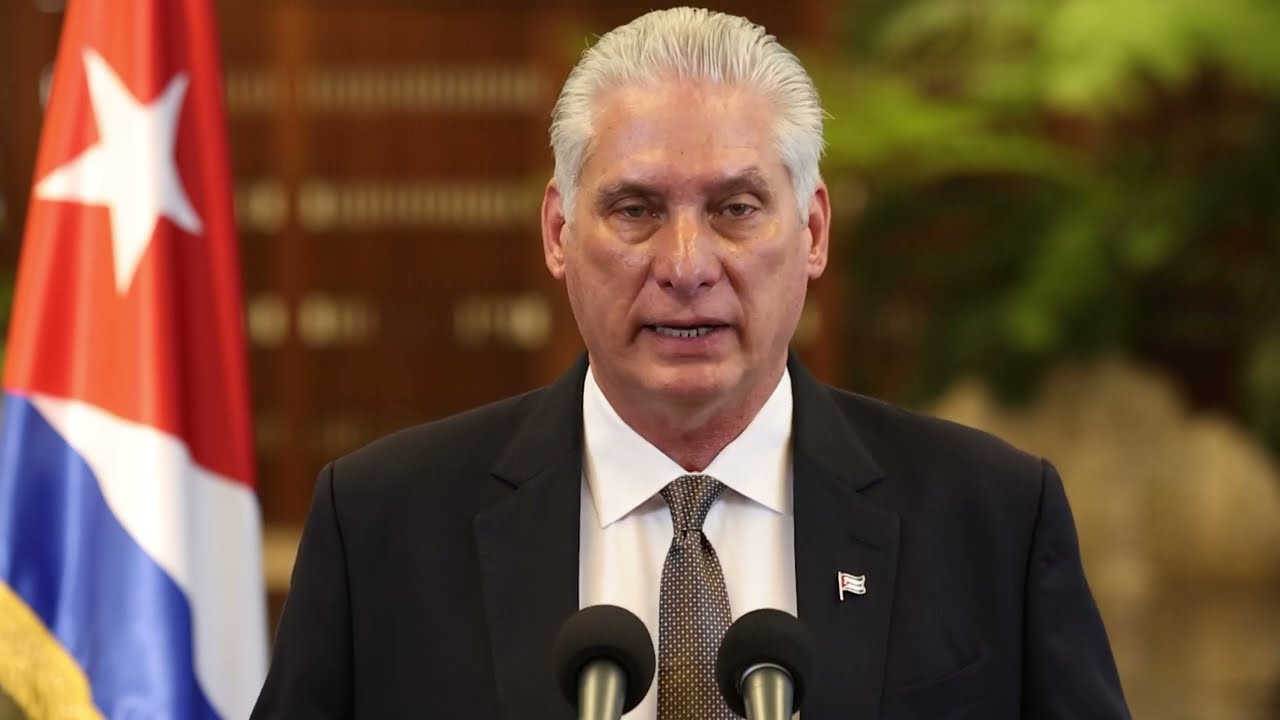
In an unprecedented development, Cuba’s President Miguel Díaz-Canel has publicly confirmed that Cuban officials have engaged in confidential discussions with representatives of the United States government, signaling a potential shift in bilateral relations, reports Baltimore Chronicle via ABC News. Speaking during a nationally televised address on Friday, Díaz-Canel acknowledged that these high-level talks are still in an initial stage and stressed that negotiators from both nations are working to outline a structured agenda, aiming to prevent misinformation and speculation.
The Trump administration, meanwhile, has maintained pressure on Cuba, describing the island as a nation struggling with a severe energy deficit following the loss of Venezuelan support and the cessation of oil shipments from Mexico. A senior official told ABC News that the administration sees a potential deal as feasible, emphasizing that Cuba’s leadership is eager to negotiate. Since late January, Washington has effectively imposed a fuel blockade, exacerbating an acute energy crisis; Díaz-Canel reported that no fuel shipments have reached the island for over three months.
President Donald Trump has personally indicated that he appointed Secretary of State Marco Rubio to spearhead negotiations with Cuba, asserting that the regime could “fall pretty soon.” Rubio and his senior aides have reportedly met with Cuban representatives multiple times in recent months, although details of any proposed agreement remain limited. Trump has suggested that a “friendly takeover” could be one avenue for change, while not entirely dismissing military intervention.
Rubio, however, has signaled that the administration may consider a gradual transformation rather than an abrupt regime change. He emphasized during a February press briefing that Cuba “needs to change, but not all at once,” suggesting that a measured approach could yield stability. Experts familiar with U.S.-Cuba relations, such as Ted Piccone of the Brookings Institution, note that even among advocates for regime change, there is a preference for a managed transition rather than a sudden collapse.
The ongoing energy crisis on the island might provide a window for negotiations, Piccone argues, particularly if the U.S. can facilitate fuel delivery directly to the private sector while bypassing the Cuban government. Lee Schlenker of the Quincy Institute for Responsible Statecraft points to the Vatican as a potential mediator, noting that previous efforts by the Holy See led to the release of 51 political prisoners. Schlenker suggests that a Vatican-mediated process could gradually build mutual trust and verifiable guarantees, minimizing harm to the civilian population during the diplomatic transition.
As the talks continue, both sides appear to be exploring a combination of political negotiation, economic pressure, and strategic oversight, with the objective of achieving tangible changes without triggering a destabilizing collapse on the island.
Earlier we wrote that Google Maps Rolls Out Gemini AI “Ask Maps” and Immersive 3D Navigation for Smarter Route Planning