

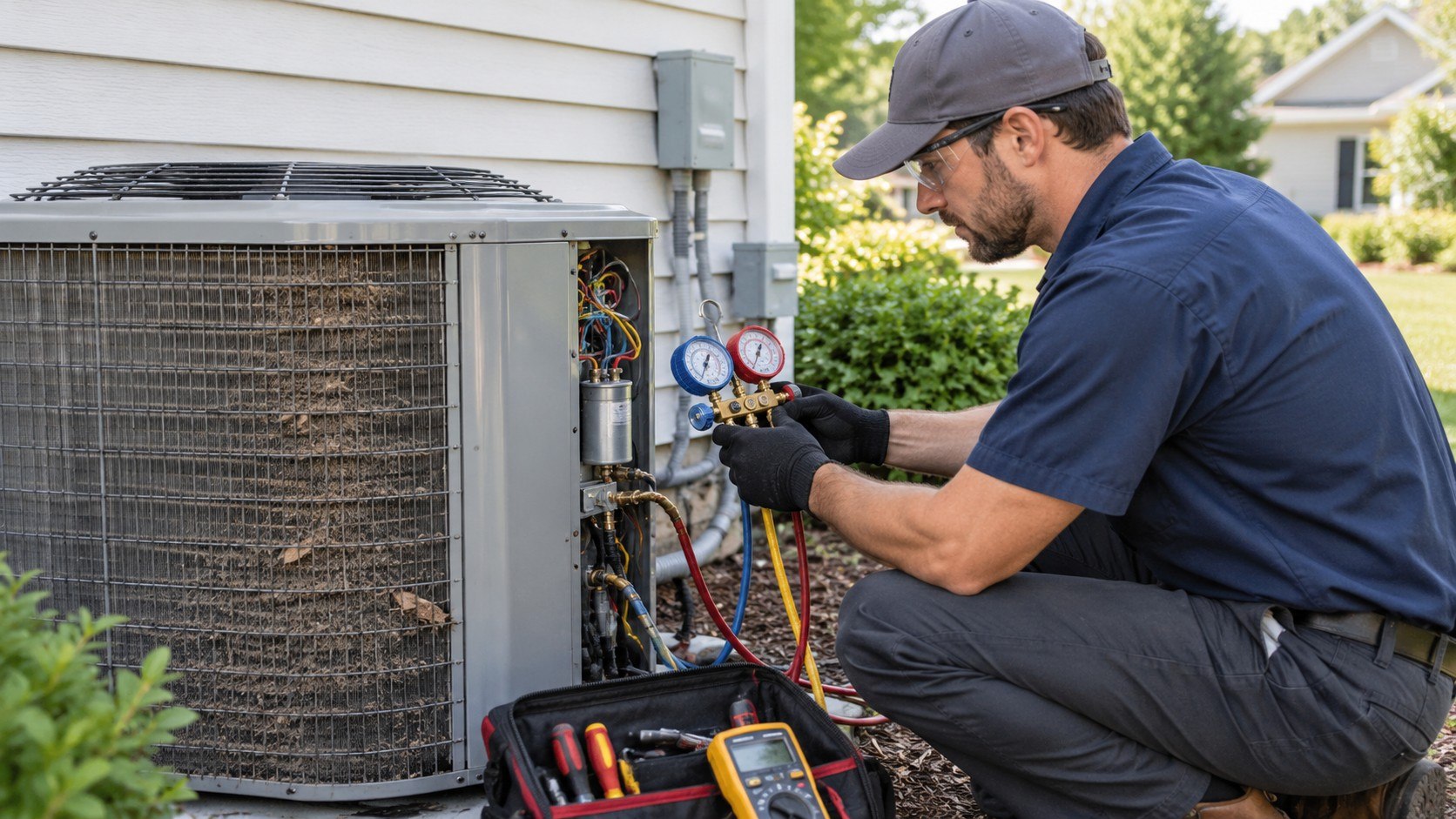
How to fix an HVAC that is blowing warm air starts with 4 checks: thermostat settings, airflow, electrical power, and the outdoor condenser. Most homeowners can complete these checks within 20 to 40 minutes. They can often identify whether the problem is DIY-safe or needs professional service, as the editors at Baltimore Chronicle note.
An air conditioner that runs but sends warm air through the vents does not automatically mean the compressor has failed. A thermostat left on “Fan,” a clogged filter, a tripped condenser breaker, or blocked outdoor coils can create similar symptoms. Refrigerant leaks and electrical failures require a technician, so the order of diagnosis matters.
Key takeaways
- Check the thermostat, filter, breaker, and outdoor unit before paying for an HVAC service visit.
- Ice, hissing sounds, repeated breaker trips, or a silent condenser usually point beyond routine homeowner maintenance.
- Do not add refrigerant yourself. EPA rules and system-specific refrigerants make professional diagnosis the safer approach.
What you need
The first checks require little equipment. Keep the HVAC manual nearby if the thermostat, breaker labels, or filter location are unfamiliar.
- Clean replacement air filter in the correct size and MERV rating
- Flashlight
- Work gloves
- Garden hose with normal household pressure
- Thermostat or thermostat app access
- Electrical panel access
- About 20 to 40 minutes
- HVAC technician if refrigerant, wiring, capacitors, or compressor problems appear
A replacement 1-inch residential filter commonly costs about $5 to $25 in 2026, depending on size and filtration level. Premium filters can cost more. Do not automatically install the highest MERV rating available because excessive resistance can reduce airflow on some systems.
The outdoor unit should also be accessible without standing in water or working around damaged electrical equipment. Keep hands away from fan blades, capacitors, wiring, and refrigerant connections.
The safest DIY diagnosis stops where sealed refrigerant lines and energized electrical components begin.
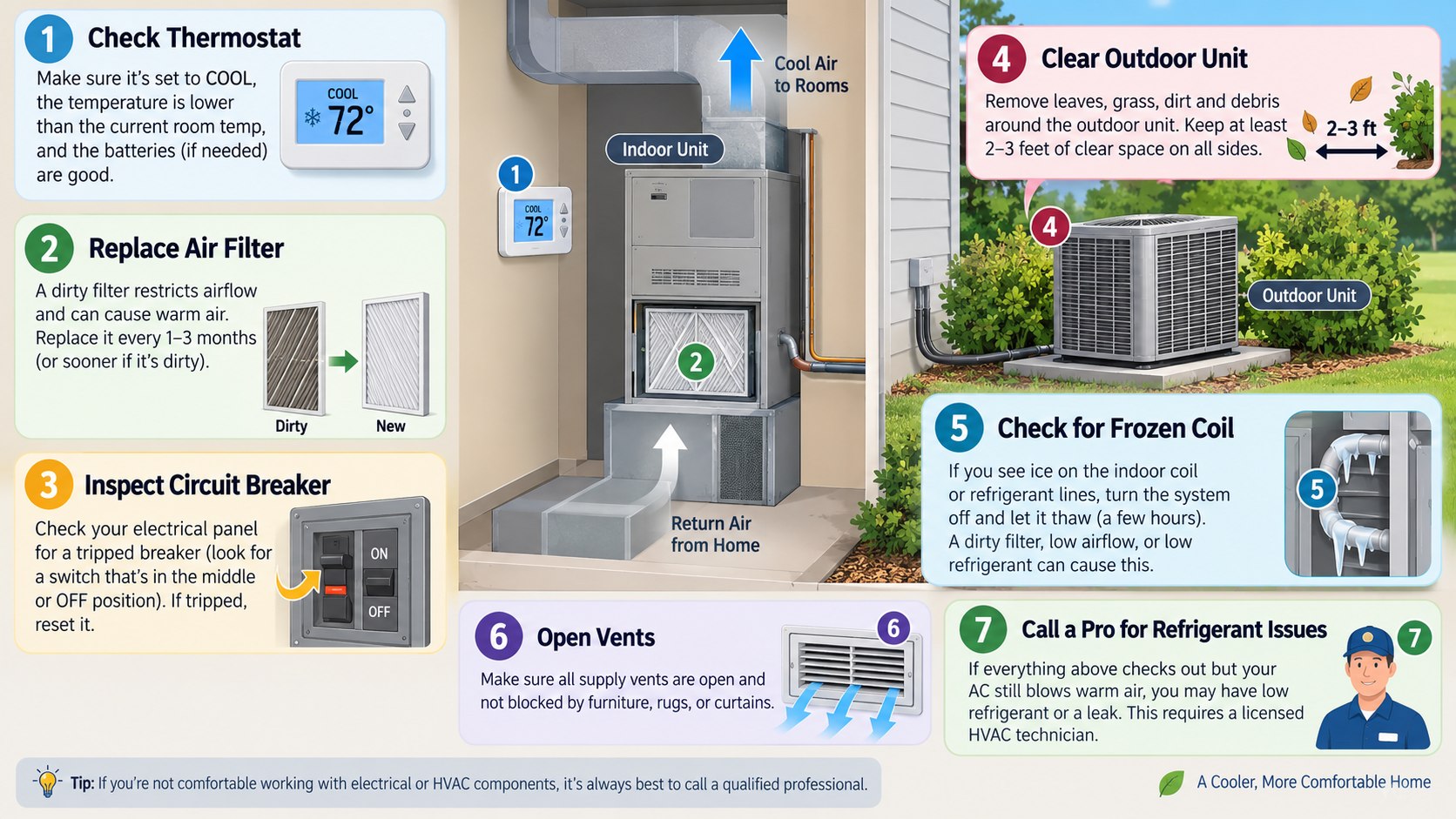
Step 1: How to Fix an HVAC That Is Blowing Warm Air at the Thermostat
Set the thermostat to “Cool,” then set the temperature several degrees below the current indoor temperature. Set the fan to “Auto,” not “On.” A fan left continuously on can circulate room-temperature air between cooling cycles, making an otherwise functional system appear broken.
Wait about 5 minutes after changing settings. Many thermostats and HVAC control boards use a compressor protection delay that prevents immediate restarting.
This matters because thermostat mistakes are among the cheapest causes of an AC blowing warm air. Carrier lists incorrect thermostat settings among the common reasons a system can run without producing cold air.
Avoid rapidly switching between “Cool,” “Off,” and “Heat.” Repeated cycling can complicate diagnosis and may stress the equipment.
Step 2: Check the HVAC Filter and Return Airflow
Turn the system off and locate the return-air filter. Replace it if the surface is heavily gray, packed with dust, or visibly restricting airflow. Confirm that the airflow arrow points toward the furnace or air handler.
Restricted airflow can reduce the amount of warm household air reaching the evaporator coil. In severe cases, coil temperature drops enough for moisture to freeze, which further blocks airflow.
ENERGY STAR recommends inspecting, cleaning, or changing central HVAC filters regularly. Its HVAC maintenance checklist also identifies dirty coils and airflow problems as cooling concerns.
“A dirty filter can increase energy costs and damage your equipment, leading to early failure.”
ENERGY STAR, residential heating and cooling maintenance guidance.
Do not stack filters or force a thick filter into a slot designed for another size.
Step 3: Check Whether the Outdoor Condenser Is Running
Turn cooling back on and go outside. The condenser fan should normally operate while the compressor is running. If indoor vents move air but the outdoor unit remains silent, the house may simply be circulating uncooled air.
Check the HVAC breakers in the electrical panel. Central systems can have separate circuits for indoor and outdoor equipment, so the blower may still work after the condenser circuit trips.
If a breaker is clearly tripped, switch it completely off before resetting it once. A breaker that immediately or repeatedly trips signals an electrical fault that needs professional diagnosis. Do not keep resetting it.
The same caution applies when the condenser hums but its fan does not start. A failed capacitor, motor, contactor, or compressor can cause that symptom, and the cabinet can contain dangerous stored electrical energy.
Indoor airflow without outdoor condenser operation is a useful diagnostic clue, not proof that the entire HVAC system needs replacement.
Step 4: Clear Debris From the Outdoor Coil
Shut off power before working around the condenser. Remove leaves, grass clippings, cottonwood debris, and vegetation blocking the exterior coil. Maintain open space around the cabinet so the fan can reject heat effectively.
A dirty condenser cannot release indoor heat efficiently. That can produce long cooling cycles, poor performance, and warmer supply air during demanding weather in states such as Texas, Arizona, Florida, and Maryland.
For basic cleaning, use normal garden-hose pressure after disconnecting power. Never use a pressure washer because its concentrated stream can bend the thin aluminum fins.
Avoid removing electrical panels or spraying control components. Cleaning accessible exterior surfaces is routine maintenance; opening electrical compartments changes the risk entirely.
| Symptom | Possible cause | DIY action | Typical 2026 cost direction |
|---|---|---|---|
| Warm air, thermostat on Fan | Incorrect setting | Set Cool and Auto | $0 |
| Weak airflow | Clogged filter | Replace correct filter | About $5–$25+ |
| Indoor fan works, condenser does not | Breaker or electrical fault | Check breaker once | $0 DIY check; repair varies |
| Outdoor coil packed with debris | Poor heat rejection | Clean accessible coil | Minimal DIY cost |
| Ice on refrigerant line | Airflow or refrigerant issue | Turn cooling off | Professional diagnosis recommended |
| Hissing and poor cooling | Possible refrigerant leak | Call certified technician | Often several hundred dollars or more |
These figures are practical 2026 consumer ranges rather than regulated national prices. Labor rates differ sharply between markets such as Phoenix, Dallas, Miami, Baltimore, and New York. System age and refrigerant type also affect the bill.
A simple filter problem costs little. Electrical diagnosis, refrigerant leak detection, coil work, and compressor repairs can move into hundreds or thousands of dollars. Carrier, Trane, Lennox, Rheem, Goodman, and York systems can also have different parts costs and warranty conditions.
Large repairs deserve a written diagnosis rather than an immediate authorization. Ask which component failed, what testing established the failure, and whether labor and parts warranties apply.
Older systems deserve another calculation. If a major compressor or coil repair approaches a meaningful share of replacement cost, compare the repair with the price of newer equipment.
Step 5: Look for a Frozen Evaporator Coil or Refrigerant Problem
If the air conditioner is running but not cooling, inspect the accessible insulated refrigerant line and air-handler area. Visible ice, frost, or unusual water after shutdown can indicate a frozen evaporator coil.
Turn cooling off if ice is present. Do not chip ice away with tools. Metal evaporator fins and refrigerant tubing are easily damaged.
A frozen coil can result from a clogged filter, insufficient airflow, blower problems, dirty coils, or low refrigerant. Simply waiting for the ice to melt does not fix the underlying cause.
Hissing or bubbling near refrigerant lines can also signal a leak. The US Environmental Protection Agency explains residential refrigerant servicing requirements in its guidance for homeowners and consumers.
Do not buy a refrigerant can and “top off” a central AC system. Refrigerant does not normally disappear through routine operation, so a low charge can indicate leakage. Older R-22 equipment presents additional cost and availability considerations in 2026.
Step 6: Decide Whether to Repair, Service, or Shut the System Down
After completing the basic checks, run the system through one normal cooling cycle. Compare airflow at several vents and listen for changes at the indoor and outdoor units. Cooling should improve rather than deteriorate as the cycle continues.
If the system still produces warm air from HVAC vents, schedule service and describe the observations precisely. Tell the technician whether the condenser runs, whether ice appeared, whether a breaker tripped, and when the filter was changed.
Stop operating the equipment immediately after electrical burning smells, smoke, loud grinding, repeated breaker trips, or severe compressor noises. Water near electrical equipment also warrants shutdown.
For a 2026 service call, ask for diagnostic fees before dispatch. Also ask whether that fee is credited toward an approved repair. Homeowners should obtain a second estimate for major compressor, evaporator coil, or full-system work when conditions allow.
Avoid approving an expensive refrigerant recharge without asking why the charge became low. A lasting repair addresses the leak or documented system fault, not only the symptom.
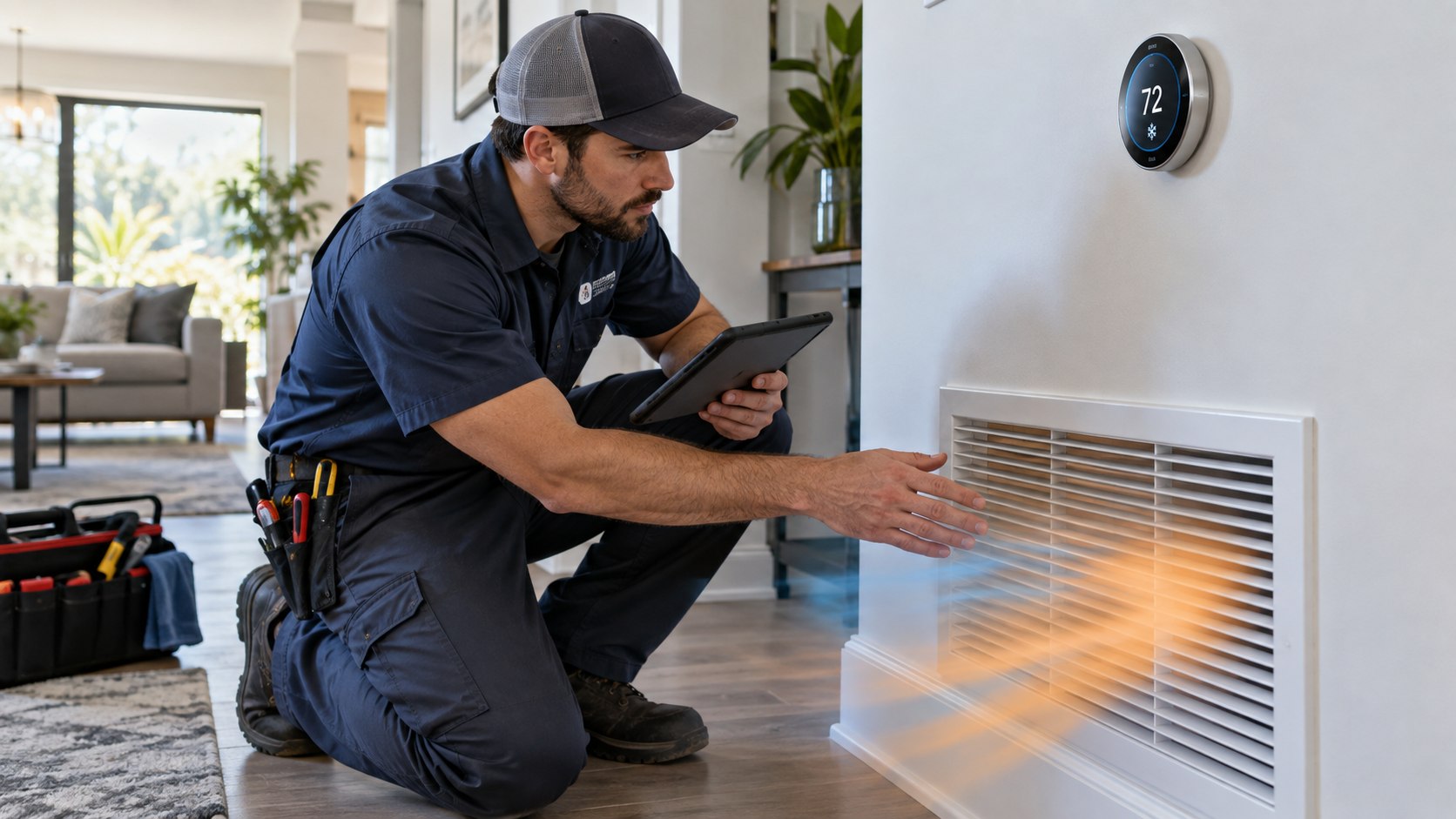
Troubleshooting an HVAC That Still Blows Warm Air
The pattern of symptoms can narrow the problem before a technician arrives. These scenarios cover several common combinations.
- AC not blowing cold air but airflow is strong: check the outdoor condenser, thermostat mode, and refrigerant-related symptoms.
- Air starts cold, then becomes warm: inspect for icing, restricted airflow, or an outdoor unit stopping during the cycle.
- Airflow is weak throughout the house: inspect the filter and return grilles before assuming refrigerant failure.
- Cooling fails only during extreme afternoon heat: check condenser cleanliness, indoor temperature trends, duct losses, and system sizing.
- Heat pump blows cool or lukewarm air in heating mode: diagnose it differently from a central AC cooling failure.
Supply air does not need to feel refrigerator-cold to cool a home. What matters is whether the HVAC system creates a consistent temperature difference between return and supply air while controlling humidity.
A house that cools slowly can also have duct leakage, undersized equipment, poor insulation, or unusually high solar gain. Those issues differ from a sudden change where previously cold vents begin blowing warm air.
Renters should document the indoor temperature, thermostat setting, and time the failure started. Report the problem through the landlord’s normal maintenance process rather than opening HVAC panels.
Homeowners should keep model and serial numbers available before calling service. They help contractors identify refrigerant type, equipment age, warranty status, and compatible parts.
A sudden cooling failure and a house that has always struggled to cool are different diagnostic problems.
FAQ
Why is my HVAC blowing warm air while the outside unit is running?
Possible causes include dirty coils, a frozen evaporator, low refrigerant, compressor trouble, or restricted airflow. Check the filter and visible outdoor airflow first. Refrigerant and compressor testing require professional equipment.
Can a dirty filter make an AC blow warm air?
Yes. A heavily clogged filter can restrict airflow across the evaporator. That may reduce cooling and eventually contribute to coil icing.
Should I turn my AC off if it is blowing warm air?
Turn it off when ice, burning odors, repeated breaker trips, unusual mechanical noises, or electrical problems appear. A simple thermostat-setting problem does not require an emergency shutdown.
How long should I wait after resetting an HVAC breaker?
Give the system about 5 minutes before expecting the compressor to restart. Many controls include a protective delay. Never repeatedly reset a breaker that continues tripping.
How much can it cost to fix an AC blowing warm air in 2026?
A thermostat adjustment or filter replacement may cost almost nothing. Professional repairs commonly move into hundreds of dollars. Major refrigerant, coil, or compressor work can exceed $1,000, depending on equipment and local labor rates.
When does warm air mean the HVAC needs replacement?
Warm air alone does not prove replacement is necessary. Replacement becomes more relevant when an older unit has compressor or coil failure, obsolete refrigerant, repeated repairs, or costs approaching the value of newer equipment.
Earlier we wrote about How Much Can a Landlord Charge for Late Rent in 2026? State Caps Range From $50 Limits to 12% Rules